EN
EN


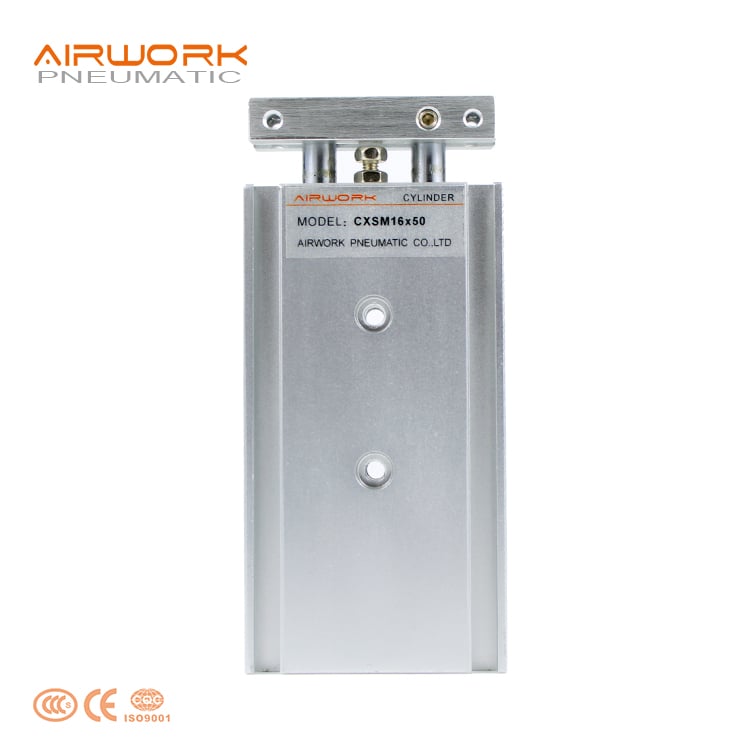
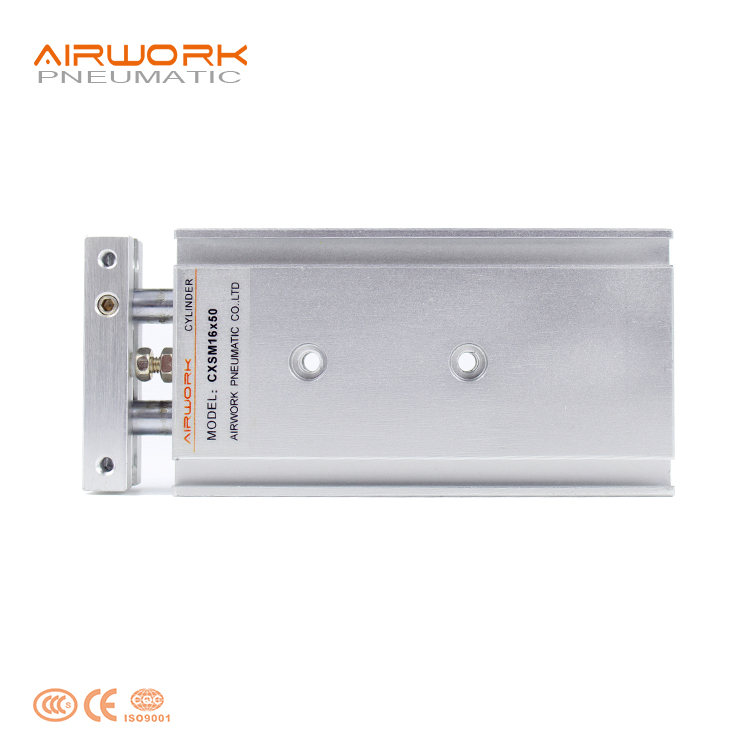
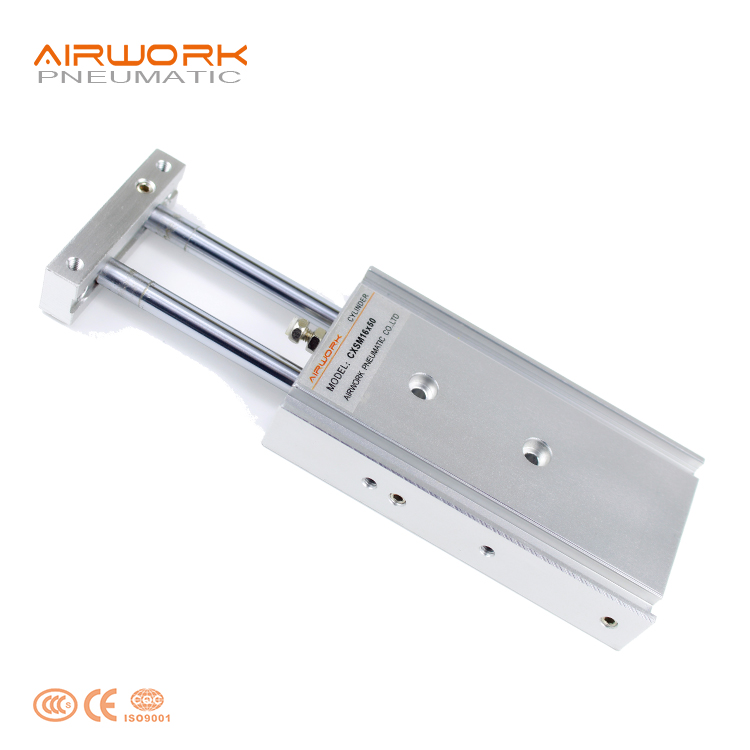
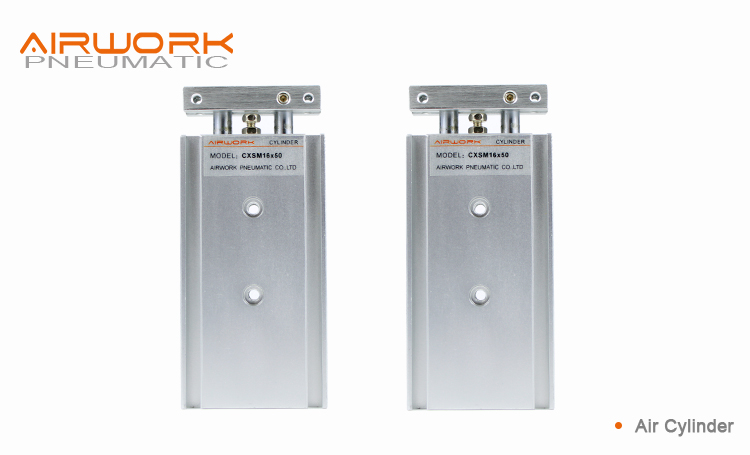
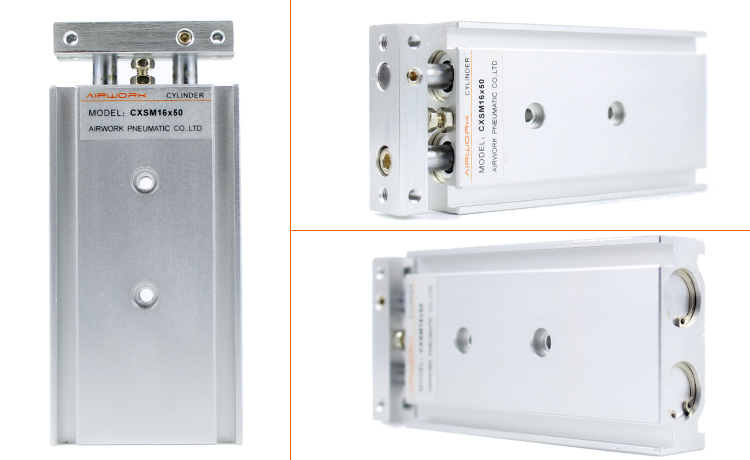
OEM Factory Direct CXS CXSM Series Dual Shaft Rod Cylinder Manufacturer Double Piston Pneumatic Air Cylinder Compatible With SMC
The CXSM Series is a high-performance dual-rod pneumatic cylinder designed for applications requiring high non-rotating accuracy and doubled output force. Featuring an integrated guide structure and compact design, it is the ideal choice for precision pick-and-place, material handling, and automated assembly lines.
- Overview
- Recommended Products
- Double Thrust Power: Dual piston rod design provides twice the output force of conventional cylinders.
- High Non-Rotating Accuracy: Ensures precise linear motion with minimal deflection, perfect for high-accuracy positioning.
- Integrated Guide Design: Built-in high-quality bearings provide excellent resistance to lateral loads and long service life.
- Magnetic Ready: Standard built-in magnet for position sensing with auto-switches.
- Compact & Space-Saving: Streamlined profile allows for installation in tight mechanical spaces without compromising performance.
- Adjustable Stroke: Available with adjustable stroke options (rubber bumpers or shock absorbers) to minimize impact.
- Dual rod construction — twice the thrust in the same footprint. Two piston rods operate in parallel from a single cylinder body, effectively doubling the output force compared to a single-rod cylinder of equivalent bore size. This allows selection of a smaller, lighter package for a given force requirement — critical in compact automation cells and end-of-arm tooling.
- Non-rotating accuracy of ±0.1°. The dual parallel rods mechanically prevent piston rod rotation without requiring an external guide mechanism. For applications where tooling orientation must remain fixed — connector pressing, label application, probe alignment — this built-in anti-rotation eliminates the complexity and cost of separate guide rails.
- Slide bearing design — lateral stability under side load. The CXSM uses precision slide bearings on both rods, providing resistance to off-center loading that would bind or wear a single-rod cylinder. This allows direct tool mounting on the rod-end plate without a separate support structure in many light to medium-duty applications.
- Identical dimensions across bearing types. CXSM (slide bearing) and CXSJ (ball bushing bearing) share the exact same mounting dimensions. This allows designers to prototype with one bearing type and switch to the other without modifying the machine frame — choose slide bearing for side-load resistance or ball bushing for ultra-smooth low-friction motion.
- Unique air cushion mechanism — no cushion ring. The CXSM uses an innovative air cushion design that eliminates the separate cushion ring found in conventional cylinders. This reduces part count, simplifies seal replacement, and provides consistent end-of-stroke deceleration without the wear and maintenance associated with cushion ring seals.
- Extremely compact envelope. The dual rods and shared body design produce a cylinder that is significantly shorter in overall length than an equivalent guided cylinder. For applications where both thrust and envelope constraints are critical — dense automation modules, tight fixture cavities — the CXSM maximizes force per installed millimeter.
- Adjustable stroke variants available. Select models offer built-in stroke adjustment, allowing fine-tuning of extend and retract end positions without external hard stops. Ideal for applications where stroke end position changes between product runs or requires precise setup calibration.
- Full SMC CXS/CXSM dimensional compatibility. Mounting hole patterns, rod spacing, port locations, and overall dimensions match SMC CXSM specifications exactly. Drop-in replacement — unbolt the old cylinder, bolt in the AIRWORK equivalent, reconnect air, resume production.
- Pharmaceutical & Medical Lab Automation:
- High-Speed Packaging & Precision Labeling:
- Precision Electronics & SMT Assembly:
- Alignment Check: Ensure the load is centered between the two rods as much as possible to maximize the lifespan of the guide bushings.
- Piping Hygiene: Flush all air lines to remove debris before connecting to the cylinder ports to prevent seal damage.
- Speed Regulation: Always use speed controllers (Flow Controls) to start the cylinder slowly, then adjust to the required speed to avoid internal impact damage.
- Sensor Installation: Insert auto-switches into the body grooves and tighten the set screw. Ensure the sensor is positioned to trigger correctly at the end-of-stroke.
- Bumper Adjustment: If using the adjustable stroke version, ensure the locking nut is tightened after setting the required travel distance.
Product Detailed Description:
Engineered for stability and precision, the CXSM Series Twin-Rod Cylinder utilizes two parallel piston rods to provide twice the thrust of a standard cylinder while ensuring superior resistance to side loads. The high-strength alloy body and integrated magnetic ring make it compatible with auto-switch sensors for seamless integration into smart factory systems.Whether you are upgrading an existing SMC-style system or building a new CNC machine, the CXSM series delivers the durability and smooth linear motion required for demanding industrial environments.
Application Industries:
Electronics Assembly,Automation & Robotics,Packaging Machinery,Medical Device Manufacturing,Automotive Sub-Assembly,Optical & Precision Instruments,Semiconductor Equipment,Textile Machinery,Food & Beverage Processing,Battery Manufacturing
Product Feature:
Specification:
Series |
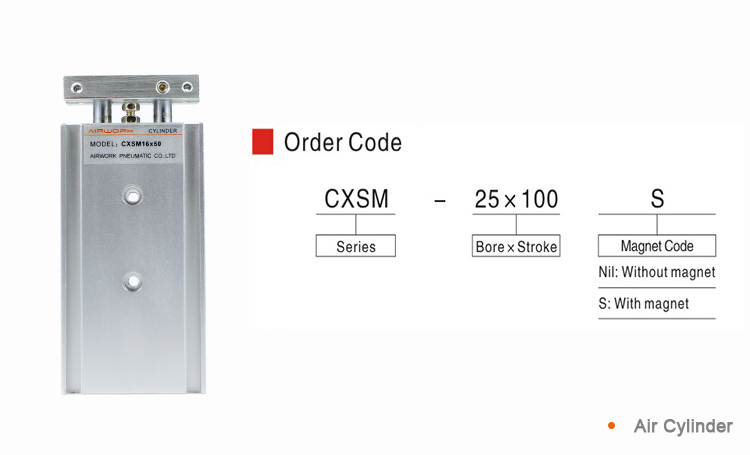
CXSM (Compatible with SMC Type ) |
Action |
Double Acting |
Bore Size |
Ø6, 10, 15, 20, 25, 32 mm |
Fluid |
Clean Air (40μm filtered) |
Operating Pressure Range |
0.1 ~ 1.0 MPa (14.5~145 psi) |
Proof Pressure |
1.5 MPa |
Ambient & Fluid Temp. |
-10°C to 60°C (No freezing) |
Piston Speed |
30 ~ 800 mm/s |
Cushion |
Rubber bumper on both ends (Standard) |
Port Size |
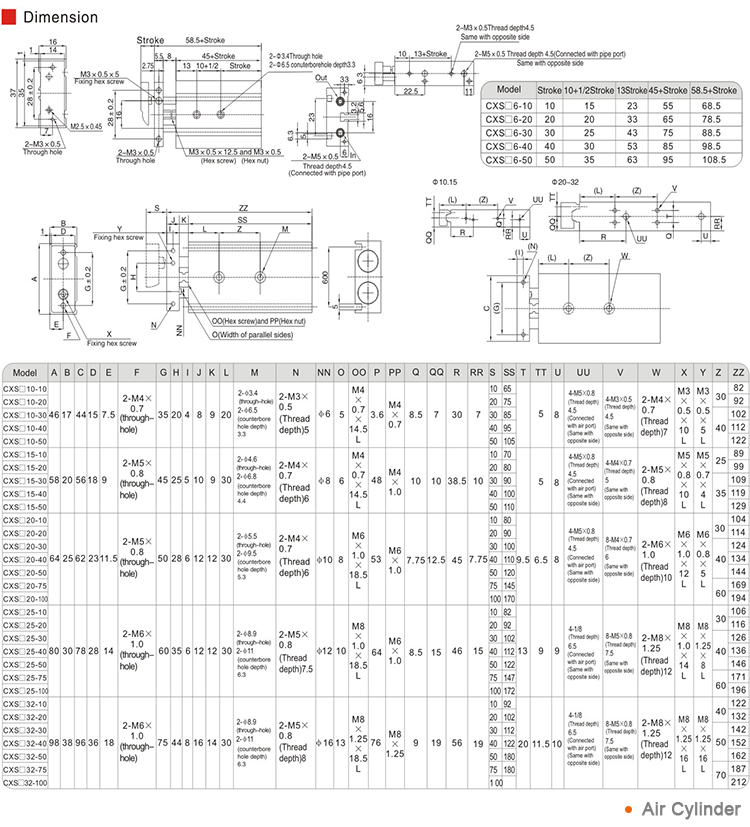
M5x0.8, Rc 1/8", G 1/8" (Depending on Bore) |
MOQ |
10 |
Lead Time |
5-7 Days |
Warranty |
1 year |
Pattern of Payment |
Paypal ;T/T;L/C;D/P |
Customization Options
Customization Item |
Options & Details |
Lead Time |
Stroke Length |
Any non-standard stroke from 5 mm to 100 mm |
3–5 days |
Bearing Type |
Slide bearing (CXSM — lateral stability, side-load resistance) or ball bushing bearing (CXSJ — ultra-smooth, low-friction) |
3–5 days |
Cushioning |
Standard: unique air cushion (no cushion ring). Options: rubber bumper, external shock absorber compatible |
5–7 days |
Stroke Adjustment |
Built-in extend and/or retract stroke adjuster for precise mechanical stop positioning |
5–7 days |
End Lock |
Integrated end lock mechanism for holding position on air loss — safety-critical clamping applications |
7–10 days |
Piston Rod Material |
Standard: hardened steel (chrome-plated). Options: 304/316 stainless steel for washdown or clean-room environments |
5–7 days |
Piston Rod Thread |
Standard: ISO metric. Options: UNC/UNF inch, extended/reduced rod, internal thread, or custom rod-end geometry |
3–5 days |
Rod-End Plate Modification |
Custom hole pattern, threaded inserts, dowel pin holes, extended plate dimensions for direct tool mounting |
5–7 days |
Seal Material Upgrade |
Standard: NBR (-10 °C ~ 60 °C). Options: Viton/FKM (-10 °C ~ 150 °C), HNBR (-25 °C ~ 100 °C), EPDM (food-grade) |
5–7 days |
High-Temperature Variant |
Viton seals + high-temperature grease, rated to 150 °C |
7–10 days |
Low-Temperature Variant |
Low-temperature seals + arctic grease, rated to -30 °C |
7–10 days |
Clean-Room Variant |
Non-lubricated seals, low-particle-emission, electropolished surfaces — ISO Class 4–6 compatible |
10–15 days |
Magnetic Piston |
Standard: non-magnetic. Option: integrated magnet for external proximity sensing |
3–5 days |
Sensor Pre-Installation |
Reed or solid-state sensors (PNP/NPN), pre-mounted at specified positions, M8 connector or flying leads |
3–5 days |
Port Thread |
Standard: M3/M5 (bore-dependent). Options: UNF inch, push-in fitting pre-installed |
3–5 days |
OEM Branding |
Custom laser engraving on body; neutral packaging for distribution partners |
3–5 days |
Product Advantages
Application:
For the handling of reagents and test tubes, smooth and repeatable motion is required. CXSM cylinders are integrated into automated capping and decapping stations. The dual-rod design allows for the attachment of specialized grippers that can apply high torque to caps without twisting the cylinder's internal seals. Its compact, oil-free design is also compatible with the cleanroom standards required for pharmaceutical manufacturing.
In labeling machinery, the application head must move in a perfectly linear path without any vibration or rotation. The CXSM cylinder drives the labeling stamp with absolute stability, ensuring that every label is applied precisely at the same angle, even at speeds of hundreds of cycles per minute. Additionally, its robust guide rods allow it to act as a "pusher" or "diverter" on conveyors, effortlessly handling the side impact of heavy boxes or bottles.
In High-Density SMT production lines, the CXSM cylinder is the preferred choice for high-speed pick-and-place operations. Its dual-rod design ensures "Zero-Rotation," which is critical when handling microscopic components like SMD chips and sensors. Unlike single-rod cylinders that may slightly twist, the CXSM keeps the suction nozzle or gripper perfectly aligned, preventing component misalignment during high-speed placement or soldering processes.
Installation and Usage:
FAQ
Q1.Is the CXSM cylinder a direct replacement for the SMC CXS series?
A1.Yes. Our CXSM series is designed to 1:1 technical and dimensional standards. The mounting holes, thread sizes, and performance curves match the SMC CXS series, allowing for a seamless drop-in replacement without modifying your machine.
Q2.What is the difference between the Basic Bushing and Ball Bearing versions?
A2.The Basic Bushing (Standard) is ideal for vertical movements and general pushing. The Ball Bearing version (CXSML) offers lower friction and is better suited for horizontal applications with significant lateral loads.
Q3.Can I adjust the stroke of the CXSM cylinder?
A3.Standard models have a fixed stroke. However, we offer an "Adjustable Stroke" version (suffix -AS, -BS, or -CS) which allows you to reduce the extension stroke by 0-5mm or more using adjustment bolts.
Q4.Does the dual-rod design mean it uses twice the air volume?
A4.No. While it provides double the force, the air consumption is proportional to the combined area of the two pistons. It is highly efficient for applications requiring high force in a narrow space.
Q5.What auto-switches are compatible with this cylinder?
A5.The CXSM body features integrated grooves compatible with standard D-A93 (Reed), D-M9B (PNP), and D-M9N (NPN) sensors. These sensors are available in our store and can be pre-installed.
Q6. How much side load can the CXSM handle before bending?
A6. The dual-rod design is highly resistant to torque. For example, a 20mm bore CXSM can handle significantly more lateral force than a standard 20mm single-rod cylinder. Please refer to our "Allowable Lateral Load" chart in the full catalog for specific Newton-meter (N·m) limits.
Q7.Is lubrication required during operation?
A7.The CXSM is pre-lubricated with high-quality synthetic grease and is designed for "non-lube" service. If you choose to use an inline lubricator, you must continue using it to prevent the original grease from washing away.
Q8. Can this cylinder be used in high-temperature environments?
A8. The standard operating range is up to 60°C (140°F). For high-heat applications (up to 120°C/248°F), please contact us for custom Viton (FKM) seals to ensure long-term reliability.
Q9.What routine maintenance does the CXSM require?
A9.Wipe both piston rods weekly to remove debris that could damage rod seals. Check for air leaks at ports and rod seals monthly. Verify smooth motion and rod-end plate alignment quarterly — binding or uneven travel indicates slide bearing wear. Replace rod seals and slide bearings annually on cylinders exceeding 2 million cycles. Seal and bearing kits available for all bore sizes.
Factory Advantages and Certifications
Company Introduction 1
Company Introduction 2
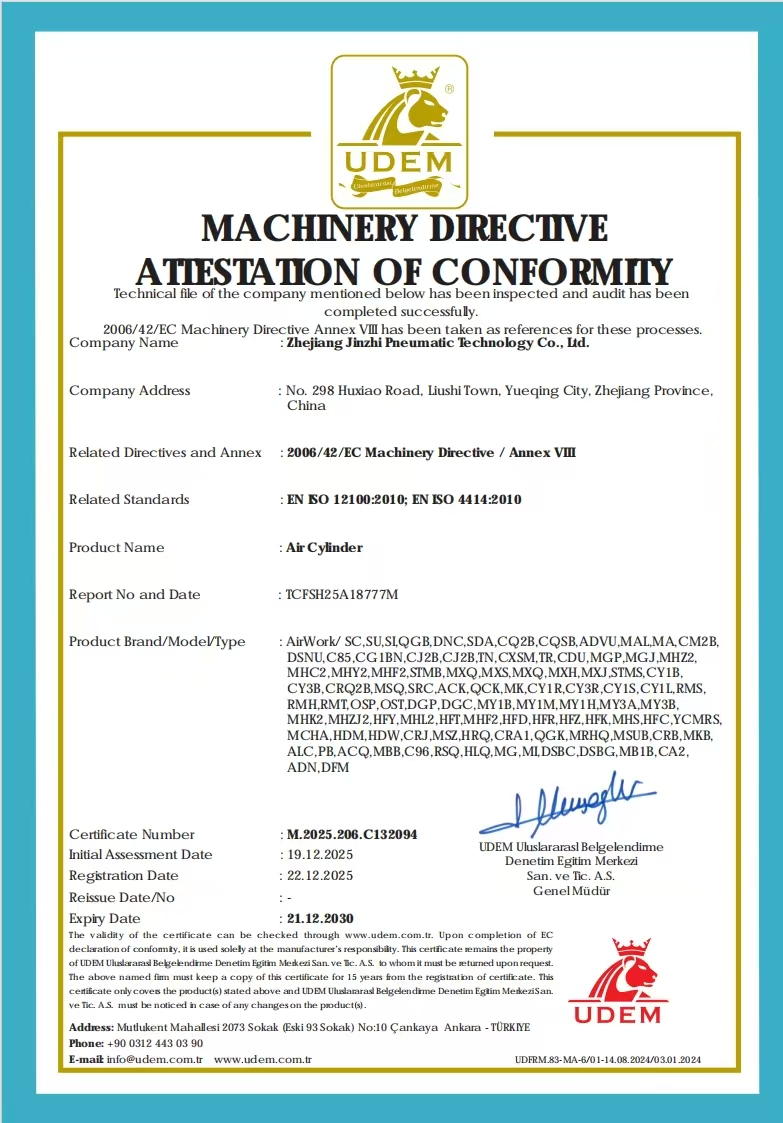
Certification