EN
EN


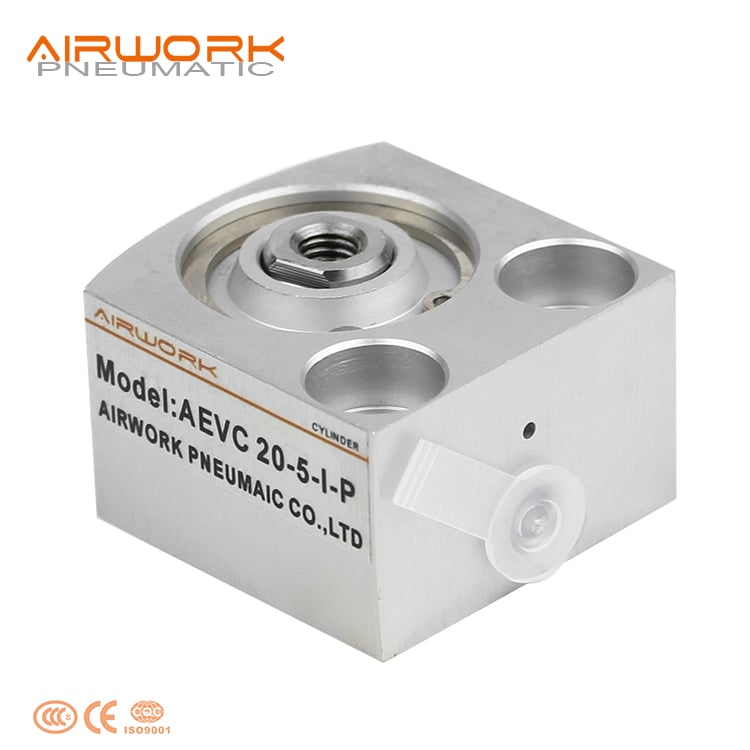
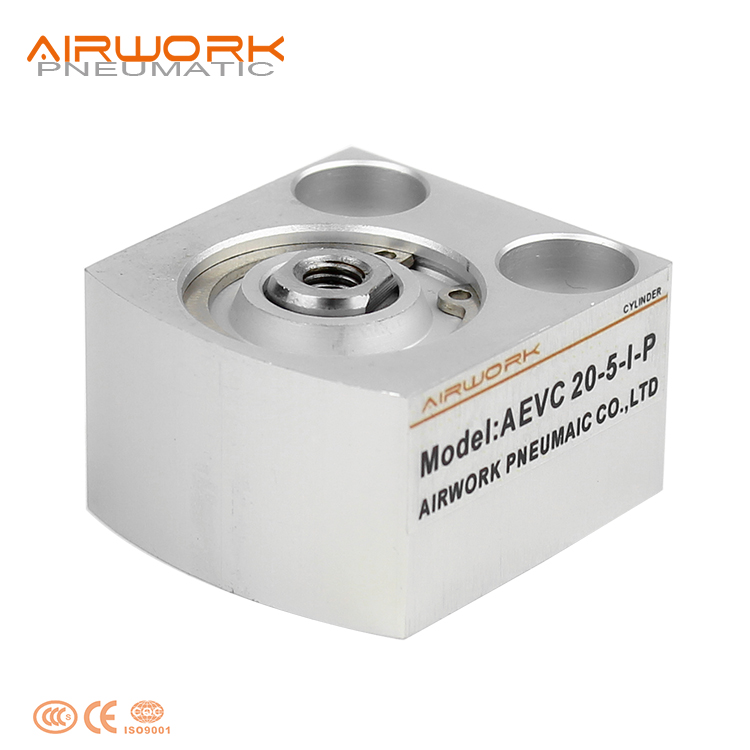
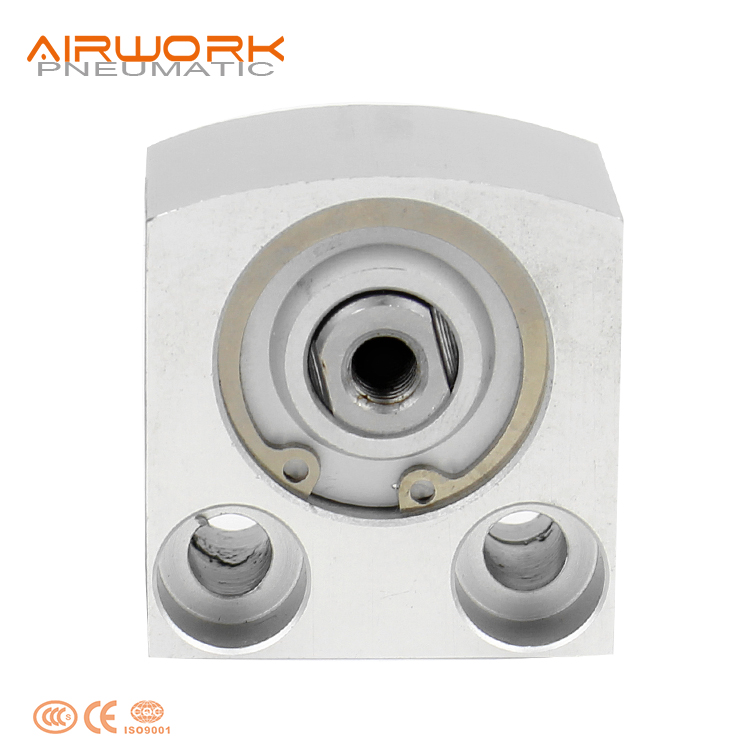
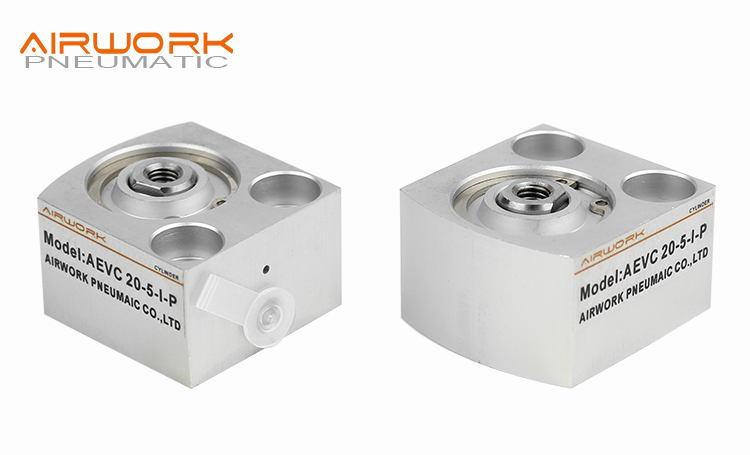
OEM Factory Direct ADVC AEVC Series Short-Stroke Pneumatic Cylinder Manufacturer Double Acting Compact Air Cylinder Festo Replacement
The AEVC Series is a high-performance, ultra-compact pneumatic cylinder designed for applications where every millimeter counts. With its significantly reduced overall height and robust construction, the AEVC provides high clamping and pushing forces in the smallest possible footprint. Ideal for automated jigs, clamping fixtures, and high-density machinery.
- Overview
- Recommended Products
- Minimal Footprint: The ultra-low profile design makes it perfect for installations with height restrictions.
- High Force-to-Size Ratio: Delivers exceptional thrust and tension forces despite its compact dimensions.
- Direct Mounting: Features through-holes for easy and direct mounting to machine frames or plates.
- Integrated Sensor Grooves: Flush-mount sensor slots protect auto-switches from mechanical damage and save space.
- Versatile Configurations: Available in single-acting (spring return) or double-acting versions to suit various control requirements.
- Impact Cushioning: Equipped with elastic cushioning rings at both ends to reduce noise and internal impact.
- Shortest stroke, shortest body — the definitive clamping actuator. The AEVC is not a general-purpose cylinder adapted for clamping — it is designed from the ground up for short-stroke clamping duty. Stroke lengths range from just 2.5 mm to 25 mm, and the overall body length is correspondingly compact. A complete AEVC-32×10 cylinder is barely 32 mm tall — shorter than a standard business card is wide. This allows clamping points to be placed in fixture locations where no other actuator type fits.
- Single-acting with integrated return spring — fail-safe clamping. The AEVC is single-acting: compressed air drives the clamping stroke (extend), and an internal spring returns the piston when air is exhausted. This spring-return design provides inherent fail-safe behavior — if air pressure is lost, the cylinder retracts and releases the workpiece rather than remaining locked. For applications where spring-extend (fail-safe clamp on air loss) is preferred, the pull-type configuration is available.
- Rapid response — clamp in milliseconds. With minimal internal volume (a few cubic centimeters for the smallest bores) and extremely short stroke, the AEVC achieves clamp engagement times measured in tens of milliseconds. Pressurize the port and the piston snaps into clamping position almost instantaneously. This rapid response is essential in high-speed automated fixturing where cycle time is measured in seconds.
- Continuous body thread — shortest installation height. The AEVC body features a continuous external thread from face to face, allowing the entire cylinder to be threaded directly into a fixture plate with a single lock nut. There is no separate mounting flange, no bracket, and no fastener stack-up adding to the installed height. The cylinder sits flush with or below the fixture surface — nothing protrudes to interfere with tool paths, chip flow, or operator access.
- Piston rod variants — male, female, or blank. Three rod-end configurations are available as standard:
- Elastic cushioning — quiet, maintenance-free. Both stroke ends incorporate elastic cushioning rings that absorb impact energy during clamp engagement and spring return. No adjustment is needed — the cushioning is tuned for the cylinder's specific mass and spring force. This passive system operates silently, requires zero maintenance, and never drifts out of calibration.
- High force-to-size ratio. Despite their diminutive dimensions, AEVC cylinders deliver substantial clamping force. At 6 bar (0.6 MPa), a 32 mm bore AEVC generates approximately 450 N of clamping force — enough to securely hold a 45 kg workpiece. A 63 mm bore delivers nearly 1800 N. For their installed volume, these cylinders are among the most force-dense pneumatic actuators available.
- Optional position sensing. From bore size 12 mm upward, the AEVC body includes a T-slot for mounting miniature proximity sensors. This enables clamp/unclamp status verification for safety interlocking, cycle confirmation, and error-proofing — critical in automated machining cells where an unclamped workpiece can cause catastrophic tool crashes.
- Corrosion-resistant construction. Standard AEVC cylinders feature corrosion resistance class CRC 1 (low corrosion stress) — suitable for dry indoor applications. Upgraded materials and coatings are available for higher corrosion stress environments, making the AEVC suitable for machining fixtures exposed to coolant mist and cutting fluid splash.
- Automotive Jig & Tooling:
- Furniture & Woodworking Automation:
- Plastic Injection Molding:
- Electronics & PCB Assembly:
- Mounting Surface: Ensure the mounting surface is clean and flat. The AEVC can be mounted directly via the through-holes in the body.
- Air Quality: Use clean, dry, and filtered air. While it can run without lubrication, a small amount of oil mist can extend the seal life in high-speed applications.
- Sensor Alignment: When installing proximity sensors, slide them into the T-slots or C-slots and lock them at the desired position. Test the signal at both ends of the stroke.
- Flow Control: We recommend using elbow-type flow control valves to adjust the speed. This prevents internal damage from excessive kinetic energy during fast strokes.
- Lateral Load: Like all compact cylinders, the AEVC is designed for axial loads. Avoid significant lateral forces to prevent uneven wear on the piston rod and seals.
Product Detailed Description:
The AEVC Series (Compact Short-Stroke Cylinder) is engineered for industrial environments that demand high power in restricted spaces. By optimizing the internal piston design, the AEVC achieves a length reduction of up to 50% compared to standard ISO cylinders without sacrificing performance.
Constructed with a hard-anodized aluminum alloy body and high-quality NBR seals, this cylinder ensures low friction and high durability. Its smooth, rounded exterior prevents debris accumulation, while the integrated sensor slots allow for flush mounting of proximity switches. Whether you are building a new CNC assembly line or replacing a Festo AEVC unit, our cylinder offers 1:1 dimensional compatibility and industry-leading reliability.
Application Industries:
Machine Tool & CNC Machining,Automotive Manufacturing,Metal Fabrication,Woodworking,Assembly & Automation,Plastics Processing,Electronics Manufacturing,Packaging Machinery,Inspection & Metrology,Printing & Converting
Product Feature:
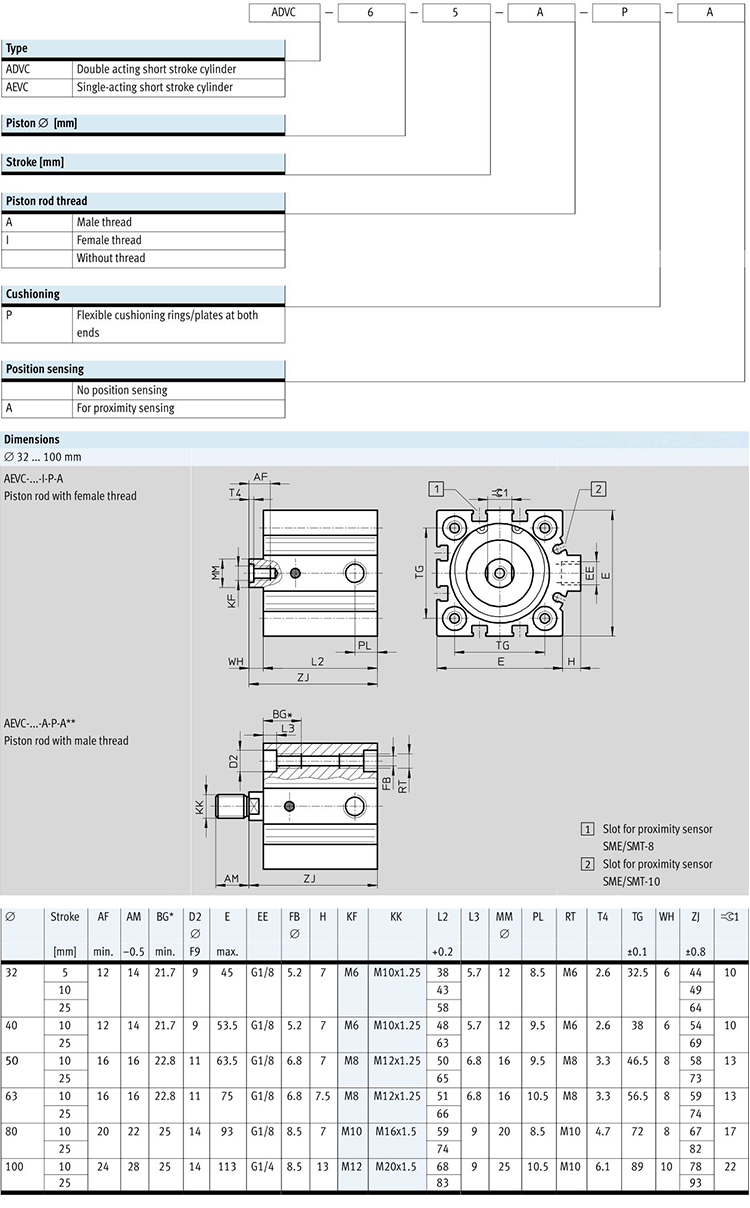
Specification:
Series |
AEVC |
Action |
Double Acting / Single Acting (Spring Return) |
Bore Size |
Ø12, 16, 20, 25, 32, 40, 50, 63, 80, 100 mm |
Standard Strokes |
5mm to 25mm (Short Stroke optimized) |
Fluid |
Compressed Air (40μm filtered) |
Operating Pressure Range |
1.0 ~ 10.0 bar (14.5 ~ 145 psi) |
Ambient Temp. |
-20°C to 80°C (-4°F to 176°F) |
Cushioning |
P: Elastic cushioning rings/plates at both ends |
Seals |
High-performance NBR (Viton available for high-temp) |
MOQ |
10 |
Lead Time |
5-7 Days |
Warranty |
1 year |
Pattern of Payment |
Paypal ;T/T;L/C;D/P |
Customization Options
Customization Item |
Options & Details |
Typical Lead Time |
Stroke Length |
Standard: 5, 10, 15, 20, 25mm.Custom micro-strokes available on request |
3–5 working days |
Acting Type |
Standard: single-acting push (air extend, spring retract). Option: single-acting pull (air retract, spring extend) — for fail-safe clamping on air loss |
5–7 working days |
Spring Force |
Standard spring force per bore size. Custom spring rates available — specify desired return force at retracted position, or extended clamping force for pull-type |
5–7 working days |
Piston Rod End |
Standard: male thread, female (internal) thread, or blank (no thread). Options: extended rod, spherical radius tip, swivel pad, clevis, or custom-machined clamping face |
5–7 working days |
Piston Rod Material |
Standard: stainless steel. 304/316 stainless steel for coolant and cutting fluid resistance, or ceramic-coated for abrasive particle environments |
5–7 working days |
Body Material |
Standard: anodized aluminum. Options: hard-anodized (enhanced wear), nickel-plated (chemical resistance), or 304/316 stainless steel (full corrosion protection for coolant-immersed fixtures) |
7–10 working days |
Body Thread |
Standard: metric fine thread. Options: inch UNF thread, or custom thread profile for specialized fixture plates |
5–7 working days |
Seal Material Upgrade |
Standard: NBR/PU (-20 °C ~ 80 °C). Options: Viton/FKM (-10 °C ~ 150 °C, for hot-work clamping near welding or heat-treat fixtures), HNBR (-30 °C ~ 100 °C), or EPDM (coolant-resistant) |
5–7 working days |
High-Temperature Variant |
Viton seals + high-temperature grease, rated to 150 °C — welding fixture clamping, hot-forming die clamping, furnace door retention |
7–10 working days |
Low-Temperature Variant |
Arctic-grade seals + low-temperature grease, rated to -40 °C — cold storage fixture actuation, outdoor winter clamping stations |
7–10 working days |
Corrosion-Resistant Variant |
Full 304/316L stainless steel body, end caps, and rod — coolant-immersed machining fixtures, food processing clamps, marine environment clamping |
10–15 working days |
Position Sensing |
Standard: T-slot for proximity sensor (bore ≥ 12 mm). Option: sensor pre-installed at clamp/unclamp position, with M8 connector or flying leads |
3–5 working days |
Port Thread |
Standard: M3 (bore 4–6), M5 (bore 10–25), G1/8" (bore 32–50), G1/4" (bore 63–100). Options: NPT, UNF, or push-in fitting pre-installed |
3–5 working days |
Clamping Pad Pre-Installed |
Custom clamping pad (steel, brass, nylon, urethane) pre-mounted on rod end — arrives ready to bolt into the fixture |
5–7 working days |
OEM Branding |
Custom laser engraving on body with customer logo, part number, and pressure rating. Neutral packaging for distribution partners |
3–5 working days |
Product Advantages
Male thread: Screw-on clamping pad, swivel foot, or custom tooling.
Female (internal) thread: Low-profile clamp attachment; the rod end sits below the fixture surface.
Without thread (blank): Press-fit or weld custom clamp elements directly.
This flexibility allows the AEVC to adapt to virtually any clamping tooling interface without custom rod machining.
Application:
In automotive assembly lines, the AEVC is the workhorse for clamping and holding components during robotic welding or precision drilling. Its thin profile allows multiple cylinders to be placed side-by-side in a single jig to hold complex curved parts, like door panels or chassis frames, ensuring they remain perfectly static under high-pressure manufacturing processes.
Woodworking CNC machines use AEVC cylinders in their automatic clamping tables. They are embedded within the vacuum pods or side rails to provide lateral pressure, holding wooden panels firmly in place during high-speed milling and routing. Their compact size ensures the cutting tool has maximum clearance, reducing the risk of collisions.
AEVC cylinders are frequently integrated into molds as core pullers or ejector assistants. In the confined space of a mold base, they provide the necessary force to actuate small moving parts that create holes or undercuts in the plastic product. Their high temperature resistance (when fitted with Viton seals) makes them reliable near hot mold cavities.
For SMT lines and testing stations, the AEVC is used to press-fit components onto circuit boards. Because it can fit into the narrow vertical gaps between machine layers, it serves as an ideal "stopper" or "locator" for PCB carriers. Its smooth, controlled stroke prevents damage to delicate electronic chips while providing enough force to secure connectors.
Installation and Usage:
FAQ
Q1.Is your AEVC cylinder fully interchangeable with the Festo AEVC series?
A1.Yes, our AEVC is designed to the exact dimensional and performance specifications of the Festo original. It features the same mounting hole patterns, port sizes, and overall height, making it a perfect drop-in replacement.
Q2.What is the main advantage of AEVC over a standard SDA compact cylinder?
A2.While both are compact, the AEVC (Festo type) often has a more streamlined, rounded body and different mounting options. AEVC is frequently preferred in European-designed machinery and provides a very high force-to-height ratio.
Q3.Can I choose between single-acting and double-acting versions?
A3. Absolutely. We offer Single-Acting (Spring Return) for fail-safe applications and Double-Acting for applications requiring powered movement in both directions.
Q4. How do I mount magnetic sensors on this cylinder?
A4. The cylinder body has built-in grooves designed for standard proximity sensors (like the SME/SMT series). Sensors fit flush into the body, so they won't snag on machine parts.
Q5.Are there high-temperature versions available?
A5.Yes. For environments exceeding 80°C (up to 150°C), we can provide AEVC cylinders with heat-resistant Viton (FKM) seals upon request.
Q6. Does it require much maintenance?
A6.The AEVC is pre-lubricated with lifetime grease. Under normal conditions, it is maintenance-free. If you use an external lubricator, ensure you continue to use it consistently.
Q7. Can I use this cylinder for heavy lifting?
A7.While the AEVC is powerful, it has a short stroke (typically up to 25mm). It is best suited for clamping, pushing, and stopping rather than long-distance lifting.
Q8. What mounting accessories are available?
A8. Since the AEVC is designed for direct mounting, it usually doesn't require extra brackets. However, we can provide rod-end accessories like clevises or ball joints if your application requires a flexible connection.
Q9.How do I install an AEVC cylinder into a fixture plate?
A9.The AEVC features an external continuous body thread. Drill and tap a matching threaded hole in your fixture plate, thread the cylinder body through from the rod side, and secure it with the lock nut on the rear face. This is the fastest and most compact installation method — the entire cylinder sits within the fixture plate thickness, with only the rod end and clamping element protruding. Ensure the threaded hole is perpendicular to the fixture face to avoid rod side-loading. For thick fixture plates where through-threading is impractical, use the body through-hole mounting option with socket-head cap screws.
Factory Advantages and Certifications
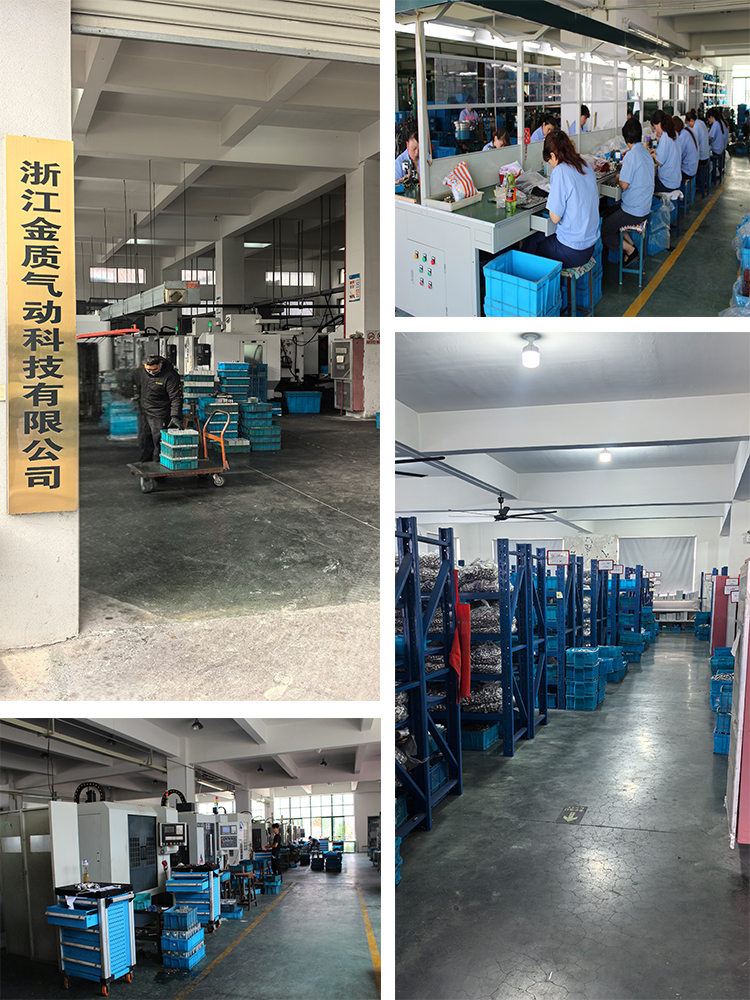
Company Introduction 1
Company Introduction 2
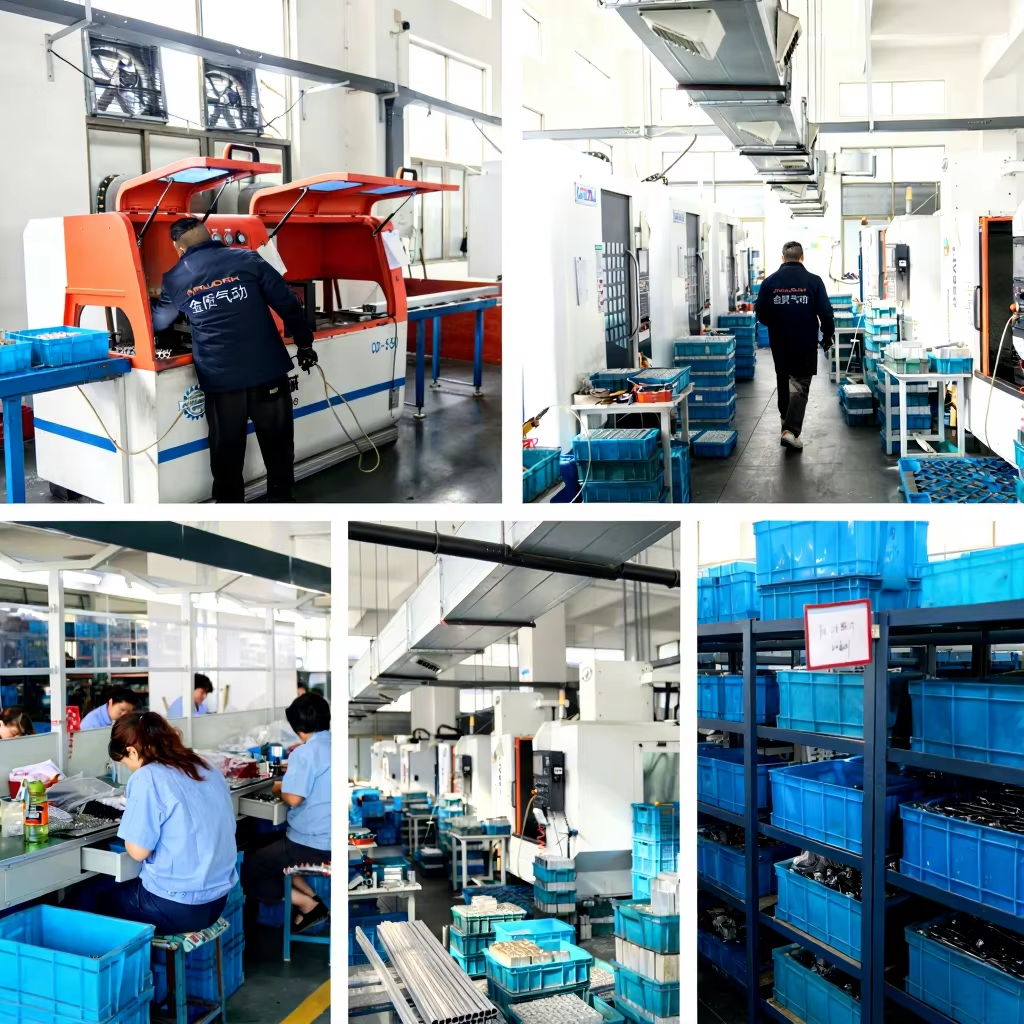
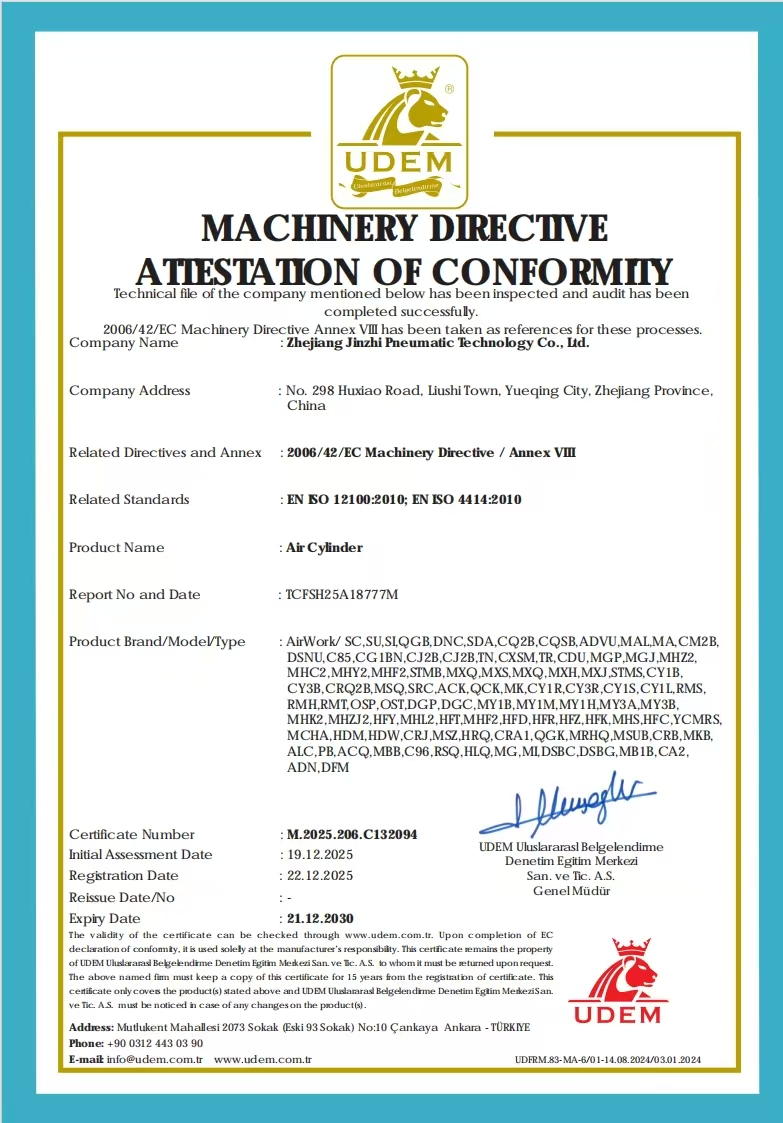
Certification