EN


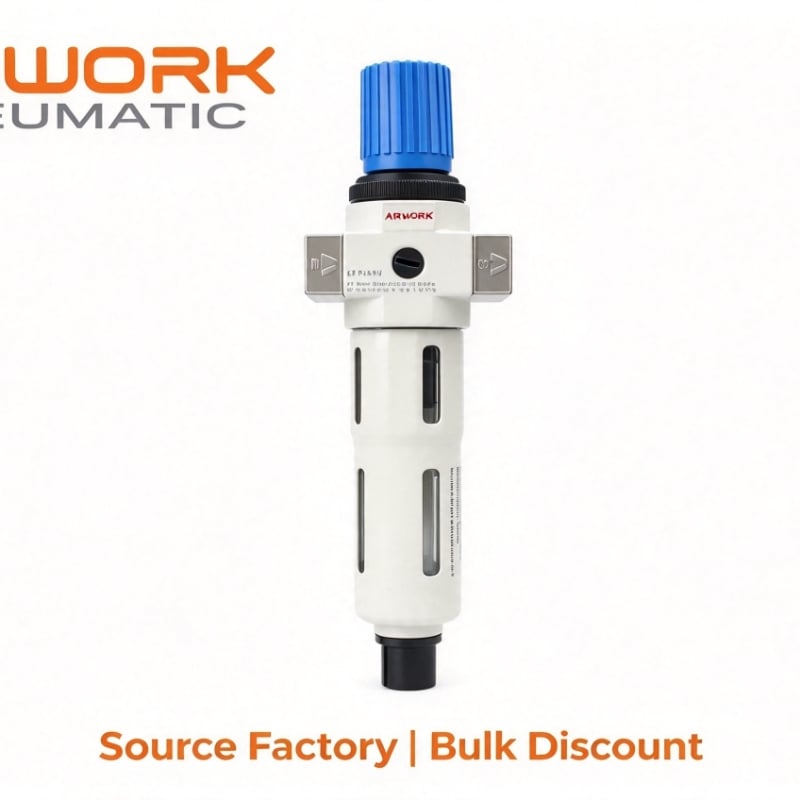
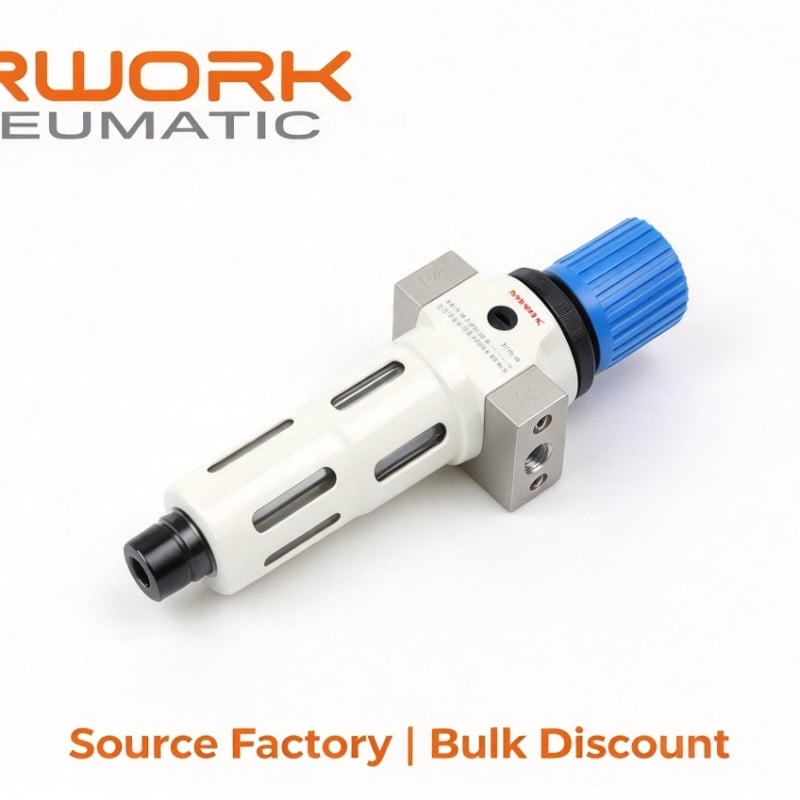
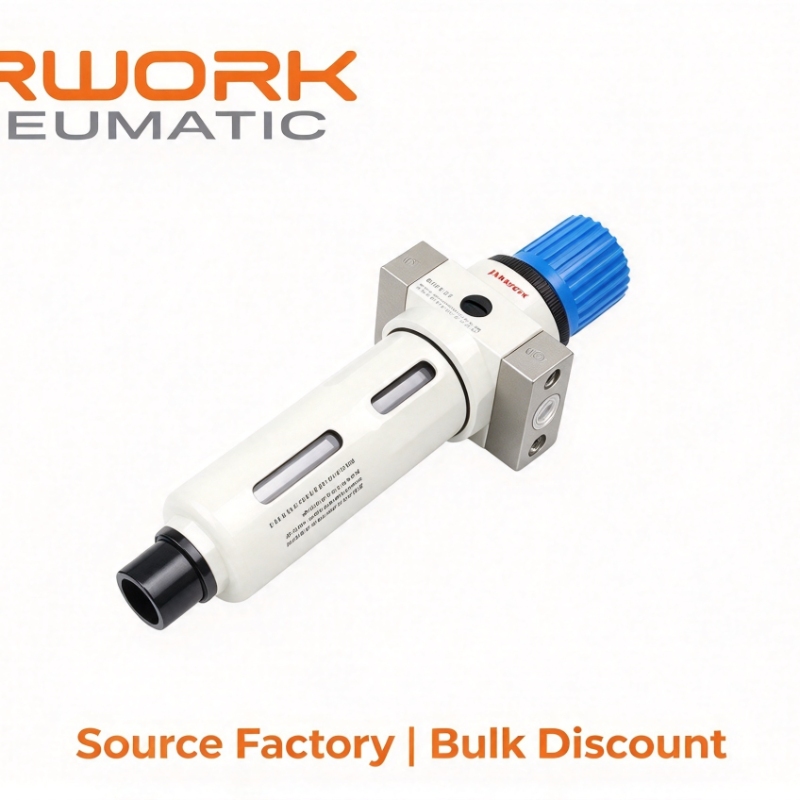
OFR Series Air Filter Regulator Pneumatic Water Separator G1/8 To G1 Inch Transparent PC Bowl Manual Drain MINI MIDI MAXI Sizes
The OFR series is a filter regulator that removes water and dirt from compressed air and holds the pressure downstream of it in the same body. Three sizes cover ports from G1/8 to G1 inch, the bowl is polycarbonate so the water level can be seen without opening anything, and the drain is manual. One body replaces a filter and a regulator bolted together, which removes a joint, a bracket and one leak path from the air preparation group.
- Overview
- Recommended Products
Product Detailed Description:
A filter regulator does two jobs that are usually done by two products. The air enters the bowl, spins and drops its water and its heavier dirt, passes through the element, and then goes through the regulating seat on its way out. Because the two functions share one body, the pressure that the element sees is the pressure that has already been cleaned, and the regulator does not have to be protected from the water that the filter has just taken out.
The bowl is polycarbonate, which is the reason the water level can be read at a glance and the reason the element can be inspected without a spanner. That transparency is also the limit of the product: polycarbonate is attacked by solvents, esters and ketones, and by some synthetic compressor oils carried over as vapour, so a line that carries those needs a different bowl rather than a longer drain interval. For ordinary workshop air, the transparent bowl is what makes the daily drain actually happen.
The drain is manual, which is a deliberate choice rather than a saving. A manual drain forces somebody to look at the bowl, and a bowl that is looked at is a bowl where a rising water line and a loading element are noticed before they reach the tool. The regulator is relieving, so turning the setting down vents the downstream side instead of trapping it, and the three body sizes take the same port range as the rest of the air preparation family, G1/8 to G1 inch.
Product Feature :
1.Filter and regulator in one body: one housing does the water separation, the dirt removal and the pressure setting, so the group is shorter, lighter and has one joint fewer to leak.
2.Transparent polycarbonate bowl: the water level and the element condition are visible from outside, which is what turns a maintenance schedule into a habit.
3.Manual drain: the drain is opened by hand, so the bowl is looked at every time it is emptied rather than trusted to a mechanism nobody checks.
4.Three body sizes, G1/8 to G1 inch: MINI, MIDI and MAXI cover a blow gun line up to a 1 inch main, on the same port range as the rest of the family.
5.Relieving regulator: turning the setting down vents the downstream side to the new pressure instead of leaving it trapped between the regulator and the tool.
6.Serviceable element: the filter element sits in the bowl as a service part, so the body stays on the machine and the element is changed when it loads up.
7.Compact group for a machine panel: one body instead of two leaves room on a small panel and shortens the pipe run between the shut off valve and the first tool.
Application Industries:
1.General factory air - compressor outlet, ring main drops and tool stations
2.Automotive repair and paint - spray gun air, blow off and lift lines where water spotting matters
3.Packaging machinery - film, sealing and ejector air on a machine mounted panel
4.Food and beverage - water and dirt removal ahead of actuators and packaging heads
5.Electronics assembly - clean, dry air for blow off and small cylinders
6.Woodworking and furniture - spray lines and clamping air in a dusty plant
7.Water treatment and chemical plant - instrument air on skids and panels
8.Machine building and OEM panels - built into the machine's own air preparation
9.Textile, printing and paper - dry air for web handling and converting cylinders
Specification:
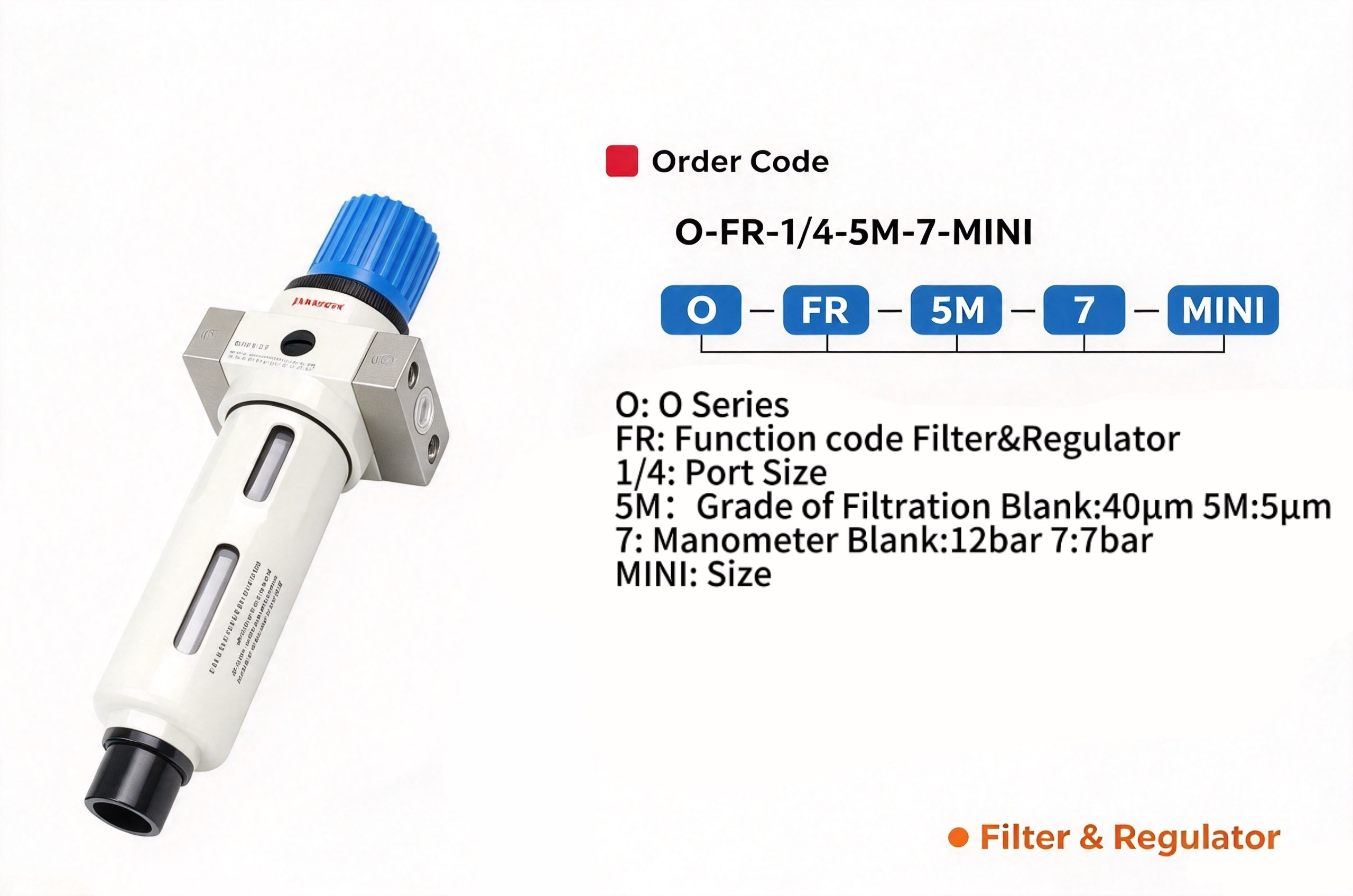
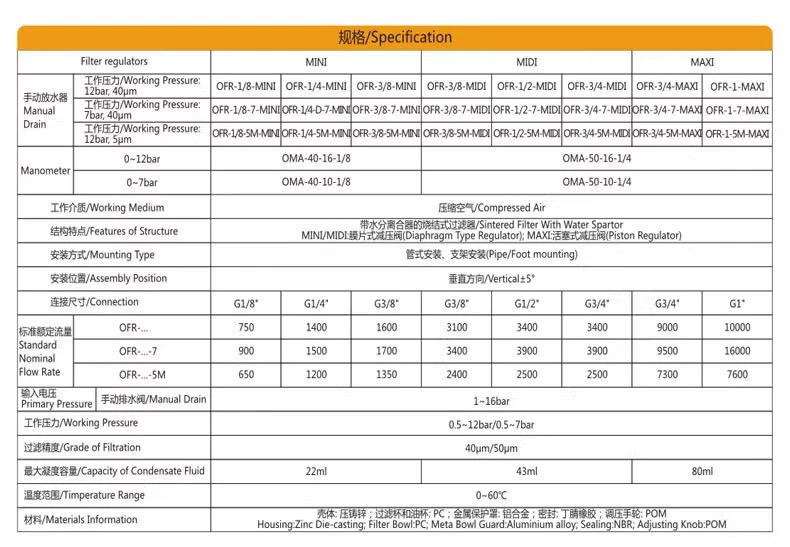
Item |
Detail |
Series |
OFR filter regulator |
Function |
Filtration and pressure regulation in one body, relieving regulator |
Sizes |
MINI, MIDI, MAXI |
Port sizes |
G1/8 to G1 inch across the three sizes |
Working medium |
Compressed air |
Bowl material |
Polycarbonate, transparent |
Drain |
Manual |
Filter element |
Service part inside the bowl; rating stated per model |
Mounting |
On the pipe or on a bracket, with the bowl visible and the drain reachable |
MOQ |
10 pcs |
Customization Options:
Customization Item |
Options |
Body size |
MINI, MIDI, MAXI |
Port size |
G1/8 to G1, matched to the body |
Drain |
Manual as standard |
Bowl |
Polycarbonate, transparent |
Element rating |
Selected to the model and the duty |
OEM marking |
Nameplate and neutral packing to customer artwork |
Application:
1.Compressor outlet on a small workshop (general air): The first thing after the receiver is where most water arrives, because the air is still hot and drops its condensate as it cools in the pipe. A filter regulator at that point takes the water out before it reaches the drops, and it sets the pressure the ring main runs at. The transparent bowl is what makes the daily drain happen: the level is visible from standing height, so nobody has to guess when it was last emptied.
2.Spray gun line in a refinish bay (paint): Water in a spray gun line shows up as spots in the finish, and the spots appear hours after the panel is baked. A filter regulator at the gun or at the booth drop removes the water and holds the gun pressure at the same time, so the painter sets one knob instead of chasing a regulator that sags whenever a second gun is triggered. The bowl is drained at the start of each shift because the level can be seen.
3.Machine mounted air preparation (OEM panel): On a machine built into a cell, panel space is the constraint. One filter regulator in place of a filter plus a regulator shortens the group by the length of a nipple and a joint, which is often the difference between fitting the preparation inside the guard and hanging it outside. The relieving regulator also lets the commissioning engineer drop the setting without venting the whole main.
Installation and Usage:
1.Put it first in the group: filter regulator, then a lubricator if one is used. The regulator side of the body is downstream of the element, so the seat sees clean air rather than the dirt the filter has just caught.
2.Drain before the shift, not after: water sits in the bowl overnight and is carried into the line on the first cycle. Opening the manual drain at start up removes it before the tools see it.
3.Mount where the bowl can be seen: a filter regulator behind a guard is a filter regulator that is never drained. Put it where the water level and the element are visible from the walkway.
4.Keep solvents away from the bowl: polycarbonate is not resistant to esters, ketones and many solvents, and to some synthetic oils carried over as vapour. A line that carries them needs a different bowl, not a shorter drain interval.
5.Change the element on condition, not on the calendar: the element loads up at the rate the air is dirty. Watch the pressure drop across the body and the water carry over, and change when either starts to move.
6.Set the pressure with the line flowing: adjust with the tool or the actuator running at normal duty, then check the gauge. A setting made with no flow reads high as soon as air moves.
7.Do not use the drain as a purge: the drain empties the bowl, it does not blow the line down. A line that needs blowing down needs a proper valve downstream.
FAQ:
Q1. What is the difference between a filter regulator and a regulator?
A1. A regulator only sets pressure. A filter regulator also removes water and dirt first, in the same body. It is used at the point where the air enters a machine or a drop, where both jobs have to be done.
Q2. Where does it go in an air preparation group?
A2. First, ahead of the lubricator if one is fitted. The filter regulator takes the water and dirt out and sets the pressure that everything downstream runs at.
Q3. What filtration rating do I get?
A3. The rating is set per model rather than quoted as one figure for the series, because it moves with the element fitted. Tell us what is downstream, a cylinder, a spray gun or instrument air, and the element is matched to it.
Q4. Is the drain automatic?
A4. It is manual as standard. The bowl is emptied by hand at the start of a shift, which keeps the water level and the element in view.
Q5. Can the polycarbonate bowl be used with solvents?
A5. No. Polycarbonate is attacked by esters, ketones and many solvents, and by some synthetic oils carried over as vapour. Where those are present, the bowl has to be a different material, which is a separate specification.
Q6. What are the pressure and temperature limits?
A6. They are stated per model on the quotation, because the body size and the element set the limits rather than the series. Give us the line pressure and the temperature and the model is matched to them.
Q7. How do I choose the size?
A7. Start from the port that fits the pipe, then check the flow the model delivers at your pressure. Undersizing shows up as a pressure that collapses when a second tool is used, not as a leak.
Q8. Can the bowl and element be replaced?
A8. The element is a service part inside the bowl, so the body stays on the machine. Bowl and element are ordered against the model number.
Q9. What is the MOQ and can it be marked for our brand?
A9. MOQ is 10 pcs. Nameplates and neutral packing can be produced to your artwork, and mixed orders across the three sizes are quoted as one line.
Factory Advantages and Certifications:
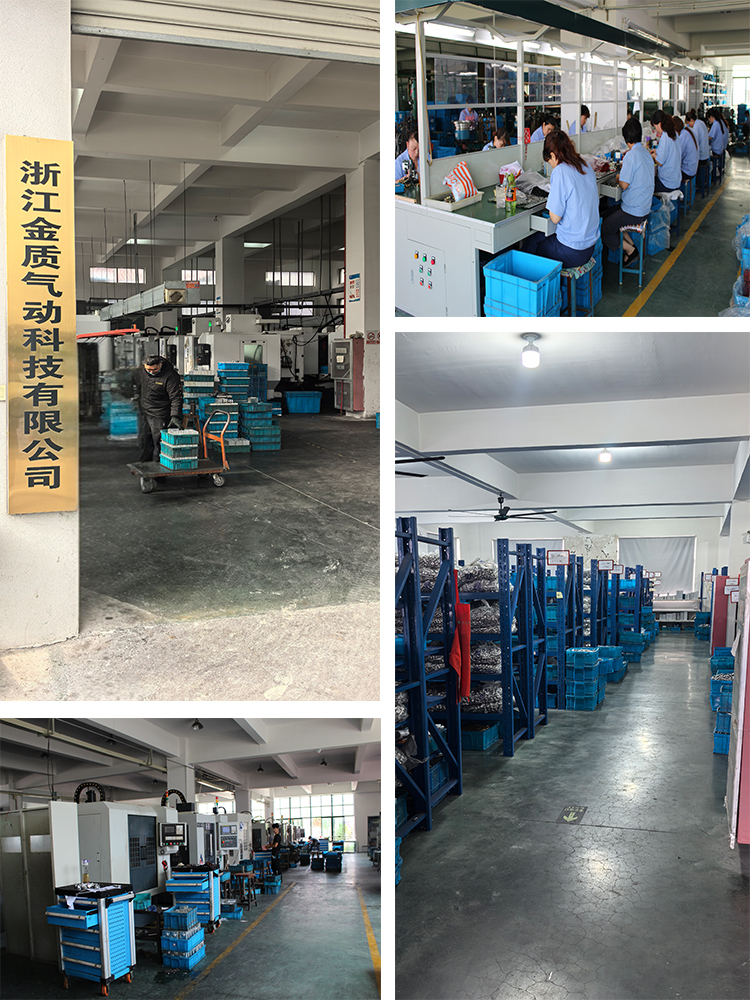
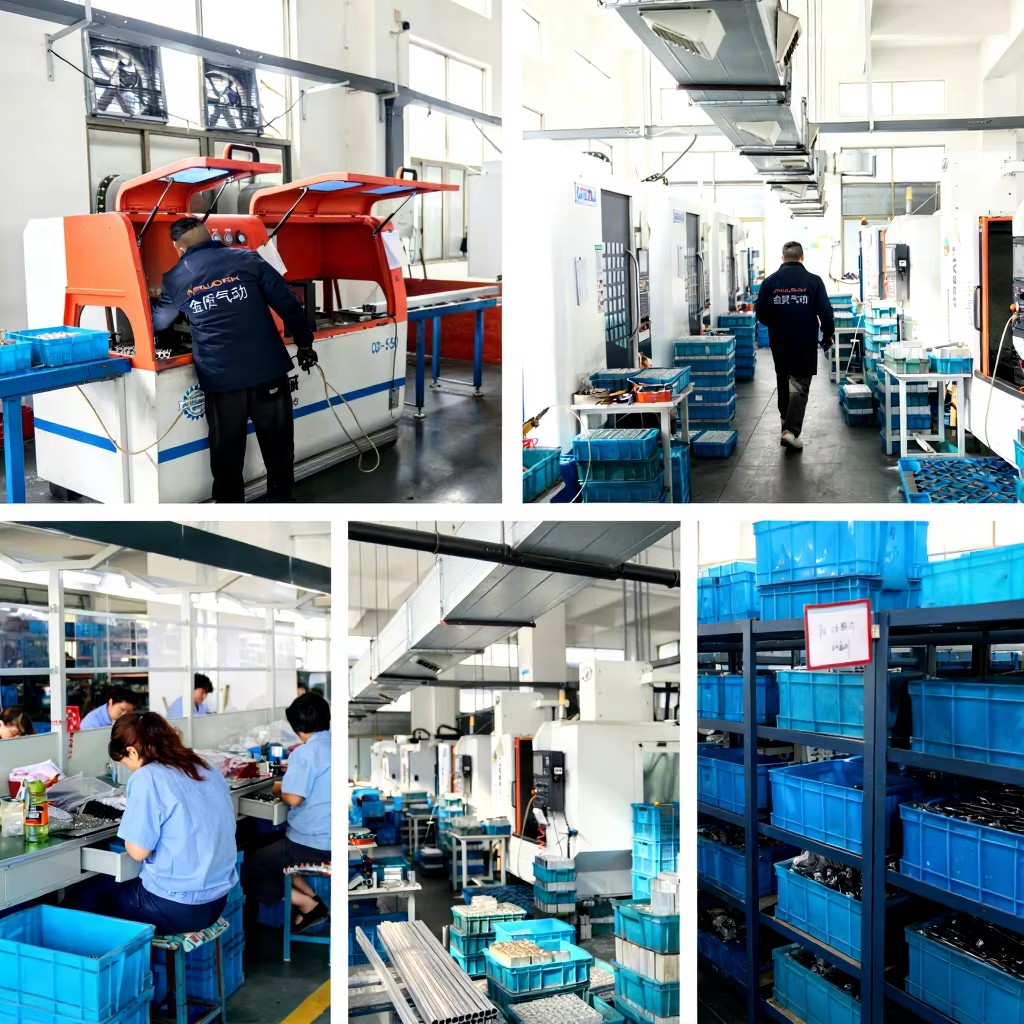
The OFR is built on the same body family as the rest of the air preparation range, so the ports, the panel thread and the bowl thread are common across MINI, MIDI and MAXI. Bodies are machined at the ports and at the bowl thread, the assembly is set and checked on air before packing, and each carton carries a batch number so a complaint about a leaking bowl or a drifting setting can be traced to a run.
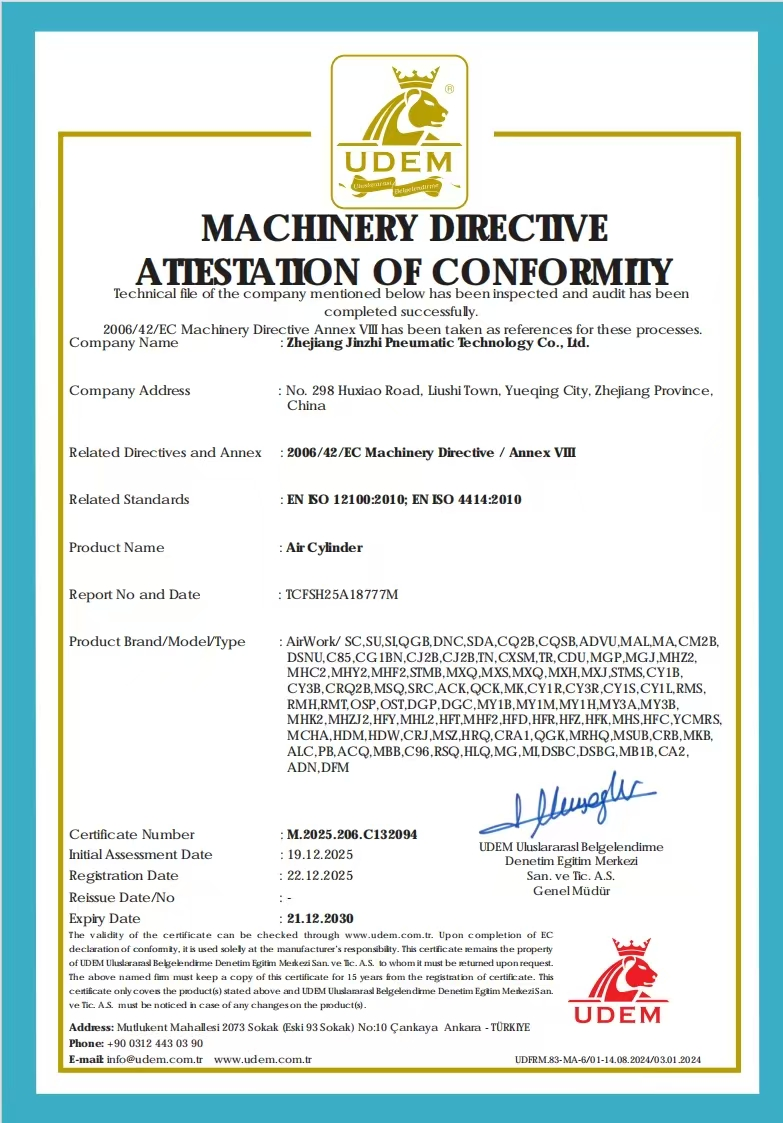
Certification