EN


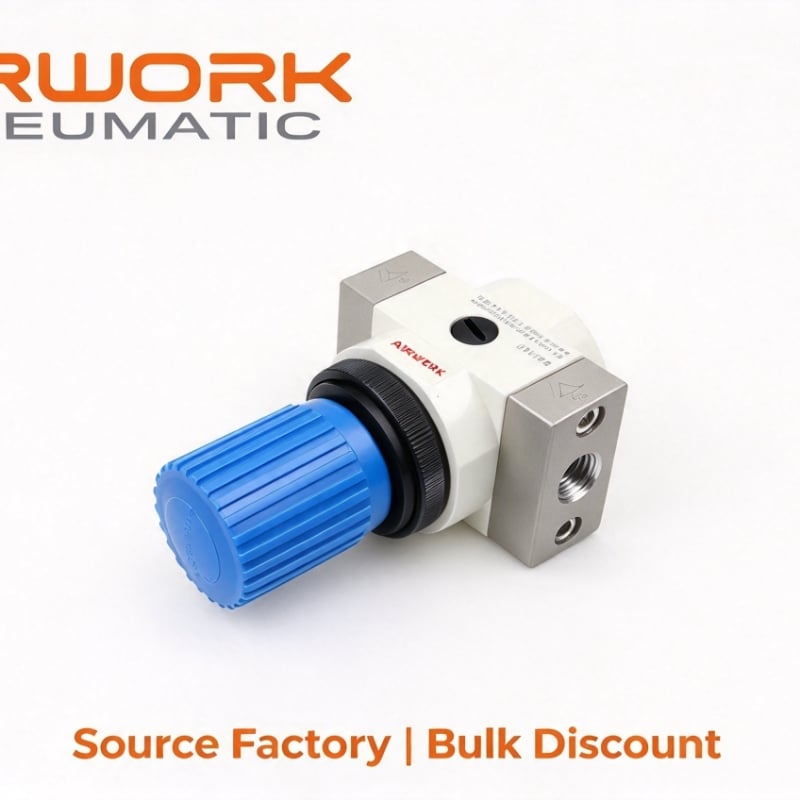
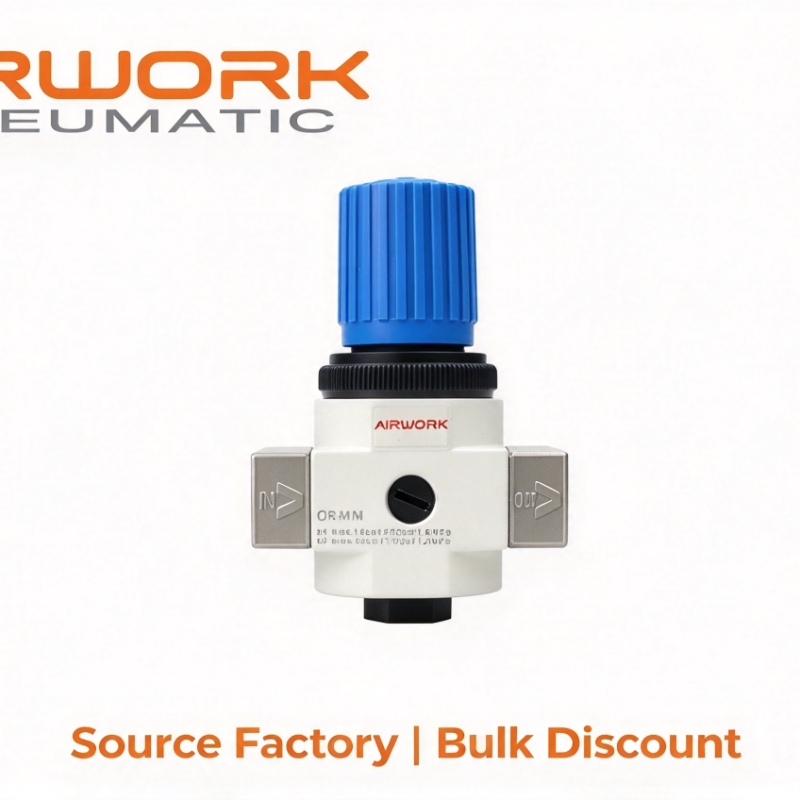
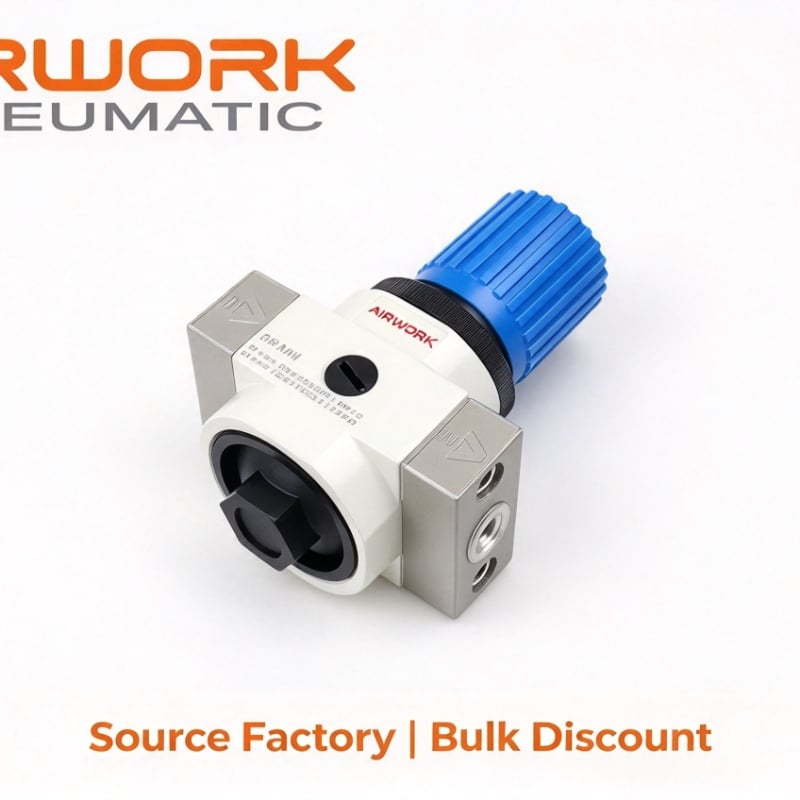
OR Series Air Pressure Regulator Pneumatic Reducing Valve 1/8 To 1 Inch G Thread 0.5 To 12 Bar Diaphragm Piston MINI MIDI MAXI
The OR series is a compressed air pressure regulator that holds a set downstream pressure while the line pressure and the air consumption move around it. Three body sizes cover ports from G1/8 to G1 inch, with a working range of 0.5 to 12 bar on the standard version and 0.5 to 7 bar on the low range version, fed from a primary pressure of 1 to 16 bar. MINI and MIDI use a diaphragm, MAXI uses a piston, and every size takes a panel, bracket or pipe mounting in any position.
- Overview
- Recommended Products
Product Detailed Description:
The OR is a pressure reducing regulator, not a filter. Air enters at the primary pressure, passes a seat that is held open by a spring against a diaphragm or a piston, and leaves at the pressure set on the knob. When the downstream pressure rises above the setting, the sensing element pushes the seat closed; when it falls, the spring opens it again. The result is a downstream pressure that stays close to the setting even as the compressor cycles between cut in and cut out and as tools are picked up and put down.
The size range is built around two structures rather than one. MINI and MIDI are diaphragm regulators, where a fabric reinforced diaphragm senses the outlet pressure and a light spring sets it, which gives fine adjustment at low flows and a fast response to small changes. MAXI is a piston regulator, where the sensing element is a piston with an O ring seal, which is the structure that survives high flow and pressure pulsation without the diaphragm taking the load. That is why the MAXI bodies carry the 1 inch port and the 11,500 L/min flow rather than a scaled up diaphragm.
Two working ranges are offered because the gauge and the spring go together. The standard body regulates 0.5 to 12 bar and is supplied with a 0 to 12 bar gauge where one is ordered; the -7 version regulates 0.5 to 7 bar with a 0 to 7 bar gauge, which gives a finer scale over the range most workshop lines actually use. Both are fed from a primary pressure of 1 to 16 bar, and both are rated 0 to 60 C. The body is zinc die-cast, the seals are NBR and the adjusting knob is POM.
Product Feature :
1.Holds outlet pressure, not just reduces it: the sensing element reacts to the downstream pressure, so the setting survives compressor cycling and changing air consumption instead of drifting with the line.
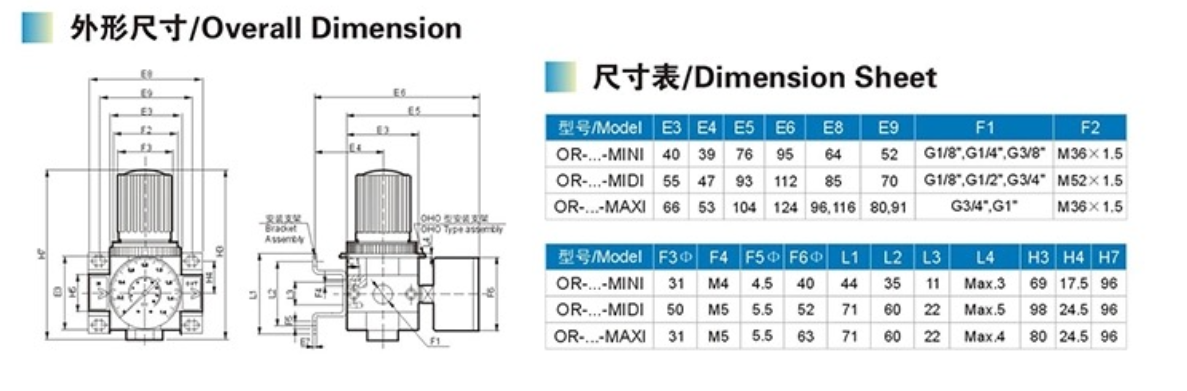
2.Three body sizes, eight port variants: MINI on G1/8, G1/4 and G3/8, MIDI on G3/8, G1/2 and G3/4, MAXI on G3/4 and G1, so the body is matched to the pipe rather than adapted to it.
3.Two pressure ranges: 0.5 to 12 bar standard and 0.5 to 7 bar on the -7 version, each with its own gauge scale, so a low pressure line is not set on the bottom tenth of a 12 bar dial.
4.Diaphragm where it is fine, piston where it is hard: MINI and MIDI regulate with a diaphragm for sensitive setting, MAXI with a piston for high flow and pulsation.
5.Flow from 800 to 11,500 L/min: the range runs from a single blow gun to a 1 inch main, with the flow figures published against each port size rather than one figure for the series.
6.Mounts three ways in any position: pipe mounting on the ports, a bracket on the body, or a panel fixing through the body thread, and the regulator does not care which way up it sits.
7.Gauge port ready: the body takes the matching gauge, 0 to 12 bar or 0 to 7 bar, and a blanking plug where no gauge is ordered, so a gauge can be added later without changing the regulator.
Application Industries:
1.General factory air - workshop ring mains, drop legs and tool stations
2.Packaging machinery - film tension, sealing heads and ejectors that need a steady pressure
3.Automotive repair and paint - spray gun pressure, blow off and lift pressure
4.Food and beverage - clean air supply to actuators and packaging lines
5.Electronics assembly - low pressure blow off and pick and place heads
6.Woodworking and furniture - clamping, edge banding and spray lines
7.Water treatment and chemical plant - instrument air and actuator supply
8.Machine building and OEM panels - regulators built into a machine's own air preparation
9.Textile, printing and paper - web tension and cylinder pressure on converting lines
Specification:
Item |
Detail |
Series |
OR air pressure regulator |
Function |
Pressure reducing regulator, relieving seat in the body |
Sizes |
MINI, MIDI, MAXI |
Port sizes |
MINI G1/8, G1/4, G3/8; MIDI G3/8, G1/2, G3/4; MAXI G3/4, G1 |
Working medium |
Compressed air |
Structure |
MINI and MIDI diaphragm type; MAXI piston type |
Primary pressure |
1 to 16 bar |
Working pressure |
0.5 to 12 bar (standard); 0.5 to 7 bar (-7 version) |
Nominal flow, standard |
800 / 1500 / 1700 / 3200 / 3500 / 3500 / 11000 / 11500 L/min by port |
Nominal flow, -7 version |
1000 / 1600 / 1800 / 3300 / 4000 / 4500 / 12000 / 12500 L/min by port |
Temperature range |
0 to 60 C |
Mounting |
Pipe, foot bracket or panel mounting |
Assembly position |
Any |
Body material |
Zinc die-casting |
Seal material |
NBR |
Adjusting knob |
POM |
Gauge, 0 to 12 bar |
OMA-40-16-1/8 for MINI; OMA-50-16-1/4 for MIDI and MAXI |
Gauge, 0 to 7 bar |
OMA-40-10-1/8 for MINI; OMA-50-10-1/4 for MIDI and MAXI |
MOQ |
10 pcs |
Customization Options:
Customization Item |
Options |
Body size |
MINI, MIDI, MAXI |
Port size |
G1/8 to G1, matched to the body |
Pressure range |
0.5 to 12 bar or 0.5 to 7 bar |
Gauge |
0 to 12 bar or 0 to 7 bar, or blanking plug |
Mounting |
Pipe, foot bracket, panel |
Bracket |
Panel nut and bracket to order |
OEM marking |
Nameplate and neutral packing to customer artwork |
Application:
1.Workshop drop leg on a ring main (general factory air): A ring main runs at compressor pressure, but a blow gun, a small press and an air motor on the same drop do not want the same pressure. The OR sits at the drop and holds the pressure the tools were set up for while the main swings between cut in and cut out. Because the regulation is against the downstream pressure rather than the upstream, a second tool being used upstream does not change what this drop delivers.
2.Spray gun pressure on a paint line (automotive refinish): A spray gun is set by the pressure at the cap, and a regulator that sags when a second gun is triggered puts more paint on the panel and less in the air. A MIDI body on a G1/2 drop holds the setting through the trigger cycle, and the 0 to 7 bar gauge scale puts the working point in the middle of the dial where it can be read and repeated shift to shift.
3.Machine mounted air preparation (OEM panel): On a machine built for export, the regulator is usually part of the machine's own air preparation and is mounted on the frame with a bracket rather than piped to the wall. The body can be fixed on a bracket or through a panel, sits in any position, and a MAXI piston body is used where the machine's own 1 inch manifold feeds several actuators at once.
Installation and Usage:
1.Put it after the filter and before the lubricator: air preparation runs filter, regulator, lubricator. A regulator fed with dirty air has its seat scored, and the setting then drifts instead of holding.
2.Set the pressure with the line flowing: adjust with the tool or the actuator running at its normal duty. A setting made with no flow reads high once air starts moving.
3.Turn down before you turn up on a new line: start from the knob backed off and raise the pressure to the working point, so the seat is not slammed open by a full 16 bar primary on the first turn.
4.Use the gauge port: fit the matching gauge, 0 to 12 or 0 to 7 bar, or keep the blanking plug. Reading the outlet on a gauge is the only way to know the setting has held.
5.Do not exceed the primary limit: 1 to 16 bar at the inlet. A regulator is not a step down safety device for an unregulated compressor line; put a safety valve downstream if the line can be isolated.
6.Mount it where the knob can be reached: panel and bracket mounting are there to put the knob at the front of the machine. A regulator adjusted once and buried behind a guard will not be adjusted again.
7.Expect it to vent when you turn it down: the body has a relieving seat, so lowering the setting releases downstream pressure rather than trapping it. That is normal and it is why the downstream side drops to the new setting quickly.
FAQ:
Q1. Is this a filter regulator or a regulator only?
A1. It is a pressure regulator. It holds and reduces the downstream pressure; it does not filter. In an air preparation group it sits after the filter and before the lubricator, and the filtration is done by a separate filter unit.
Q2. What is the difference between the diaphragm and the piston versions?
A2. MINI and MIDI use a diaphragm to sense the outlet pressure, which gives a fine, sensitive setting at low and medium flow. MAXI uses a piston, which is the structure that holds up under high flow and pressure pulsation at the 3/4 and 1 inch sizes.
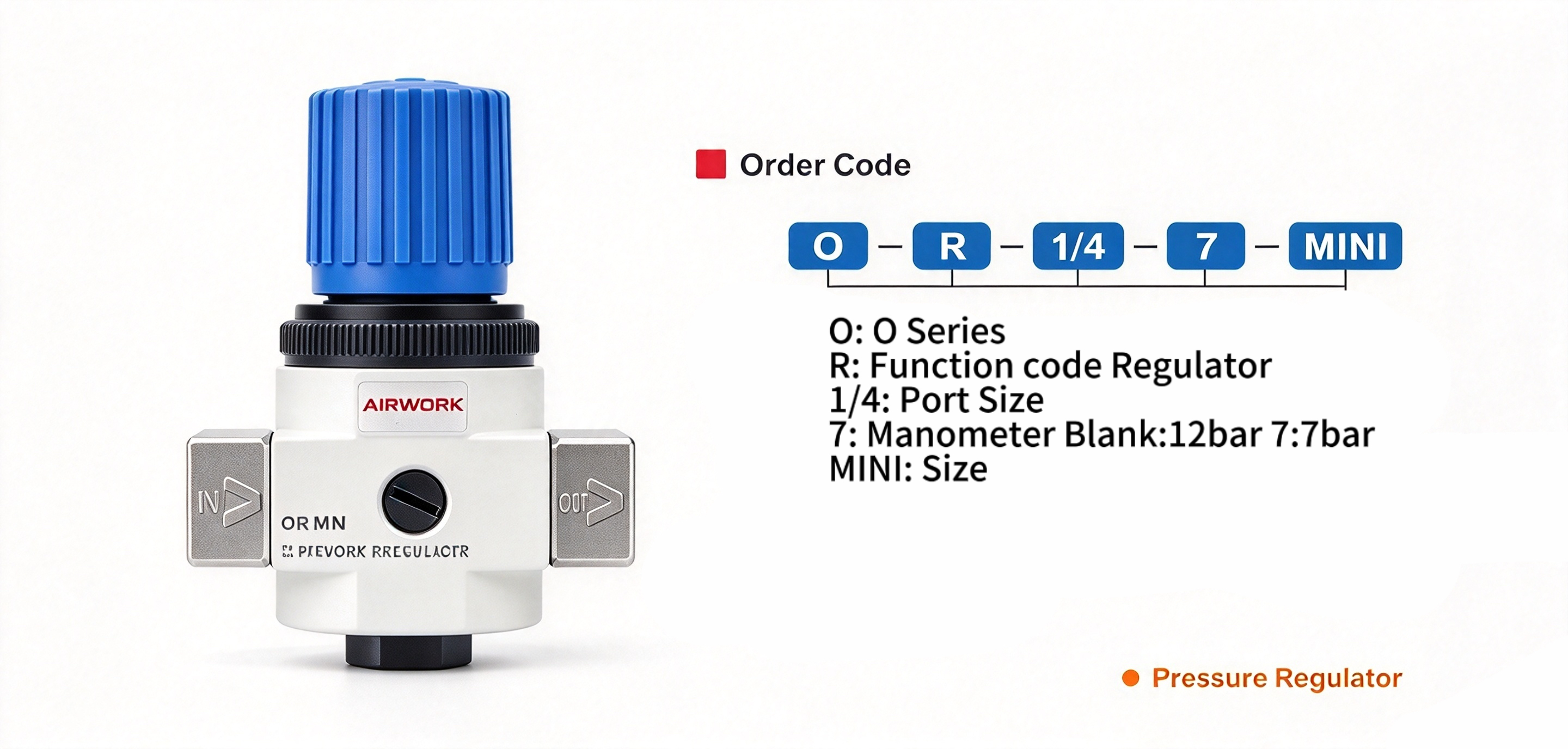
Q3. How do I read the ordering code?
A3. O is the series, R is the basic regulator function, the next block is the port size, then the gauge code and finally the body size. The gauge block is blank for the 0.5 to 12 bar range and 7 for the 0.5 to 7 bar range, so OR-1/2-7-MIDI is a MIDI body, G1/2 port, 7 bar range.
Q4. Which range should I take, 12 bar or 7 bar?
A4. Take the 7 bar version if the working pressure sits below 7 bar, which is most workshop and machine lines. The scale is then spread over the range in use, so the setting can be read and repeated. Take the 12 bar version where the line genuinely runs above 7 bar.
Q5. Does it relieve downstream pressure?
A5. Yes. The body carries a relieving seat, so turning the setting down vents the downstream side to the new pressure instead of leaving it trapped. It is not a safety valve and should not be used as one.
Q6. Can it be mounted in any position?
A6. Yes, any position is allowed, and the body can be pipe mounted, bracket mounted or fitted through a panel. Mount so the adjusting knob stays accessible, because a regulator that cannot be reached will not be readjusted when the process changes.
Q7. How do I choose the size from the flow figures?
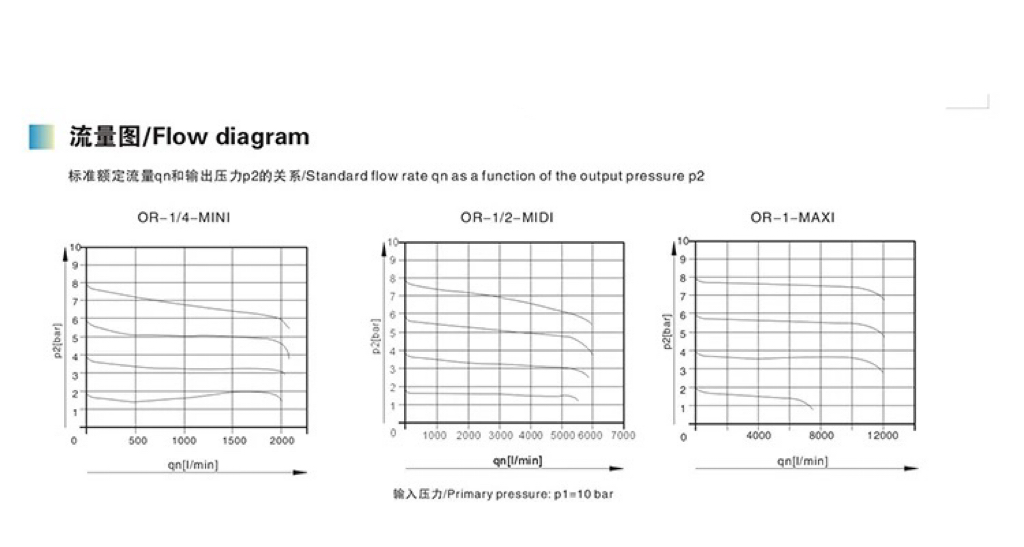
A7. Use the nominal flow for the port against the air you actually consume, then check the flow diagram at your primary pressure. The published curves are drawn at 10 bar primary; at a lower primary the same body delivers less, so leave margin rather than sizing at the nominal figure.
Q8. Can I add a gauge later?
A8. Yes. The gauge port takes the matching gauge, OMA-40 for MINI and OMA-50 for MIDI and MAXI, in 0 to 12 bar or 0 to 7 bar. Where no gauge is ordered the port is closed with a blanking plug.
Q9. What is the MOQ and can it be marked for our brand?
A9. MOQ is 10 pcs. Nameplates and neutral packing can be produced to your artwork, and mixed orders across the three body sizes and both pressure ranges are quoted as one line.
Factory Advantages and Certifications:
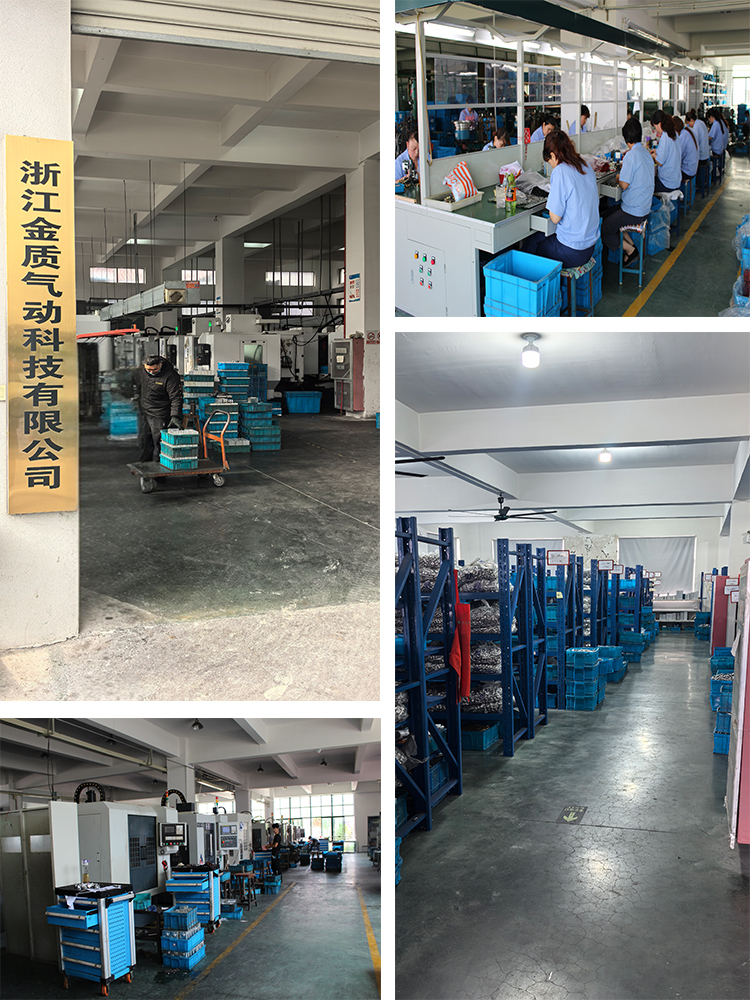
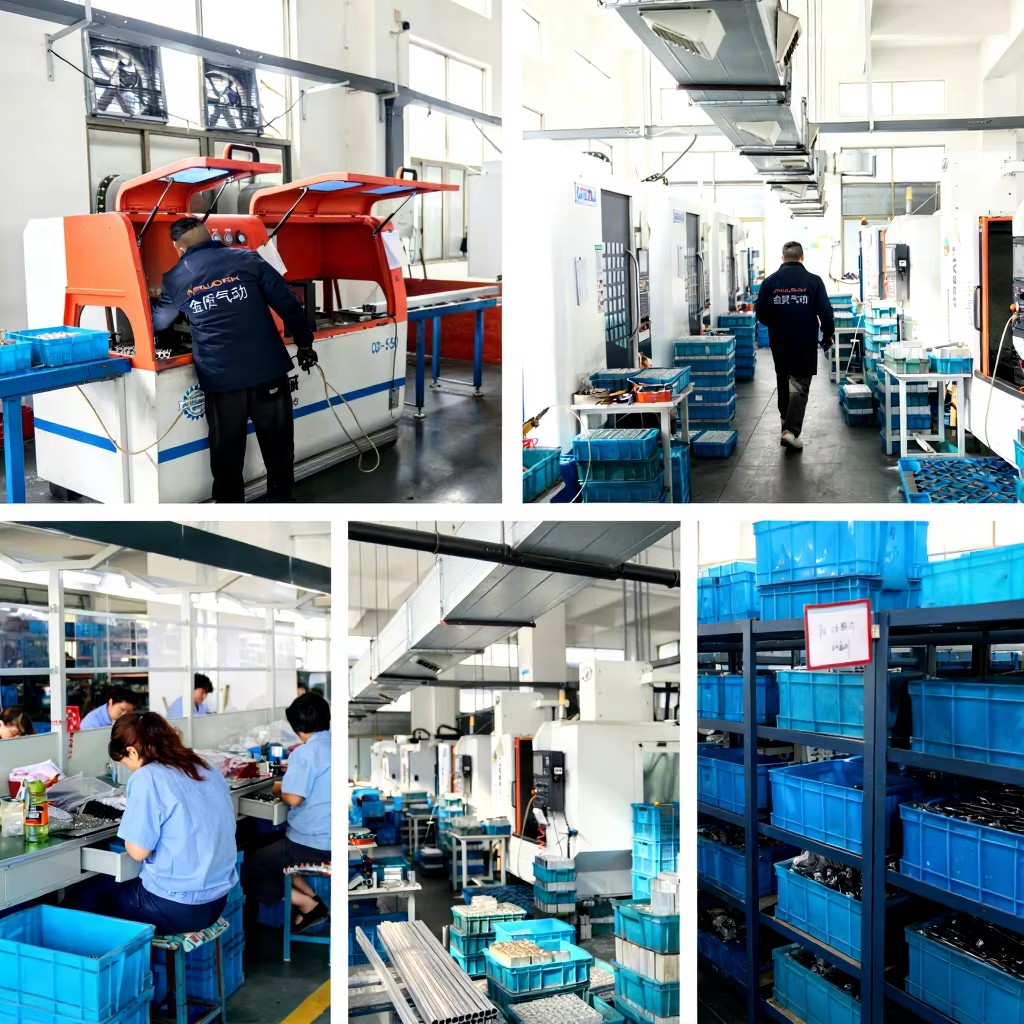
The OR is built as three body sizes on one design rather than as three separate products, which is what keeps the seat, the diaphragm and the knob consistent across the range, and what lets a distributor stock one spare set of seals for MINI, MIDI and MAXI. Bodies are zinc die-cast and machined at the ports and at the panel thread, and the assembly is set and checked on air before packing. Each carton carries a batch number so a complaint about a drifting setting can be traced to a run rather than to a guess.
Certification