EN
EN


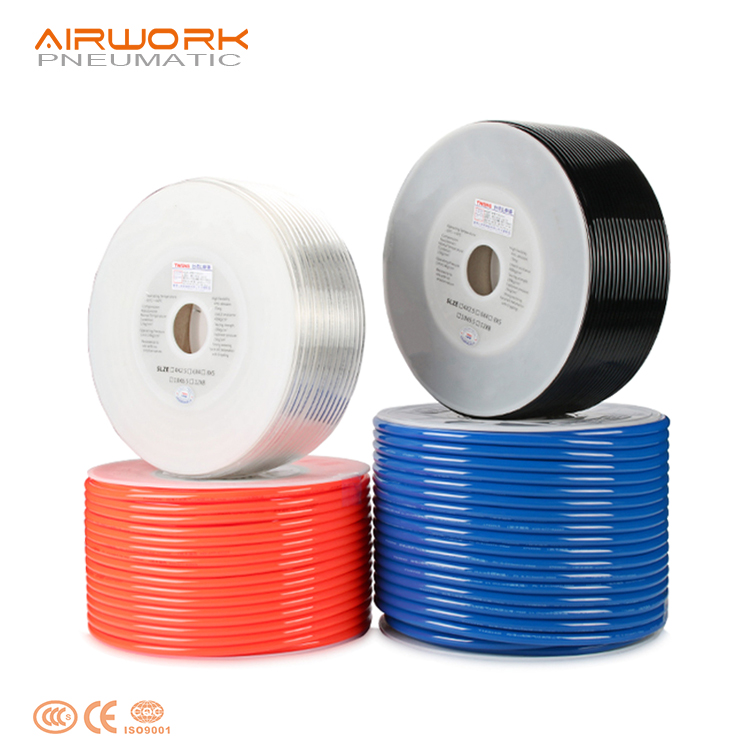
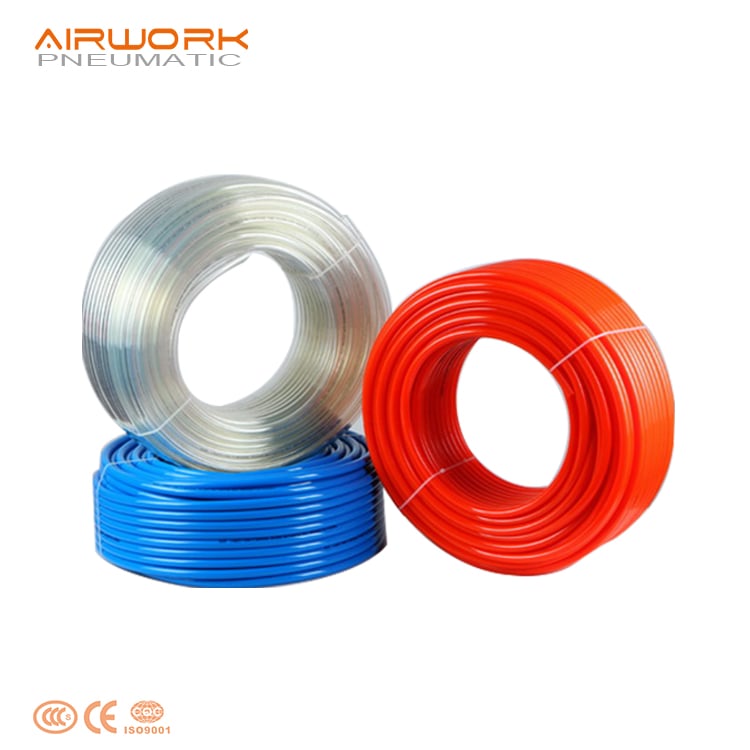
OEM Factory Direct PU Tube Polyurethane Pneumatic Hose Manufacturer Flexible Air Tubing Pipe Compatible With SMC Festo Airtac Fitting
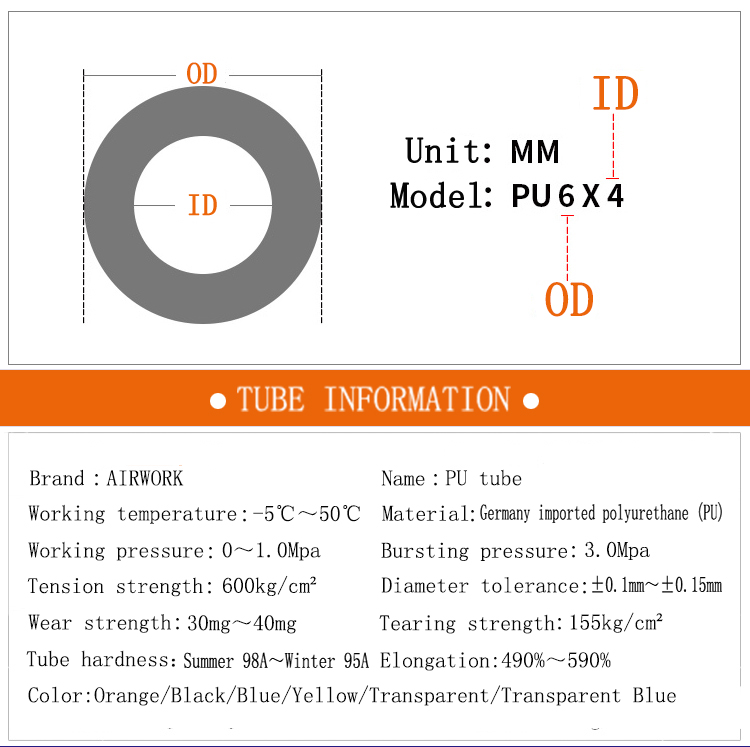
PU tube pneumatic hose is suitable for compressed air, ordinary industrial water, non-corrosive oil. In order to maintain long service life, it must be used under rated working pressure and ambient temperature. As the temperature rises, the working pressure should be reduced accordingly. If it exceeds the limit, the hose may rupture. High temperature of fluid or corrosive chemical cost of fluid may lead to hose rupture, high temperature of working environment or chemical gas in working space, which may lead to hose cracking, storage in wet place or long shelf life, which may cause hose hydrolysis or aging, and may lead to fracture phenomenon.
- Overview
- Recommended Products
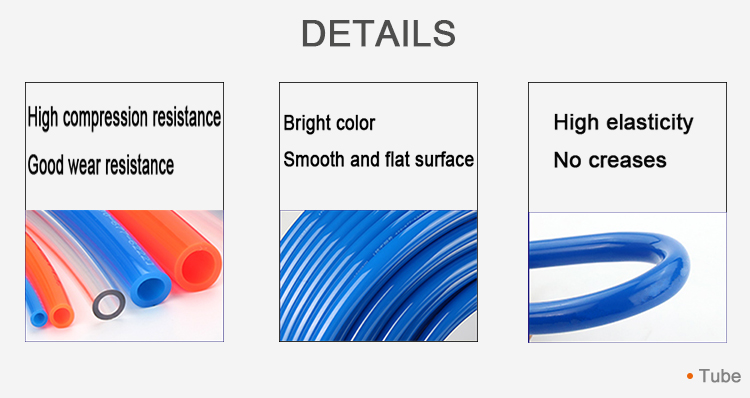
- Superior flexibility — tight bend radius without kinking. PU tube can be bent to radii as tight as 2–3× the tube OD without collapsing or restricting flow. This allows clean, compact routing in dense machine enclosures where nylon or polyethylene tubing would kink or require larger bend radii.
- Excellent abrasion resistance. Polyurethane has inherently high wear resistance — approximately 3–5× better than nylon and 10× better than polyethylene. In dynamic applications where tubing rubs against machine frames, cable carriers, or other tubing, PU significantly outlasts alternative materials.
- Lightweight — minimal stress on fittings and connections. At roughly half the weight of equivalent nylon tubing, PU tube imposes less mechanical load on push-in fitting collets and pneumatic ports. This reduces the risk of fitting fatigue, leakage, and port thread damage over time.
- Kink-resistant memory. PU tube resists permanent deformation. Even after being tightly coiled, bent, or pinched during installation, it returns to its original shape. This self-recovery property simplifies installation in tight spaces and reduces waste from kinked tubing being scrapped.
- Color-coded identification. Eight standard colors enable quick circuit identification. Assign colors by function — blue for extend, red for retract, yellow for control signals, black for main supply — and troubleshooting time drops significantly. This is standard practice in complex multi-cylinder automation systems.
- Wide temperature range. Operates reliably from -20°C to 60°C, covering factory floor environments from cold storage to hot production areas. For higher-temperature applications, consult nylon or FEP tubing alternatives.
- Compatible with all standard push-in fittings. Precision-controlled OD tolerances ensure a consistent, leak-free grip in push-in fittings from all major brands — SMC, Festo, Airtac, Parker, Norgren, and others. No brand-specific tubing required.
- General pneumatic piping — connects valves, cylinders, and FRL units in every automated machine
- Control cabinet internal wiring — flexible, color-coded routing in tight spaces
- Robot end-effectors — lightweight and flexible, no drag on arm movement
- Pick-and-place and dynamic applications — kink-resistant through millions of flex cycles
- Vacuum pickup systems — elastic wall resists collapse under negative pressure
- Laboratory and test benches — transparent tube for visual flow and contamination inspection
- Workshop air tool supply — durable outer surface withstands floor drag and abrasion
- Outdoor low-temperature equipment — stays flexible to -20°C
- Food packaging lines — available in FDA-compliant materials for indirect food contact
- Multi-color circuit identification — blue for supply, red for safety, green for vacuum
- Cutting: Use a dedicated tube cutter or sharp utility knife for clean, square cuts. Do not use scissors or diagonal cutters — they pinch the tube, creating an oval cross-section that will leak in push-in fittings. The cut end must be perpendicular to the tube axis within ±5°.
- Push-in fitting connection: Push the tube firmly into the fitting until it bottoms out against the internal stop. Pull back gently to verify the collet has gripped. For removal, press the release collar fully inward while pulling the tube out. Never pull the tube out without depressing the release collar — this damages the collet and tube surface.
- Bend radius: Minimum bend radius is approximately 3× tube OD for dynamic applications and 2× for static routing. Sharper bends cause flow restriction, oval deformation, and potential kinking. Use elbow fittings at tight corners rather than forcing the tube to bend beyond its minimum radius.
- Routing: Secure tubing every 300–500 mm with cable ties or tube clamps to prevent sagging, vibration-induced fatigue, and snagging. In cable carriers, allow the tube to move freely without tension — do not clamp both ends rigidly in dynamic applications. Route tubing away from sharp edges, hot surfaces ( 60°C), welding spatter, and chemical splash zones.
- Color coding: Establish and document a color standard for your facility. Label both ends of each tube with the circuit function where multiple identical colors are used. This pays for itself the first time you need to trace a circuit during troubleshooting.
- Storage: Store tubing in original packaging, away from direct sunlight and UV sources. PU tube exposed to prolonged UV radiation will discolor and become brittle. Use UV-stabilized black tube for outdoor or sunlight-exposed installations.
- Pressure testing: After installation, pressurize the system to 1.5× normal operating pressure and check all connections with soap solution. Repair any leaks before placing the system into production service.
Product Detailed Description:
PU (polyurethane) pneumatic tubing is a flexible, lightweight, and durable air hose engineered for compressed air delivery in pneumatic systems. Manufactured from high-grade polyether-based polyurethane resin, it offers an ideal balance of flexibility, kink resistance, and pressure-holding capability for general industrial automation, robotics, and pneumatic tool applications.
The tubing features a smooth internal bore that minimizes flow restriction and pressure drop, while the precisely controlled outer diameter ensures a leak-free seal with standard push-in fittings. Available in metric sizes from 4 mm to 16 mm OD and inch sizes from 5/32" to 1/2", the PU tube covers the full range of pneumatic piping requirements from miniature instrument circuits to main air supply lines.
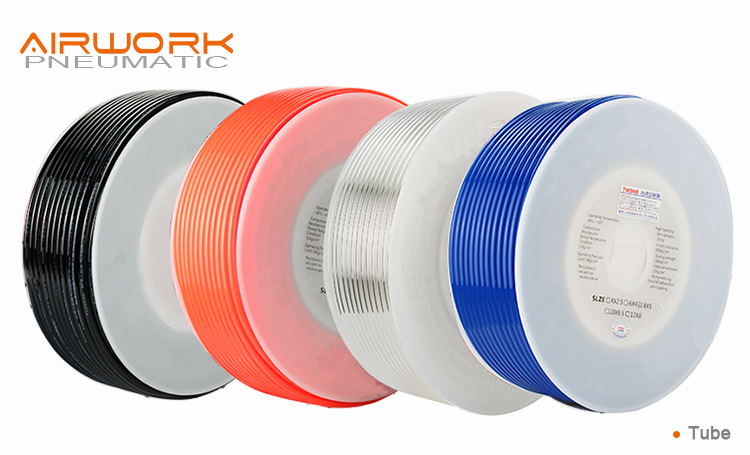
Multiple standard colors — black, blue, clear, red, green, yellow, white, and orange — enable color-coded circuit identification for easier installation, troubleshooting, and maintenance. The tubing is supplied in continuous lengths on spools (typically 20 m, 50 m, or 100 m) or can be cut to specified lengths.
PU tube operates reliably from -20°C to 60°C with a working pressure of up to 1.0 MPa at 20°C. Its polyurethane construction provides excellent resistance to abrasion, oil, and flex fatigue — making it the tubing of choice for moving applications such as robotic arms, reciprocating carriages, and dynamic cable carriers.
Application Industries:
PU tube is the standard pneumatic piping medium across all industries using compressed air. In general automation and assembly lines, it connects FRL units to valve manifolds, cylinders, and actuators. Packaging machinery uses PU tube for tight-radius routing around carton folders, sealers, and labelers. Machine tools and CNC equipment rely on it for coolant-resistant, flexible connections to pneumatic chucks, tool changers, and door cylinders.
In robotics and end-of-arm tooling, PU tube's flexibility and light weight make it the preferred choice for dynamic applications where tubing moves continuously with the robot arm. Textile machinery employs PU tube in high-vibration loom and sewing applications where rigid tubing would fatigue and crack. Food and beverage processing uses food-grade PU tube for air supply to filling and capping stations.
Electronics and semiconductor assembly uses micro-bore PU tube (4 mm and smaller) for precision pneumatic circuits in pick-and-place heads and test fixtures. Automotive manufacturing relies on color-coded PU tube for complex multi-circuit pneumatic systems where quick fault identification is essential. Medical device and laboratory automation, printing machinery, and woodworking equipment all depend on PU tube for reliable, flexible air delivery.
Product Feature:
1. Transparent tube has high transparency and the flow state of medium is clearly visible.
2. Made of high resilient polyurethane raw materials, which makes the pneumatic tube have smaller bending radius and easier to install.
3. The yellowing resistance is above grade 3, which is not easy to yellowing.
4. The colour tube is made of imported weather-resistant colour powder. The colour tube is standard, bright and durable.
5. Using online diameter control system, the diameter tolerance is controlled within +0.12mm.
6. Made of 100% high physical plasticity polyurethane elastomer (TPU), it can be used under constant working pressure and has longer service life.
7. Pass SGS certification and ROHS certification.
Specification:
Model Number |
APU |
|||||||||
Material |
PU |
|||||||||
Length |
100m |
|||||||||
Thickness |
1mm-4mm |
|||||||||
Standard |
ROHS |
|||||||||
Port size |
4,6,8,10,12,14,16 |
|||||||||
Thread type |
M5, 1/8, 1/4, 3/8, 1/2, 3/4 |
|||||||||
Working Medium |
Air,Water,Noncorrosive Oil |
|||||||||
Certificate |
CE/ISO9001 |
|||||||||
Working Temperature |
-20~60°C |
|||||||||
Working Pressure |
0~0.9MPa |
|||||||||
Color |
Red /Black /Transparent/Blue |
|||||||||
|
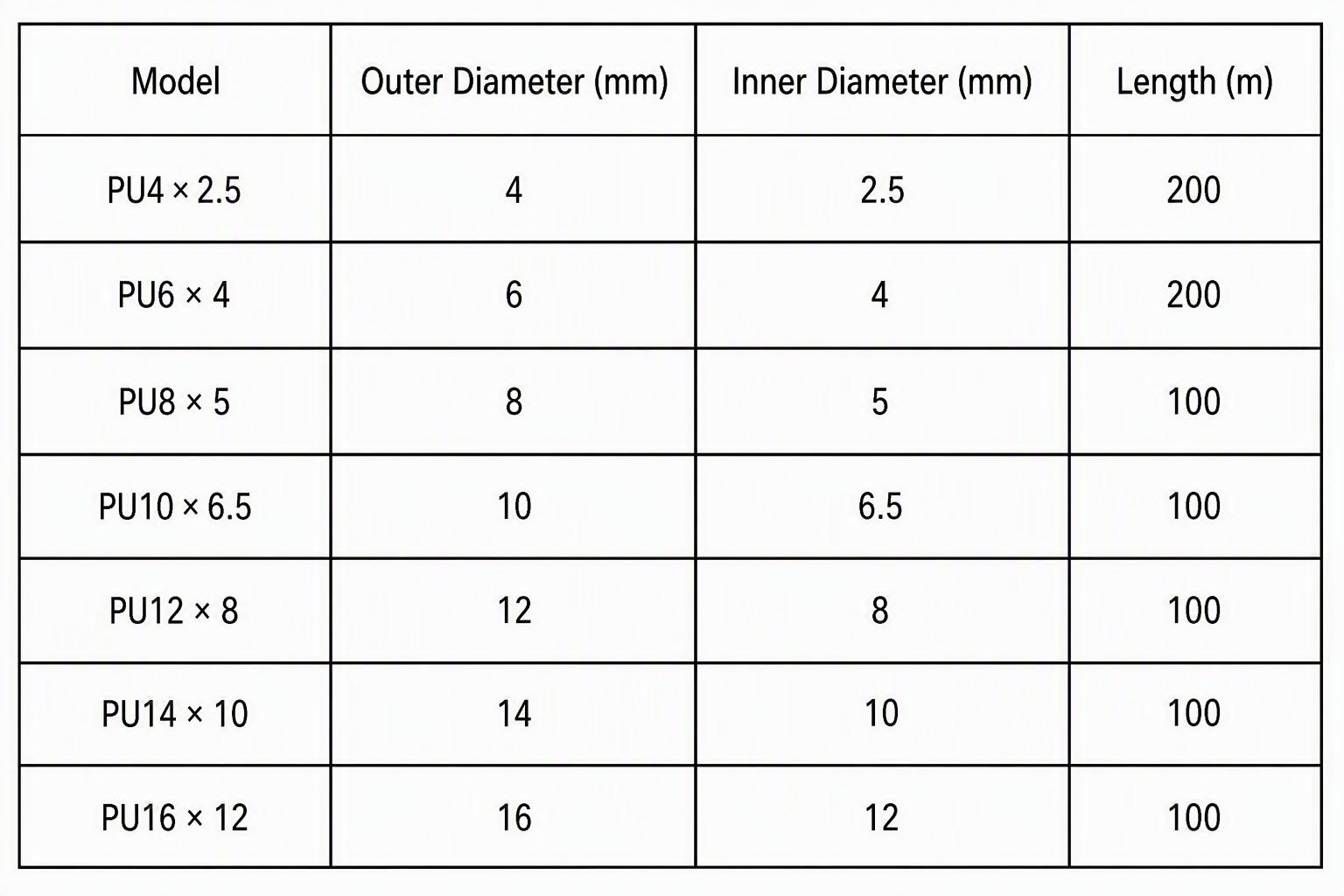
Model |
APU 4X2.5 |
APU 6X4 |
APU 8X5 |
APU 10X6.5 |
APU 12X8 |
APU 10X8 |
APU 8X6 |
APU 12X10 |
APU 14X10 |
APU 16X13 |
Max. Working Pressure |
0~12 |
0~10 |
0~8 |
|||||||
Tube O.D. |
4 |
6 |
8 |
10 |
12 |
10 |
8 |
12 |
14 |
16 |
Tube I.D. |
2.5 |
4 |
5 |
6.5 |
8 |
8 |
6 |
10 |
10 |
13 |
Standard Length(m) |
200 |
200 |
100 |
100 |
100 |
100 |
100 |
100 |
50 |
50 |
Min.Bending Radius |
10 |
15 |
20 |
37 |
37 |
35 |
20 |
37 |
56 |
60 |
Broken Pressure(kg/cm2) |
30 |
35 |
40 |
30 |
30 |
24 |
24 |
24 |
20 |
18 |
Rated flow |
90~500L/Min |
|||||||||
Tube Diameter |
Ф4 Ф6 Ф8 Ф10 Ф12 |
|||||||||
MOQ |
10 |
|||||||||
Lead Time |
5-7 Days |
|||||||||
Warranty |
1 year |
|||||||||
Pattern of Payment |
Paypal ;T/T;L/C;D/P |
|||||||||
Customization Options
Customization Item |
Options & Details |
Lead Time |
OD Size |
Metric: 4, 6, 8, 10, 12, 16 mm. Inch: 5/32", 1/4", 5/16”,3/8", 1/2",1/8”,3/16”, 5/8”. Custom sizes available |
3–5 days |
Color |
Black, blue, clear (transparent), red, green, yellow, white, orange. Custom color matching on bulk orders |
3–5 days |
Roll Length |
Standard: 20 m, 50 m, 100 m rolls. Custom: cut-to-length pieces, pre-coiled bundles |
3–5 days |
Wall Thickness |
Standard wall for general pneumatic use. Thin-wall option for reduced weight; thick-wall for higher pressure |
5–7 days |
Material Grade |
Standard: polyether-based PU. Options: polyester-based PU (enhanced oil resistance), food-grade PU (FDA compliant), anti-static PU (conductive, for electronics) |
7–10 days |
Hardness |
Standard: Shore A 85–95. Options: softer (Shore A 70–80, extra flexible) or harder (Shore D 55–60, higher pressure) |
7–10 days |
UV-Resistant |
UV-stabilized black PU for outdoor and sunlight-exposed installations |
5–7 days |
Flame-Retardant |
UL94 V-2 rated PU for applications requiring fire resistance compliance |
10–15 days |
Twin / Multi-Bore |
Two or more tubes bonded together in parallel for tidy multi-circuit routing |
7–10 days |
Printed Marking |
Meter marking, part number, pressure rating, or custom text printed continuously along the tube exterior |
5–7 days |
Packaging |
Standard spool. Options: zip-tied coils, boxed lengths, custom-labeled packaging |
3–5 days |
Product Advantages
Application:
Installation and Usage:
FAQ
Q1.PU tube vs. nylon tube — which should I choose?
A1.PU: superior flexibility, tighter bend radius, better abrasion resistance, lighter weight. Best for dynamic applications, robotics, and tight routing. Nylon: higher pressure rating, higher temperature resistance (up to 80°C), better chemical resistance. Best for high-pressure circuits, hot environments, and chemical exposure. For most general pneumatic applications, PU is the recommended choice.
Q2. What OD size do I need for my application?
A2. Match the OD to your push-in fitting size. For cylinder connections, use the fitting size at the cylinder port. For supply lines, use the fitting size at the FRL or manifold outlet. For lines longer than 2 m, step up one OD size to reduce pressure drop.
Q3. Standard wall vs. thin wall vs. thick wall — what is the difference?
A3. Standard wall: best all-around balance of flexibility and pressure rating. Thin wall: lighter, more flexible, lower cost — but reduced pressure rating. Use for low-pressure pilot signals and sensor tubing. Thick wall: higher burst pressure, better kink resistance — but stiffer and heavier. Use for main supply lines and high-pressure circuits.
Q4. How do I choose tube color for my system?
A4. Assign colors by function for fastest troubleshooting. Common standard: blue = extend, red/ orange = retract, yellow = control/pilot, black = main supply, clear = visual monitoring. Document your color code and apply it consistently across all machines in your facility.
Q5. How long does PU tube last?
A5.In a clean indoor environment with proper installation, PU tube typically lasts 5–10 years. Replace sooner if: tube is discolored (yellowed or browned — UV or chemical degradation), surface is cracked or crazed, tube feels stiff or brittle instead of flexible, or repeated leaks occur at fitting connections despite replacing fittings.
Q6. PU tube is yellowing or becoming brittle — why?
A6. UV exposure, ozone exposure, or chemical attack from incompatible compressor oil or environmental contaminants. Replace affected tubing. For outdoor installations, use UV-stabilized black PU. For chemical exposure, verify compatibility or switch to nylon.
Q7. How should I store unused PU tube?
A7.Keep in original packaging, away from direct sunlight and UV sources. Store in a cool, dry environment. Avoid stacking heavy objects on tube spools. PU tube exposed to prolonged UV or heat in storage may be compromised before use — inspect before installation.
Q8. Is AIRWORK PU tube compatible with all push-in fitting brands?
A8. Yes. Our PU tube OD tolerances meet international standards and are compatible with SMC, Festo, Airtac, Parker, Norgren, PISCO, Legris, and all other major push-in fitting brands. Brand-specific tubing is not required — a correctly sized PU tube from any quality manufacturer will seal reliably.
Q9.What warranty or quality guarantee?
A9.We guarantee dimensional accuracy (OD and wall thickness within specified tolerance), material quality (free from defects), and consistent performance. Free replacement for any manufacturing defect. Samples available for evaluation before bulk purchase. Standard spool lengths: 20 m, 50 m, 100 m. Custom lengths and cut pieces available.
Factory Advantages and Certifications
Company Introduction 1
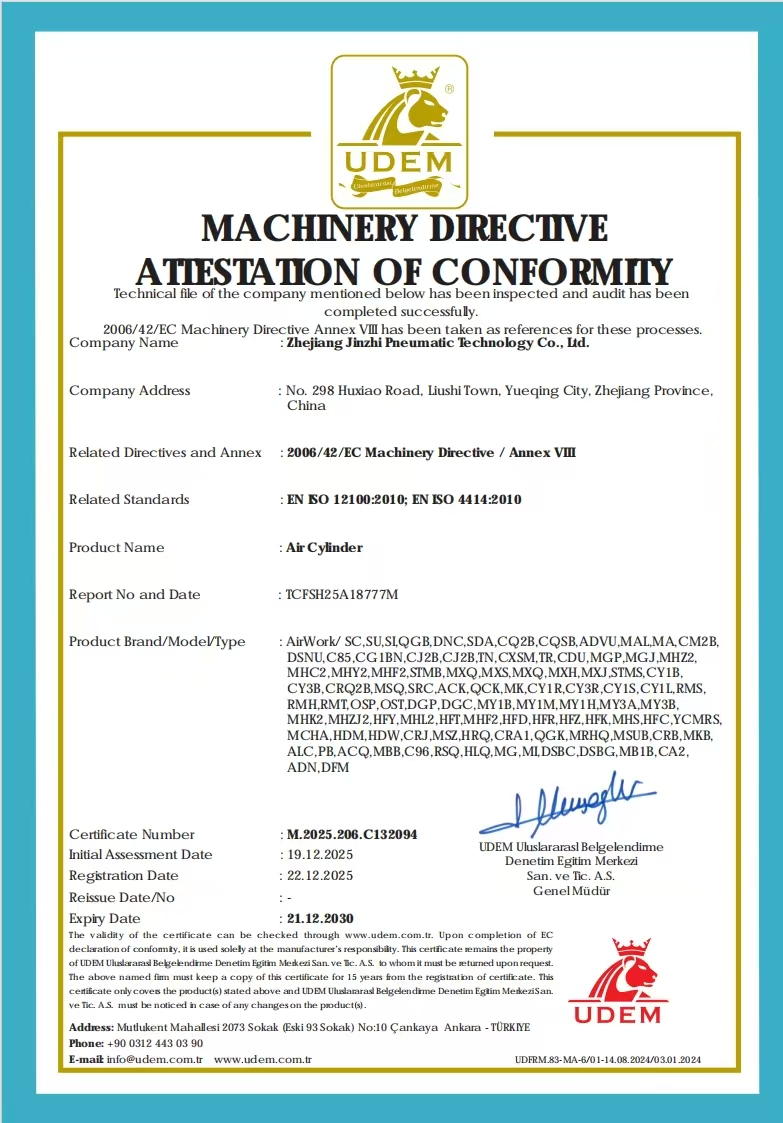
Certification