 EN
EN

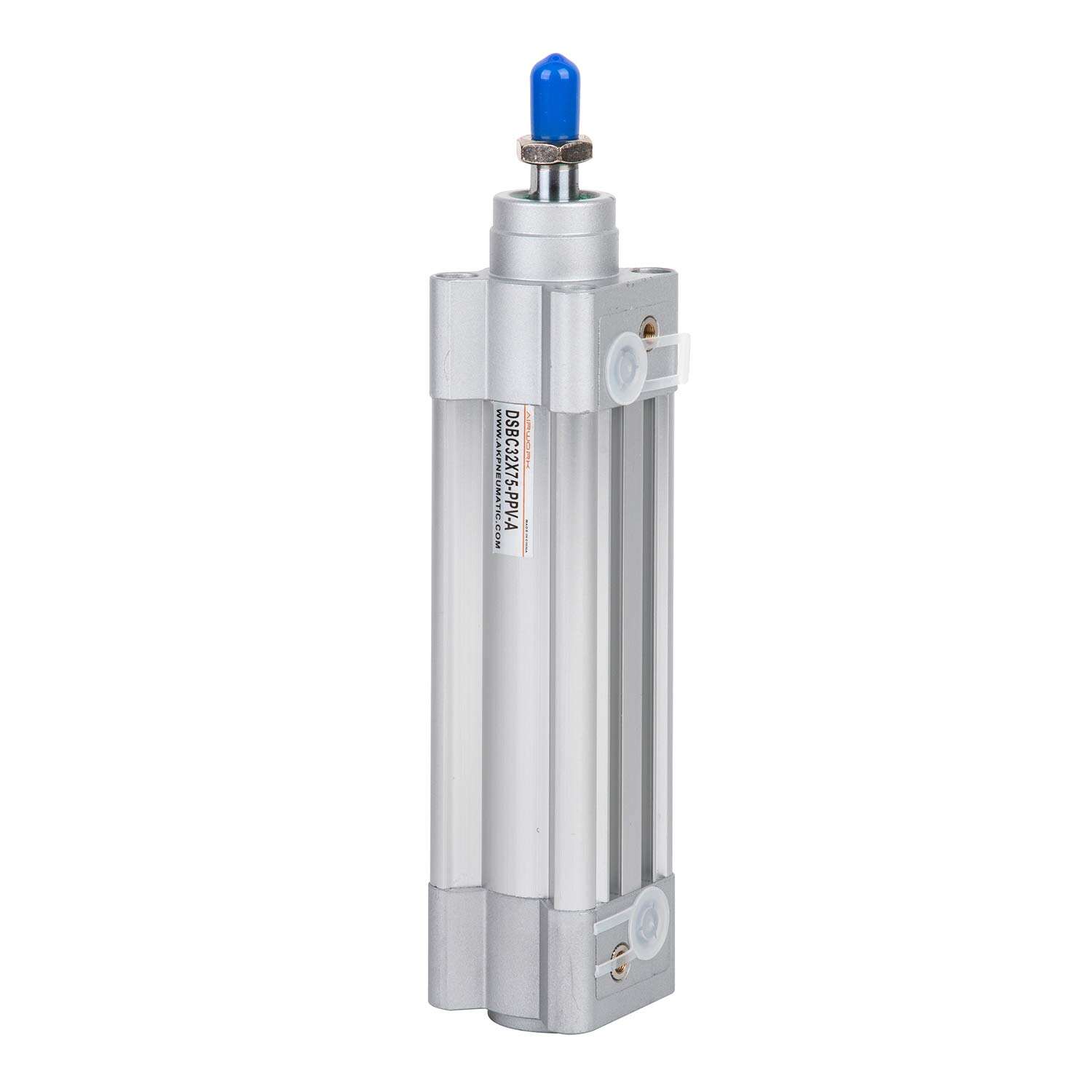
Question: The impact of 'Air Cushioning' adjustment on the mechanical lifespan of SC series cylinders?
Answer: Properly adjusting the air cushioning on SC series tie-rod pneumatic cylinders has a direct, positive impact on their mechanical lifespan, often extending their operational cycles by three to five times. Air cushioning works by trapping a specific volume of exhausting air at the end of the cylinder's stroke, creating a pneumatic brake that decelerates the piston before it strikes the metal end cap. If the air cushioning is poorly adjusted or completely open, the piston will crash into the end caps at high velocity, generating massive shock forces. These repeated high-impact collisions lead to metal fatigue, cracked end caps, damaged piston rod threads, and premature seal destruction. Correctly tuning the cushion needle screws eliminates metal-on-metal impacts and absorbs kinetic energy smoothly.
Introduction: The Challenge of High-Velocity Piston Impacts
In B2B industrial automation, SC series cylinders are highly favored for their robust, classical tie-rod design and versatile mounting options. These cylinders are frequently used in heavy-duty applications where they must push, pull, or lift significant payloads at high speeds. However, with speed and mass comes kinetic energy. When a heavy piston travels at high velocity, it gains kinetic energy that must be safely dissipated at the end of every stroke.
Without an effective deceleration mechanism, this kinetic energy is converted into a destructive shockwave when the piston slams into the aluminum front or rear end cap. Over time, these violent impacts will destroy even the most ruggedly built cylinder. AIRWORK, a leading manufacturer of top-tier pneumatic components, integrates high-precision adjustable air cushioning into our SC series cylinders to protect both the cylinder and the surrounding automation machinery from shock-induced wear.
The Physics of Kinetic Energy in Pneumatic Cylinders
To understand the vital importance of air cushioning, we must look at the mathematical formula for kinetic energy (Ek):
Kinetic Energy = 0.5 x m x (v squared)
Where:
- m is the total moving mass (including the piston, piston rod, and the external payload) in kilograms (kg).
- v is the velocity of the piston in meters per second (m/s).
Because velocity is squared in this equation, any increase in speed has a exponential impact on the kinetic energy. For example, doubling the piston speed from 0.5 m/s to 1.0 m/s quadruples the kinetic energy that must be absorbed at the end of the stroke.
If the cylinder has a bore size of 100mm and is moving a 20kg payload at 0.8 m/s, the kinetic energy is:
- Kinetic Energy = 0.5 x 20 kg x (0.8 x 0.8) = 6.4 Joules.
While 6.4 Joules might seem small, when concentrated onto the narrow mating surfaces of the piston and the end cap over millions of cycles, it represents a massive amount of cumulative stress. Without proper air cushioning, this energy will rapidly fatigue the metal and shatter the cylinder components.
How Adjustable Air Cushioning Works
Adjustable pneumatic air cushioning is an elegant engineering solution built directly into the cylinder end caps. It utilizes the following components:
- Cushioning Sleeve: A cylindrical metal sleeve or boss mounted on the piston rod, located on both sides of the main piston.
- Cushioning Seal: A specialized one-way seal ring fitted inside the end cap bore.
- Throttle Needle Screw: A high-precision adjustable screw that controls the exhaust airflow rate through a bypass channel.
As the piston approaches the end of its stroke, the cushioning sleeve enters the bore of the end cap, making contact with the cushioning seal. This action blocks the main exhaust path for the air. The remaining air in the end-cap chamber becomes trapped. This trapped air acts as a pneumatic spring, compressing rapidly and creating a high backpressure that decelerates the piston.
The only way for this trapped air to escape is through a tiny bypass channel regulated by the throttle needle screw. By turning this screw, the operator can adjust how quickly the trapped air escapes, thereby fine-tuning the deceleration rate to match the payload mass and speed.
The Direct Mechanical Benefits of Correct Cushioning Adjustment
- Eliminating End-Cap Metal Fatigue: Aluminum alloy end caps are susceptible to structural fatigue under repeated impact loading. Cushioning absorbs the shock before it reaches the end cap, preventing structural cracking, especially around the tie-rod mounting holes.
- Protecting Piston Rod Threads: The piston is secured to the steel rod via high-tensile threads. High-impact collisions generate massive shear stresses that can strip or snap these threads. Smooth deceleration reduces tensile stress on these critical mechanical joints.
- Extending Internal Seal Lifespan: Shockwaves travel through the entire cylinder, causing the piston and rod seals to deform and extrude into mechanical clearances. Eliminating impact shock maintains seal geometry and prevents tear failures.
- Reducing Factory Floor Noise and Vibration: Metal-on-metal cylinder impacts generate high-decibel noise and structural vibrations that propagate through the machine frame, potentially loosening electrical connections, sensor brackets, and structural bolts.
Step-by-Step Guide to Adjusting SC Series Air Cushioning
To maximize the lifespan of your AIRWORK SC cylinders, follow this professional adjustment procedure:
- Step 1: Locate the Needle Screws. Find the brass or stainless steel cushion needle screws located on the sides of the front and rear end caps.
- Step 2: Set to Fully Open (Initial State). Turn the needle screws counterclockwise to open them fully. Do not back them out past their retention clips to avoid thread damage.
- Step 3: Start the Machine at Low Pressure. Turn on the pneumatic air supply at reduced pressure (around 3 to 4 bar) and cycle the cylinder with its load. You will hear a loud metallic clang as the piston hits the end caps.
- Step 4: Gradually Close the Needle. Turn the needle screws clockwise in small increments (half-turns). As the bypass channel narrows, you will notice the piston begin to slow down right before reaching the end of its stroke, and the metallic clanging sound will soften.
- Step 5: Find the Optimal Setpoint. Continue adjusting until you achieve the sweet spot: the piston decelerates smoothly to a gentle, whisper-quiet stop at the end cap without bouncing back. If you close the needle too much, the backpressure will be too high, causing the piston to bounce or stall before completing its full stroke.
- Step 6: Test at Full Operating Pressure. Increase the system to its full operating pressure and make final, minor adjustments. Secure the lock nuts if your model is equipped with them to prevent the screws from drifting due to vibration.
Table of Contents
- Question: The impact of 'Air Cushioning' adjustment on the mechanical lifespan of SC series cylinders?
- Introduction: The Challenge of High-Velocity Piston Impacts
- The Physics of Kinetic Energy in Pneumatic Cylinders
- How Adjustable Air Cushioning Works
- The Direct Mechanical Benefits of Correct Cushioning Adjustment
- Step-by-Step Guide to Adjusting SC Series Air Cushioning