 EN
EN

Question: Why are 'Hard-Chrome Plated' piston rods essential for cylinders in abrasive environments?
Answer: Hard-chrome plated piston rods are essential in abrasive environments because they provide extreme surface hardness (typically between 850 to 1000 Vickers, or 60 to 65 HRC), exceptional scratch resistance, and an ultra-smooth low-friction surface finish. In industrial sectors like cement manufacturing, woodworking, glass processing, mining, and agriculture, the air is thick with abrasive dust, metallic shavings, and mineral particles. These particles settle on the extended piston rod. When the rod retracts, a standard unplated steel rod will scratch easily. These microscopic scratches act like saw blades, rapidly tearing the polyurethane or NBR rod seals and leading to massive external air leaks and system failure. Hard-chrome plating acts as an impenetrable shield, repelling abrasive wear and protecting the sealing interface.
Introduction: The Hostile Environments of Heavy Industry
In the world of B2B industrial machinery, pneumatic cylinders are often expected to perform in incredibly harsh conditions. In a cement packaging plant, fine limestone dust is constantly settling on every moving part. In a commercial saw mill, high-velocity wood shavings and resin fly through the air. In agricultural harvesting equipment, cylinders are continuously exposed to soil, mud, and water.
Under these hostile conditions, the single most exposed component of a pneumatic cylinder is the extended piston rod. Because it is continuously moving in and out of the cylinder body, it serves as a direct bridge between the dirty external environment and the sensitive internal components. If the piston rod surface degrades, the entire cylinder is doomed to rapid failure. AIRWORK, a trusted global manufacturer of premium pneumatic cylinders, standardizes on high-thickness hard-chrome plating for our piston rods to ensure absolute durability in the world's most abrasive industries.
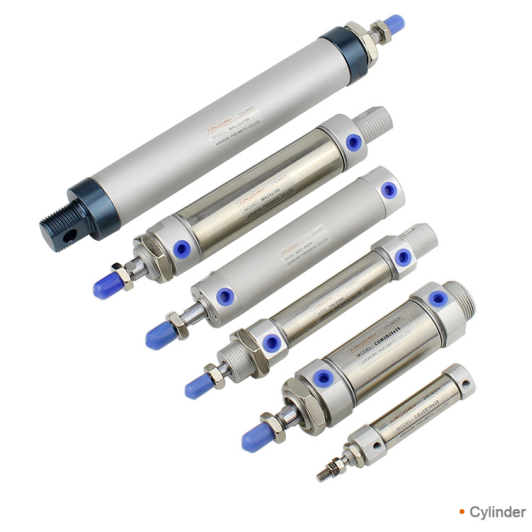
The Electroplating Process: Creating a Hard-Chrome Shield
Hard-chrome plating is not a decorative finish like the chrome on a consumer vehicle. It is an industrial electroplating process where a heavy layer of chromium is electrolytically deposited directly onto a precision-ground steel rod. The process involves several key engineering steps:
- Precision Grinding: The raw steel rod (typically medium-carbon steel like C45 or stainless steel) is ground to a precise diameter with extremely tight tolerances.
- Electrodeposition: The rod is submerged in a chemical bath containing chromic acid. High-voltage electrical current is applied, forcing chromium ions to bond molecularly with the steel surface.
- Micro-Polishing: Once the chrome layer is deposited, the rod is polished to an ultra-smooth mirror finish, typically achieving a surface roughness (Ra) of under 0.2 microns.
This process results in a high-density, uniform layer of chromium that is metallurgically bonded to the steel substrate, ensuring it will never peel, flake, or delaminate under high-impact operating conditions.
The Threat of Abrasive Particles to Seal Integrity
To understand why surface hardness is so critical, we must examine the interface between the piston rod and the front cap of the cylinder. This interface contains two key elastomeric components:
- The Rod Wiper (Scraper): A seal lip designed to scrape off dust and moisture from the rod during retraction.
- The Rod Seal: A primary pressure-holding seal that prevents compressed air from leaking out of the front chamber.
If a piston rod is made of standard, unplated carbon steel, its surface hardness is relatively low (around 150 to 200 Vickers). Common abrasive particles like sand (quartz), silica, cement dust, and metal shavings have hardness values exceeding 500 Vickers. When these hard particles settle on an unplated rod, the retracting motion forces them under the rod wiper. Because the steel is soft, the particles gouge deep microscopic grooves into the rod surface.
As the scratched rod continues to cycle, these sharp-edged grooves slide directly across the rubber rod seal. Within a few thousand cycles, the seal lip is completely shredded. The cylinder begins to leak air externally, losing pressure, slowing down cycle times, and forcing the factory's air compressors to run continuously, wasting massive amounts of electrical energy.
Core Reasons Why Hard-Chrome Plating is Essential
- 1. Unmatched Surface Hardness: With a surface hardness of 850 to 1000 Vickers, hard-chrome plating is harder than most industrial dusts and metallic debris. Abrasive particles simply slide off the surface without leaving scratches or dents.
- 2. Outstanding Corrosion Resistance: Abrasive environments are often highly humid or chemically aggressive. The chrome layer is highly resistant to oxidation, moisture, rust, salt spray, and mild acids. This prevents rust pits from forming on the piston rod, which would otherwise tear the seals just as quickly as abrasive scratches.
- 3. Ultra-Low Coefficient of Friction: Chromium has a very low friction coefficient against rubber and polyurethane. This minimizes frictional heat generation at the rod seal interface, preventing the seals from hardening and cracking due to thermal degradation.
- 4. High Oil-Retention Micro-Structure: Under microscopic examination, hard-chrome plating contains a network of extremely fine micro-cracks. This micro-cracked structure is actually highly beneficial; it acts as a reservoir for lubricating grease, keeping a micro-film of oil on the rod at all times, further reducing seal wear.
AIRWORK Premium Rod Specifications for Extreme Duty
At AIRWORK, we do not cut corners when it comes to material specifications. Our heavy-duty cylinders (including the SC, DNC, and large-bore custom series) feature piston rods designed to meet the highest B2B engineering standards:
- Chrome Layer Thickness: We maintain a consistent chrome layer thickness of 20 to 30 microns, which is double the industry average for low-cost cylinders. This ensures a deep wear barrier that lasts for millions of cycles.
- Induction Hardening Option: For applications where the rod is susceptible to high-velocity physical impacts (such as falling rocks in mining or flying metal scraps in machining centers), we offer induction-hardened piston rods. The steel core is hardened to 55-60 HRC before the chrome plating is applied, preventing deep denting under physical impact.
- Stainless Steel Core Option: For sanitary food processing or marine environments where acid washdowns are common, we plate hard-chrome over a high-grade 304 or 316 stainless steel core, providing the ultimate combination of acid resistance and surface hardness.
Additional Protective Measures for Extreme Dust
For ultra-heavy dust applications, AIRWORK recommends combining hard-chrome plated rods with these advanced options:
- Bronze Scrapers: Upgrading from a polyurethane wiper to a hard brass or bronze metallic scraper. The metal wiper physically scrapes off baked-on mud, ice, or welded splatter before it can reach the elastomer seals.
- Protective Rod Bellows: Installing a flexible, accordion-style neoprene or canvas bellow over the extended rod. This physically isolates the rod from the dusty environment, ensuring zero direct dust exposure.
Conclusion: Secure Your Operations with AIRWORK Durability
Using standard, unprotected piston rods in abrasive environments is a recipe for frequent machine breakdowns and costly maintenance. Specifying hard-chrome plated rods from AIRWORK is the most cost-effective way to guarantee long-term cylinder reliability, protect your seals, and lower your total operating costs.
Visit jzpnu.com to view our complete range of abrasive-resistant pneumatic cylinders, download structural CAD drawings, and consult with our technical team today.
Table of Contents
- Question: Why are 'Hard-Chrome Plated' piston rods essential for cylinders in abrasive environments?
- Introduction: The Hostile Environments of Heavy Industry
- The Electroplating Process: Creating a Hard-Chrome Shield
- The Threat of Abrasive Particles to Seal Integrity
- Core Reasons Why Hard-Chrome Plating is Essential
- AIRWORK Premium Rod Specifications for Extreme Duty
- Additional Protective Measures for Extreme Dust
- Conclusion: Secure Your Operations with AIRWORK Durability