

I. Project Background A food packaging company's three-station vacuum positive and negative pressure molding line is used for the mass production of PET fruit blister packs. The original equipment used a single-acting cylinder + mechanical limiter, ...
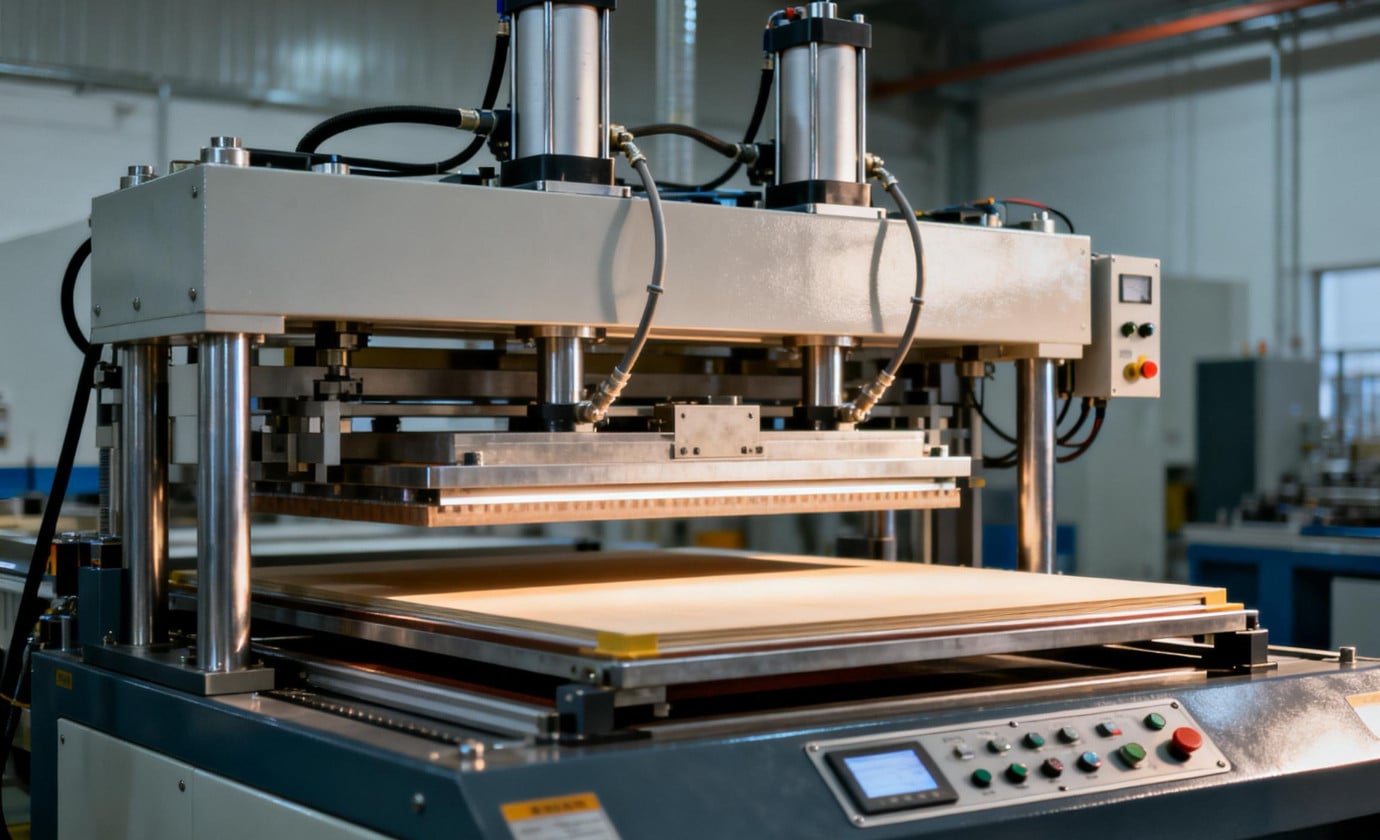
A food packaging company's three-station vacuum positive and negative pressure molding line is used for the mass production of PET fruit blister packs. The original equipment used a single-acting cylinder + mechanical limiter, which had problems such as poor mold closing synchronization, uneven edge pressing force, and large impact when the vacuum hood was in place. This resulted in products with bubbles, burrs, and warping, with a yield rate of only 85%, frequent downtime for debugging, and high energy consumption and maintenance costs. To improve molding consistency, cycle time, and stability, the cylinder system was upgraded and modified.
• Process: Vacuum forming + positive pressure molding, constant temperature hot pressing, rapid mold opening and closing, vacuum hood sealing and locking
• Core Actions: Vacuum hood lifting, template closing/locking, edge material pressing, station positioning
• Specifications: Mold closing repeatability ≤ ±0.1mm; stable and adjustable blank holder force; vacuum degree ≤ -0.095MPa; cycle time improvement ≥ 15%; yield rate ≥ 97%
1. Key Cylinder Configuration
• Vacuum Cover Lifting: Double-acting buffer cylinder (80mm diameter/250mm stroke), with magnetic ring position feedback, achieving high-speed approach + low-speed buffer closing, eliminating impact and sealing issues.
• Main Mold Closing Cylinder: High-thrust mold-locking cylinder (100mm diameter), pressure closed-loop control, stable pressure holding without pressure leakage.
• Edge Pressing Positioning: Thin-type cylinder with guide rod, high parallelism, anti-side twisting, ensuring uniform edge pressing.
• Auxiliary Actions: Mini cylinders responsible for ejection, blocking, and edge trimming assistance.
2. Control and Pneumatic Circuit
• PLC + Touch Screen + Solenoid Valve Group, achieving segmented speed, adjustable pressure, and closed-loop position control.
• Linkage Logic: Mold Closing → Mold Locking → Vacuuming → Pressure Holding and Forming → Vacuum Breaking → Mold Opening and Ejection
• Adding throttle valves and pressure regulating valves to achieve fast advance and slow close, flexible buffering.
Indicators |
Before Modification |
After Modification |
Improvement |
Molded Product Yield |
85% |
97.2% |
+12.2% |
Equipment Downtime Rate |
18% |
12.6% |
-30% |
Single Cycle Time |
12s |
10.2s |
+15% |
Positioning Accuracy |
±0.3mm |
±0.08mm |
More Stable |
Maintenance Frequency |
Twice a Week |
Once a Month |
Significantly Reduced |
The vacuum hood provides a more reliable seal, effectively eliminating defects such as air bubbles, material shortages, and burrs; cylinder buffering and synchronous control significantly reduce mechanical wear, resulting in a simultaneous decrease in noise and energy consumption.
1. Molding Quality: Uniform pressure, synchronized mold closing, and reliable vacuum sealing eliminate air bubbles and delamination.
2. Production Efficiency: Increased cycle time, reduced downtime, and approximately 18% increase in daily production capacity per line.
3. Operating Costs: Long cylinder lifespan and simple maintenance reduce annual maintenance costs by approximately 40%.
4. Strong Adaptability: Quick switching between molds and process parameters to meet the production needs of multiple product specifications.
As the core actuator of a vacuum molding machine, the cylinder, through a systematic design of double-acting buffer, position feedback, pressure closed loop, and multi-cylinder synchronization, can significantly improve equipment stability, molding accuracy, and production efficiency. This case study verifies that the pneumatic cylinder solution is reliable, efficient, and low-cost in the vacuum molding field, suitable for promotion in vacuum hot pressing molding scenarios such as thermoforming, composite materials, rubber, and silicone.
 EN
EN