

At the end of the line (EOL) of an automated food production line, processes such as packaging, sorting, boxing, palletizing, and sealing place stringent demands on high-speed, clean, reliable, and flexible power drives. Pneumatic technology, using c...
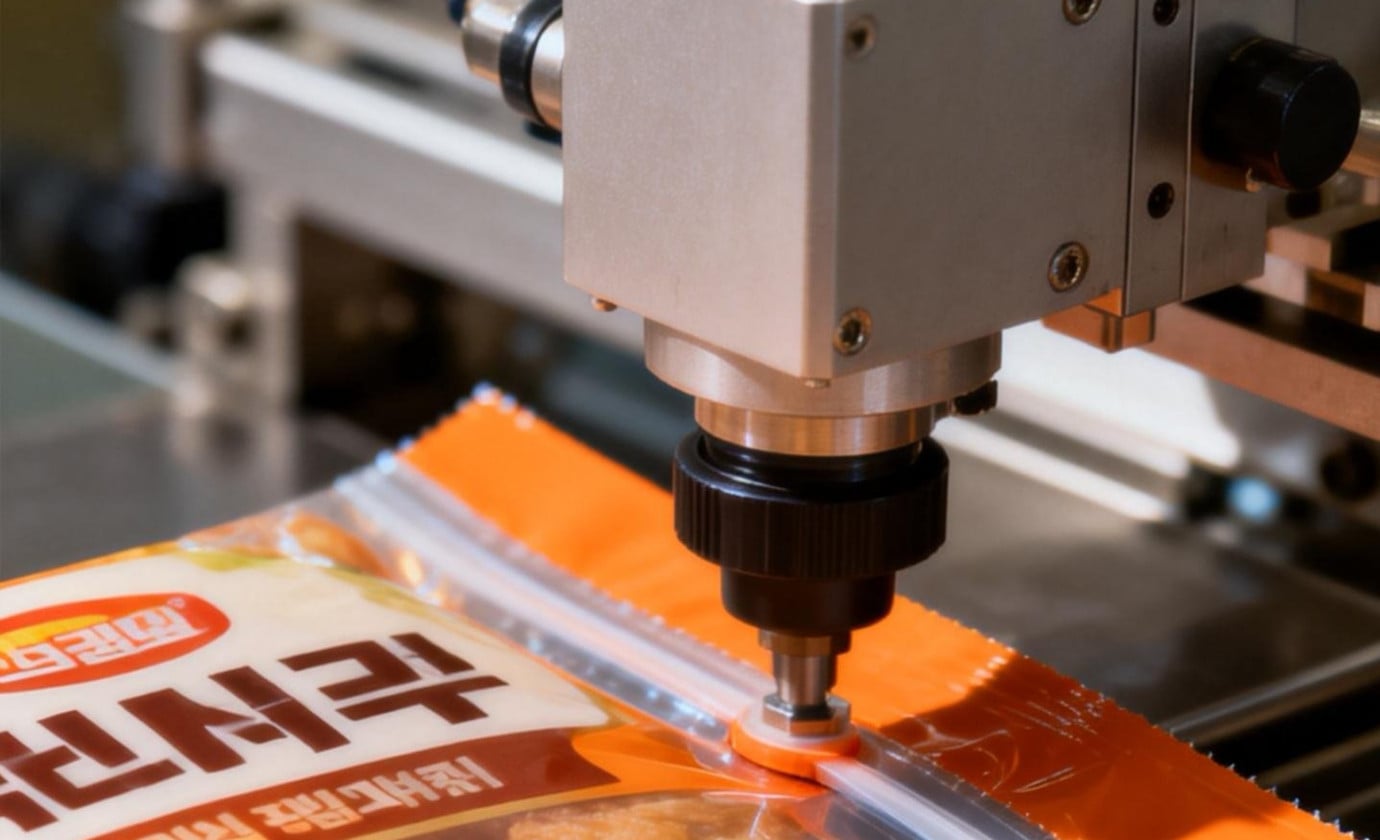
At the end of the line (EOL) of an automated food production line, processes such as packaging, sorting, boxing, palletizing, and sealing place stringent demands on high-speed, clean, reliable, and flexible power drives. Pneumatic technology, using compressed air as a power source, offers advantages such as cleanliness and explosion-proof properties, fast response, overload protection, low cost, and easy maintenance, making it a core drive solution for end-of-line automation in food packaging. This article focuses on the classification, selection, air path matching, and collaborative working logic of pneumatic components, detailing how they complete the entire end-of-line operation of a food packaging production line.
I. Core Requirements of Pneumatic Systems for End-of-Line Food Packaging
The food industry imposes far higher constraints on pneumatic systems than general industries, requiring compliance with four major principles: hygiene and safety, oil-free cleanliness, washability, and contamination prevention:
1. Air Source Grade: CLASS 0 oil-free compressed air is used, with an oil content ≤0.01mg/m³ and a pressure dew point ≤-40℃, eliminating the possibility of oil, water, and particulate contamination of the food.
2. Material Compliance: Actuating components and contact parts are preferably made of 304/316L stainless steel or food-grade silicone/PTFE, with a surface roughness Ra≤0.8μm, complying with FDA, HACCP, and GMP standards.
3. Structural Design: No dead corners, easy to clean, prevents liquid accumulation, suitable for CIP/SIP online cleaning, IP65 protection rating and above, resistant to acid and alkali disinfection environments.
4. Motion Characteristics: High-speed reciprocating, precise positioning, flexible clamping, suitable for various food forms such as biscuits, bread, beverages, meat products, and prepared meals.
The pneumatic system consists of four main modules: air source treatment, control components, actuators, and auxiliary components. Each module's components have clearly defined functions and work collaboratively.
(1) Air Source Treatment Components: The System's "Clean Station"
Responsible for purifying, stabilizing, and drying compressed air, it is the first line of defense for food hygiene.
• Oil-free air compressor: Water-lubricated screw/oil-free scroll compressor, eliminating lubricant contamination at the source. • Precision filter assembly: Three-stage filtration (coarse filtration → fine filtration → ultra-fine filtration), removing particles smaller than 0.1μm and liquid water.
• Dryer + air tank: Stabilizes pressure, removes moisture, and prevents condensation from causing microbial growth.
• Food-grade two-unit/three-unit dryer: Filtration + pressure regulation, oil mist-free design, preventing oil dripping and food contamination.
(2) Control Components: The System's "Nerve Center"
Achieves precise control of airflow direction, pressure, and flow rate, coordinating the timing of actuator actions.
• Solenoid Valves/Valve Islands: 2-position 5-way/3-position 5-way solenoid valves with stainless steel bodies and electropolished flow channels for easy cleaning with no dead angles; centralized control via the valve island simplifies wiring and is suitable for high-speed production lines.
• One-way Throttle Valve: Regulates the advance and retreat speed of the cylinder, achieving smooth and buffered operation to prevent food impact damage.
• Pressure Reducing Valve/Safety Valve: Stabilizes working pressure, automatically relieves pressure in case of overpressure, and protects equipment and product safety.
• Magnetic Switches/Sensors: Detect the cylinder's stroke position and send feedback signals to the PLC for automated closed-loop control.
(3) Actuators: The System's "Muscle Group"
• Convert pneumatic energy into mechanical energy to perform actions such as gripping, pushing, clamping, sealing, and sorting.
• Standard Cylinders: Double-acting thin/mini cylinders used for pushing, positioning, and pressing, suitable for boxing and material handling processes.
• Pneumatic Grippers/Claws: Parallel opening and closing, wide, flexible grippers with food-grade silicone tips, gently gripping fragile foods (pastries, fruits, egg products).
• Vacuum Components: Vacuum generator + food-grade vacuum suction cups, adsorbing packaging bags, boxes, and bottled products for handling, loading, and unloading.
• Swing Cylinders: 0–180° rotation drive used for flipping lids, turning, and bag handling, suitable for opening and sealing boxes at corners.
• Rodless Cylinder: Long-stroke conveying, saving installation space, used for lateral transfer and sorting on the production line.
(4) Auxiliary Components: The System's "Blood Vessels and Skeleton"
Ensuring unobstructed airflow, reliable connections, and convenient maintenance.
• Food-grade Air Tubing: Made of PU/PA/Teflon, oil- and temperature-resistant, non-leaching, and easy to clean.
• Stainless Steel Quick-connect Fittings: Seamless connection, easy assembly and disassembly, preventing pipe leaks and bacterial residue.
• Muffler: Reduces exhaust noise, meets workshop environmental protection requirements, made of food-grade corrosion-resistant material.
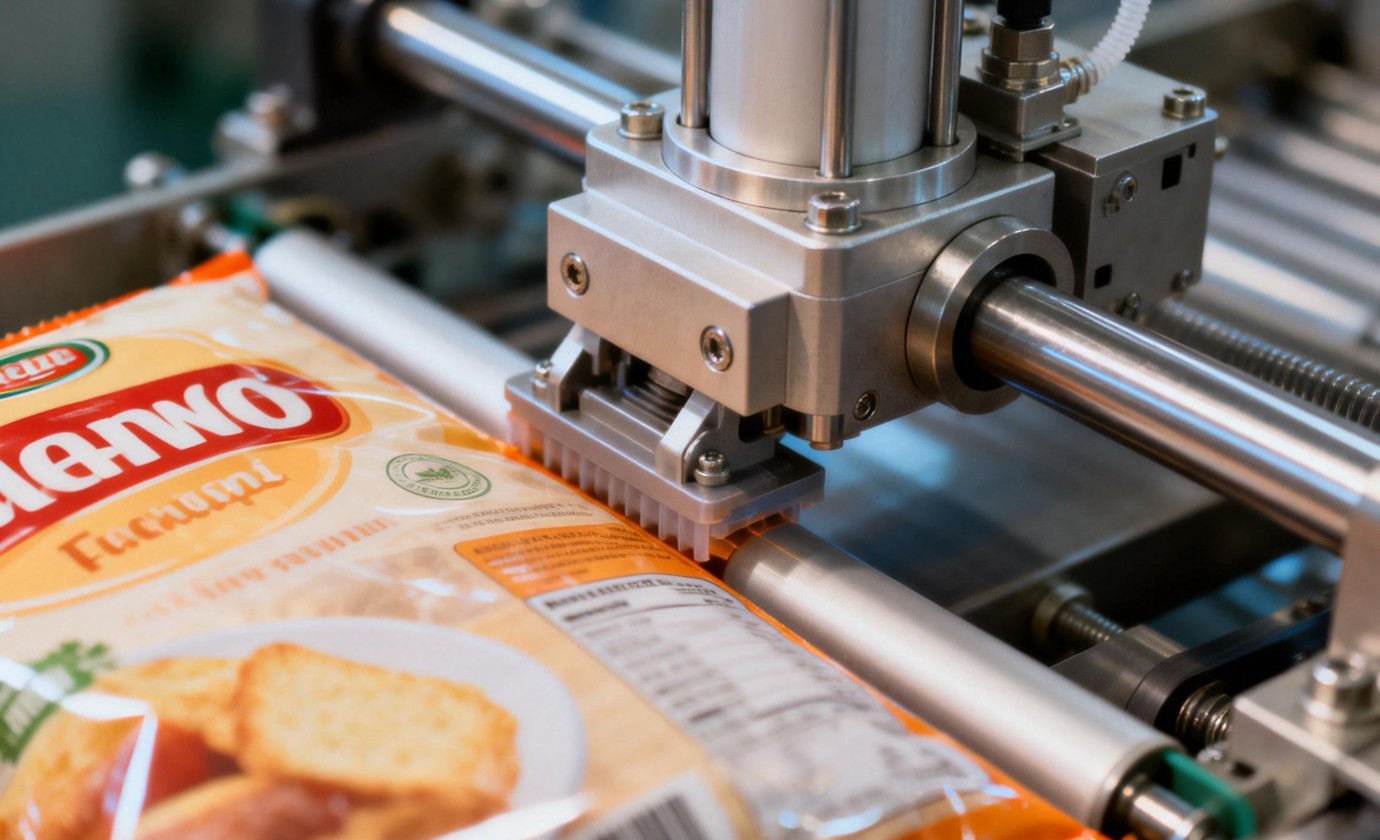
Taking the end-of-line process of pillow packaging machine → weighing and detection → boxing → sealing → palletizing as an example, pneumatic components work collaboratively in sequence to complete the entire process:
1. Finished Product Conveying and Positioning
• Execution: Double-acting thin cylinder + one-way throttle valve
• Action: The cylinder extends to push the bagged food to the positioning station; the throttle valve controls the speed to prevent damage to the packaging bag; a magnetic switch provides feedback on the positioning signal, triggering the next process.
2. Defective Product Sorting and Removal
• Execution: High-speed sorting cylinder + two-position five-way solenoid valve + photoelectric sensor
• Action: The sensor detects products that are unqualified in weight/appearance; the PLC instructs the solenoid valve to switch direction; the cylinder quickly extends to push the defective product away from the main line; good products continue to be conveyed.
3. Packing and Pushing
• Execution: Rodless cylinder + Double-rod guide cylinder
• Action: The rodless cylinder drives the pusher plate to move laterally, neatly pushing the bagged food into the carton; the double-rod cylinder ensures smooth pushing and prevents product compression.
4. Carton Opening and Sealing
• Execution: Swing cylinder + Thin-film pressing cylinder
• Action: The swing cylinder flips the carton folds, and the pressing cylinder completes the tape sealing and pressing; the actions are smooth and the positioning is precise. 5. Finished Product Gripping and Palletizing
• Execution: Pneumatic flexible gripper + vacuum suction cup assembly
5. Finished Product Gripping and Palletizing
• Execution: Pneumatic flexible gripper + vacuum suction cup assembly
• Action: The vacuum suction cups adhere to the top of the box, the grippers assist in holding the sides, and the cylinder lifts/shifts to complete the palletizing; the flexible gripper head prevents box deformation and is adaptable to different sized cartons.
6. Vacuum Sealing (Pre-prepared Vegetable/Meat Products)
• Execution: Heavy-duty cylinder + vacuum generator
• Action: The cylinder drives the vacuum chamber to close, the vacuum generator evacuates the vacuum, and the cylinder maintains pressure to complete the heat sealing, ensuring packaging airtightness and shelf life.
 EN
EN