 EN
EN

Question: Why is my Pneumatic Cylinder drifting or failing to hold position?
Answer: A pneumatic cylinder that drifts, creeps, or fails to maintain its position under load is almost always suffering from internal bypass leakage. This phenomenon occurs when compressed air leaks across the piston seal from the pressurized chamber of the cylinder into the unpressurized chamber. Because both chambers reach a state of pressure equalization or the exhaust air cannot support the external load, the piston rod slowly moves or drifts from its setpoint. To solve this problem, engineers must diagnose the sealing integrity of the piston, check for barrel cylinder scoring, and implement specialized pneumatic holding solutions like pilot-operated check valves or physical rod locks.
Introduction: The Operational Impact of Cylinder Drift
In modern automated factory floors, precision is everything. Pneumatic cylinders are widely used to clamp, lift, push, and hold components in place during critical assembly processes. However, when a cylinder begins to drift, it poses a severe threat to both product quality and operational safety. In vertical lifting systems, cylinder drift can cause a heavy load to slide down unexpectedly, potentially damaging expensive tooling or injuring workers. In clamping applications, drift reduces the holding force, leading to part misalignment, machining defects, and increased scrap rates.
Identifying and resolving cylinder drift quickly is essential for maintaining plant productivity. As a leading manufacturer of high-performance pneumatic components, AIRWORK is dedicated to helping B2B buyers, distributors, and maintenance engineers understand the mechanical causes behind cylinder failure and implement long-lasting solutions.
Understanding Internal Bypass Leakage: The Silent Culprit
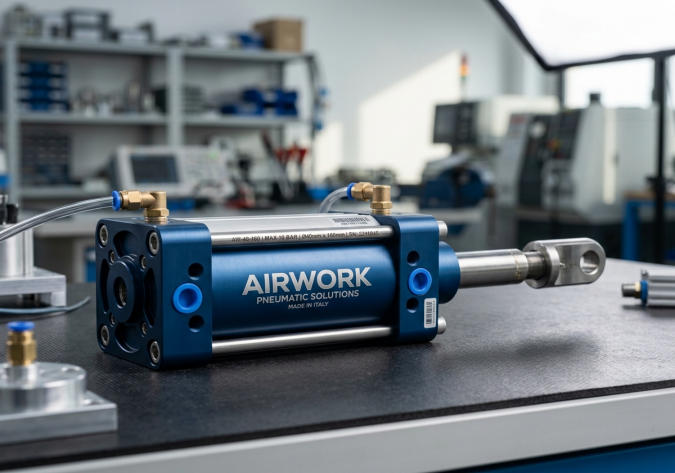
To understand why a cylinder drifts, it is helpful to look at how a double-acting cylinder works. When compressed air is directed into the rear port, it pushes against the piston, extending the rod. The air on the front side of the piston must be exhausted through the front port. The piston seal acts as a total physical barrier between these two chambers.
Internal bypass leakage occurs when the piston seal fails to maintain a tight barrier. When this happens, pressurized air slips through the tiny gap between the piston and the inner bore of the cylinder barrel. This leakage has several immediate consequences:
- Pressure Equalization: The pressure in the exhaust chamber rises, while the pressure in the supply chamber drops. This reduces the pressure differential across the piston, which is the source of the cylinder's force.
- Force Reduction: The net force generated by the cylinder drops below the force required to hold the external load, causing the rod to drift.
- Air Waste: Compressed air continuously escapes through the exhaust port of the directional control valve, wasting energy and raising operating costs.
Unlike external leakage, which can be easily heard or seen with soapy water around the rod gland or end caps, internal bypass leakage is completely invisible. The cylinder may look perfectly intact from the outside while failing completely on the inside.
Step-by-Step Diagnostic Test for Internal Bypass Leakage
Before replacing parts, maintenance technicians should perform a simple pressure test to confirm if internal bypass leakage is the actual cause of the drift. Here is the standard industry procedure to test a double-acting pneumatic cylinder:
- Step 1: Isolate and Depressurize. Safely shut down the machinery and relieve all residual air pressure in the pneumatic circuit. Ensure any physical load on the cylinder is supported or blocked to prevent sudden falling.
- Step 2: Extend the Cylinder. Reconnect the air supply and extend the piston rod fully. If the drift occurs in the retracted position, retract the rod fully instead.
- Step 3: Remove the Exhaust Hose. Disconnect the pneumatic tubing from the exhaust port (the port opposite to the pressurized chamber). For example, if the cylinder is fully extended, disconnect the tubing from the rod-side port.
- Step 4: Apply Pressure to the Active Port. Apply full system air pressure to the cap-side port. Keep the rod-side port completely open to the atmosphere.
- Step 5: Observe the Open Port. Watch the open rod-side port for any signs of escaping air. A small initial puff of air is normal as the piston settles, but a continuous stream of escaping air indicates that air is leaking past the piston seal. This confirms internal bypass leakage.
- Step 6: Repeat for the Retracted Position. Retract the cylinder fully, disconnect the cap-side tubing, apply pressure to the rod-side port, and check the open cap-side port for continuous leakage.
Common Causes of Internal Bypass Leakage and How to Fix Them
Once bypass leakage is confirmed, you must determine the underlying mechanical failure. Several factors can destroy the integrity of the piston seal:
- Wear and Tear of Piston Seals: Over millions of cycles, elastomer seals naturally degrade. Standard nitrile (NBR) or polyurethane seals can harden, crack, or wear down, especially if they are subjected to excessive friction or operating temperatures beyond their limits. The solution is to replace the worn seal with an AIRWORK premium rebuild seal kit. For high-temperature or high-speed operations, upgrading to Viton (FKM) seals is highly recommended.
- Cylinder Barrel Scoring: If particulate contamination enters the pneumatic line, hard particles can get trapped between the piston seal and the inner wall of the aluminum or stainless steel barrel. As the piston moves, these particles scratch deep grooves into the bore. Even a brand-new seal will leak if it has to slide over a scored barrel surface. If the barrel is scored, the entire cylinder or the barrel tube must be replaced.
- Chemical Degradation of Lubrication: Pneumatic cylinders require internal lubrication to reduce friction between the seals and the barrel. If the compressed air contains aggressive chemical vapors, solvents, or water from an inadequate air filtration system, the factory grease can wash away or break down. This leads to dry running, high heat, and rapid seal destruction. Installing a proper Filter-Regulator-Lubricator (FRL) unit is the primary solution.
- Side Loading and Rod Misalignment: If the cylinder is subjected to an external side load that is not aligned with the piston rod axis, the piston will be forced sideways against the barrel wall. This uneven pressure causes rapid wear on one side of the piston seal, leading to premature bypass leakage. Implementing proper linear guides or using rod-end alignment couplers will eliminate side loading stress.
Engineering Solutions for Critical Position Holding
While repairing the piston seal will stop drift caused by leakage, standard double-acting cylinders are not designed to hold a static position for extended periods of time under load because air is compressible. For safety-critical or high-precision holding applications, B2B designers should incorporate these specialized AIRWORK components:
- Pilot-Operated Check Valves: These valves allow air to flow freely into the cylinder but block the exhaust air from leaving unless a pilot pressure signal is received. If a pneumatic hose bursts or the control valve loses electrical power, the PO check valve immediately locks the air inside both chambers of the cylinder, preventing the load from drifting or falling.
- Mechanical Rod Locks: A rod lock is a spring-loaded mechanical clamping device integrated into the cylinder end cap. When pneumatic pilot pressure is removed, internal springs force a heavy-duty collar to clamp down on the piston rod, holding it in place with massive physical friction. This provides a true mechanical holding solution that does not rely on air pressure at all.
Conclusion: Sourcing Reliable Pneumatic Cylinders from AIRWORK
Pneumatic cylinder drift is an avoidable issue that can be easily managed with high-quality components and proper maintenance. By standardizing on AIRWORK precision-machined cylinders, industrial distributors, system integrators, and OEM manufacturers can ensure excellent seal longevity and minimal bypass leakage.
For more information on selecting heavy-duty cylinders, custom seal kits, or integrated rod lock systems, visit jzpnu.com to view our full product catalog and talk to our engineering support team today.
Table of Contents
- Question: Why is my Pneumatic Cylinder drifting or failing to hold position?
- Introduction: The Operational Impact of Cylinder Drift
- Understanding Internal Bypass Leakage: The Silent Culprit
- Step-by-Step Diagnostic Test for Internal Bypass Leakage
- Common Causes of Internal Bypass Leakage and How to Fix Them
- Engineering Solutions for Critical Position Holding
- Conclusion: Sourcing Reliable Pneumatic Cylinders from AIRWORK