 EN
EN

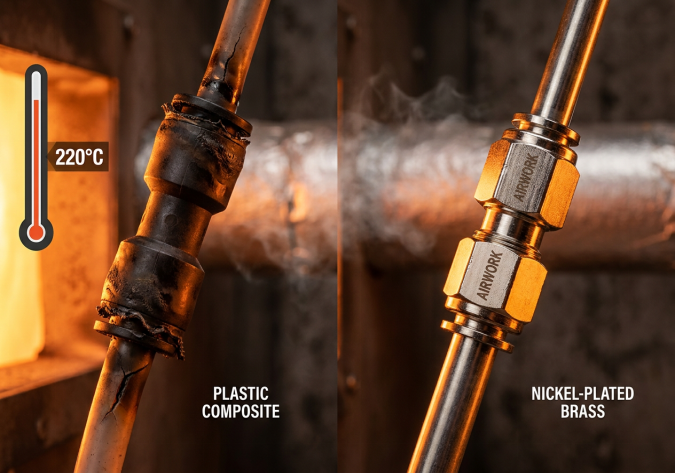
Q: Why is 'Nickel-Plated Brass' superior to Plastic for fittings in high-heat industrial environments?
Introduction: The Thermal Stress of Heavy Manufacturing
In the global B2B manufacturing sector, pneumatic systems are deployed across a wide range of industries, from lightweight electronics assembly to heavy steel production, glass manufacturing, injection molding, and commercial food baking. In these heavy industrial settings, high temperature is a constant operational hazard. Pneumatic lines must often run close to steam pipes, high-heat ovens, radiant furnace walls, or hot molding platens.
Sourcing managers frequently attempt to standardize on lightweight, low-cost plastic composite push-in fittings (usually made of PBT or nylon) across an entire facility. However, in high-heat zones (where ambient temperatures exceed 60 degrees Celsius), these plastic fittings experience rapid structural and chemical degradation, resulting in sudden tubing blowout failures and expensive production line stoppages. In these high-temperature zones, specifying nickel-plated brass fittings is a critical engineering requirement.
This guide provides a detailed material comparison explaining why nickel-plated brass is the superior choice for high-heat pneumatic applications.
1. Physical Softening and Structural Deformation of Plastics
The primary physical limitation of plastic composite fittings is their low heat-deflection temperature. Plastic materials are polymers held together by weak intermolecular forces that weaken as thermal energy rises:
- The Behavior of Plastic (PBT/Nylon) Under Heat: Most standard plastic fittings utilize Polybutylene Terephthalate (PBT) or Nylon 66. As temperatures approach 60 to 80 degrees Celsius, these polymers begin to soften, lose their structural rigidity, and swell. Under standard system pressures of 6.0 to 10.0 bar, the softened plastic body of the fitting will expand and deform, creating micro-gaps around the internal seals, resulting in catastrophic pressure blowouts.
- The Behavior of Nickel-Plated Brass Under Heat: Brass is a robust copper-zinc alloy with a melting point exceeding 900 degrees Celsius. In the operating range of industrial high-heat environments (80 to 150 degrees Celsius), brass exhibits virtually zero thermal expansion or structural softening. It maintains its absolute geometric shape and structural strength, ensuring a secure, pressurized connection even under continuous thermal exposure.
2. Failure of the Tubing Retention Mechanism
A push-in fitting relies on an internal gripping mechanism (often called a lock claw or collet) to bite into the pneumatic tubing and hold it firmly under pressure. The failure of this mechanism is the most common cause of fitting blowouts in hot zones:
- Plastic Release Collars: In cheap composite fittings, the outer release sleeve and inner claw housing are made of plastic. When exposed to heat, the plastic collar becomes soft and pliable. Under high-pressure surges, the metal teeth of the lock claw can slip out of the softened plastic housing, releasing the pneumatic tube and causing a catastrophic line blowout.
- All-Metal Construction: Premium nickel-plated brass fittings feature all-metal internal components, including brass release sleeves and stainless steel lock claws housed in a solid brass body. This ensures that the mechanical gripping force of the fitting remains rock-solid, preventing tubing slippage regardless of thermal stress.
3. Accelerated Sealing Material Degradation
A fitting is only as good as its internal O-ring seal. However, the heat radiating from a plastic fitting body is transferred directly to the seal, accelerating its chemical degradation:
- Standard Nitrile (NBR) Seals: Standard plastic fittings utilize standard Nitrile rubber seals, which have a maximum heat rating of 80 degrees Celsius. When subjected to continuous heat, NBR dry-cracks and becomes brittle, losing its elasticity and creating microscopic air paths.
- High-Temperature Viton (FKM) Seals: Premium nickel-plated brass fittings are routinely equipped with specialized Viton (fluorocarbon) or high-temperature silicone seals. Viton seals are chemically engineered to withstand continuous operating temperatures up to 150 degrees Celsius (and intermittent surges up to 200 degrees Celsius) without losing their sealing elasticity. When paired with a solid brass body, these seals provide a reliable barrier against air leaks over years of operation.
4. Mechanical Thread Integrity and Thermal Expansion Cycles
Pneumatic systems experience frequent temperature cycles (heating up during a production run and cooling down when the machinery is idle). These thermal cycles create massive mechanical stresses at the thread joints:
- Plastic-to-Metal Thread Connections: Plastic has a thermal expansion coefficient that is up to ten times higher than steel or aluminum. When a plastic fitting is screwed into a metal cylinder port, the rapid expansion and contraction cycles cause the plastic threads to deform, strip, or crack. This leads to permanent thread damage, requiring the replacement of the entire cylinder.
- Brass-to-Metal Thread Connections: Nickel-plated brass has a thermal expansion profile that is closely matched to the aluminum and steel alloys used in pneumatic cylinder ports. This ensures that the thread joint expands and contracts at a similar rate, maintaining a tight, leak-free connection and preventing thread stripping or loosening under continuous vibration.
5. Corrosion Resistance and the Value of Nickel Plating
While raw brass offers outstanding thermal stability, it is prone to surface oxidation (forming tarnish or green verdigris) when exposed to high humidity, moisture, or chemical detergents. Nickel plating acts as a protective barrier:
- Oxidation Protection: A high-density layer of electroplated nickel prevents atmospheric oxygen and chemical cleaning agents from contacting the raw copper-zinc brass alloy underneath.
- Wear and Scratch Resistance: Nickel plating is exceptionally hard, protecting the fitting threads and body from scratches during installation tool torque, extending the service life of the component.
- Aesthetic and Hygienic Value: Nickel-plated fittings maintain a clean, bright, and professional appearance, which is highly valued in pharmaceutical and food packaging machines.
Why Choose JZPNU AIRWORK Metal Fittings?
Zhejiang Jinzhi Pneumatic Technology Co., Ltd. (JZPNU) manufactures a premium selection of high-temperature all-metal push-in fittings under our AIRWORK brand, specifically designed to handle severe industrial heat:
- 100 percent Solid Brass Body: All fitting bodies, release sleeves, and internal structures are machined from solid brass and electroplated with high-purity nickel.
- Viton Seals as Standard: Our high-heat fitting families are equipped with certified Viton (FKM) seals to guarantee reliable performance at temperatures up to 150 degrees Celsius.
- Precise Thread Sizing: Available in G, PT, and NPT thread standards, featuring pre-applied high-temperature thread sealants to ensure a zero-leak seal immediately upon installation.
- High Pressure Ratings: Rated for working pressures up to 15 bar, making them suitable for heavy-duty pneumatic systems.
Conclusion: Strategic Sourcing Recommendations
When designing or maintaining pneumatic automation lines, material selection is the key to preventing premature component failure. While plastic composite fittings are an excellent, cost-effective choice for general-purpose, room-temperature automation, they are a liability in high-heat industrial zones. Sourcing directors and plant managers should mandate the use of JZPNU's AIRWORK premium nickel-plated brass fittings in all areas with elevated ambient temperatures. Investing in all-metal connectors is a strategic way to eliminate thermal blowouts, reduce energy waste from air leaks, and guarantee continuous, uninterrupted production. To request a sample or custom material technical sheet, contact JZPNU's engineering team today.
Table of Contents
- Q: Why is 'Nickel-Plated Brass' superior to Plastic for fittings in high-heat industrial environments?
- Introduction: The Thermal Stress of Heavy Manufacturing
- 1. Physical Softening and Structural Deformation of Plastics
- 2. Failure of the Tubing Retention Mechanism
- 3. Accelerated Sealing Material Degradation
- 4. Mechanical Thread Integrity and Thermal Expansion Cycles
- 5. Corrosion Resistance and the Value of Nickel Plating
- Why Choose JZPNU AIRWORK Metal Fittings?
- Conclusion: Strategic Sourcing Recommendations