 EN
EN

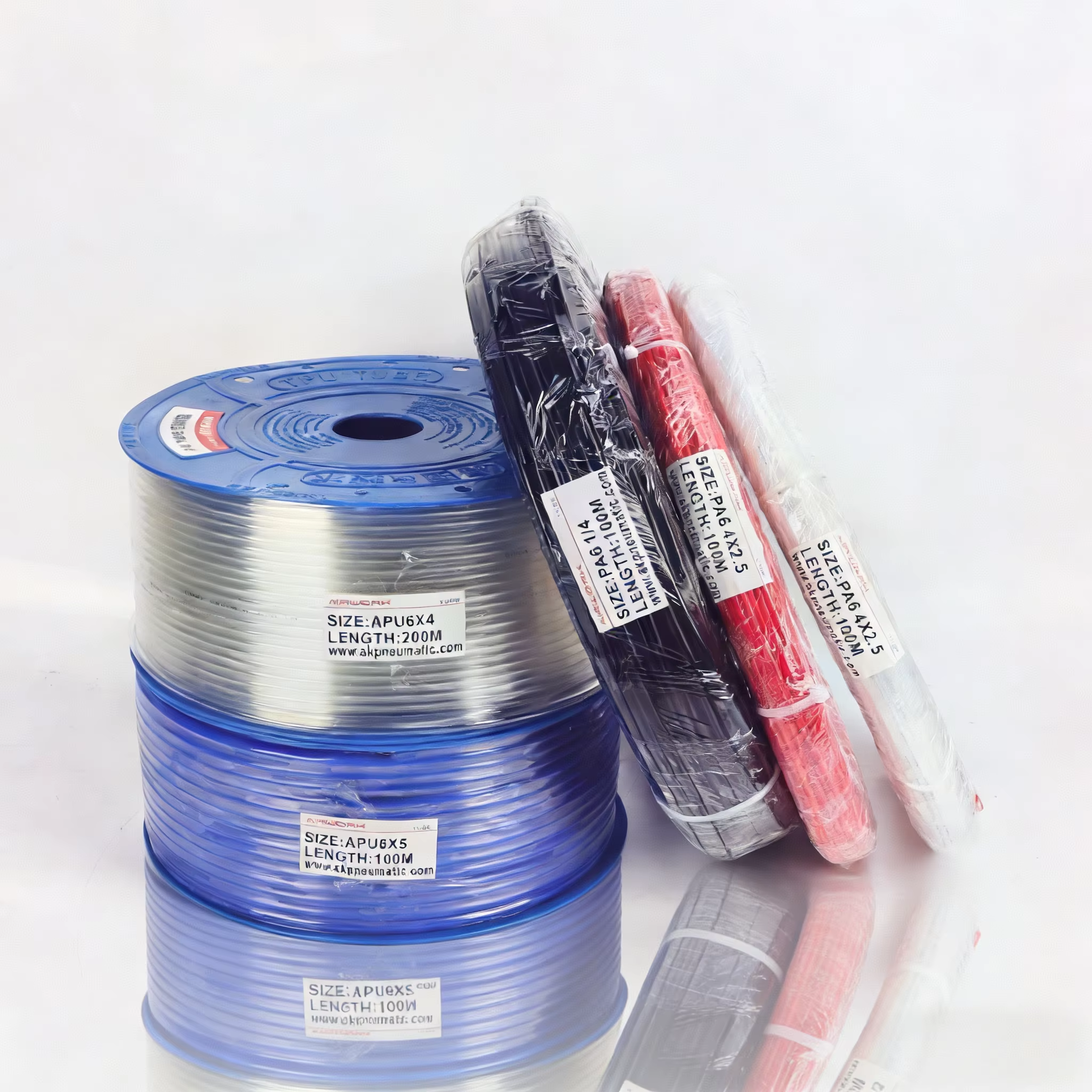
When engineers and procurement professionals evaluate flexible conduit options for pneumatic systems, polyurethane tubing consistently stands out as one of the most versatile and performance-driven choices available. Unlike rigid piping or conventional rubber hoses, polyurethane tubing combines exceptional flexibility, impressive pressure resistance, and outstanding durability into a single compact profile. Understanding what this material actually is—and precisely how it functions within pneumatic circuits—helps technical buyers make better-informed decisions that directly impact system reliability, maintenance cycles, and total cost of ownership.
This article takes a structured look at the definition, material composition, key physical characteristics, and real-world applications of polyurethane tubing in pneumatic environments. Whether you are designing a new compressed air network, upgrading an existing automation line, or simply trying to understand why so many industrial facilities have moved toward this tubing type, the explanation below covers every important dimension. From material science fundamentals to application-specific guidance, this resource is intended to give you a clear and complete picture of polyurethane tubing and its role in modern pneumatic engineering.
Defining Polyurethane Tubing: Material Composition and Core Properties
What Polyurethane Actually Is
Polyurethane tubing is a flexible conduit manufactured from polyurethane polymer, a synthetic material created through the chemical reaction between a polyol and an isocyanate compound. The resulting polymer exhibits a unique combination of elastomeric and thermoplastic characteristics, which sets it apart from both rubber-based and standard thermoplastic hose materials. This dual-natured molecular structure is the foundation for the performance advantages that make polyurethane tubing so well-suited to demanding pneumatic environments.
The material can be formulated in varying hardness grades, typically measured on the Shore A or Shore D scale. Softer formulations deliver maximum flexibility and are ideal for applications requiring tight bend radii or frequent movement. Harder grades provide greater rigidity and crush resistance where the tubing may be subject to external mechanical stress. This tunability of hardness is one reason polyurethane tubing can serve such a wide range of pneumatic system configurations without requiring designers to compromise on either flexibility or structural integrity.
Polyurethane is also naturally resistant to hydrolysis, oxidation, and many oils and fuels, giving polyurethane tubing a durability advantage over EPDM rubber or standard PVC in environments where these substances are present. The polymer's molecular chains resist degradation from ozone exposure and UV radiation far more effectively than conventional rubber, which means outdoor or exposed installations retain their mechanical properties over longer service lives.
Key Physical Characteristics That Define Performance
Among the most important physical properties of polyurethane tubing is its high tensile strength relative to its wall thickness. This allows manufacturers to produce lightweight, thin-walled tubing that still handles substantial working pressures—a critical advantage in pneumatic systems where component weight and routing space are constrained. Tensile strength figures for polyurethane formulations frequently range from 40 to 70 MPa, depending on the specific grade, making them significantly stronger than comparably sized PVC or nylon alternatives in many standard formulations.
Abrasion resistance is another defining property of polyurethane tubing. In automated machinery where tubing moves repeatedly through cable carriers, drag chains, or robotic arms, surface wear is a major failure mechanism for competing materials. Polyurethane's resistance to abrasion is generally several times higher than that of rubber, which translates directly into extended service intervals and reduced unplanned downtime. This characteristic alone makes polyurethane tubing the default choice in many high-cycle automation platforms.
The elastic memory of polyurethane also deserves mention. Unlike some plastics that develop permanent kinks or set after bending, polyurethane tubing consistently returns to its original shape after deformation. This resilience is essential in applications where the tubing must coil, flex, and recover thousands or even millions of times throughout its service life without developing flow restrictions or structural weak points.
How Polyurethane Tubing Functions in Pneumatic Systems
Routing Compressed Air and Control Signals
In pneumatic systems, polyurethane tubing serves as the primary conduit through which compressed air travels from the supply source—typically a compressor and filter-regulator-lubricator assembly—to actuators, cylinders, valves, and other working components. Its flexibility allows installers to route air lines through tight machine frames, around obstacles, and into moving assemblies without the rigid elbow fittings that would be required with metal or semi-rigid nylon tubing. This dramatically reduces the number of fittings needed in a typical installation, lowering both material costs and potential leak points.
The smooth inner bore of polyurethane tubing minimizes pressure drop across long runs by reducing friction losses as compressed air moves through the conduit. In large pneumatic networks with multiple actuators, even small pressure drops accumulate and can force operators to run compressors at higher pressures to compensate, increasing energy costs. Maintaining consistent bore geometry and surface smoothness throughout the tubing's service life is therefore both an energy efficiency benefit and an operational performance advantage.
For pneumatic control circuits—where tubing carries pilot air signals to directional control valves rather than main actuating flow—the rapid pressure response enabled by the low volumetric compliance of polyurethane tubing supports precise and fast cycle times. Systems requiring sub-millisecond valve response benefit from tubing with low internal volume and consistent wall stiffness, both of which polyurethane formulations reliably provide in standard dimensional ranges.
Connecting Push-In Fittings and Quick-Connect Components
Polyurethane tubing is engineered with tight dimensional tolerances on both outer diameter and wall thickness, a necessity for reliable engagement with push-in pneumatic fittings. These fittings—also called push-to-connect or instant fittings—grip the tubing's outer surface using collet-type grab rings. If the outer diameter varies beyond acceptable tolerances, the fitting cannot generate a reliable seal, leading to air leaks that compromise actuator force and response time. The dimensional consistency of quality polyurethane tubing is therefore a functional requirement, not merely a cosmetic one.
The material's hardness range is also directly relevant to fitting compatibility. Tubing that is too soft may deform under the fitting's grip ring and creep over time, leading to gradual seal degradation. Tubing that is too hard may not seat properly in the fitting bore, preventing an airtight engagement. Standard polyurethane tubing formulations are deliberately positioned within the hardness range that most push-in fitting systems are designed to accommodate, which is why this tubing type has become the de facto standard across pneumatic automation platforms worldwide.
Reusability is another practical advantage. When a technician needs to disconnect and reconnect polyurethane tubing from push-in fittings during maintenance or reconfiguration, the tubing typically retains its geometry without crushing or flaring. This means the same tubing segment can often be reused rather than replaced after a disconnection, a small but meaningful operational economy in high-maintenance environments.
Application Scenarios Where Polyurethane Tubing Excels
Robotic Arms and High-Motion Automation Platforms
Robotic assembly lines and pick-and-place systems subject pneumatic tubing to continuous flexing, torsion, and lateral movement that would quickly fatigue and crack conventional PVC or nylon alternatives. Polyurethane tubing handles these dynamic loading conditions with exceptional durability because its elastomeric characteristics allow the material to absorb and recover from repeated deformation cycles without initiating fatigue cracks. In multi-axis robotic systems, tubing bundles are often routed through articulated wrist joints and cable management channels where bend angles are severe and cycle counts reach millions over the equipment's lifetime.
The low weight of polyurethane tubing relative to its working pressure capability also matters in robotics applications. Adding unnecessary mass to a robotic arm increases inertia, slowing acceleration and deceleration, and ultimately limiting throughput. Engineers specify thin-walled polyurethane tubing precisely because it delivers the required pressure rating without adding meaningful weight to the moving assembly. This combination of light weight and dynamic durability is difficult to replicate with any other commercially available tubing material at comparable cost.
Food Processing, Pharmaceutical, and Clean Environment Applications
Many grades of polyurethane tubing are formulated to comply with food contact regulations, making them appropriate for pneumatic systems operating within food processing lines, packaging equipment, and beverage filling systems. The absence of plasticizers—which are required in PVC formulations and can migrate into product streams—is a key compliance advantage of polyurethane in these regulated environments. Pneumatic actuators that handle food packaging or directly contact product surfaces require clean, non-contaminating air supply lines, and polyurethane tubing meets this standard without the safety concerns associated with plasticizer migration.
In pharmaceutical manufacturing cleanrooms, polyurethane tubing is valued for its smooth, non-porous outer surface that resists biofilm formation and is easy to wipe clean with standard disinfectants. Tubing that develops micro-cracks or surface roughness over time creates sites for microbial accumulation, a contamination risk that regulatory standards strictly prohibit. The material stability and surface integrity that characterize quality polyurethane tubing across its service life support compliance with these hygiene requirements in ways that more porous rubber-based alternatives cannot reliably match.
Outdoor Machinery and Harsh Industrial Environments
Construction equipment, agricultural machinery, and outdoor automation installations expose pneumatic tubing to UV radiation, temperature extremes, moisture, and contact with oils and hydraulic fluids. Standard PVC becomes brittle and cracks under prolonged UV exposure, while rubber degrades from ozone and oxidation. Polyurethane tubing formulated for outdoor service maintains its flexibility and pressure integrity across a broad temperature range—typically from around minus 40 degrees Celsius to plus 60 or 70 degrees Celsius in standard grades—and resists the environmental degradation mechanisms that cause premature failure in competing materials.
The oil resistance of polyurethane tubing is particularly relevant in industrial environments where hydraulic leaks, lubricant mists, and cutting fluids are present. Contact with these substances causes many elastomers to swell, soften, and lose their mechanical properties. Polyurethane's molecular structure limits this absorption, maintaining dimensional stability and working pressure capability even in contaminated environments. This makes polyurethane tubing a lower-maintenance choice in machine tool applications, metal fabrication cells, and similar settings where fluid contamination is routine.
Selecting the Right Polyurethane Tubing Specification
Understanding Dimensional Standards and Pressure Ratings
Pneumatic polyurethane tubing is available in metric outer diameter sizes ranging from 4 mm to 16 mm in standard product lines, with fractional inch sizes available for North American markets. The outer diameter determines fitting compatibility, while the inner diameter and wall thickness govern both flow capacity and working pressure. Specifying the correct outer diameter for the fitting system already installed in a facility is the most critical dimensional decision, as mismatches result in either loose connections prone to blowout or excessively tight fits that damage the fitting's internal grab mechanism.
Working pressure ratings for polyurethane tubing at standard pneumatic operating temperatures typically range from 8 to 16 bar depending on tube size and wall thickness. Most industrial pneumatic systems operate at between 5 and 10 bar, which means standard polyurethane tubing specifications provide an adequate safety margin for typical applications. However, for systems that operate near or above 10 bar—such as high-force clamping circuits or certain press applications—selecting a reinforced or heavy-wall grade of polyurethane tubing with a higher rated working pressure is strongly advisable.
Color Coding, Transparency, and Special Grades
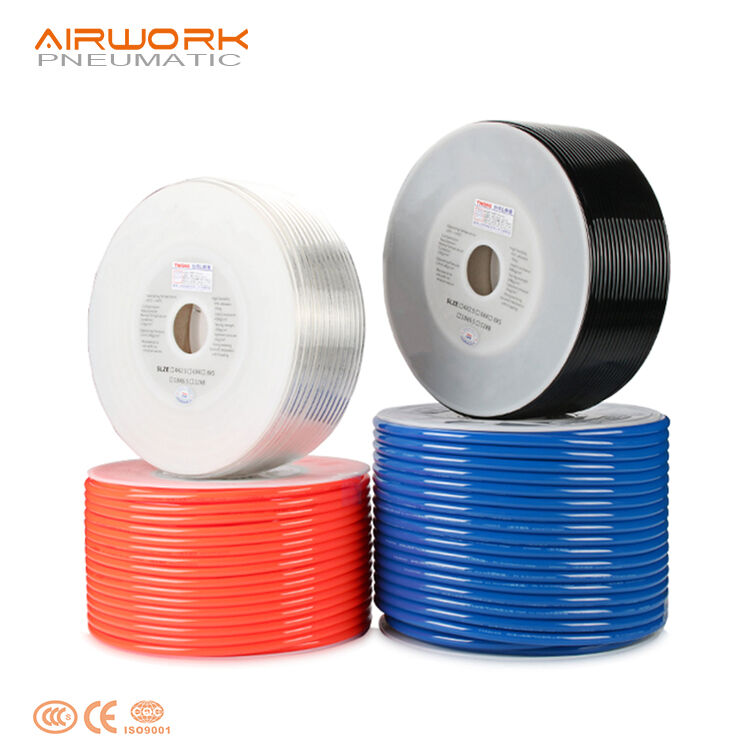
Polyurethane tubing is manufactured in a wide range of colors, and this color coding serves a functional purpose in complex pneumatic systems. Standardized color assignments—where blue indicates working air supply, red indicates secondary supply lines, and black indicates exhaust—allow maintenance technicians to trace circuits quickly and accurately, reducing diagnostic time during troubleshooting. Facilities that implement consistent color coding conventions throughout their pneumatic networks measurably reduce the time required to isolate faults and perform planned maintenance.
Transparent or translucent grades of polyurethane tubing offer the additional advantage of visual flow confirmation. In systems where verifying that air or fluid is actually moving through a circuit is operationally important—such as in vacuum generation lines or instrument air supply networks—clear tubing allows technicians to observe the flow state directly without installing separate flow indicators. This diagnostic transparency can be valuable during commissioning, troubleshooting, or quality validation stages of system startup.
Specialized formulations of polyurethane tubing also include anti-static grades for environments where electrostatic discharge poses a risk, such as paint spray booths or explosive atmospheres. These grades incorporate conductive additives that dissipate static charges safely, preventing ignition hazards while maintaining the mechanical performance characteristics that make polyurethane the preferred tubing material for the underlying pneumatic application.
FAQ
What is the difference between polyurethane tubing and nylon tubing for pneumatics?
Polyurethane tubing is generally more flexible and has higher abrasion resistance than nylon tubing, making it the preferred choice for dynamic applications involving continuous movement, such as robotic arms and cable carrier systems. Nylon tubing is typically stiffer, which can be advantageous in static routing where tubing must hold its shape without sagging. Polyurethane also tends to offer better elastic recovery after bending. The choice between the two depends on whether the application demands flexibility and wear resistance or dimensional rigidity in a static installation.
Can polyurethane tubing be used with vacuum applications as well as pressure?
Yes, polyurethane tubing is commonly used in vacuum circuit applications within pneumatic systems, such as vacuum cup supply lines for pick-and-place equipment. When selecting tubing for vacuum service, it is important to verify that the wall thickness is sufficient to resist collapse under atmospheric pressure differential. Standard pneumatic polyurethane tubing in common sizes and wall thicknesses generally handles typical industrial vacuum levels without collapsing, but for deep vacuum applications or very small bore sizes, confirming the manufacturer's vacuum rating is the appropriate step.
How should polyurethane tubing be cut and installed to ensure leak-free connections?
A clean, square cut is essential for achieving a leak-free push-in fitting connection with polyurethane tubing. The cut face must be perpendicular to the tube axis, with no burrs, nicks, or deformation on the tube end. A dedicated pneumatic tube cutter—rather than scissors or a utility knife—produces the most reliable results. Before inserting the tube into a fitting, verify that the outer diameter is within specification and free of scratches in the sealing zone. Push the tube firmly into the fitting until it bottoms out, then give a gentle pull-back to confirm that the grab ring has engaged properly.
What temperature range is polyurethane tubing suitable for in industrial use?
Most standard grades of polyurethane tubing perform reliably across a temperature range of approximately minus 35 degrees Celsius to plus 60 degrees Celsius, with some formulations rated to plus 70 degrees Celsius or slightly higher. At temperatures below the lower limit, the material stiffens and loses some flexibility, which can increase the risk of kinking during installation or operation in cold environments. At elevated temperatures near the upper limit, working pressure ratings are typically derated. For applications involving elevated temperatures, always consult the specific product's technical datasheet to verify that the operating conditions fall within the rated performance envelope of the selected polyurethane tubing grade.
Table of Contents
- Defining Polyurethane Tubing: Material Composition and Core Properties
- How Polyurethane Tubing Functions in Pneumatic Systems
- Application Scenarios Where Polyurethane Tubing Excels
- Selecting the Right Polyurethane Tubing Specification
-
FAQ
- What is the difference between polyurethane tubing and nylon tubing for pneumatics?
- Can polyurethane tubing be used with vacuum applications as well as pressure?
- How should polyurethane tubing be cut and installed to ensure leak-free connections?
- What temperature range is polyurethane tubing suitable for in industrial use?