 EN
EN

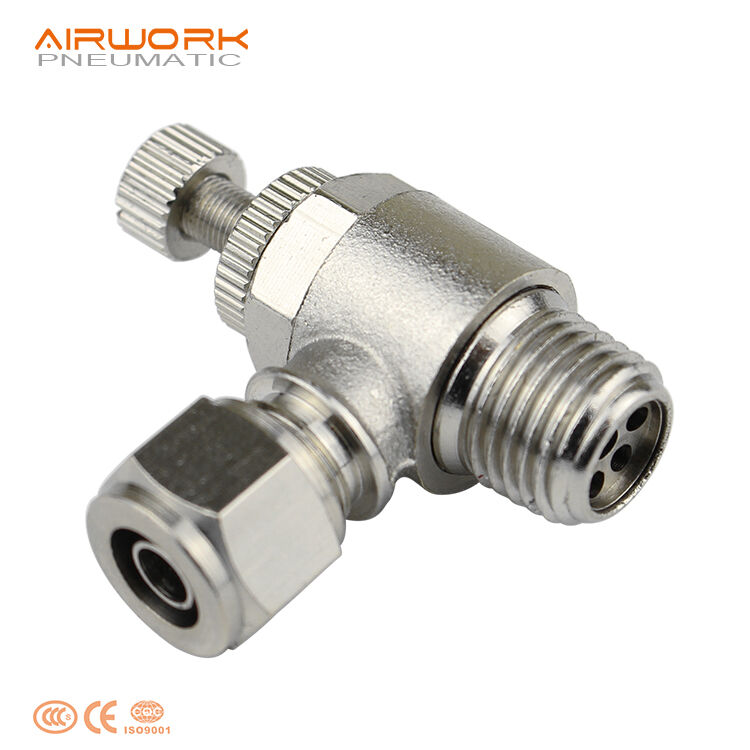
In industrial automation and fluid power systems, pneumatic valves serve as one of the most fundamental components for directing, regulating, and controlling the flow of compressed air. From simple on/off switching to precise flow modulation, pneumatic valves enable engineers and system designers to build reliable, responsive, and efficient control architectures across a wide range of applications. Understanding what pneumatic valves are—and how they function within a broader system—is essential for anyone involved in designing, specifying, or maintaining automated equipment.
The role of pneumatic valves extends far beyond simply opening or closing a passage. These devices are integral to how machines respond to commands, how actuators move with precision, and how entire production lines operate in a coordinated manner. This article explores the definition of pneumatic valves, breaks down their core types and mechanisms, and explains how they support system control in practical industrial environments.
Defining Pneumatic Valves and Their Core Function
The Basic Principle Behind Pneumatic Valves
Pneumatic valves are mechanical or electromechanical devices that control the passage of compressed air through a circuit. At their most fundamental level, they operate by shifting an internal element—typically a spool, poppet, or disc—to open, close, or redirect airflow paths. This shifting action is triggered by various actuating mechanisms including manual force, mechanical contact, pilot air pressure, or electrical solenoids.
The function of pneumatic valves is defined by two primary responsibilities: directing flow and regulating pressure or flow rate. Directional control valves determine which path the air takes within the system, while pressure and flow control valves manage how much air passes and at what force. Together, these categories form the foundation of any pneumatic control architecture.
In practical terms, when a machine cycle starts, a command signal activates specific pneumatic valves, which then route compressed air to the appropriate actuator—such as a cylinder or rotary motor. The actuator converts that air pressure into mechanical movement, completing a task. When the cycle ends, the valve shifts again to either exhaust the air or redirect it for a return stroke.
How Pneumatic Valves Differ from Other Fluid Control Devices
It is important to distinguish pneumatic valves from hydraulic valves or general-purpose fluid valves. While hydraulic valves manage high-pressure liquid media, pneumatic valves are specifically engineered for compressed air service, which is compressible and operates at comparatively lower pressures. This means pneumatic valves must account for air's compressibility, require different sealing materials, and often prioritize speed of response over force output.
Another key distinction is that pneumatic valves are often designed with exhaust ports to safely vent spent air to atmosphere. This is unique to gas-based systems and influences the valve's port configuration. A standard directional control valve in a pneumatic circuit will typically have designated supply, outlet, and exhaust ports—each playing a specific role in the control cycle.
Major Types of Pneumatic Valves and Their Applications
Directional Control Valves
Directional control valves are the most widely used category of pneumatic valves in industrial automation. They are classified by the number of ports and the number of switching positions, expressed in a notation such as 5/2-way or 5/3-way. A 5/2-way valve, for example, has five ports and two switching positions, making it ideal for double-acting cylinder control where both extension and retraction require positive air pressure.
The pneumatic valves in the 5/3-way configuration offer an additional center position that can be configured as pressure-centered, exhaust-centered, or blocked-center. This third position gives engineers greater flexibility in designing fail-safe machine states, ensuring that in the event of power loss or signal failure, the actuator assumes a safe and predictable condition.
Directional control pneumatic valves are actuated in a variety of ways. Solenoid-operated valves use electromagnetic coils to shift the spool and are ideal for integration with PLCs and electronic control systems. Pilot-operated valves use a small pilot air signal to shift a larger main valve, which is beneficial when high flow rates are required or when the valve must be located away from the control signal source.
Pressure and Flow Control Valves
Beyond directional switching, pneumatic valves also include pressure regulators, relief valves, and flow control valves. Pressure regulators downstream from a compressor or FRL unit ensure that the pneumatic circuit receives a stable, pre-set supply pressure regardless of fluctuations in the main air line. This is critical for consistent actuator performance and system safety.
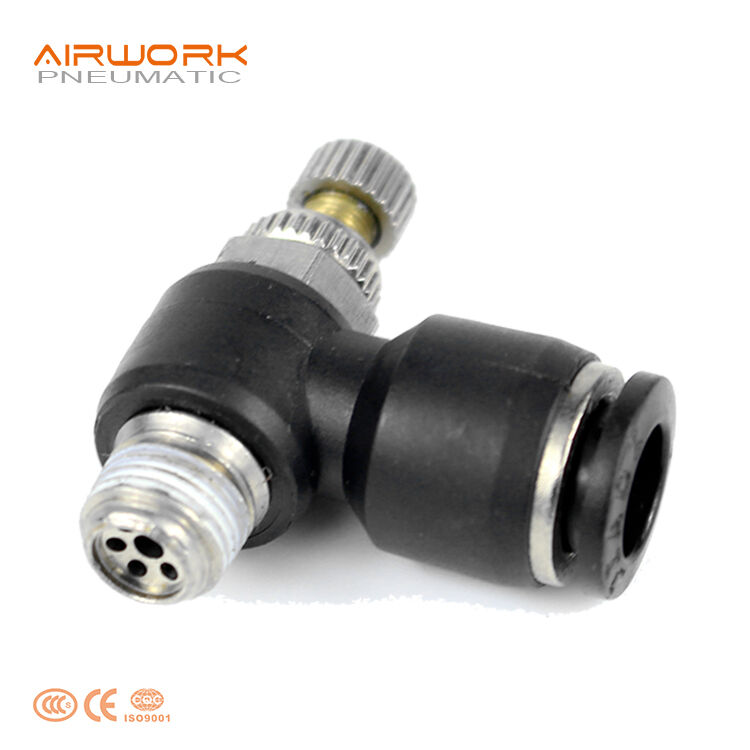
Flow control pneumatic valves, often called needle valves or speed controllers when combined with a check valve, manage the rate at which air enters or exhausts from an actuator. By throttling airflow, operators can precisely control the speed of a cylinder's stroke. This is particularly important in assembly applications where moving too fast could damage parts or cause misalignment.
Check valves are another subset of pneumatic valves that permit flow in only one direction. They are commonly used within speed controller assemblies to allow free flow in one direction while metering flow in the opposite direction. This unidirectional characteristic makes them invaluable for preventing backflow and protecting sensitive system components.
How Pneumatic Valves Support System Control Architecture
Integration with PLC and Electronic Control Systems
Modern industrial automation relies heavily on the seamless integration of pneumatic valves with programmable logic controllers and other electronic systems. Solenoid-operated pneumatic valves receive discrete or analog signals from the PLC output cards, translating electrical commands into physical airflow changes. This bridge between electronic logic and mechanical actuation is what makes automation cycles precise and repeatable.
Valve manifolds allow multiple pneumatic valves to be grouped together on a common base, sharing a single air supply and exhaust connection. This reduces plumbing complexity, minimizes installation time, and allows for centralized electrical connectivity through fieldbus systems such as IO-Link, EtherNet/IP, or PROFIBUS. In complex machines with many axes of motion, manifold-mounted pneumatic valves are a standard approach to managing both air and data efficiently.
Position feedback sensors are often integrated alongside pneumatic valves to close the control loop. When a cylinder reaches its end position, a sensor sends a confirmation signal to the PLC, which then triggers the next valve action in the sequence. This feedback-driven approach transforms individual pneumatic valves from simple switching devices into active participants in a coordinated machine logic.
Role of Pneumatic Valves in Fail-Safe and Safety Circuit Design
One of the most critical functions that pneumatic valves serve in system control is defining the machine's behavior under abnormal conditions. Engineers must plan for scenarios such as power outages, emergency stops, or signal failures. The spring-return mechanism in most solenoid-operated pneumatic valves ensures that when power is removed, the valve returns to a known default position—typically venting air from the actuator and stopping motion.
For safety-critical applications, dual-valve safety configurations may be required. These arrangements use two pneumatic valves in series, monitored by a safety controller, to ensure that neither valve alone can cause a hazardous machine state. This redundancy is required by machinery safety standards such as ISO 13849 in applications involving significant risk to operators.
The center position options of 5/3-way pneumatic valves are specifically chosen to meet safety requirements. A blocked-center valve holds the actuator in place when de-energized, while an exhaust-center valve vents both ports to atmosphere, allowing the actuator to be moved freely by hand. The choice between these depends on the mechanical requirements of the application and the defined safe state of the machine.
Selection Criteria for Pneumatic Valves in Industrial Systems
Key Technical Parameters to Evaluate
Selecting the right pneumatic valves for a system requires careful evaluation of several interdependent technical parameters. The first is the port size and flow coefficient (Cv or Kv), which determines how much air the valve can pass at a given pressure drop. Undersized pneumatic valves create flow bottlenecks that slow actuator speed, while oversized valves may add unnecessary cost and bulk.
Operating pressure range is another critical factor. Most standard pneumatic valves are rated for pressures between 2 and 10 bar, but low-pressure or high-pressure variants exist for specialized applications. It is equally important to verify that the solenoid voltage rating matches the available control power supply—common options include 12V DC, 24V DC, 110V AC, and 220V AC.
Response time—the duration between receiving an electrical signal and completing the valve shift—is especially important in high-speed or synchronized applications. Premium pneumatic valves can achieve response times below 10 milliseconds, enabling tight coordination of multi-actuator sequences. For less time-sensitive applications, standard response times are entirely adequate and offer a cost advantage.
Environmental and Application Compatibility
The operating environment strongly influences which pneumatic valves are appropriate for a given installation. In food and beverage processing, valves must comply with hygiene standards and may require stainless steel bodies or food-grade sealing materials. In washdown environments, valves with IP65 or IP67 protection ratings are essential to prevent water ingress from damaging solenoid coils and seals.
Temperature extremes also affect the performance of pneumatic valves. Standard elastomeric seals may harden or degrade in very cold conditions, while high-temperature applications may require special seal compounds such as PTFE or Viton. In explosive or hazardous atmospheres, ATEX-rated or IECEx-certified pneumatic valves with intrinsically safe solenoids must be selected to meet legal and safety requirements.
Cycle life and maintenance requirements are practical considerations that influence long-term ownership costs. High-quality pneumatic valves from reputable manufacturers are typically rated for tens of millions of cycles, making them suitable for continuous production environments. Regular inspection of seals, solenoid coils, and port screens ensures that pneumatic valves continue to perform reliably over their operational lifespan.
FAQ
What is the main difference between a 5/2-way and a 5/3-way pneumatic valve?
A 5/2-way pneumatic valve has five ports and two switching positions, making it suitable for controlling double-acting cylinders that require full air pressure to both extend and retract. A 5/3-way pneumatic valve adds a third center position, which can be configured to exhaust, pressurize, or block both actuator ports simultaneously. This center position is used to define a safe intermediate state for the actuator when the valve is de-energized or between active commands.
How do solenoid-operated pneumatic valves integrate with a PLC?
Solenoid-operated pneumatic valves receive electrical signals—typically 24V DC—from the digital output modules of a PLC. When the PLC output turns on, the solenoid coil is energized, creating a magnetic field that shifts the valve's internal spool to change airflow direction. When the output turns off, a spring returns the spool to its default position. This simple on/off interface makes solenoid pneumatic valves straightforward to program and diagnose in automated sequences.
What causes pneumatic valves to fail or respond slowly over time?
The most common causes of pneumatic valve degradation include contamination of the compressed air supply with moisture, oil residue, or particulate matter. These contaminants can clog orifices, corrode internal surfaces, or cause seals to swell or harden. Slow response may also result from a worn solenoid coil with reduced magnetic force, or from seal wear that allows internal leakage, requiring more spool travel to achieve full port opening. Regular use of air filtration, lubrication where required, and scheduled maintenance significantly extends valve service life.
Can pneumatic valves be used for proportional or analog control?
Standard on/off pneumatic valves are not suitable for proportional control, but a specialized category of proportional pneumatic valves does exist. These devices use an analog electrical signal—typically 0–10V or 4–20mA—to position the valve spool at intermediate points, allowing continuous modulation of pressure or flow rate. Proportional pneumatic valves are used in applications requiring precise force control, soft-stop positioning, or variable actuator speed profiles, and they are typically integrated with closed-loop control systems that include position or pressure feedback.