 EN
EN

Introduction: The Power of Pneumatics in Modern Automation
In the rapidly evolving landscape of industrial automation, the ability to achieve precise, reliable, and efficient linear motion is paramount. Pneumatic air cylinders, the workhorses of the automation world, convert compressed air energy into mechanical force. However, with a vast array of designs, sizes, and specifications available, selecting the right air cylinder is not just a technical necessity—it is a strategic decision that impacts the longevity and performance of your entire machinery.
At AIRWORK (Zhejiang Jinzhi Pneumatic Technology Co., Ltd.), we have spent over a decade refining our pneumatic solutions. This guide is designed to help B2B buyers and engineers navigate the complexities of cylinder selection to ensure optimal system performance. To move from a basic understanding to a professional selection process, one must look beyond simple force calculations and into material science, international standards, and environmental compatibility.
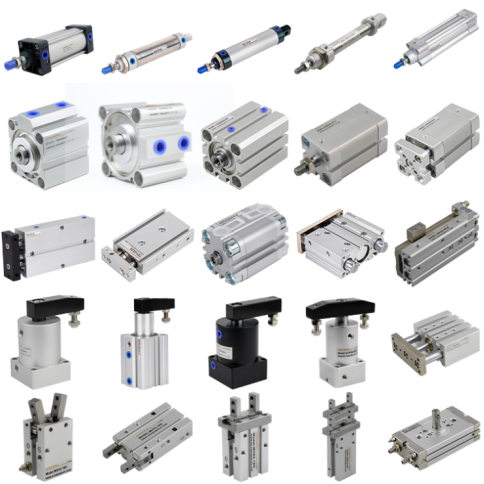
1. Defining Your Force Requirements: Bore Size and Pressure Ranges
The most fundamental step in selecting an air cylinder is determining the force required to move the load. Force is a function of the air pressure and the internal surface area of the cylinder (the bore).
The Engineering Formula
- Formula: Theoretical Force (F) = Working Pressure (P) × Piston Area (A).
- Consideration: Always factor in a safety margin. For horizontal loads, a factor of 1.25 to 1.5 is standard. For vertical lifting, a factor of 2 or higher is recommended to ensure the cylinder can handle the weight during pressure fluctuations.
Pressure Ranges and Material Limits
Most industrial pneumatic systems operate between 0.5 MPa and 0.8 MPa (5 to 8 bar). However, the cylinder's construction determines its maximum limit. AIRWORK’s standard SC and DNC series are rated for pressures up to 1.0 MPa (10 bar). High-pressure applications require cylinders with reinforced barrels and thickened end caps to prevent deformation or 'breathing' during high-frequency cycles.
2. Determining Stroke Length and Speed Dynamics
How far does the load need to travel? The stroke length defines the linear distance the piston rod moves. While it seems straightforward, technical nuances arise as the stroke increases.
Long-Stroke Stability
Long-stroke cylinders (especially those over 500mm) face the risk of 'piston rod buckling' or lateral deflection. To mitigate this, engineers must specify larger rod diameters or utilize external guides. At AIRWORK, we offer customized rod diameters and reinforced guide units (such as the MGP series) for applications requiring long strokes with heavy side loads.
Cycle Speed and Cushioning
High-speed applications (above 500mm/s) require specialized cushioning to prevent the piston from damaging the cylinder end caps. There are two primary types:
1. Fixed Rubber Bumpers: Best for low-speed, short-stroke applications where noise reduction is the primary goal.
2. Adjustable Air Cushioning: Essential for heavy or high-speed loads. By adjusting a needle valve on the end cap, a pocket of air is trapped, creating a 'pneumatic brake' that brings the piston to a gentle stop. This significantly extends the life of the cylinder and the machine frame.
3. Material Specifications and ISO Standards
For B2B buyers, adherence to international standards ensures interchangeability and global support.
- ISO 15552 (formerly ISO 6431): This is the global standard for large-bore cylinders (32mm to 320mm). Our DNC Series follows this standard, featuring a profile design that allows for easy sensor mounting and sleek aesthetics.
- ISO 6432: This applies to mini cylinders (8mm to 25mm). Our MA Series uses this standard, ensuring that replacement parts are easy to source regardless of the machine's origin.
Material Selection for Longevity
- Cylinder Barrel: We use hard-anodized aluminum for its lightweight properties and superior wear resistance.
- Piston Rod: Standard rods are made of C45 carbon steel with hard chrome plating. For corrosive environments (e.g., marine or chemical processing), stainless steel (SUS304 or SUS316) is a mandatory upgrade to prevent pitting and seal failure.
- Seals: Standard NBR (Nitrile) seals are rated for -20°C to 80°C. For high-temperature environments like glass manufacturing or foundries, we provide Viton (FKM) seals capable of withstanding up to 150°C.
4. Industry Use Cases: Where Precision Meets Power
Use Case: High-Speed Sorting in Logistics
In modern fulfillment centers, cylinders must cycle thousands of times per hour. The Compact Cylinder (SDA or CQ2 series) is favored here for its low inertia and high-speed capability. When paired with high-flow solenoid valves, these cylinders can respond in milliseconds, ensuring packages are diverted to the correct chutes without bottlenecking the system.
Use Case: Food & Beverage Packaging
In bottling plants, cylinders are subjected to daily high-pressure washdowns with caustic cleaning agents. This requires 'Clean Design' cylinders—often made of stainless steel with smooth surfaces to prevent bacteria buildup. AIRWORK’s specialized food-grade grease and corrosion-resistant coatings ensure compliance with strict hygiene standards while maintaining high cycle life.
5. B2B Selection Criteria: Moving from Procurement to Partnership
For a global OEM, selecting a supplier is as important as selecting the part. Here are the key criteria for professional procurement:
1. Customization Capability: Does the factory offer custom stroke lengths, special rod ends, or non-standard seal materials? At AIRWORK, OEM customization is a core part of our business.
2. Lead Times and Logistics: In an era of supply chain volatility, reliable lead times are non-negotiable. Look for suppliers with a stable raw material stock and efficient export logistics.
3. Certifications: Ensure the manufacturer is ISO 9001 certified and the products meet CE or RoHS requirements where necessary.
4. Technical Support: A true B2B partner provides engineering support, including 2D/3D CAD files and technical consultation during the design phase.
Conclusion: Future-Proofing Your Automation
Selecting the right air cylinder is a balance of physics, material science, and strategic sourcing. By understanding the specific force requirements, material limitations, and industry standards, you can significantly reduce maintenance costs and improve the reliability of your automated systems. At AIRWORK, we are committed to providing the technical depth and manufacturing quality that global OEMs require. Whether you need a standard ISO cylinder or a custom precision solution, our team is ready to help you optimize your pneumatic infrastructure.
Table of Contents
- Introduction: The Power of Pneumatics in Modern Automation
- 1. Defining Your Force Requirements: Bore Size and Pressure Ranges
- 2. Determining Stroke Length and Speed Dynamics
- 3. Material Specifications and ISO Standards
- 4. Industry Use Cases: Where Precision Meets Power
- 5. B2B Selection Criteria: Moving from Procurement to Partnership
- Conclusion: Future-Proofing Your Automation