 EN
EN

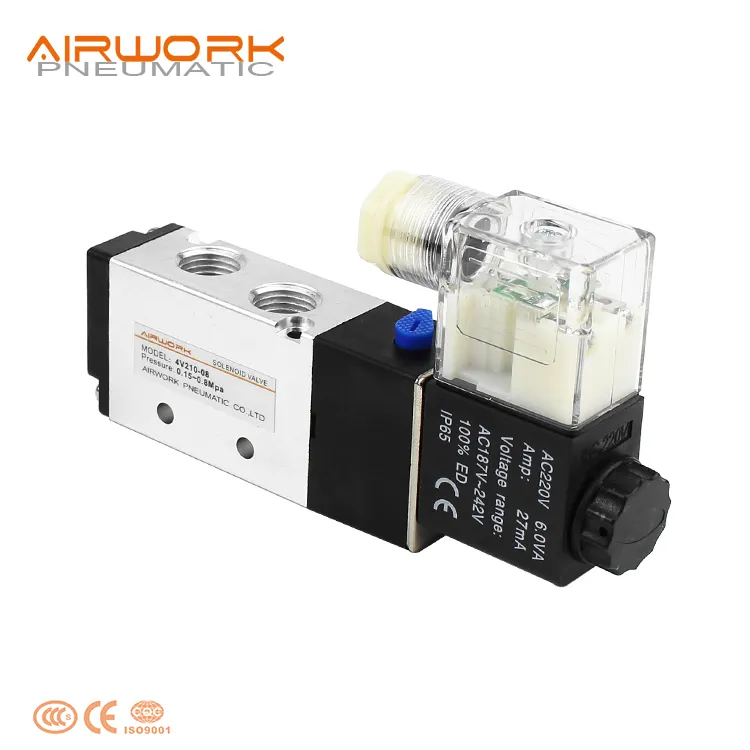
In pneumatic and automation systems, response time is one of the most critical performance metrics. Every millisecond of delay between a control signal and mechanical action can translate into reduced throughput, inconsistent product quality, or even safety risks on the production floor. The air solenoid valve sits at the center of this challenge, acting as the electrically controlled gateway that governs when and how compressed air flows to actuators, cylinders, and other pneumatic components. Understanding how this device influences response time is essential for engineers and procurement professionals who want to optimize their systems.
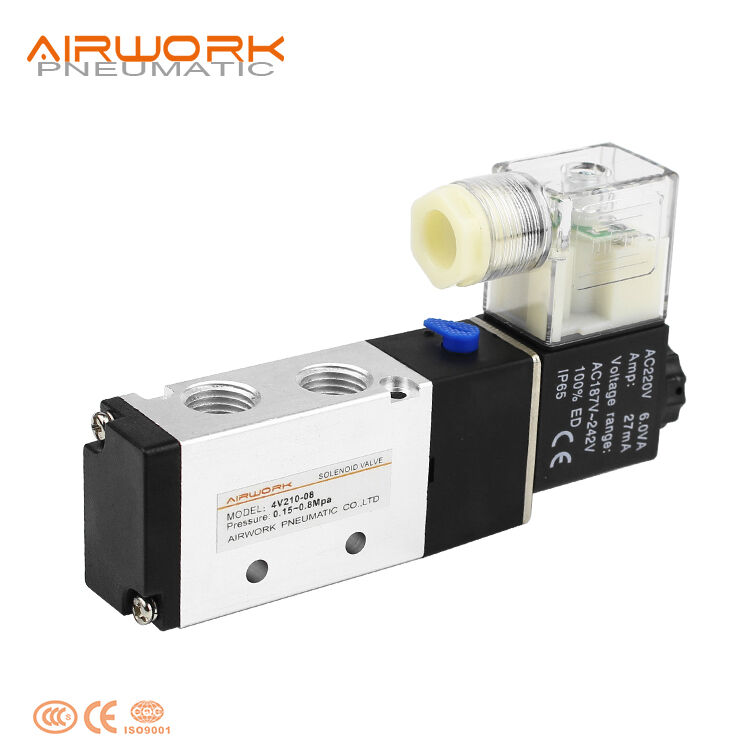
The relationship between an air solenoid valve and system response time is not simply about how fast the valve opens or closes in isolation. It encompasses valve design, coil actuation speed, internal flow geometry, mounting proximity to actuators, and even the control signal voltage. When all these factors are properly aligned, an air solenoid valve can dramatically shorten cycle times, sharpen repeatability, and deliver the kind of split-second precision that modern automated manufacturing demands. This article explores each dimension of that relationship in practical, engineering-relevant detail.
The Role of an Air Solenoid Valve in Pneumatic Control Loops
How the Valve Functions Within the Control Chain
A pneumatic control loop consists of a controller, a switching element, an actuator, and feedback. The air solenoid valve is the switching element. When a PLC or sensor-driven controller sends an electrical signal, the solenoid coil energizes, generating a magnetic field that shifts a plunger or spool, which in turn opens or closes the air path. This electromechanical conversion is the first step in the chain — and it is where response time either gains or loses ground.
Because the air solenoid valve translates an electrical command into a pneumatic action, its internal switching speed directly determines how quickly downstream actuators receive pressurized air. A valve with high coil inductance or heavy mechanical components will lag behind the control signal. By contrast, a well-engineered air solenoid valve with a low-mass armature and optimized magnetic circuit minimizes that conversion delay, allowing the system to react almost instantaneously to commands.
In high-speed packaging lines, semiconductor handling equipment, or medical device assembly, this responsiveness becomes a production differentiator. Engineers who choose the right air solenoid valve for the application can achieve consistent actuation timing down to single-digit milliseconds, which cumulatively improves throughput and quality across thousands of cycles per hour.
Direct vs. Pilot-Operated Valve Configurations
Not all air solenoid valve designs respond at the same speed. Direct-acting valves move the main seal directly via the solenoid plunger, requiring no minimum pressure differential to operate. This makes them inherently faster and more predictable in response because there is no intermediate pilot stage introducing a secondary delay. For low-flow applications or systems operating near zero pressure, direct-acting designs offer the most reliable response characteristics.
Pilot-operated configurations use the solenoid to control a small pilot passage, which then uses line pressure to shift the main spool. While this allows the valve to handle much larger flow volumes, the pilot stage adds a brief but measurable lag. In applications where response time is paramount and flow volumes are moderate, selecting a direct-acting air solenoid valve eliminates this intermediate step and tightens actuation timing.
Understanding the configuration trade-off is essential when engineering for speed. A pilot-operated air solenoid valve may be perfectly adequate for slower press cycles or clamping operations, while a direct-acting variant should be specified wherever the control loop demands sub-10-millisecond switching performance.
Key Design Factors That Influence Response Speed
Coil Technology and Electromagnetic Efficiency
The solenoid coil is the electrical heart of any air solenoid valve. The time it takes for the coil to build sufficient magnetic force to move the plunger is called the 'pull-in time,' and it varies depending on coil resistance, inductance, and supply voltage. Lower coil inductance generally enables faster pull-in times, while higher voltage supplies can accelerate the rate of current rise through the coil, shortening actuation delay.
Modern air solenoid valve coils are often designed with optimized wire gauges and winding configurations that balance fast pull-in characteristics with thermal stability during continuous-duty operation. Some designs incorporate suppression diodes or varistors to manage voltage spikes, which also helps protect the driving electronics and ensures consistent switching behavior over millions of cycles.
When specifying an air solenoid valve for a fast-cycling application, reviewing the manufacturer's stated response times under nominal voltage and pressure is critical. Small differences in coil design can account for 5 to 15 millisecond differences in switching speed — a margin that compounds significantly across high-frequency automated processes.
Internal Flow Path Geometry
Beyond electrical actuation speed, the physical geometry of the air path inside the valve body determines how quickly pressurized air can transit from the inlet to the outlet once the valve opens. Narrow passages, sharp bends, and poorly profiled seats all create pressure drop and slow the rate of downstream pressure build-up. An air solenoid valve with a well-optimized, straight-through flow path and a high Cv (flow coefficient) relative to its body size delivers faster downstream actuator response.
This is why flow coefficient is listed alongside switching time in quality air solenoid valve specifications. A valve that opens in 5 milliseconds but restricts flow heavily may ultimately deliver worse system response than a valve that opens in 8 milliseconds but passes air with minimal resistance. Both switching time and flow geometry must be evaluated together for accurate system-level response time prediction.
In multi-axis robotic systems or fast-cycling pick-and-place equipment, this distinction is especially relevant. System integrators often underestimate the flow restriction contribution to total response lag, focusing only on electrical switching specifications. Choosing an air solenoid valve with both fast electrical actuation and a well-profiled internal flow path delivers the best combined performance.
Mounting Proximity and Tubing Volume Effects
Why Valve Placement Matters as Much as Valve Speed
Even the fastest air solenoid valve cannot overcome the physics of compressed air propagation through long tubing runs. When a valve opens, the time required for pressurized air to travel through the connecting tubing and build sufficient pressure at the actuator port is directly proportional to tubing volume. A short, large-bore connection between valve and actuator minimizes this delay. Long, narrow tubes create significant lag that far exceeds the valve's own switching time.
This is why manifold-mount and sub-base configurations for air solenoid valve installations have become standard practice in high-speed automation. Mounting the valve directly on the actuator body, or using a manifold block positioned immediately adjacent to the cylinder bank, reduces the dead volume between valve outlet and actuator inlet to nearly zero. The result is a dramatically shorter time-to-pressure and faster mechanical movement.
Engineers designing for response time should calculate the tubing volume in their circuit and evaluate whether repositioning the air solenoid valve closer to the load point would yield meaningful improvements. In many retrofit scenarios, simply relocating an existing valve from a remote panel to a manifold near the actuators produces a 20 to 40 percent reduction in observed cycle time without any change to the valve itself.
Manifold Systems and Centralized Air Distribution
Manifold-based air solenoid valve systems consolidate multiple valves onto a shared air supply block, reducing individual tubing lengths and simplifying the overall circuit layout. This architecture inherently supports faster response across all connected actuators because each air solenoid valve in the manifold is already positioned at the optimal distance from its corresponding load.
Manifold systems also facilitate maintenance and configuration changes, since individual valve stations can be swapped without disturbing adjacent circuits. For facilities running multiple product variants or requiring frequent retooling, this flexibility adds operational value beyond pure speed improvement. The air solenoid valve becomes not just a speed asset but a system agility asset.
When evaluating manifold-compatible air solenoid valve configurations, attention should be given to station pitch, port sizing, and whether the manifold design supports both 5/2-way and 5/3-way valve configurations. Mixed configurations are common in systems where some actuators require mid-position holding and others require simple bidirectional control, and a well-designed manifold accommodates both without compromising response characteristics.
Selecting the Right Air Solenoid Valve Configuration for Response-Critical Applications
Understanding 5/2-Way vs. 5/3-Way Configurations
The port and position configuration of an air solenoid valve has a direct bearing on how it responds and what behavior it enables under different control conditions. A 5/2-way air solenoid valve has five ports and two switching positions, making it the standard choice for driving double-acting cylinders in both directions with a single solenoid or dual solenoids. Its mechanically simple spool design contributes to fast, repeatable switching with minimal internal hysteresis.
A 5/3-way air solenoid valve adds a third, center position that can be configured to exhaust all ports, pressurize all ports, or block all ports when de-energized. This center condition is valuable for applications where the actuator must hold position precisely without continuous electrical power. However, the additional spool complexity and the springs required to center the valve can slightly extend switching time compared to a simpler 5/2-way configuration.
For maximum response speed in straightforward bidirectional actuation, a dual-solenoid 5/2-way air solenoid valve typically outperforms a 5/3-way variant. The selection should always be driven by the functional requirement — specifically, whether the center condition of a 5/3-way valve is actually needed — rather than defaulting to the more complex configuration when simplicity would serve better.
Matching Valve Specifications to System Requirements
Proper specification of an air solenoid valve requires cross-referencing several performance parameters simultaneously. Response time, flow coefficient, operating pressure range, port size, electrical supply voltage, power consumption, and environmental rating must all align with the application's demands. An air solenoid valve that is oversized for the flow requirement will have unnecessary internal volume, slowing downstream pressure rise. An undersized valve will restrict flow and limit actuator force and speed.
IP rating and enclosure class also affect response time indirectly. Valves intended for wash-down environments often incorporate additional sealing that increases plunger friction, slightly slowing mechanical switching. In cleanroom or hygienic environments, the choice of an appropriate air solenoid valve must balance contamination control requirements with acceptable response characteristics. Specifying a valve category that exceeds the environmental requirement unnecessarily may compromise speed without providing any operational benefit.
Taking a systematic approach to air solenoid valve selection — starting with the response time target, then working backward through flow, pressure, mounting, and electrical requirements — leads to better outcomes than selecting based on catalog familiarity alone. This process is especially important in new machine builds where the total cycle time budget must be allocated across all system components.
Operational Practices That Sustain Response Performance Over Time
Air Quality and Its Effect on Valve Switching Consistency
An air solenoid valve depends on clean, dry, properly regulated compressed air to maintain its designed response characteristics throughout its service life. Moisture in the supply line causes corrosion on internal spool and seat surfaces, increasing friction that slows switching. Particulate contamination can partially block pilot passages in pilot-operated designs, extending actuation time and introducing cycle-to-cycle variability. Both degradation mechanisms can turn a fast-responding valve into an unpredictable one.
Installing a properly rated filter-regulator-lubricator (FRL) unit upstream of the air solenoid valve assembly is the most effective preventive measure. For valves that specify oil-free operation — which is increasingly common in food processing and pharmaceutical applications — a coalescing filter without lubrication is the correct approach. Maintaining supply pressure within the valve's rated operating range also ensures the solenoid force margin remains adequate for consistent switching.
Routine inspection of FRL service intervals and downstream air quality should be part of any maintenance program for systems where air solenoid valve response time is a critical process variable. When cycle time drift is observed during production, contaminated air supply is often the first place to investigate before attributing the issue to the valve itself.
Preventive Maintenance and Response Time Monitoring
Like any electromechanical component, an air solenoid valve experiences gradual wear on coil insulation, seals, and moving parts over its operating life. As seals harden or swell due to temperature cycling and fluid exposure, internal leakage can increase, and switching force margins can erode. These changes manifest as gradually increasing response time that may not be immediately apparent without instrumented monitoring.
In high-cycle applications, tracking actuation time with position sensors or flow transducers allows maintenance teams to detect response degradation before it affects product quality or triggers alarms. Establishing a baseline response time measurement during commissioning and comparing it periodically against live measurements provides an early warning system that supports condition-based maintenance rather than calendar-based replacement.
Pairing response time monitoring with structured spare parts management — maintaining ready stock of the most common air solenoid valve sizes used in a facility — minimizes mean time to repair when a valve does require replacement. This operational discipline ensures that the system response time advantage delivered by well-specified valves is preserved throughout the equipment's production lifetime.
FAQ
What is a typical response time for an air solenoid valve?
Response time varies by design, but most industrial-grade air solenoid valve models offer switching times in the range of 5 to 30 milliseconds from signal input to full valve opening. Direct-acting configurations at the lower end of this range are preferred for fast-cycling applications, while pilot-operated designs used in high-flow systems typically fall toward the upper end. Always verify the manufacturer's stated response time under the specific pressure and voltage conditions of your system, as these parameters significantly influence actual performance.
Does supply voltage affect how quickly an air solenoid valve responds?
Yes, supply voltage has a measurable effect on coil pull-in time. Higher voltages drive current through the coil winding faster, building the magnetic force needed to shift the plunger in less time. Some high-speed air solenoid valve applications use 'peak and hold' driver circuits that apply a high initial voltage spike to accelerate pull-in, then drop to a lower holding voltage to reduce coil temperature. This technique can reduce actuation delay by several milliseconds without increasing steady-state power consumption or thermal loading.
Can the length of tubing between the air solenoid valve and actuator affect response time?
Absolutely. Tubing volume is one of the most overlooked contributors to total system response lag. Even if the air solenoid valve switches in 5 milliseconds, a long tube with large internal volume will require additional time to pressurize before the actuator can move. Reducing tubing length, minimizing tube bore where flow permits, and mounting the valve as close as possible to the actuator are all effective strategies. In precision timing applications, tubing volume should be calculated and factored into the total response time budget during system design.
How does choosing between a 5/2-way and 5/3-way air solenoid valve affect response time?
A 5/2-way air solenoid valve typically responds faster than a 5/3-way variant because its simpler two-position spool design requires less spring force to overcome and has fewer sealing surfaces to move. A 5/3-way air solenoid valve introduces a center-position spring system that must be overcome during both energization and de-energization, which can add a few milliseconds to switching time. If mid-position holding is not functionally required by the application, specifying a 5/2-way configuration is the better choice for optimizing response time.
Table of Contents
- The Role of an Air Solenoid Valve in Pneumatic Control Loops
- Key Design Factors That Influence Response Speed
- Mounting Proximity and Tubing Volume Effects
- Selecting the Right Air Solenoid Valve Configuration for Response-Critical Applications
- Operational Practices That Sustain Response Performance Over Time
-
FAQ
- What is a typical response time for an air solenoid valve?
- Does supply voltage affect how quickly an air solenoid valve responds?
- Can the length of tubing between the air solenoid valve and actuator affect response time?
- How does choosing between a 5/2-way and 5/3-way air solenoid valve affect response time?