 EN
EN

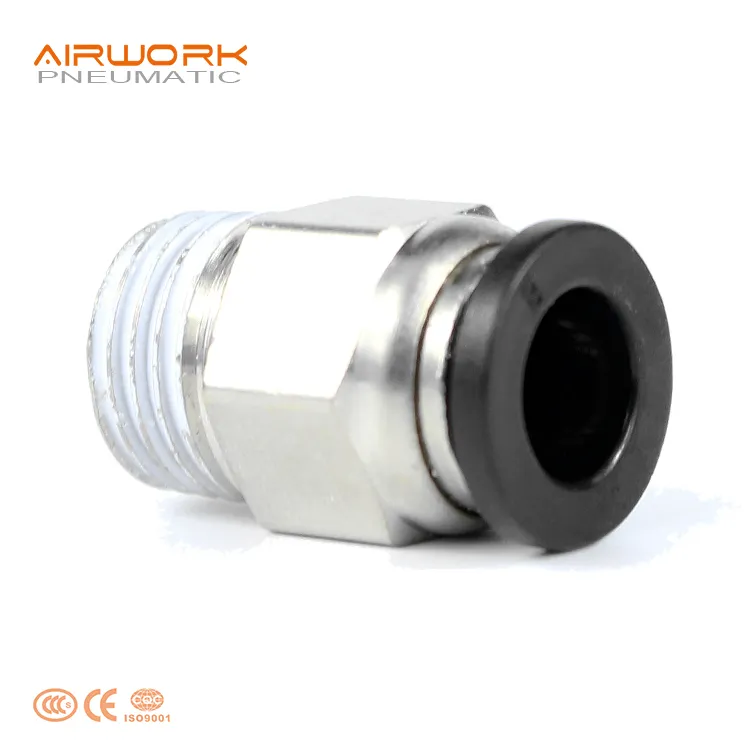
In pneumatic systems, the way components are joined together has a direct impact on efficiency, reliability, and maintenance time. Push to connect air fittings have become one of the most widely adopted connection methods in industrial and commercial pneumatic applications because they eliminate the need for tools, thread tape, or specialized installation skills. Whether you are assembling a new pneumatic circuit or replacing worn components on an existing system, understanding what these fittings are and how they function will help you make smarter decisions about your air line infrastructure.
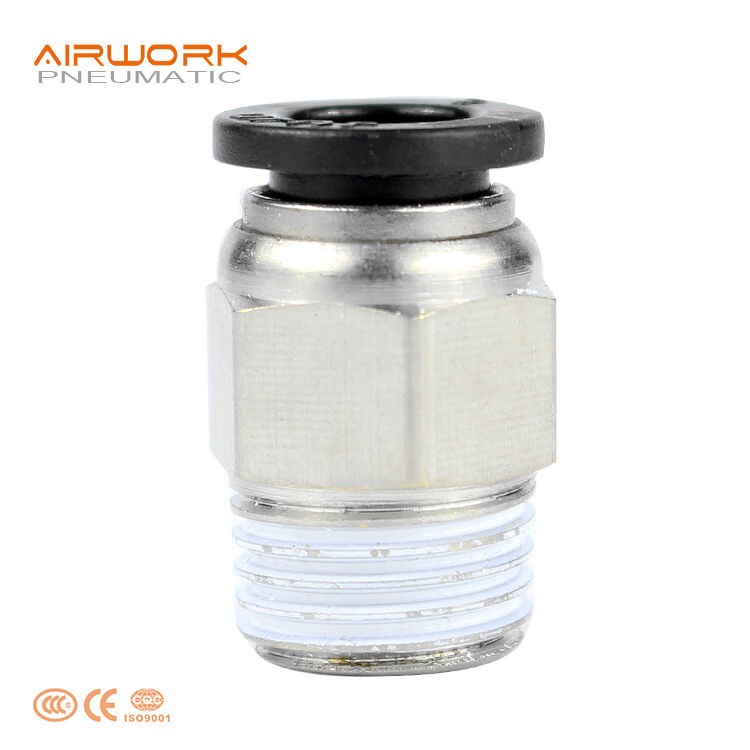
The market for push to connect air fittings has expanded significantly as automation, robotics, and compressed air technology have matured across industries. From small workshop air compressors to large-scale manufacturing lines, these fittings are found in virtually every environment where compressed air is used. This article provides a clear, detailed explanation of what push to connect air fittings are, how their internal mechanisms operate, what types are available, and what buyers and engineers should know before selecting them for a specific application.
Defining Push to Connect Air Fittings
The Core Concept Behind the Technology
Push to connect air fittings, also commonly referred to as push-in fittings or instant fittings, are pneumatic connectors designed to create a secure, airtight seal simply by inserting a tube or pipe into the fitting body. No wrenches, thread sealants, or complex assembly procedures are required. The tube is inserted until it bottoms out or clicks into position, and the connection is immediately ready to carry compressed air under pressure.
The defining characteristic of push to connect air fittings is that the gripping and sealing action is entirely mechanical and automatic. When the tube is pushed in, internal components engage simultaneously to lock and seal the connection. This makes them fundamentally different from threaded fittings, compression fittings, or barbed fittings that require separate installation steps or additional hardware.
The term 'push to connect' describes the user experience precisely: you push the tube, and the connection is made. Disconnection is equally simple in most designs — pressing a collet release ring allows the tube to be withdrawn cleanly without damage to either the fitting or the tube. This two-action simplicity is a major reason why push to connect air fittings dominate pneumatic plumbing in modern facilities.
Common Materials and Construction
Push to connect air fittings are manufactured from several different materials depending on the application environment. The most widely used body materials are nickel-plated brass and engineering-grade polymers such as polyoxymethylene (POM) or glass-fiber reinforced nylon. Brass fittings are preferred in high-pressure, high-temperature, or chemically aggressive environments, while polymer fittings are common in lighter-duty or weight-sensitive applications.
Internal sealing components in push to connect air fittings are typically made from nitrile rubber (NBR) or ethylene propylene diene monomer (EPDM), chosen for their compatibility with compressed air and their ability to maintain a seal across a wide temperature range. The gripping collet is generally made from stainless steel to resist corrosion and maintain long-term holding strength even with repeated insertion and removal cycles.
The tube that connects to push to connect air fittings is most commonly polyurethane (PU) or nylon tubing, though some fittings are also compatible with semi-rigid or rigid thermoplastic tubing. Correct tube outside diameter (OD) and hardness are essential for the fitting to grip and seal properly, which is why manufacturers specify compatible tube dimensions clearly.
The Internal Mechanism: How Push to Connect Air Fittings Work
The Three-Component Working Principle
Understanding how push to connect air fittings work requires looking at three core internal components: the collet (also called the gripper ring or grab ring), the O-ring seal, and the release sleeve. These three parts work in coordinated sequence every time a tube is inserted or removed. The elegance of this system is that all three functions — gripping, sealing, and releasing — are built into a compact, self-contained fitting body.
The collet in push to connect air fittings is a stainless steel ring with inward-angled teeth or fingers. When a tube is inserted, these teeth flex outward to allow entry. Once the tube is inside, the teeth bite into the tube's outer surface and prevent it from being withdrawn. The harder the internal air pressure pushes against the tube, the harder the collet teeth engage, making the connection self-reinforcing under pressure — a design feature that makes push to connect air fittings reliable even at high working pressures.
The O-ring provides the airtight seal. As the tube is inserted past the collet, it contacts the O-ring, compressing it radially against both the tube's outer surface and the fitting's inner bore. This compressed O-ring blocks any air path between the tube and the fitting body, ensuring a leak-free joint. The combination of mechanical grip from the collet and radial seal from the O-ring is what makes push to connect air fittings both strong and leak-resistant under dynamic conditions.
The Release and Reconnection Process
Releasing a tube from push to connect air fittings involves pressing the collet release sleeve — typically a cylindrical ring protruding from the fitting's face — inward against the body. This action pushes the collet's angled teeth inward, freeing them from the tube surface and allowing the tube to slide out. The release is clean and does not damage the tube or the fitting's internal components, which means the fitting can be reused many times without degradation of performance.
After removal, the O-ring and collet in push to connect air fittings return to their original positions and are ready for the next tube insertion. This recoverability is especially valuable in test environments, prototype assemblies, or maintenance scenarios where air lines need to be frequently reconfigured. Technicians can reroute tubing, replace damaged sections, or modify a pneumatic circuit without special tools and without replacing the fittings themselves.
It is important to note that while push to connect air fittings are designed for easy reconnection, proper tube preparation remains essential. The tube end must be cut cleanly and squarely — a deformed or angled cut can prevent the tube from reaching the O-ring correctly, resulting in a partial or leaking seal. Using a proper tube cutter rather than scissors or a utility knife is considered best practice for any installation of push to connect air fittings.
Types and Configurations of Push to Connect Air Fittings
Standard Body Styles and Port Configurations
Push to connect air fittings are available in a wide range of body configurations to suit every routing and connection need in a pneumatic system. The most fundamental type is the straight fitting, which connects a tube in a linear path to a threaded port on a valve, actuator, or manifold. push to connect air fittings in a male straight configuration are among the most frequently specified components in pneumatic panels because they provide a direct, low-profile connection with minimal flow restriction.
Elbow or 90-degree push to connect air fittings allow a tube to exit perpendicular to the port, which is particularly useful when working in confined spaces or when routing tubing along a surface to avoid obstruction. T-shaped fittings allow one inlet port to split into two outlets, enabling a single compressed air source to feed two downstream devices. Union fittings connect two tube ends directly without a threaded port, useful for joining lengths of tubing inline.
Reducer fittings in the push to connect air fittings range allow two tubes of different outer diameters to be connected, which is essential when transitioning between different tubing sizes within a circuit. Bulkhead-style push to connect air fittings include a mounting nut that allows the fitting to be secured through a panel, so tubing can pass cleanly from one side to the other in a structured enclosure or machine frame.
Thread Standards and Size Compatibility
The threaded port ends of push to connect air fittings must match the thread standard used in the pneumatic system. The most common standards are NPT (National Pipe Taper) used predominantly in North America, BSPT (British Standard Pipe Taper) used widely in Europe and Asia, and metric threads used in certain industrial machine platforms. Selecting the wrong thread standard is a common installation error that can result in leaks or damaged ports.
Tube-end sizing for push to connect air fittings is typically specified by the tube's outside diameter. Common metric sizes include 4mm, 6mm, 8mm, 10mm, and 12mm OD tubing, while imperial sizes such as 1/4 inch, 5/16 inch, and 3/8 inch OD are standard in markets that use imperial measurement systems. Confirming both the tube OD and the port thread size before purchasing push to connect air fittings will prevent costly mismatches during installation.
Key Application Areas for Push to Connect Air Fittings
Industrial Automation and Manufacturing
Push to connect air fittings are foundational components in industrial automation. Pneumatic cylinders, grippers, rotary actuators, and vacuum generators all depend on reliable, leak-free air connections that can be quickly assembled or reconfigured as production requirements change. Assembly lines that handle different product variants often require frequent tooling changeovers, and push to connect air fittings make those transitions far faster than threaded or compression-type connections would allow.
In robotic end-of-arm tooling (EOAT), where weight, size, and speed of reconfiguration are critical, push to connect air fittings are the default choice. Their compact bodies, light weight, and tool-free installation allow engineers to design denser, more capable end effectors without adding excess mass or assembly complexity. The reliability of the collet-and-O-ring mechanism ensures that air pressure is maintained consistently even when the tool is subject to rapid movement and vibration.
Maintenance, Repair, and OEM Equipment
For maintenance and repair operations, push to connect air fittings significantly reduce downtime. When a pneumatic line fails or needs to be rerouted, a technician can replace it in seconds without shutting down an entire system or calling for a specialist. This practical advantage translates directly into lower labor costs and higher system uptime, which is why facility managers in sectors like automotive, food processing, and electronics manufacturing favor push to connect air fittings heavily.
Original equipment manufacturers (OEMs) also rely on push to connect air fittings because they allow efficient machine assembly on the production floor. Workers do not need pneumatic fitting experience to install them correctly — the fitting either holds or it does not, making quality control straightforward. For OEM applications, standardizing on a specific range of push to connect air fittings also simplifies spare parts management and after-sales support globally.
Selection Criteria for Push to Connect Air Fittings
Pressure Rating, Temperature Range, and Flow Requirements
Before specifying push to connect air fittings for any application, engineers should verify that the fitting's pressure rating exceeds the system's maximum working pressure, including any pressure spikes during valve switching. Most standard push to connect air fittings are rated for working pressures between 0 and 10 bar (approximately 0 to 145 PSI), which covers the majority of industrial compressed air applications. High-pressure variants are available for systems operating above this range.
Temperature is another critical parameter. Standard push to connect air fittings with NBR seals are typically rated for ambient temperatures from -20°C to +80°C. If the application involves elevated temperatures — such as close proximity to heating equipment or steam — fittings with EPDM seals or high-temperature polymer bodies should be selected. Using push to connect air fittings outside their rated temperature range will degrade the O-ring material and result in premature seal failure and leakage.
Flow Efficiency and System Design Considerations
The internal bore diameter of push to connect air fittings influences flow capacity and pressure drop through the fitting. In high-flow applications such as large pneumatic cylinders or air-driven motors, specifying fittings with an adequate bore is important to avoid flow restriction that would reduce actuator speed or system responsiveness. Elbow-style push to connect air fittings introduce slightly more flow resistance than straight fittings, a factor worth considering in circuits with multiple bends.
System designers should also consider the total number of push to connect air fittings in a circuit when calculating pressure drop. Each fitting contributes a small amount of restriction, and in long or complex pneumatic circuits, the cumulative effect can be significant. Using appropriately sized tubing and minimizing unnecessary fittings will keep the pneumatic system operating at its intended efficiency and reduce energy consumption from the compressor.
FAQ
What is the difference between push to connect air fittings and compression fittings?
Compression fittings require a nut to be tightened onto a ferrule that compresses around the tube to create a seal, which means a wrench is needed for installation and adjustment. Push to connect air fittings, by contrast, achieve both gripping and sealing automatically when the tube is inserted, requiring no tools at all. Push-in fittings are also faster to disconnect and reconnect, which makes them preferred in applications where tubing is frequently changed.
Can push to connect air fittings be reused after the tube is removed?
Yes, push to connect air fittings are designed to be reused. The internal collet and O-ring are engineered to withstand multiple insertion and removal cycles without losing their gripping or sealing performance. However, the tube itself should be inspected after removal — if the collet teeth have left marks that deform the tube's circular cross-section, that section of tubing should be trimmed off before reinserting to ensure a reliable seal.
What tube materials are compatible with push to connect air fittings?
Push to connect air fittings are most commonly used with polyurethane (PU) and nylon (PA) tubing, both of which provide the surface hardness needed for the collet teeth to grip effectively. Some ranges of push to connect air fittings also accept semi-rigid polyethylene or polypropylene tubing. Soft or highly flexible tubes like silicone are generally not compatible because the collet cannot grip them adequately, and they may collapse under the O-ring rather than sealing correctly.
How do I prevent leaks when installing push to connect air fittings?
The most important steps to prevent leaks in push to connect air fittings are: cutting the tube end squarely and cleanly with a dedicated tube cutter, confirming the tube OD matches the fitting specification, and pushing the tube in fully until it bottoms out or reaches a firm stop. Applying a small amount of pneumatic thread sealant to the fitting's threaded port (where applicable) will seal the threaded joint. After pressurizing the system, checking each fitting with a leak detection solution will confirm all connections are airtight.