EN


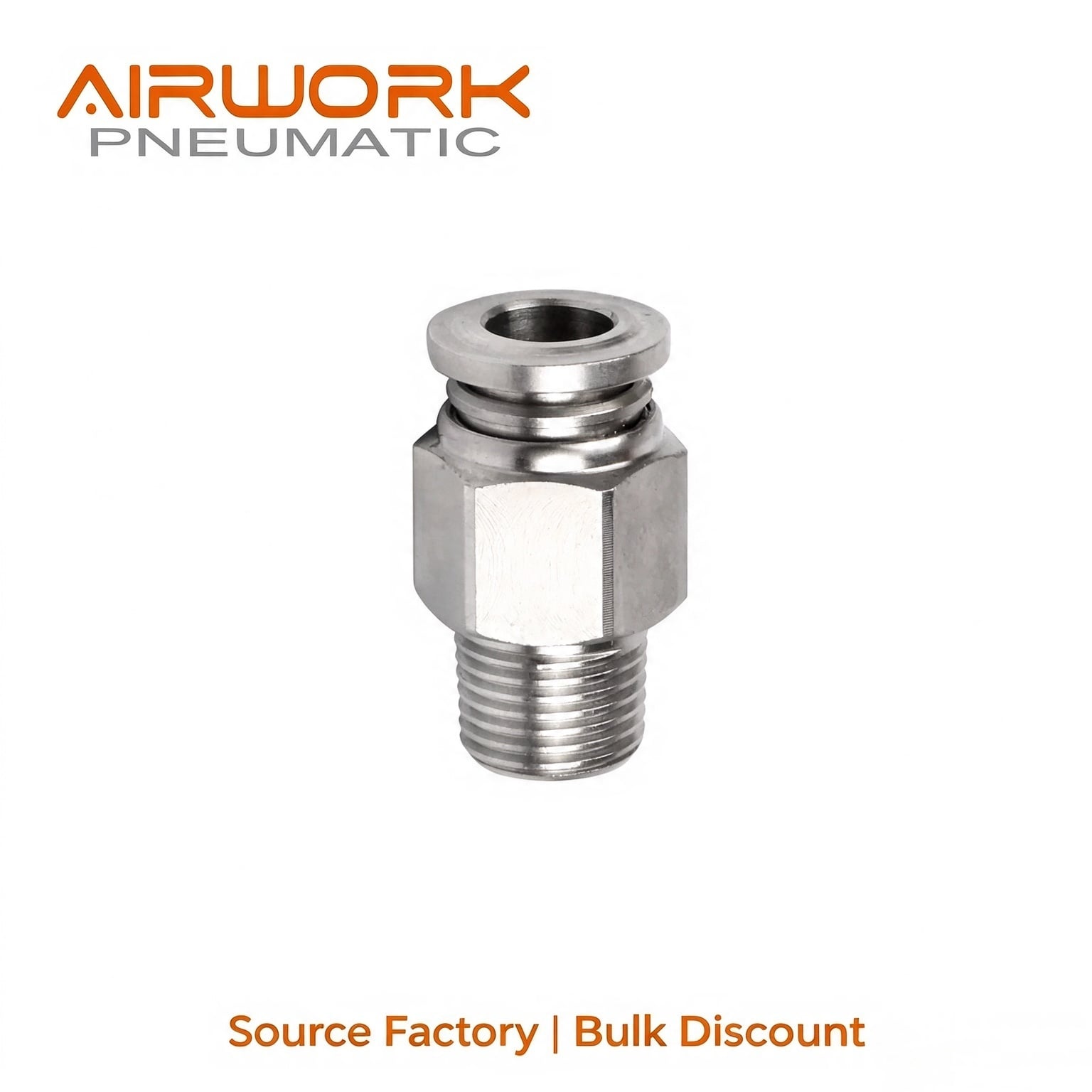
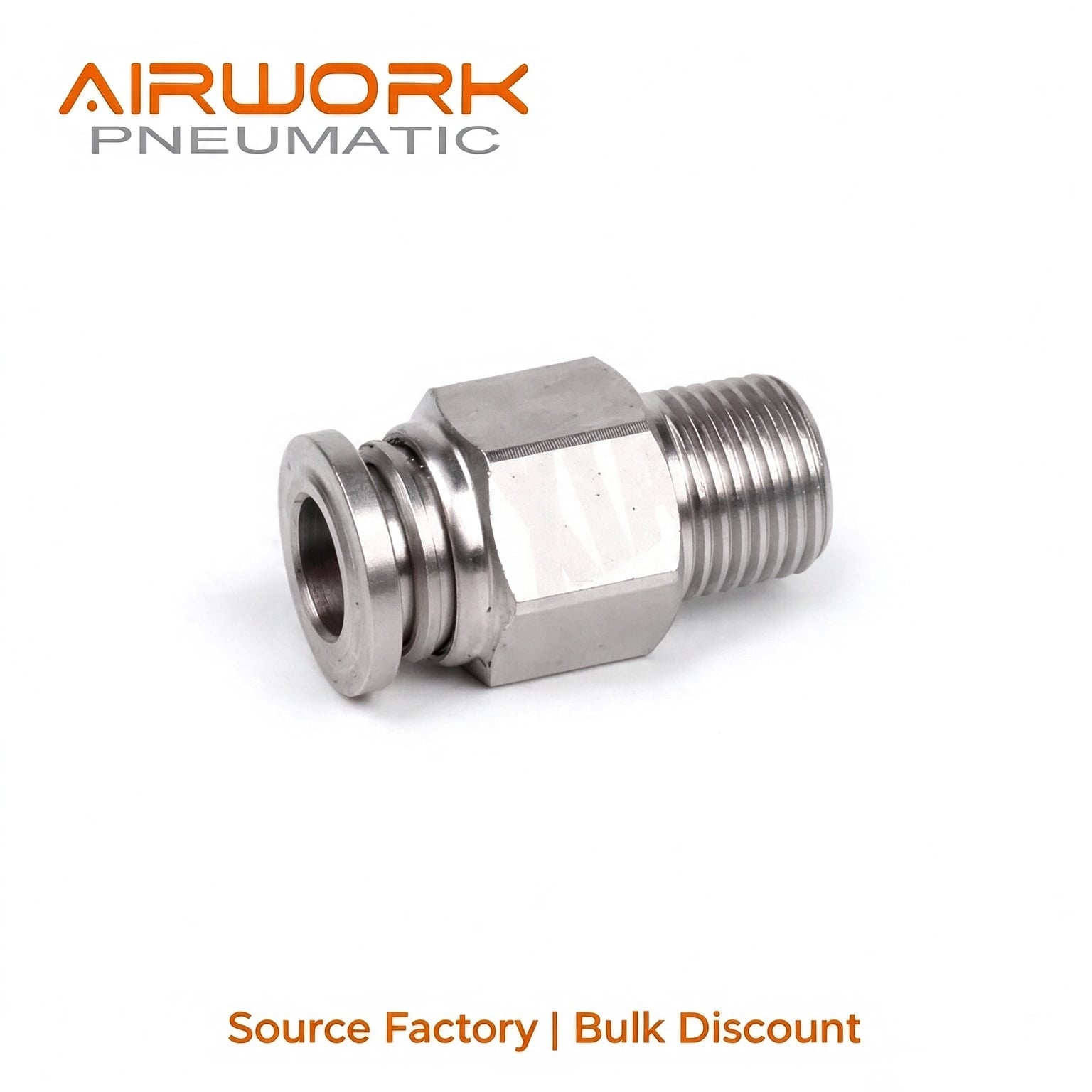
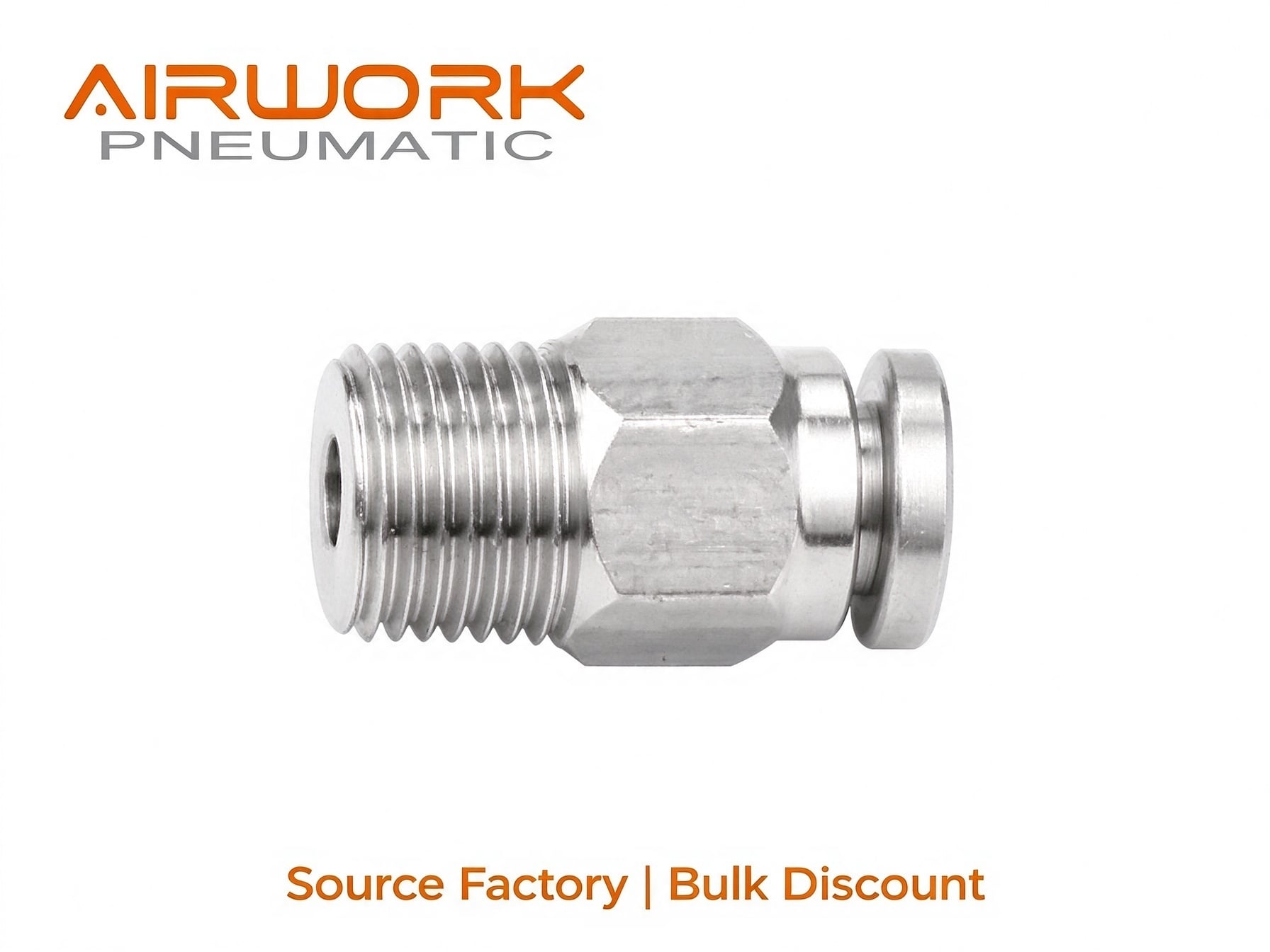
Stainless Steel Male Straight Push In Fitting Pneumatic One Touch Quick Connect Air Hose Connector M G PT Thread 4 To 12 Mm OD
AIRWORK manufactures pneumatic components for automation and air systems — cylinders, push-in fittings, solenoid valves, air preparation units, shock absorbers and PU/PE tubing. Our range is built to standard mounting and thread dimensions, so parts drop into existing designs without modification. We work with distributors, OEMs and automation integrators on OEM and ODM orders, offering flexible MOQ, quick sampling and export-ready packaging. One team follows your order from model selection to shipment, with drawings, test reports and certificates provided on request.
- Overview
- Recommended Products
- Cut the tube square: use a tube cutter rather than a knife, and check the end for burrs. A slanted or crushed end seats on one side only and will weep under pressure.
- Push in to the depth stop: insert until the tube stops, then pull back gently to confirm the collet has gripped. A tube that slides back out has not passed the collet.
- Seal the thread by its own rule: PT threads need a sealant on the flank and stop by wedging; M and G threads are parallel and need a washer or an O ring. More tape does not fix a parallel port.
- Do not over torque: the hex is for a spanner, not for a breaker bar. Over tightening distorts the port and cracks the body at the thread root.
- Support the tube run: a fitting holds the tube, it does not carry the weight of a long unsupported run. Clip the tube within a short distance of the fitting.
- Keep side load off the collet: a tube pulled sideways at the fitting works the collet and the seal. Route the run so the tube leaves the fitting straight for at least a short length.
Product Detailed Description:
The BKC-PC is a straight male connector, which in practice means the tube and the thread sit on the same centre line, so the air line leaves the port in a straight run instead of turning a corner. It is a one touch fitting in the literal sense: the tube goes in by hand, the collet grips it, and no spanner is needed at the tube end. That single axis is what makes it the default choice at a manifold outlet, on a valve island, at the back of a filter regulator or on a cylinder port where the tube has to head straight into a cable duct or a drag chain. Tube sizes run from 4 mm to 12 mm OD, and each size is paired with the thread that fits the port it serves. On a shop order the same part gets written down as a push fit connector, a quick connect air fitting, a one touch tube connector, a stainless air line fitting or simply a male thread adapter, and all of those describe this one body rather than five different products.
The reason to specify stainless rather than plated brass is the environment, not the pressure. A plated body works well in a dry workshop; it is in a washdown bay, a coastal plant, a chlorine atmosphere or an outdoor cabinet that the plating is attacked first at the thread and at the collet window, and the corrosion product then travels into the air line. A stainless body removes that failure mode, which is why the same fitting turns up on food and beverage lines, water treatment panels, marine and offshore skids and outdoor conveyor frames.
The thread end is where most selection mistakes happen. M threads are parallel and seal on a washer or an O ring; G threads are parallel and seal the same way with a bonded washer; PT threads are tapered and seal on the thread flank with a sealant. A fitting that seals one way will not seal another by tightening harder, so the thread system is quoted together with the tube size rather than chosen on site. Custom threads are available where a machine uses a non-standard port.
Product Feature:
1.Straight male connector: tube and thread on one axis, so the line runs straight out of the port with no elbow and no extra swing radius.
2.Stainless steel body: chosen for washdown, coastal and chemical atmospheres where plated brass pits at the thread and the collet window.
3.Push in collet, tool free: the tube is pushed in by hand until it seats, held by the collet, and released by pressing the ring, so a line can be re-routed without cutting a new length.
4.Three thread systems, one body range: M, G and PT threads cover metric ports, European parallel ports and tapered pipe ports, with custom threads on request.
5.Compact hex for tight port spacing: the hex takes a standard spanner and clears adjacent ports on a manifold or a valve island.
6.Reusable connection: releasing and re-inserting the same tube keeps the joint repeatable, which matters on a machine that is modified between product runs.
7.One body, three positions on the line: the same fitting is used at the compressor outlet, at the filter regulator port and at the valve island or cylinder port, so one size range covers the whole air line instead of three different part numbers.
Application Industries:
1.Food and beverage processing – washdown areas, filling heads, conveyor diverters, clean-in-place surrounds
2.Water treatment and chemical dosing – panels, dosing skids, filter banks, humid or splash zones
3.Marine, offshore and shipboard – deck machinery, hatch controls, coastal outdoor cabinets
4.Medical device and laboratory – gas lines, analyser racks, humid rooms
5.Semiconductor and electronics – wet benches, plating lines, clean room utilities
6.Packaging machinery – humid plants, steam surrounds, carton erecting and sealing heads
7.Outdoor and mobile equipment – conveyor frames, gate and door actuation, trailer air lines
8.Automotive and paint shops – corrosive atmosphere, booth surrounds, jig clamping
9.General pneumatic automation – manifolds, valve islands, cylinders, filter regulators
Specification:
Item |
Detail |
Series |
BKC-PC male straight connector |
End 1 |
Push in collet for tube |
End 2 |
Male thread, M / G / PT, custom thread on request |
Tube outside diameter |
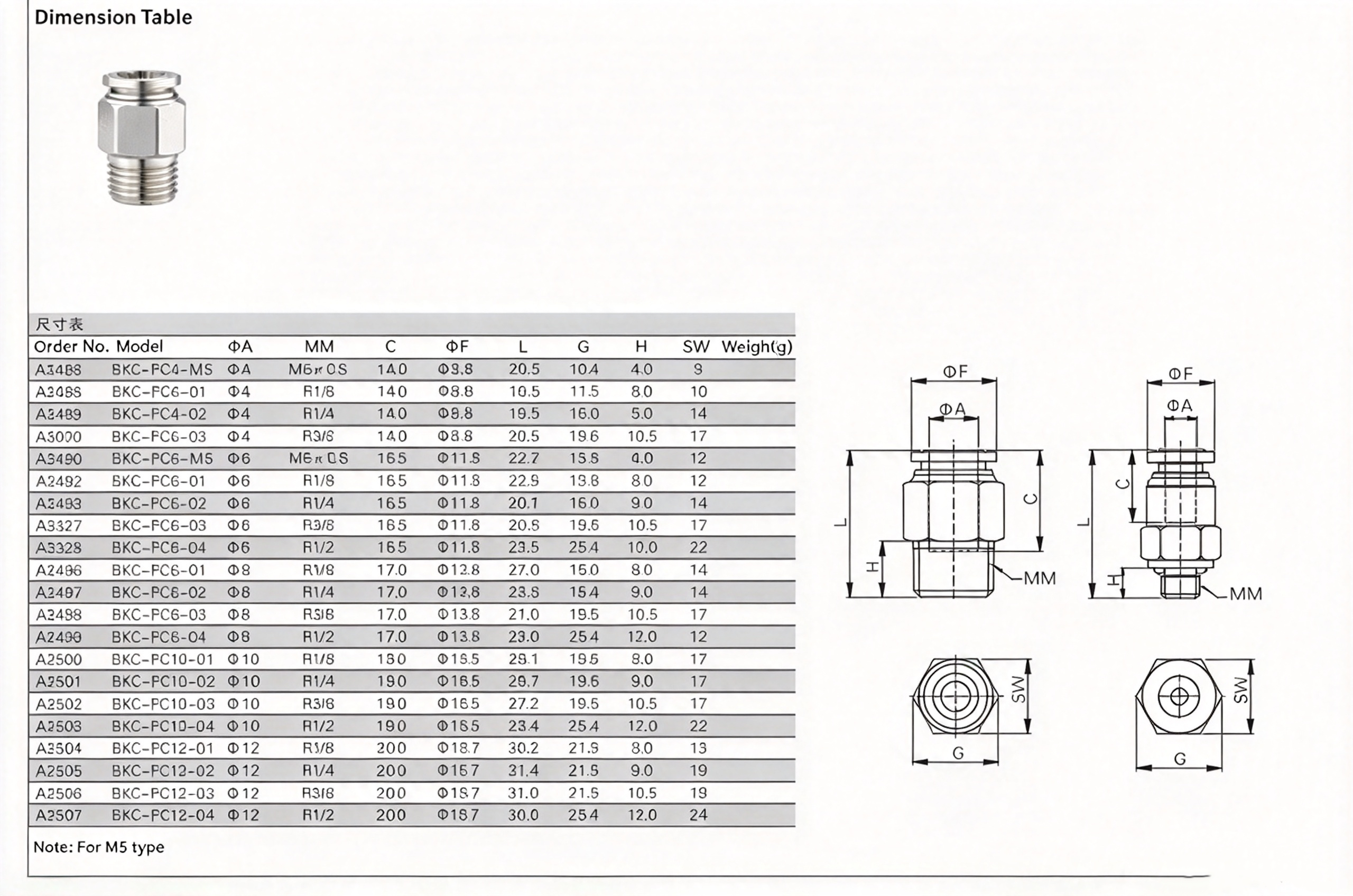
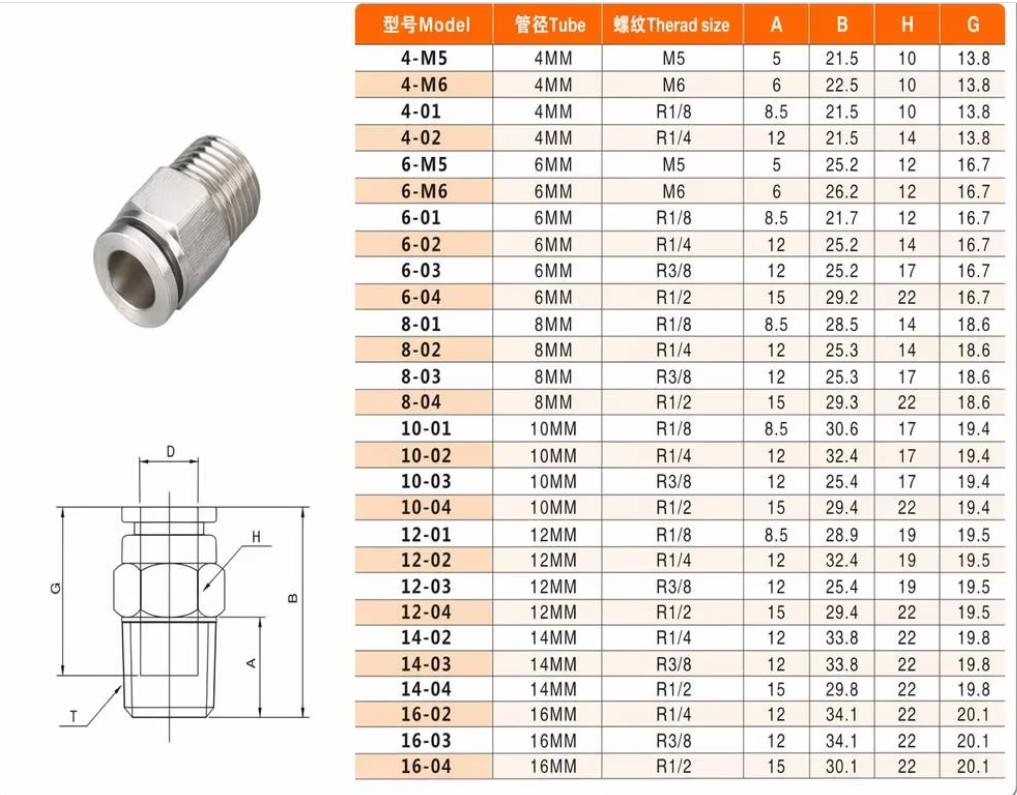
4 / 6 / 8 / 10 / 12 mm (per model) |
Body material |
Stainless steel |
Seal |
Confirmed per model |
Fluid |
Compressed air and inert gas; other media confirmed against the seal |
Thread sealing |
M and G seal on a washer or O ring, PT seals on the thread flank with a sealant |
Typical pairings |
4 mm tube with M5 or M6, 6 mm and 8 mm tube with G1/8 or PT1/8, 10 mm and 12 mm tube with G1/4 or PT1/4 |
MOQ |
50 pcs |
Customization Options:
Customization Item |
Options |
Tube size |
4 / 6 / 8 / 10 / 12 mm OD, other sizes on request |
Thread system |
M metric, G parallel, PT tapered |
Thread size |
Matched to the port on the drawing, quoted per size |
Custom thread |
Non standard pitch or diameter, made to drawing |
Body material grade |
Stainless grade confirmed with the order |
Seal compound |
Selected against the medium and the temperature |
OEM marking |
Laser marking on the body, neutral bag and label |
Packaging |
Bulk bag, labelled bag, kit with mixed sizes |
Application:
1.Washdown filling line (food and beverage): On a filling head the tube leaves the valve island and runs to the nozzle cluster, and the whole frame is hosed down at the end of the shift. A plated fitting survives the first year and then starts to show a white bloom at the thread; a stainless body does not, which is why the same position is specified in stainless even though the air itself is clean and dry. The straight body also keeps the tube flat against the frame, so there is nothing to catch a cloth or a jet of water.
2.Coastal outdoor cabinet (marine and offshore): A cabinet at the quay holds a filter regulator and a small valve bank, and the air line leaves through a gland to a hatch actuator. Salt mist reaches every thread on the panel, and the fitting that fails first is always the one at the bottom of the cabinet where water collects. Stainless bodies plus a thread sealant suitable for the port material are what keep that position serviceable between inspections.
3.Water treatment and dosing panel (chemical atmosphere): Around a dosing skid the atmosphere carries chlorine and acid vapour, and the pneumatic actuators on the valves are the parts that keep the plant running when the panel is wet. The stainless male straight carries the pilot air from the manifold to each actuator. Note that the medium in the tube is still air: where the tube itself carries a chemical, the tube material and the seal compound are confirmed against the medium before the order.
Installation and Usage:
FAQ:
Q1. How do I read the model code?
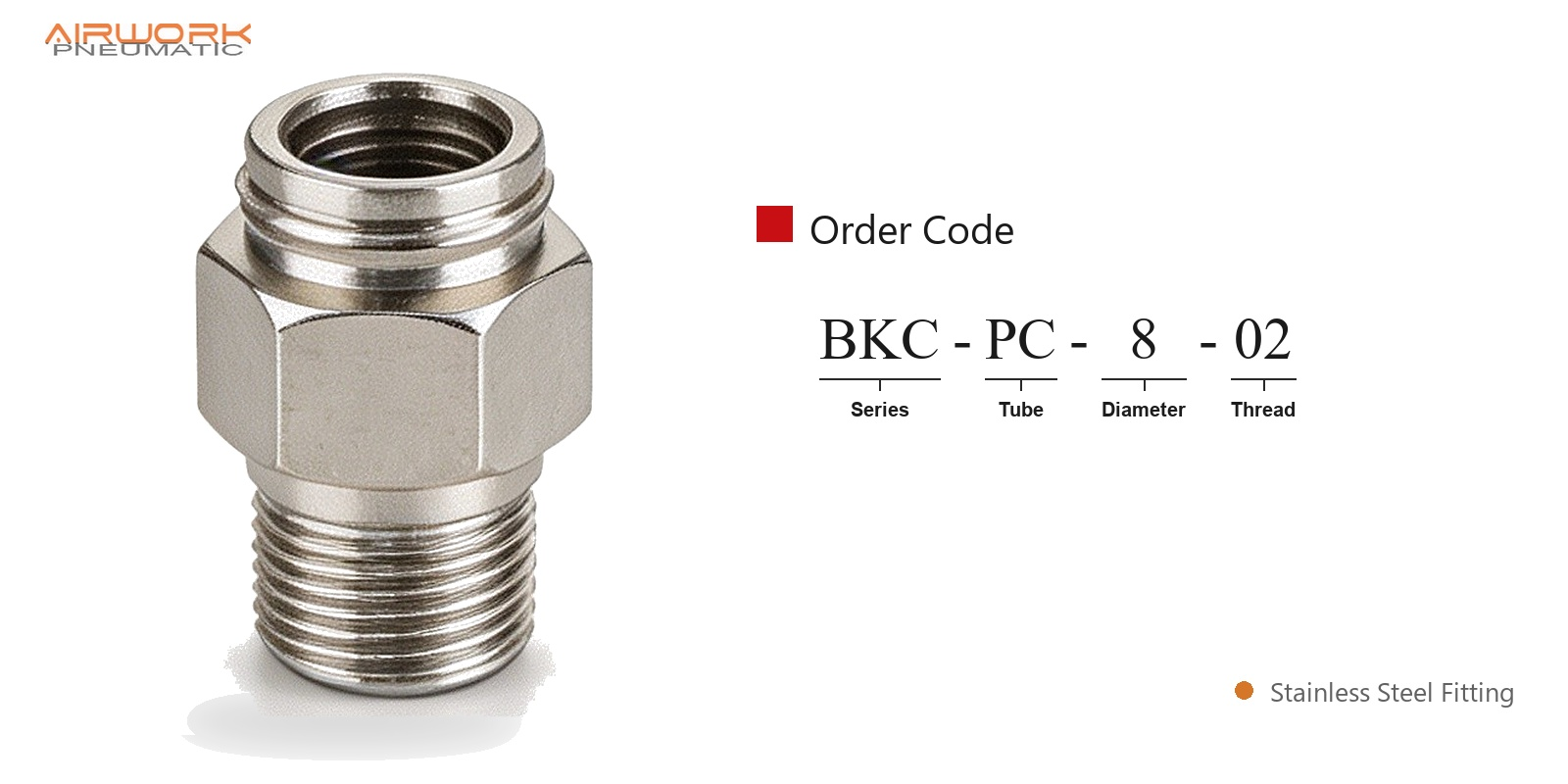
A1. BKC-PC is the series, followed by the tube outside diameter and then the thread. An 8 mm tube with a 1/4 thread reads as the 8 by 1/4 size. State tube OD and thread system together, because M, G and PT of the same nominal size are different fittings. The same part is also sold as a male adapter, a male connector, a tube fitting or a pneumatic connector depending on whose catalogue you read, so the drawing rather than the name is what settles it.
Q2. What is the difference between this and a nickel plated brass PC fitting?
A2. The shape and the way it works are the same; the difference is the body. Plated brass is the economical choice for dry indoor air. Stainless is chosen where washdown, salt or chemical vapour attacks the plating, and it also removes the risk of a chipped plating travelling down the line.
Q3. Which stainless grade do you use?
A3. The grade is confirmed with the order rather than assumed, because the right choice depends on the atmosphere and on the medium. Tell us the environment and the grade is quoted with the offer, so the certificate and the part match.
Q4. What is the difference between M, G and PT threads?
A4. M is metric parallel, G is parallel pipe thread, PT is tapered pipe thread. M and G seal on a washer or an O ring at the face; PT seals on the thread flank with a sealant and stops by wedging. A parallel fitting will not seal in a tapered port by tightening harder.
Q5. Can it be used on water or another medium?
A5. The body is stainless, but the seal decides the medium. Air and inert gas are the standard duty; for water, coolant or a chemical, send the medium and the temperature and the seal compound is confirmed before the order rather than after.
Q6. What are the working pressure and temperature?
A6. They are stated per size and per seal on the quotation rather than as one figure for the whole range, because the tube size and the seal set the limit. Tell us the line pressure, the temperature and the tube material, and the model is matched to it.
Q7. Can it be used under vacuum?
A7. Vacuum duty depends on the tube and the seal rather than on the body, and it is confirmed per model. Give the vacuum level and the tube material with the enquiry, and the combination is checked before it is quoted.
Q8. Which tube should I use?
A8. PA and PU tube are the usual pairings, and the tube OD must match the fitting size exactly. PTFE and other hard tubes need a different collet, so tell us the tube material with the order; a hard tube forced into a standard collet will not hold.
Q9. What is the MOQ and can you mark the body?
A9. MOQ is 50 pcs. Laser marking on the body and neutral bag and label are available on request, which suits a distributor who sells under their own part number.
Factory Advantages and Certifications:
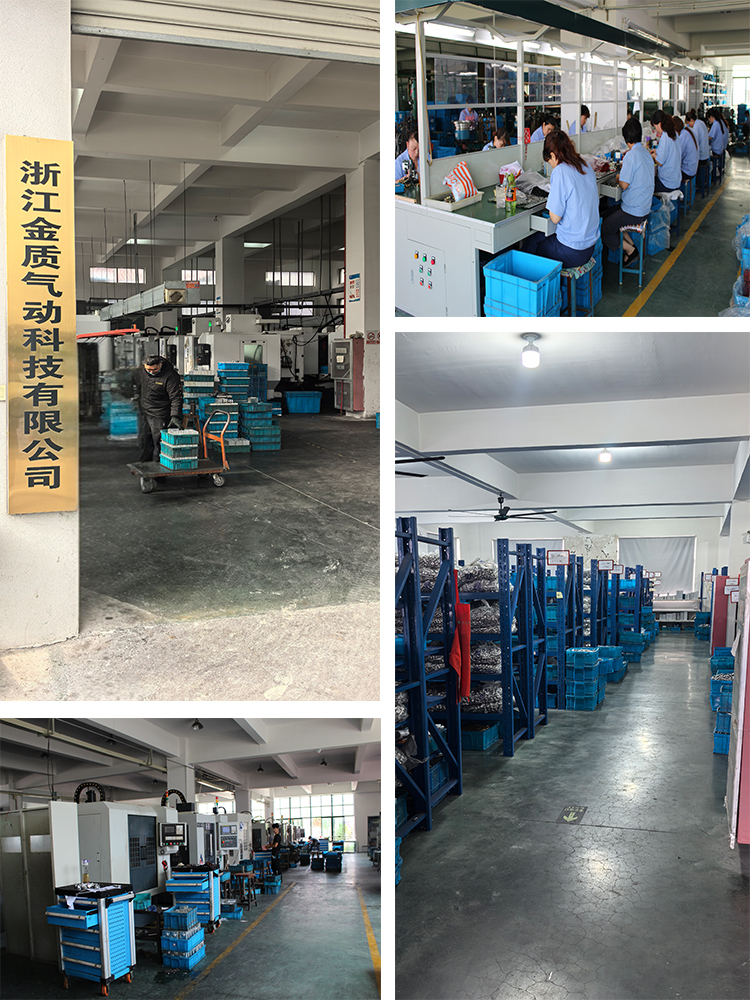
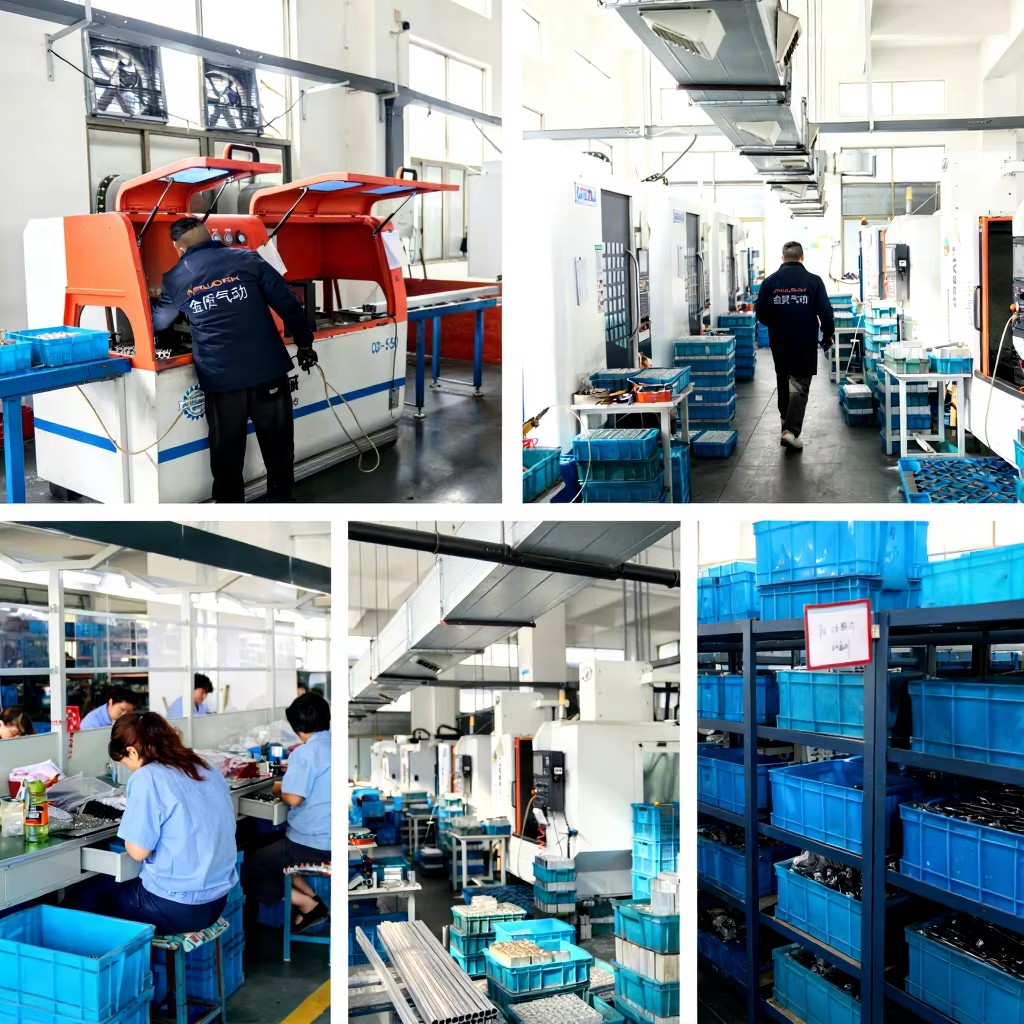
The BKC-PC is machined and assembled as one family rather than as separate sizes bought in, which is what keeps the collet force and the thread depth consistent from one tube size to the next. Bodies are checked at the thread and at the collet bore before assembly, and each batch carries a batch number on the bag so a complaint can be traced to a run rather than to a guess. OEM marking and neutral packaging are handled in house.
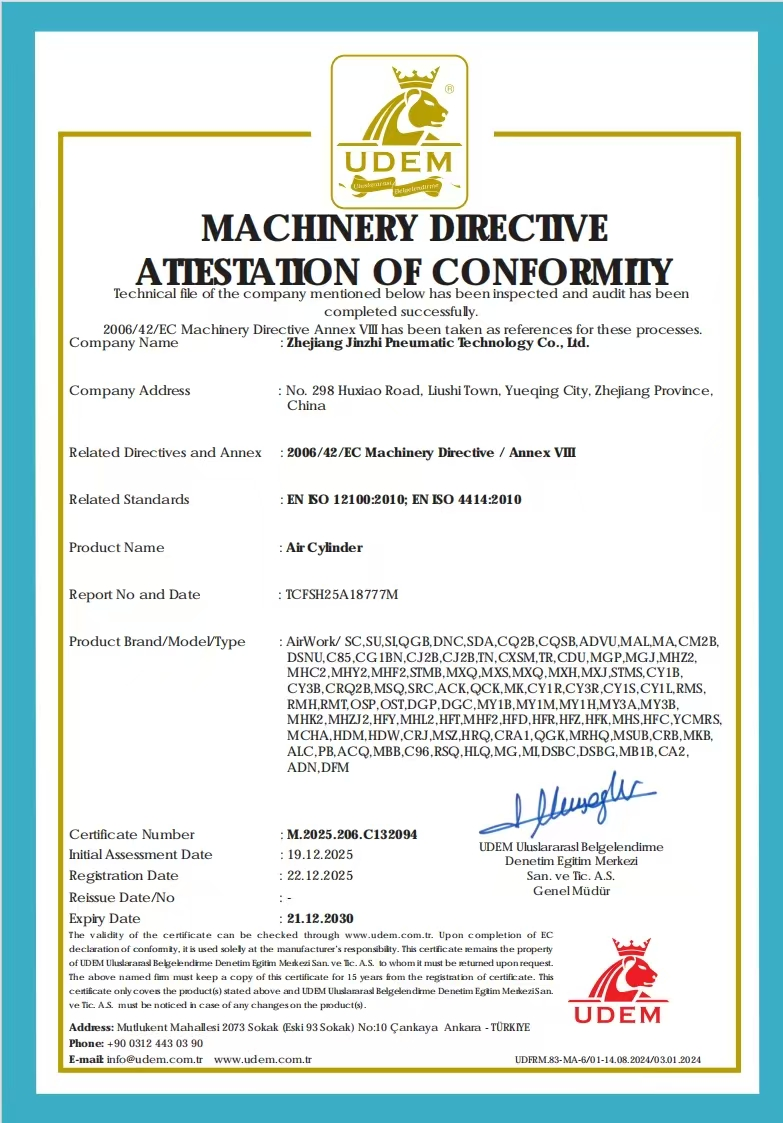
Certification