 EN
EN

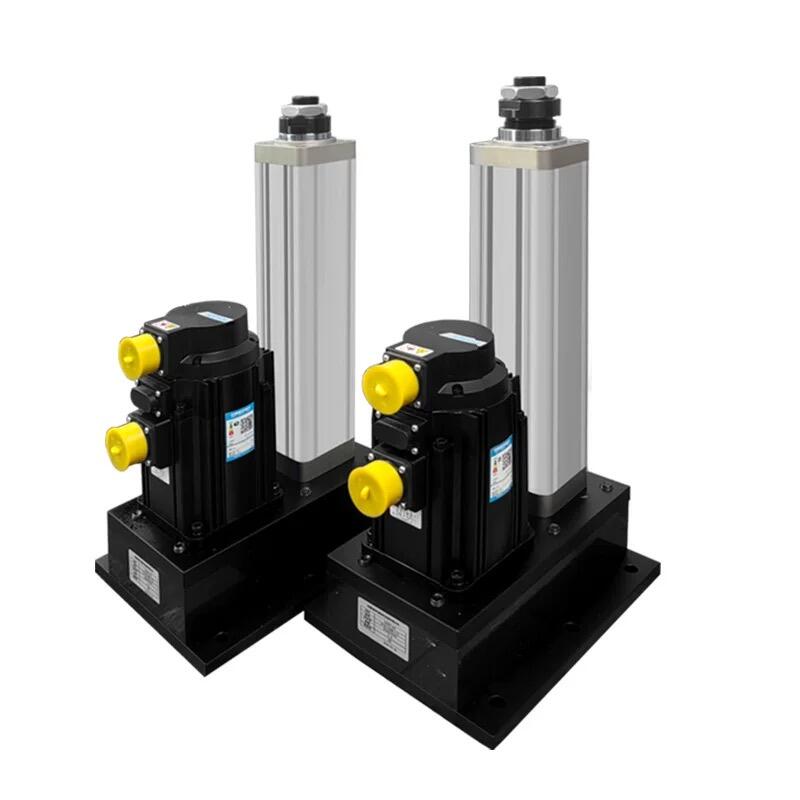
Modern automation systems depend on a precise balance of mechanical, electrical, and fluid power components working in perfect synchrony. Among all these components, pneumatic parts play a foundational role that is often underestimated until a system fails or underperforms. From controlling actuator movement to regulating air pressure across complex machinery, pneumatic parts are the invisible backbone that keeps automated production lines running efficiently, safely, and consistently.
As automation system integration becomes more sophisticated across industries such as automotive manufacturing, food processing, electronics assembly, and logistics, the demand for reliable, high-quality pneumatic parts continues to grow. Understanding why these components matter — not just in isolation but as integrated elements within a complete system — is essential for engineers, system integrators, procurement managers, and operations professionals who are responsible for designing or maintaining automated environments.
The Core Role of Pneumatic Parts in Automation Architecture
Energy Transmission and Motion Control
At the heart of any pneumatic system is the ability to convert compressed air into usable mechanical energy. Pneumatic parts such as cylinders, valves, actuators, and air preparation units are specifically engineered to channel, regulate, and direct that energy with remarkable precision. When integrated properly, these components allow automated machines to perform repetitive, high-speed tasks with minimal electrical input and reduced mechanical complexity.
Motion control in automation is often binary — extend, retract, rotate, clamp — and pneumatic actuators excel in delivering these movements quickly and reliably. Unlike hydraulic systems, pneumatic components operate cleanly without the risk of fluid contamination, which is particularly critical in food-grade or medical manufacturing environments. The simplicity of the operating principle makes pneumatic parts attractive for integration teams looking for responsive, low-maintenance motion solutions.
Moreover, the speed of pneumatic actuation is difficult to match with electric alternatives in many applications. Grippers, clamps, and slides powered by compressed air can complete cycles in milliseconds, directly impacting throughput rates on high-volume production lines. This speed advantage is one reason why pneumatic parts remain dominant in automation even as electric actuators gain ground in precision applications.
System-Level Reliability and Fault Tolerance
Automation system integration is not merely about connecting individual components — it is about building a system that performs reliably under real-world production conditions. Pneumatic parts contribute to system reliability in ways that go beyond their immediate mechanical function. Properly selected and installed air preparation units, for example, ensure that the entire downstream pneumatic circuit receives clean, dry, and correctly pressurized air, directly preventing premature component wear and unexpected downtime.
In integrated automation systems, a single point of failure can halt an entire production line. This is why experienced system integrators pay close attention to the quality and compatibility of every pneumatic part used in a design. Components from the same product family often share standardized port sizes, pressure ratings, and mounting interfaces, which simplifies troubleshooting and accelerates maintenance when issues arise.
Fault tolerance is also enhanced by designing redundancy into pneumatic circuits. Dual-valve configurations, pressure switches, and flow control valves all act as safety and performance management layers. Each of these elements is a pneumatic part that contributes not just to the function of one machine but to the overall resilience of the integrated automation system.
Air Preparation Units and Their Systemic Importance
Why Clean and Regulated Air Matters
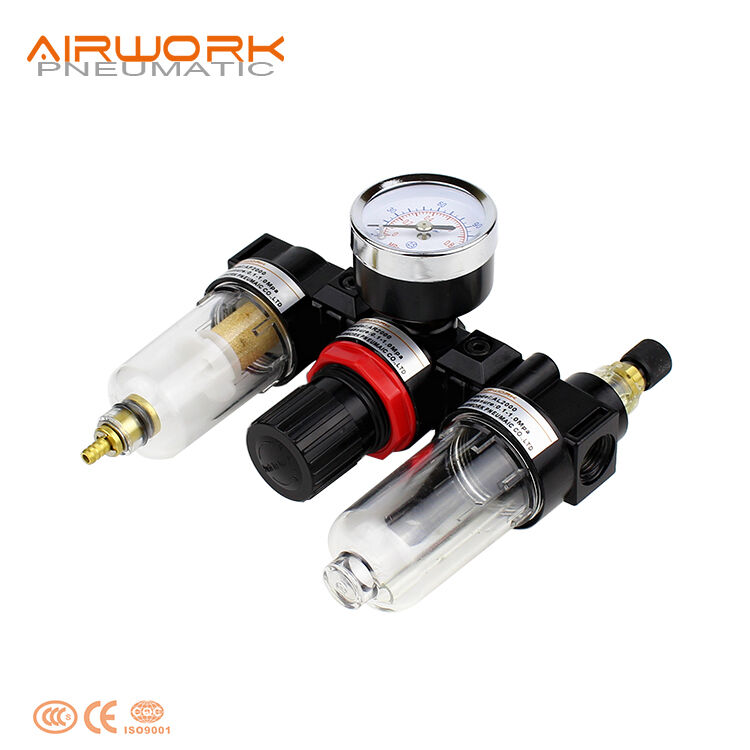
Compressed air supplied from a central compressor is rarely suitable for direct use in precision automation equipment. It typically contains moisture, particulate contamination, and pressure fluctuations that can damage sensitive pneumatic parts over time. Air preparation units — commonly referred to as FRL units (Filter, Regulator, Lubricator) — serve as the first line of defense in protecting the entire pneumatic circuit.
A filter removes contaminants and water droplets from the compressed air stream before they can enter cylinders, valves, and other downstream pneumatic parts. A regulator maintains stable output pressure regardless of supply-side fluctuations, ensuring that actuators and tools receive consistent force. A lubricator, where applicable, introduces a fine mist of oil to extend the life of moving internal components within the circuit.
For system integrators, selecting the right air combination unit is a critical design decision. Products like the pneumatic parts in the AC Series FRL Air Combination lineup are specifically engineered to meet these air preparation needs in industrial automation contexts. These units combine filtration, regulation, and lubrication in a compact, modular form that simplifies installation and ongoing maintenance within complex integrated systems.
Impact on Downstream Component Performance
The condition of compressed air directly determines the performance and lifespan of all pneumatic parts further down the circuit. Valves subjected to contaminated air develop sticking or leaking seats far sooner than expected. Cylinders exposed to moisture can corrode internally, leading to erratic movement and eventual failure. These failures rarely announce themselves in advance — they degrade gradually, causing subtle quality defects before becoming catastrophic.
In an integrated automation system, these subtle degradations are particularly dangerous because they can propagate. A cylinder that drifts in its position affects the accuracy of gripper placement, which in turn affects part orientation, which ultimately affects product quality at the end of the line. The root cause — contaminated or poorly regulated compressed air reaching the pneumatic parts — may not be identified until significant waste has accumulated.
This cascading effect reinforces why air preparation is not an optional add-on but a foundational requirement in any serious automation integration project. Investing in quality FRL components protects the entire network of pneumatic parts within the system and ensures that performance specifications are maintained over the full operational lifespan of the equipment.
Integration Challenges and How Pneumatic Parts Address Them
Compatibility and Standardization Across Subsystems
One of the most complex challenges in automation system integration is ensuring that components from different subsystems work together seamlessly. Pneumatic parts must align in terms of port sizes, flow capacity, pressure ratings, and mounting configurations to avoid costly custom adaptations. When these parameters are mismatched, energy efficiency drops, response times increase, and the maintenance burden escalates.
Standardizing on a coherent range of pneumatic parts from the outset of a system design project significantly reduces integration risk. When valves, actuators, and air preparation units share a consistent design language and dimensional standard, system integrators can plan circuits more accurately, commission faster, and train maintenance technicians more efficiently. Standardization also simplifies spare parts management, reducing the inventory complexity that larger automated facilities must manage.
The modular design philosophy increasingly adopted by pneumatic parts manufacturers reflects this integration reality. Manifold-mounted valve systems, stackable FRL units, and plug-in fittings are all examples of how the industry has evolved to serve the practical needs of complex system integration rather than treating components as isolated products.
Space Constraints and Compact Design Requirements
Modern automated systems are often designed within strict spatial envelopes, particularly in industries like semiconductor manufacturing, medical device assembly, and compact robotic cells. The physical size of pneumatic parts has a direct impact on how much automation capability can be packed into a given footprint. Miniaturized valves, slim-line cylinders, and compact FRL combination units allow designers to achieve full pneumatic functionality in increasingly tight spaces.
Compact pneumatic parts are not just smaller versions of their standard counterparts — they are re-engineered to deliver equivalent or superior performance within reduced dimensions. This requires careful attention to internal flow geometry, seal design, and material selection. For system integrators working in space-constrained environments, access to a range of compact pneumatic parts with reliable performance data is essential to producing viable designs.
The push toward collaborative robotics and flexible manufacturing cells has further amplified the need for compact, lightweight pneumatic solutions. As robotic arms become smaller and more agile, the pneumatic parts mounted on or near them must follow suit, contributing to the ongoing drive for miniaturization without performance compromise across the entire automation sector.
Maintenance, Safety, and Long-Term Operational Value
Planned Maintenance and Component Lifecycle Management
A well-integrated automation system is designed with maintenance in mind from the beginning. Pneumatic parts have defined service intervals based on cycle counts, operating pressures, and environmental conditions. When these intervals are followed and components are replaced proactively, unplanned downtime is dramatically reduced and overall equipment effectiveness (OEE) improves.
Maintenance accessibility is a key consideration when specifying pneumatic parts during system design. Components that are difficult to reach, require special tools to service, or lack clear visual condition indicators add unnecessary complexity to maintenance operations. Modern pneumatic parts increasingly feature visual pressure gauges, quick-release fittings, and modular assembly designs that make field servicing practical even in busy production environments.
Digital integration is also beginning to influence pneumatic maintenance strategies. Smart sensors mounted on actuators and valves can monitor performance trends and provide early warning signals before failure occurs. This predictive approach, increasingly adopted in industrial IoT environments, depends on having pneumatic parts that are either natively sensor-ready or compatible with retrofit monitoring solutions.
Safety Considerations in Pneumatic System Integration
Safety is non-negotiable in any industrial automation environment, and pneumatic parts play a central role in implementing safety functions. Pressure relief valves protect systems from over-pressurization events that could damage equipment or injure personnel. Soft-start valves allow controlled pressurization at startup, preventing sudden actuator movements that could pose hazards in semi-automated or collaborative workspaces.
Emergency exhaust valves and dual-channel safety valve configurations are specifically designed to meet functional safety standards relevant to machine safety directives. When specifying pneumatic parts for safety-critical functions, system integrators must verify that components carry appropriate certifications and have documented fail-safe behavior under fault conditions.
Beyond the individual component level, the way pneumatic parts are integrated into the overall circuit layout has safety implications. Proper pressure zoning, logical valve sequencing, and defined exhaust pathways all contribute to a system that behaves predictably under both normal operation and fault conditions, protecting both the machinery and the people working alongside it.
FAQ
What types of pneumatic parts are most commonly used in automation system integration?
The most commonly used pneumatic parts in automation system integration include directional control valves, pneumatic cylinders and actuators, air preparation units (FRL combinations), flow control valves, fittings and tubing, pressure regulators, and pressure gauges. Air preparation units are particularly critical as they condition compressed air before it enters the rest of the pneumatic circuit, protecting all downstream components.
How do pneumatic parts differ from hydraulic components in automation applications?
Pneumatic parts use compressed air as their operating medium, while hydraulic components use pressurized fluid. Pneumatic systems are generally cleaner, lighter, faster in response, and simpler to maintain, making them preferred for high-speed, moderate-force automation tasks. Hydraulic systems offer higher force density and are better suited for heavy-load applications. For most general automation integration projects involving assembly, handling, and packaging, pneumatic parts are the preferred choice.
How can poor air quality affect pneumatic parts in an integrated system?
Poor air quality — including moisture, oil aerosols, and particulate contamination — causes accelerated wear on seals, valve seats, and cylinder walls within pneumatic parts. This leads to increased leakage, erratic operation, and premature component failure. In an integrated automation system, these failures can cascade through multiple subsystems, causing product quality defects and unplanned downtime. Installing proper filtration and regulation at the inlet of the pneumatic circuit is the most effective way to protect pneumatic parts and extend system life.
What should system integrators consider when selecting pneumatic parts for a new automation project?
System integrators should evaluate operating pressure requirements, flow capacity, environmental conditions (temperature, humidity, chemical exposure), cycle frequency, mounting space constraints, and compatibility with existing infrastructure when selecting pneumatic parts. Standardizing on modular, well-documented component families reduces integration complexity and ongoing maintenance costs. Safety certification requirements relevant to the application must also be confirmed before finalizing component selection.
Table of Contents
- The Core Role of Pneumatic Parts in Automation Architecture
- Air Preparation Units and Their Systemic Importance
- Integration Challenges and How Pneumatic Parts Address Them
- Maintenance, Safety, and Long-Term Operational Value
-
FAQ
- What types of pneumatic parts are most commonly used in automation system integration?
- How do pneumatic parts differ from hydraulic components in automation applications?
- How can poor air quality affect pneumatic parts in an integrated system?
- What should system integrators consider when selecting pneumatic parts for a new automation project?