 EN
EN

Q: Why is 0.01-micron 'Sub-Micron' filtration essential for pneumatic spray painting and cleanroom apps?
Standard industrial pneumatic systems are generally designed to operate on air filtered to 40 microns or 5 microns. While this level of filtration is perfectly adequate to protect robust mechanical components like heavy-duty air cylinders and direction control valves from dust and pipe scale, it is completely inadequate for high-sensitivity applications. When compressed air is used in pneumatic spray painting or sterile cleanroom environments, the requirements for air purity skyrocket.
In these high-stakes fields, even microscopic contaminants—including sub-micron liquid water aerosols, oil vapors, and ultra-fine dust particles—can cause massive product failures and system downtime. This is why a 0.01-micron sub-micron coalescing filter is not just an optional upgrade, but an absolute operational necessity. This technical analysis explores the critical physics, standard configurations, and application requirements that make 0.01-micron filtration essential in these advanced industries.
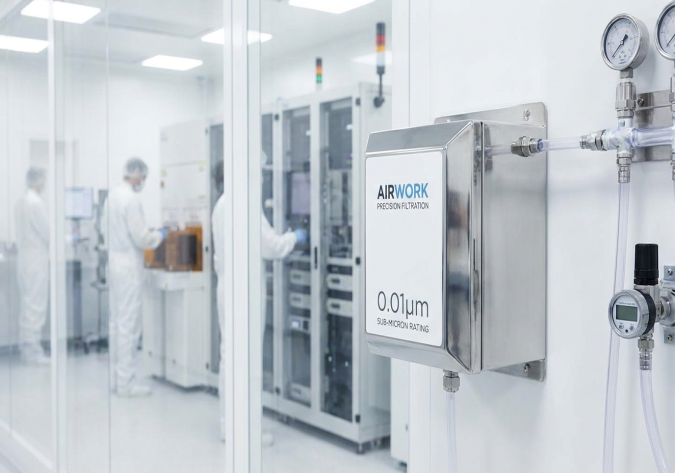
The Anatomy of the Threat: What Lies in Compressed Air?
To understand the necessity of 0.01-micron filtration, we must dissect the contaminants present in standard compressed air. When a compressor intakes ambient air, it concentrates thousands of microscopic particles. Furthermore, oil-lubricated compressors introduce lubricating oil aerosols and liquid vapors directly into the air stream.
At 5 microns, particles are invisible to the naked eye, but in precision environments, they are colossal. The most insidious contaminants are those measuring under 1 micron, which typically consist of:
- Liquid Oil Aerosols: Microscopic oil droplets carried over from the compressor crankcase.
- Sub-Micron Solid Particulates: Environmental soot, atmospheric dust, and tiny metal wear particles from the compressor.
- Water Aerosols: Ultra-fine moisture droplets that have bypassed standard water separators.
Application Focus 1: Pneumatic Spray Painting and Finishing
In automotive, aerospace, and high-end furniture manufacturing, pneumatic spray painting is the standard method for achieving a flawless finish. The compressed air acts as the propellant to atomize the liquid paint and transfer it onto the substrate. If this propellant air contains even trace amounts of oil or water, the consequences are immediate and costly:
- The Fisheye Phenomenon: Oil has a much lower surface tension than modern water-based or solvent-based paints. When a microscopic droplet of oil lands on the paint surface, it forces the paint to push outward, creating a small, circular crater known as a fisheye. This ruins the finish and requires the entire component to be sanded down and repainted.
- Blistering and Bubbling: If liquid water droplets are trapped beneath the dry paint film, they will eventually vaporize when exposed to heat or sun, causing the paint to blister, bubble, and peel away over time.
- Orange Peel and Texture Defects: Particulate contamination disrupts the smooth flow and leveling of the paint mist, resulting in a rough, uneven texture resembling an orange peel.
By installing a 0.01-micron sub-micron coalescing filter at the spray booth inlet, you capture 99.999 percent of liquid aerosols and fine solids, ensuring a mirror-smooth finish and eliminating expensive rework costs.
Application Focus 2: Semiconductor and Pharmaceutical Cleanrooms
Cleanroom facilities operating under strict ISO standards (such as ISO Class 5 or Class 6) are designed to manufacture microchips, medical devices, or pharmaceuticals in a sterile environment. Pneumatic systems in these facilities are frequently used to operate automated clamping tools, high-speed sorting arms, and packaging equipment.
In these settings, any air discharged from pneumatic valves or exhaust ports enters the cleanroom atmosphere. If this air contains oil mist or microscopic particles, it will:
- Contaminate Silicon Wafers: In semiconductor fabrication, a single particle measuring 0.1 microns can short-circuit a microchip circuit, rendering a multi-thousand-dollar wafer useless.
- Compromise Pharmaceutical Sterility: Liquid oil carryover acts as a breeding ground and nutrient source for bacteria, violating strict FDA and GMP health regulations.
- Disrupt Precision Assembly: Microscopic dust particles get trapped in the microscopic moving parts of advanced electronics, leading to mechanical jams and sensor errors.
A 0.01-micron filter guarantees that the air exhausted by the pneumatic machinery is completely sterile and free from oil mist, maintaining cleanroom integrity and regulatory compliance.
How Coalescing Filtration Works: The Physics of Sub-Micron Particle Capture
Standard particulate filters use a barrier-type screen to catch solids. This is ineffective for oil and water aerosols, which easily slip through standard mesh openings. A 0.01-micron filter operates on the principle of coalescing filtration.
Coalescing filters utilize a dense, multi-layered matrix of borosilicate glass microfibers. As contaminated air flows from the inside of the filter element to the outside, three distinct physical mechanisms capture sub-micron particles:
- Direct Impaction: Larger particles in the air stream collide directly with the glass fibers and get stuck.
- Inertial Interception: Medium-sized particles, unable to follow the tortuous path of the air stream around the fibers due to their momentum, slide into the fibers and are captured.
- Brownian Diffusion: Extremely small particles (under 0.1 microns) move in a random, zig-zag pattern due to collisions with gas molecules. This erratic movement increases their likelihood of coming into contact with a fiber and adhering to it.
As these captured liquid droplets collect on the fibers, they merge (coalesce) into larger droplets. Gravity pulls these heavy droplets down to the bottom of the filter element, where they accumulate in the bowl and are evacuated by an auto-drain. The exiting air is clean, dry, and pure.
The Importance of Multi-Stage Staging: Protecting Your 0.01-Micron Filter
One common error facility managers make is installing a 0.01-micron coalescing filter directly into a raw compressed air line. Because a sub-micron filter is extremely dense, it will quickly clog with bulk water, rust, and large dust particles, failing in a matter of days or weeks.
To prevent rapid pressure drops and maximize the lifespan of your high-efficiency filters, always implement a three-stage filtration setup:
- Stage 1: Standard Particulate Filter (5-micron or 40-micron): Removes bulk water droplets, large rust particles, and pipe scale.
- Stage 2: Coarse Coalescing Filter (0.3-micron or 1-micron): Captures the majority of medium-sized oil and water droplets, reducing the burden on the final stage.
- Stage 3: High-Efficiency Coalescing Filter (0.01-micron): Performs the final polishing, removing the last remaining sub-micron aerosols and particulate matter down to 0.01 microns.
Conclusion: Sourcing High-Purity Solutions with AIRWORK
For B2B operations where product quality and regulatory compliance are paramount, sub-micron filtration is a non-negotiable safeguard. The premium line of coalescing filters manufactured by JZPNU under their flagship AIRWORK brand delivers 99.999 percent purification efficiency with low pressure drop characteristics. By pairing these high-precision 0.01-micron filters with automated mechanical drains and proper staging, facility managers can guarantee pure compressed air, flawless finishes, and sterile cleanroom operations.
Table of Contents
- Q: Why is 0.01-micron 'Sub-Micron' filtration essential for pneumatic spray painting and cleanroom apps?
- The Anatomy of the Threat: What Lies in Compressed Air?
- Application Focus 1: Pneumatic Spray Painting and Finishing
- Application Focus 2: Semiconductor and Pharmaceutical Cleanrooms
- How Coalescing Filtration Works: The Physics of Sub-Micron Particle Capture
- The Importance of Multi-Stage Staging: Protecting Your 0.01-Micron Filter
- Conclusion: Sourcing High-Purity Solutions with AIRWORK