 EN
EN

Introduction: The High Cost of Unplanned Downtime
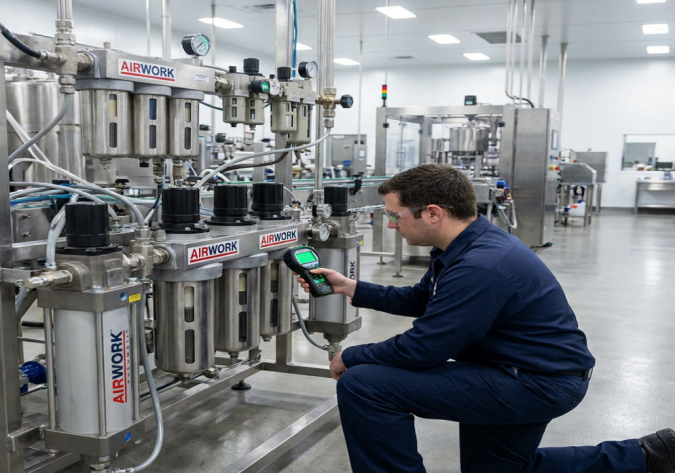
In the world of high-volume manufacturing, every minute of downtime translates into lost revenue, wasted labor, and missed delivery targets. While pneumatic systems are celebrated for their durability and 'industrial ruggedness,' they are not 'set and forget' assets. A robust preventive maintenance (PM) strategy is essential to ensure that your cylinders, valves, and air lines continue to function at peak performance.
A small leak or a slightly sluggish cylinder might seem like a minor issue, but these are often the 'canaries in the coal mine' for a catastrophic system failure. This guide outlines how B2B facilities can implement an effective maintenance routine using AIRWORK standards to keep production moving and maximize the lifespan of their pneumatic infrastructure.
1. The FRL Unit: The Lifeblood of System Health
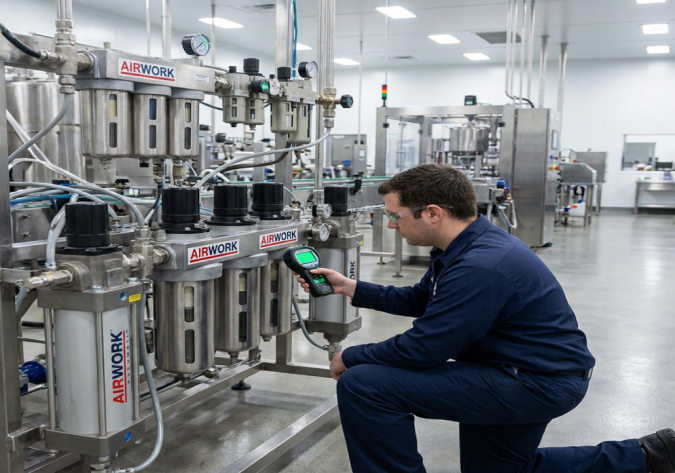
The Filter, Regulator, and Lubricator (FRL) unit is the most critical part of any pneumatic maintenance program. If the air entering your system is dirty, wet, or incorrectly pressured, every downstream component will fail prematurely.
Filtration Maintenance
Moisture and particulates are the primary enemies of pneumatic seals.
- Check Daily: Manually drain water traps if you don't have auto-drains.
- Replace Quarterly: Filter elements have a finite life. Once they become saturated with oil and dust, they cause a significant pressure drop, forcing your compressor to work harder and wasting energy. Replace elements every 3 to 6 months depending on the environment.
Regulator Stability
Operating at a higher pressure than necessary doesn't just waste energy—it accelerates the wear of cylinder seals and valve spools.
- Action: Periodically check that regulators haven't drifted from their set point due to machine vibration. Ensure that the 'lock' on the regulator knob is engaged.
Lubrication Management
While many modern AIRWORK components are pre-lubricated for life, certain high-speed applications still require a mist lubricator.
- Action: Ensure the oil levels are topped up with the correct grade of pneumatic oil (ISO VG32). Check the 'drop rate'—typically 1 to 2 drops per 1,000 liters of air is sufficient. Over-lubrication can be as damaging as under-lubrication, as it can cause valves to become 'sticky'.
2. Advanced Leak Detection: Saving Energy and Money
Compressed air is one of the most expensive utilities in a factory. It is estimated that 20% to 30% of a typical plant's air capacity is lost to leaks.
Finding the 'Silent' Leaks
Many leaks are inaudible in a noisy factory environment.
- Ultrasonic Leak Detection: Professional B2B maintenance teams should use ultrasonic detectors to find high-frequency 'hissing' from fittings and valves.
- Soap Solution Test: For accessible fittings, a simple spray-on soap solution will reveal leaks through bubbles.
- Energy ROI: Fixing a single 2mm leak in a system running at 7 bar can save over $500 in energy costs annually.
3. Actuator and Valve Inspection Protocols
Cylinders (Actuators)
- Rod Inspection: Check for scoring or pitting on the piston rod. A damaged rod will shred the internal rod seal within hours of operation.
- Drift Test: With the system pressurized but the machine stopped, check if the cylinder is 'drifting' (moving slowly). This indicates internal bypass leakage across the piston seal.
- Mounting Integrity: Ensure that mounting bolts and clevis pins are tight. Vibration can loosen these, causing misalignment and side-loading on the cylinder, which leads to premature wear.
Solenoid Valves
- Cycle Speed: If a valve is responding slowly, the internal spool may be contaminated.
- Coil Temperature: A solenoid coil that is too hot to touch may be failing or receiving the wrong voltage.
- Exhaust Check: Check the silencers. If they are oil-soaked or dusty, they create back-pressure that slows down the entire system.
4. Industry-Specific Maintenance Strategies
Woodworking and Textile (Dusty Environments)
In these industries, the focus is on 'external cleaning'. Dust buildup on a cylinder acts as an insulator, causing the cylinder to run hot and drying out the internal grease. Use compressed air to blow off dust from actuators and valves during every shift change.
Food & Beverage (Washdown Environments)
Maintenance in food plants must focus on 'seal integrity'. Frequent washdowns with caustic chemicals can dry out standard NBR seals. Preventive maintenance should include a monthly check for 'seal brittleness' and the application of food-grade grease to exposed piston rods.
5. B2B Selection Criteria for Spare Parts
When a component does fail, the speed and quality of the replacement are paramount.
1. OEM vs. Generic Parts: Always use genuine AIRWORK seal kits and solenoids. Generic seals may have different tolerances or material compositions, leading to a shorter 'second life' for the repaired component.
2. Repair vs. Replace: For small-bore cylinders (under 32mm), it is often more cost-effective to replace the entire unit. For large-bore ISO 15552 cylinders, a repair kit (seals, guide bush, and piston) is the strategic choice.
3. Inventory Management: Critical machines should have 'Line Side Spares' for high-wear items like fittings, tubing, and the most common solenoid valves used in the facility.
Conclusion: From Reactive to Proactive
Preventive maintenance is the bridge between a system that merely 'works' and one that 'excels'. By shifting from a reactive 'fix it when it breaks' mentality to a proactive 'preserve and optimize' strategy, manufacturers can significantly reduce their total cost of ownership. At AIRWORK, we don't just provide the hardware; we provide the technical knowledge and support needed to keep your systems running at peak performance. A well-maintained pneumatic system is a reliable, efficient, and profitable system.
Table of Contents
- Introduction: The High Cost of Unplanned Downtime
- 1. The FRL Unit: The Lifeblood of System Health
- 2. Advanced Leak Detection: Saving Energy and Money
- 3. Actuator and Valve Inspection Protocols
- 4. Industry-Specific Maintenance Strategies
- 5. B2B Selection Criteria for Spare Parts
- Conclusion: From Reactive to Proactive