 EN
EN

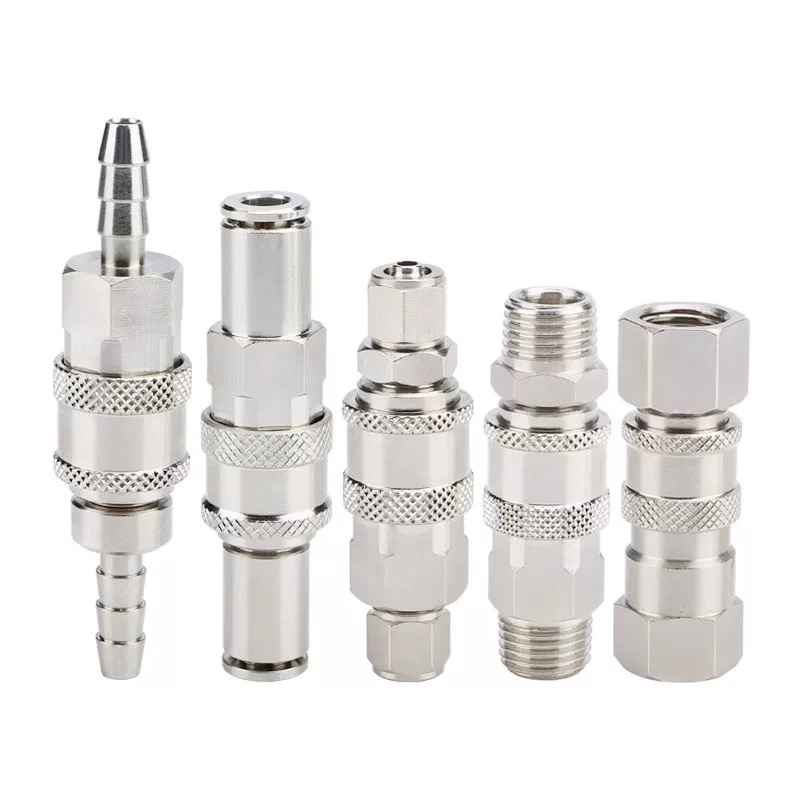
In pneumatic systems, the integrity of every connection point directly determines the performance, safety, and efficiency of the entire operation. Push to connect air fittings have emerged as one of the most reliable and widely adopted solutions for creating secure, leak-free joints in compressed air lines. Their design eliminates the need for threaded assembly, adhesives, or complex tools, offering a connection method that is both fast and mechanically sound. Understanding exactly how these fittings achieve and maintain a leak-free seal is essential for engineers, maintenance teams, and procurement specialists working with pneumatic equipment.
The reliability of push to connect air fittings is not accidental — it results from a carefully engineered internal mechanism that combines multiple sealing technologies into a single compact component. From industrial automation lines to food processing equipment and medical air supply systems, these fittings are trusted to keep compressed air where it belongs: inside the tubing, moving toward the application. This article breaks down the engineering logic behind their leak-free performance, the conditions that support or challenge that performance, and what to look for when selecting the right fitting for your system.
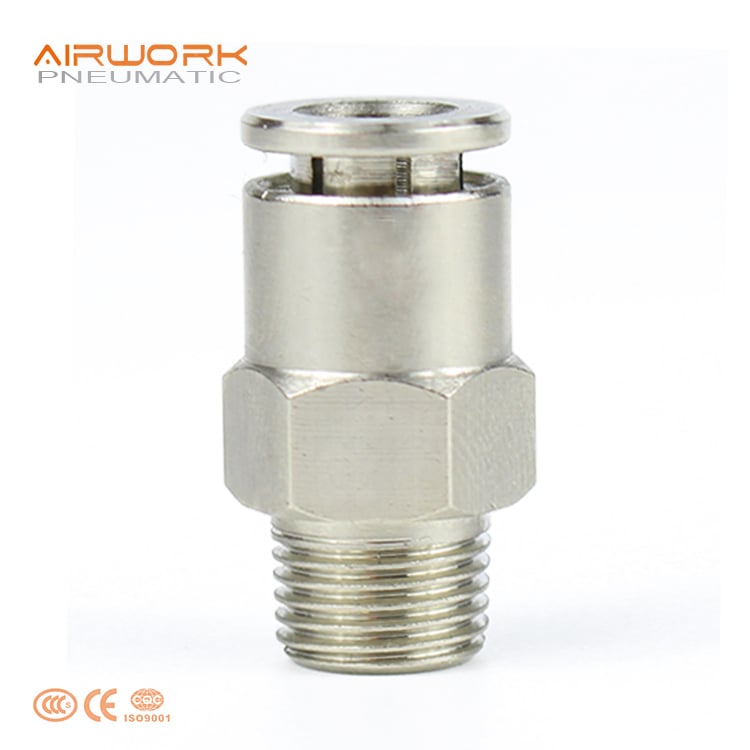
The Internal Mechanism Behind Leak-Free Performance
How the Gripping Ring Works
At the heart of every push to connect air fitting is a stainless steel collet or gripping ring. When a tube is inserted into the fitting body, this collet engages the outer surface of the tube with a series of inward-facing teeth. The geometry of these teeth is designed so that any axial pulling force on the tube — such as system pressure pushing against the tube end — actually causes the teeth to bite deeper into the tube wall rather than releasing it.
This self-locking behavior is the first and most critical layer of leak prevention. Without a mechanically stable tube position, no seal element can function consistently over time. The gripping ring ensures that even under pressure fluctuations, vibration, or thermal cycling, the tube does not shift or back out of the fitting body. This positional stability is what allows the secondary sealing element to do its job reliably.
The collet design also means that tube insertion requires minimal force — usually just a firm push — while tube removal requires deliberate action such as pressing the release collar. This asymmetry between insertion ease and retention strength is a deliberate engineering choice that contributes directly to the leak-free nature of push to connect air fittings.
The O-Ring Seal and Its Role
Behind the gripping ring sits an O-ring, typically made from NBR (nitrile butadiene rubber) or EPDM depending on the application. When the tube is fully inserted, it compresses this O-ring radially against both the inner wall of the fitting body and the outer surface of the tube. This radial compression creates a continuous, circumferential seal that prevents air from escaping between the tube and the fitting.
The effectiveness of this O-ring seal depends on the tube being inserted to the correct depth. Most push to connect air fittings have a defined insertion depth that ensures the tube end travels past the O-ring and engages the gripping collet fully. Partial insertion is one of the most common causes of leakage in push-fit pneumatic systems, which is why many quality fittings include depth markings or visible indicators on the tube during installation.
O-ring material selection also matters significantly for long-term leak-free performance. NBR offers good resistance to petroleum-based lubricants commonly found in compressed air systems, while EPDM handles ozone, steam, and certain chemical environments better. Choosing the correct O-ring compound ensures the seal remains elastic and dimensionally stable throughout the service life of the fitting.
Material Quality and Its Impact on Sealing Integrity
Fitting Body Materials
The body material of push to connect air fittings plays a critical role in maintaining dimensional accuracy under pressure and temperature changes. Brass is the most widely used material for high-performance pneumatic fittings because of its excellent machinability, pressure resistance, and corrosion resistance. A precision-machined brass body maintains tight internal tolerances that allow the O-ring and collet to function as designed, even at elevated pressures.
For applications involving aggressive chemicals, outdoor environments, or food-grade requirements, nickel-plated brass or stainless steel variants of push to connect air fittings are commonly specified. These materials resist surface oxidation and corrosion that could otherwise degrade the internal seating surfaces over time, gradually compromising sealing performance. The choice of body material should always be aligned with the operating environment to ensure long-term integrity.
Polymer-bodied push to connect air fittings made from PA (polyamide) or POM (acetal) are also used in lower-pressure applications and offer advantages in weight reduction and chemical resistance. However, their dimensional stability under thermal cycling is generally lower than metal alternatives, which must be considered when evaluating leak-free performance over wide temperature ranges.
Tube Compatibility and Preparation Standards
Even the best push to connect air fittings will not achieve a leak-free connection if the tubing is improperly prepared. The tube must be cut cleanly and squarely — any burrs, ovality, or angled cuts will prevent the O-ring from seating uniformly and create leak paths. Industrial-grade tube cutters rather than saws or scissors are strongly recommended for this reason.
Tube outside diameter tolerance is equally important. Push to connect air fittings are designed to work within a specific OD tolerance range. Tubes that are undersized allow the O-ring to under-compress, reducing sealing force. Tubes that are oversized may prevent full insertion or damage the O-ring upon entry. Always verify that the selected tubing complies with the fitting manufacturer's specified OD tolerance to ensure a reliable, leak-free result.
Surface condition of the tube's outer wall in the insertion zone must also be smooth and free from scratches, grooves, or contamination. Even minor surface defects in the sealing zone can create micro-leak paths past the O-ring. Some engineers apply a light coating of pneumatic system-compatible lubricant to the tube end before insertion, particularly in dry or dusty environments, to protect the O-ring and ease assembly without compromising the seal.
System Pressure, Temperature, and Operational Conditions
Pressure Rating and Dynamic Load Management
Push to connect air fittings are rated for specific maximum operating pressures, typically ranging from 10 bar to 16 bar depending on body material, tube size, and design standard. Operating within the rated pressure range is a fundamental requirement for maintaining leak-free performance. Pressure spikes caused by rapid valve switching or water hammer effects can momentarily exceed nominal operating pressure, and fittings must be selected with adequate pressure margin to handle these transient events without seal degradation.
Vibration is another factor that can challenge the leak-free performance of push to connect air fittings over time. In applications mounted on moving machinery, compressors, or equipment with significant mechanical vibration, the continuous movement can cause micro-motion between the tube and the fitting body. This micro-motion gradually wears the O-ring and may loosen the gripping collet's hold. Selecting fittings with vibration-resistant collet designs or adding vibration dampening mounts to the tubing can significantly extend leak-free service life in these environments.
Cyclic pressure applications — systems that frequently pressurize and depressurize — place repetitive mechanical stress on the sealing elements of push to connect air fittings. High-cycle applications require fittings with O-rings made from materials with excellent fatigue resistance and low compression set values. Specifying fittings rated for high-cycle pneumatic duty ensures that the sealing system remains effective across millions of pressure cycles without developing leaks.
Temperature Range Considerations
Temperature affects both the O-ring elastomer and the fitting body material in ways that directly impact sealing performance. At elevated temperatures, elastomers soften and may extrude slightly under pressure, reducing the sealing force available. At low temperatures, they stiffen and may lose their ability to conform to micro-irregularities in the sealing surfaces. Push to connect air fittings must be selected with O-ring compounds rated for the full temperature range expected in the application.
Thermal cycling — the repeated expansion and contraction that occurs as a system heats up during operation and cools down during shutdown — causes different materials within the fitting assembly to change dimensions at different rates. Metal bodies and plastic tubes have different thermal expansion coefficients, and this differential movement can relax the O-ring preload over many thermal cycles. High-quality push to connect air fittings are designed with tolerances that accommodate this differential expansion while still maintaining adequate sealing force throughout the thermal range.
Installation Best Practices That Preserve Leak-Free Performance
Correct Insertion Technique
Proper insertion technique is surprisingly important for achieving the leak-free potential of push to connect air fittings. The tube should be pushed straight into the fitting with a single firm motion until it reaches the mechanical stop — the point at which it cannot travel further. Inserting the tube at an angle concentrates O-ring compression on one side of the circumference, creating an uneven seal that is prone to leaking.
After insertion, a gentle pull-test on the tube confirms that the gripping collet has engaged. If the tube pulls out easily, it has not been inserted to the correct depth and must be reinserted. This simple verification step, which takes only a second, prevents a significant proportion of installation-related leaks in pneumatic systems using push to connect air fittings. Making pull-testing a standard part of installation procedure is a best practice that should be communicated to all maintenance and assembly personnel.
For fitting styles that incorporate a thread connection on one end — such as male straight or elbow configurations — the threaded joint must also be properly sealed. PTFE tape or liquid thread sealant applied correctly to the male thread prevents leakage at the thread interface, complementing the tube-side sealing performed by the O-ring and collet system. Both sealing points must be correctly addressed for the overall connection to be truly leak-free.
Inspection, Maintenance, and Long-Term Reliability
Even well-installed push to connect air fittings benefit from periodic inspection in systems where leakage has significant energy or safety consequences. Soap solution or electronic leak detection equipment can identify any developing leak paths at fitting locations before they become significant. Establishing a scheduled inspection program for pneumatic fittings is a cost-effective maintenance investment given that compressed air leaks typically represent a measurable percentage of a facility's total energy consumption.
When a leak is detected at a push to connect air fitting, the diagnosis should begin with whether the tube is fully inserted, whether the tube surface is damaged, and whether the O-ring has been degraded by chemical exposure or heat. In many cases, simply removing the tube, inspecting and re-cutting the tube end, and reinserting correctly resolves the leak without requiring new components. If the O-ring shows visible hardening, cracking, or extrusion, the fitting should be replaced entirely.
Planned replacement intervals for push to connect air fittings in high-cycle or harsh environment applications are also worth considering. While these fittings are designed for long service life, the elastomeric components have finite fatigue life. Incorporating fitting replacement into scheduled maintenance shutdowns — rather than reacting to leaks after they occur — supports consistently leak-free pneumatic system performance and reduces unplanned downtime.
FAQ
What is the most common reason push to connect air fittings develop leaks?
The most frequent cause of leakage in push to connect air fittings is incomplete tube insertion. If the tube is not pushed fully into the fitting until it reaches the mechanical stop, the O-ring does not compress evenly and the gripping collet does not fully engage. A quick pull-test after insertion is the simplest way to confirm correct seating and prevent this issue. Other common causes include tube ends with burrs or angled cuts, and O-ring degradation from chemical incompatibility.
Can push to connect air fittings be reused after disconnection?
Yes, push to connect air fittings are generally designed for multiple insertion and removal cycles. However, each disconnection and reconnection cycle adds minor wear to the O-ring and gripping collet. In applications where the fitting is connected and disconnected frequently — such as during equipment changeover — it is good practice to periodically inspect the O-ring condition and re-cut the tube end to ensure a fresh, clean sealing surface. Fittings that show visible O-ring wear or collet deformation should be replaced rather than reused.
Do push to connect air fittings work with all types of pneumatic tubing?
Push to connect air fittings are designed to work with specific tubing materials and outside diameter tolerances. The most commonly compatible tube materials include polyurethane (PU), polyethylene (PE), nylon (PA), and flexible PVC. The critical requirement is that the tube OD falls within the tolerance specified by the fitting, and that the tube wall hardness is sufficient for the collet teeth to grip securely. Very soft or highly flexible tubing materials may not provide adequate grip surface for reliable retention under pressure.
How do I choose the right push to connect air fitting for a high-pressure application?
For high-pressure applications, select push to connect air fittings with brass or stainless steel bodies rather than polymer bodies, as metal provides superior dimensional stability under pressure. Verify that the fitting's pressure rating exceeds the maximum working pressure of the system, including any transient spikes. Choose O-ring compounds with high-pressure ratings and low compression set values. For systems with both high pressure and vibration, look specifically for fittings described as suitable for dynamic pneumatic duty, as these incorporate enhanced collet and O-ring designs optimized for demanding service conditions.