 EN
EN


Air Source Treatment Unit:The "Guardians" and Core Components of Pneumatic Systems
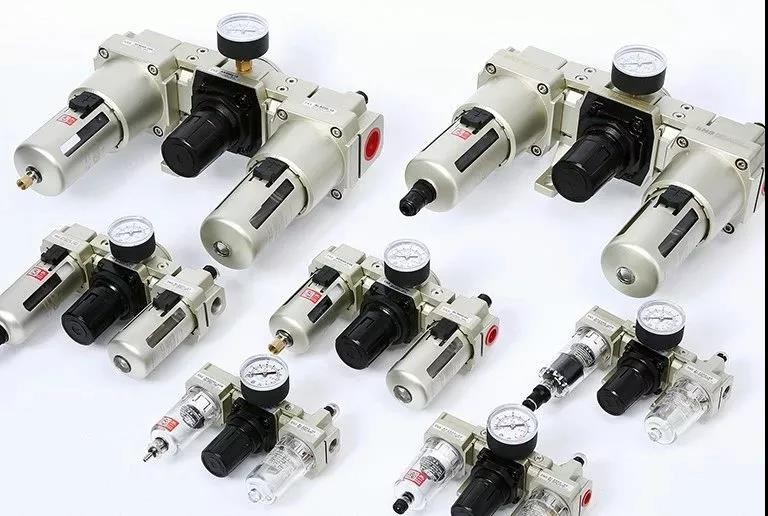
Air source treatment units are indispensable basic components in pneumatic control systems. Their main functions are to filter, regulate, lubricate, stabilize, and drain compressed air, providing a clean, dry, and pressure-stable high-quality air source for cylinders, solenoid valves, pneumatic motors, and other equipment. This directly determines the lifespan, accuracy, and stability of the pneumatic system. This article will comprehensively introduce the core knowledge of air source processing components from three dimensions: types, typical applications, and usage precautions.
I. Main Types of Air Source Processing Components
Air source processing components usually appear as single units or combinations. In the industry, they are often referred to as pneumatic triple units, duplex units, filters, pressure regulating valves, lubricators, etc. The core classifications are as follows:
1. Air Filters
Responsible for removing moisture, oil, rust, dust, and other impurities from compressed air, they are the first line of defense for the pneumatic system. Based on precision, they can be divided into ordinary filters (40μm), precision filters (5μm), and ultra-precision filters (0.01μm), with manual/automatic drainage functions to protect downstream components from wear and clogging.
2. Pressure Regulating Valve (Pressure Reducing Valve)
It provides stable output pressure, unaffected by fluctuations in inlet pressure or changes in air flow, ensuring consistent operation of pneumatic equipment. Divided into standard and precision pressure regulating valves, it enables high-precision control at low pressure and is widely used in testing, spraying, and positioning equipment.
3. Lubricators
A small amount of lubricating oil mist into compressed air to lubricate moving parts such as cylinders and solenoid valves, reducing friction loss and extending service life. Divided into primary lubricators and micro-mist sprayers, it can be omitted in some oilless lubrication systems.
4. Air Source Dual Unit
The most common combination, generally a filter + pressure regulating valve, integrating filtration, pressure regulation, and drainage functions, meeting the needs of most conventional pneumatic equipment. It has a compact structure and is easy to install.
5. Air Source Triple Unit
Complete combination: filter + pressure regulator + lubricator, suitable for pneumatic systems requiring lubrication, such as heavy-duty cylinders, pneumatic tools, and impact pneumatic equipment.
6. Precision Air Source Processing Unit
Includes a precision filter + precision pressure reducing valve, offering higher filtration accuracy and stronger pressure stability, used in high-requirement pneumatic applications such as electronics, pharmaceuticals, testing, and printing.
7. Drain Valves and Auxiliary Accessories
Including automatic drainers, manual drain valves, pressure gauges, flow dividers, etc., used for automatic sewage discharge, pressure display, and multi-channel gas supply.
II. Typical Application Scenarios of Air Source Processing Components
Air source processing components are standard equipment in all pneumatic automation equipment, with applications covering industrial manufacturing, automotive, electronics, food and pharmaceutical, packaging, and construction machinery fields:
1. Automated Production Lines:
Robots, transfer machines, conveyors, and assembly equipment rely on two- or three-unit air supply lines to ensure precise and continuous operation.
2. Automotive Manufacturing:
Welding, painting, handling, and inspection stations require high levels of compressed air cleanliness and necessitate the use of multi-stage precision air source processing.
3. Electronics and Semiconductor Equipment:
Chip mounters, dispensing machines, and testing instruments utilize oil-free, water-free, and dust-free precision air source processing components to prevent product contamination.
4. Food and Pharmaceutical Machinery:
Packaging machines, filling machines, and bottle unscramblers often employ stainless steel, oil-free, food-grade air source processing components to meet hygiene and safety standards.
5. Pneumatic Tools and Spraying Equipment:
Pneumatic screwdrivers, spray guns, and grinders require pressure regulation and filtration to ensure stable pressure and prevent water or oil leakage from affecting quality.
6. Textile, Printing, and Plastics Machinery:
For equipment requiring continuous air supply, automatic drainage air source treatment devices reduce manual maintenance and improve equipment reliability.
7. Construction Machinery, Shipbuilding, and Special Equipment:
Filter impurities and stabilize pressure in harsh environments to protect pneumatic control components from failure.
III. Precautions for the Use and Installation of Air Source Treatment Components
Proper use of air source treatment components can significantly reduce malfunctions and extend component lifespan. The following are key precautions:
1. Installation Direction and Flow Direction Installation must strictly follow the arrow direction on the valve body; do not install upside down. Ensure vertical installation for easy automatic drainage.
2. Pressure Setting Specifications The output pressure of the pressure regulating valve must not exceed the rated pressure. For general equipment, set at 0.4–0.6 MPa; for precision equipment, adjust slowly to avoid impact.
3. Regular Drainage and Maintenance Water accumulated in the filter cup must be drained promptly. The automatic drainer should be checked regularly for blockages. For long-term shutdowns, drain accumulated water to prevent freezing and cracking or the growth of impurities.
4. Regular Filter Cartridge Replacement Replace filter cartridges every 3–6 months depending on operating conditions. Replace precision filter cartridges every 1–3 months. Blockage will lead to insufficient air pressure and flow.
5. Oil Mist Lubricator Usage Guidelines Use dedicated pneumatic lubricating oil (ISO VG32). The oil level should not be too high or too low; oil mist lubricators are strictly prohibited from use in oilless lubrication systems.
6. Material and Environmental Compatibility For humid, underwater, and corrosive environments, use stainless steel or corrosion-resistant types; the food and pharmaceutical industries must use oil-free, food-grade components.
7. Prevent Low-Temperature Freezing When the ambient temperature is below 0℃, compressed air is prone to freezing. Anti-freeze filters or pre-dryers must be used to prevent components from freezing and cracking.
8. Accessory Compatibility
The pressure gauge range, air hose diameter, and flow rate specifications must match the equipment. Insufficient flow will lead to pressure drop and sluggish operation.
9. Safety Precautions The water cup is generally made of PC and cannot be used in environments with organic solvents. For high-temperature environments, a metal cup must be used. Avoid impacts and direct sunlight.
IV. Summary
Air source treatment components are considered the "throat" of pneumatic systems. Filters purify the air, pressure regulators stabilize the pressure, and lubricators provide lubrication. The combination of these three components provides a stable and reliable power source for pneumatic equipment. From automated production lines to precision instruments, from engineering machinery to food and pharmaceuticals, it is ubiquitous and crucial for ensuring stable, efficient, and long-lasting equipment operation. Only by selecting the right model, installing correctly, and maintaining it regularly can the air source treatment components achieve their maximum value, making the entire pneumatic system safer, more energy-efficient, and more durable.