 EN


One roof, four functions: inside the pneumatic components plant that machines,assembles, tests and stocks on site
Aluminium bar stock enters at one end of the building; batch-labelled pneumatic components leave at the other. A look at the production model behind AIRWORK — and at the two places where the process stops being automatic.
AIRWORK builds pneumatic motion components: cylinders, air preparation units, solenoid valves and shock absorbers. What distinguishes the operation is less the product list than the layout — machining, assembly, testing and finished-goods inventory occupy the same plant, and that arrangement is the part worth walking through.
Most suppliers in this category can quote a bore, a stroke and a lead time. Fewer can tell you where the bore was cut, who seated the seal, and what the gauge read when the unit was pressed together. Those answers are a function of how the plant is organised, not of the catalogue.
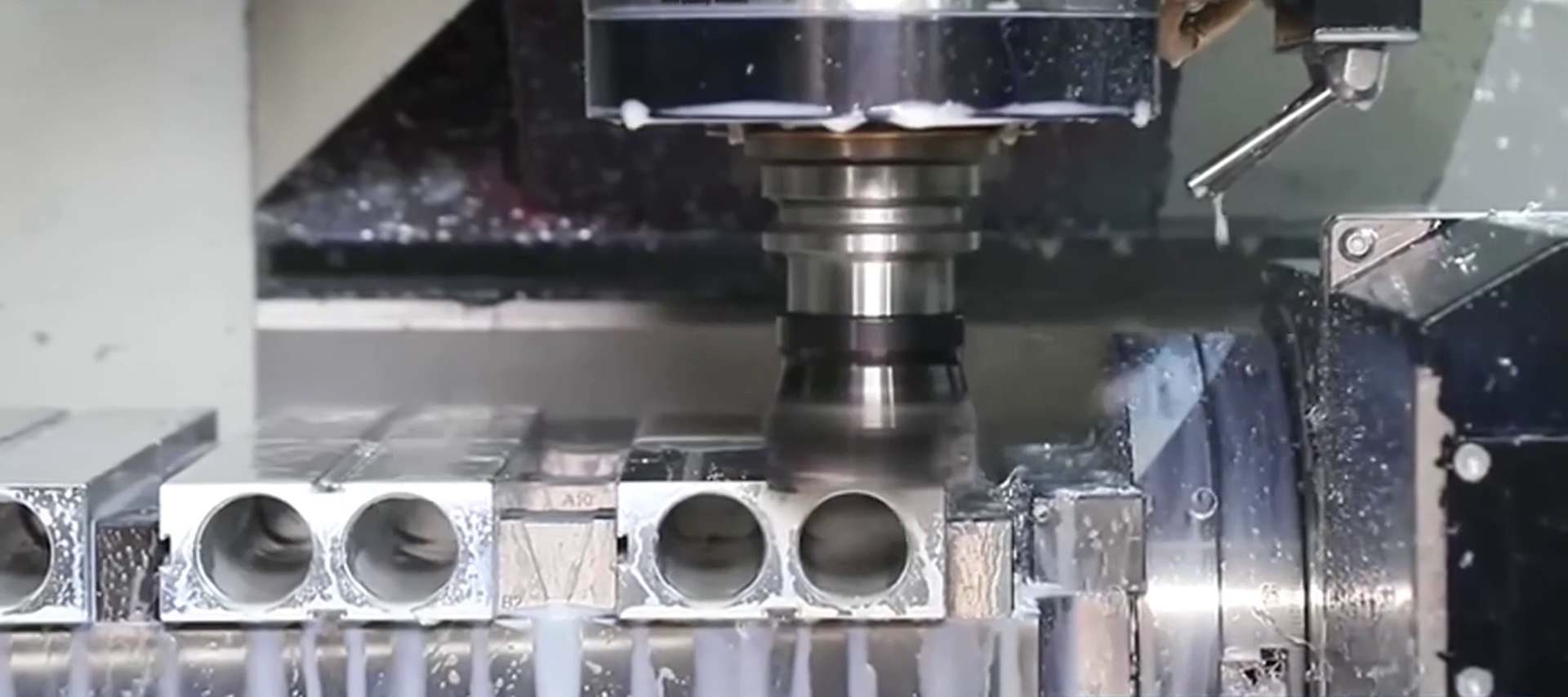
An aluminium block on a machining centre: the end mill cuts the bore under coolant. Machining is done in-house, on the same site as assembly and testing.
Why the building matters
When machining, assembly and testing sit in separate buildings — or separate companies — feedback arrives with a delay. A bore that drifts by a few microns is discovered at assembly, or worse at the customer's line, and the correction has to travel back through a supply chain before it reaches the machine that caused it.
AIRWORK's answer is geographical rather than procedural: put the operations in one plant and the correction is a walk across the floor. A drift found at assembly is known to the machining side the same day, not after a container has landed.
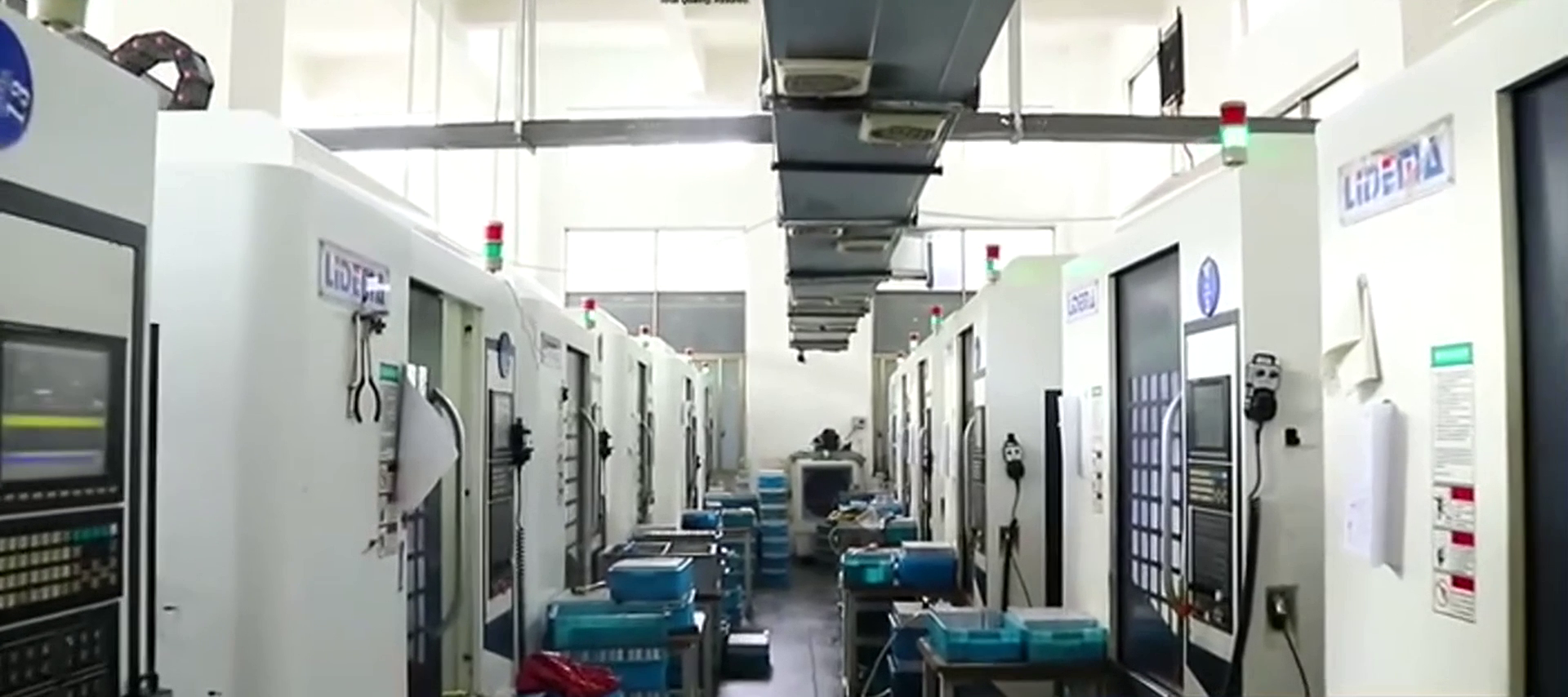
The main machining aisle. Vertical machining centres line both sides; assembly, inspection and the finished-goods store are in the same building.
From bar stock to bore
Production starts on the CNC floor. Aluminium bar is cut to length, then turned, milled and drilled into the three parts that decide how a cylinder behaves: the barrel, the end caps and the piston rod.
The bore is the critical surface. It is where the piston seal runs, and therefore where a cylinder either holds pressure for its service life or begins to leak. Everything downstream — seal selection, assembly force, the test bench — is an attempt to protect a surface that was already decided at the spindle.
Where the automation stops
Downstream of the machine tools, the plant runs automated stations: a gantry dispenses fluid in measured doses, and press stations drive components to a set depth. Repetition and force are handled by the machine, which is exactly what machines are good at.
Then the process changes hands. Seating a seal and aligning a piston rod are still done by operators, because the judgement involved — is the seal sitting square, does the rod move freely — is not yet something a press can feel. It is also the stage that determines whether a finished cylinder runs smoothly or binds, which makes it a strange place to save labour.
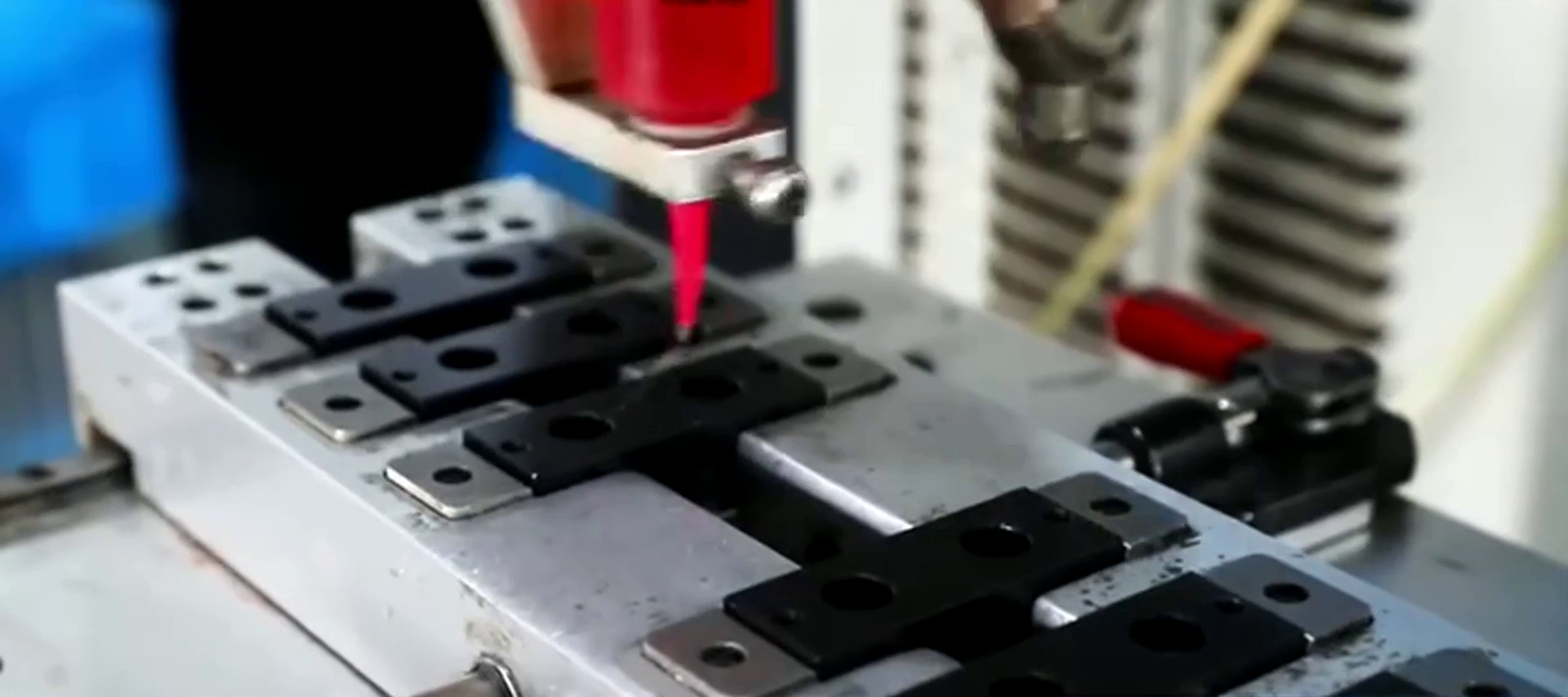
An automated station dispensing fluid in a measured dose, ahead of the press operation.
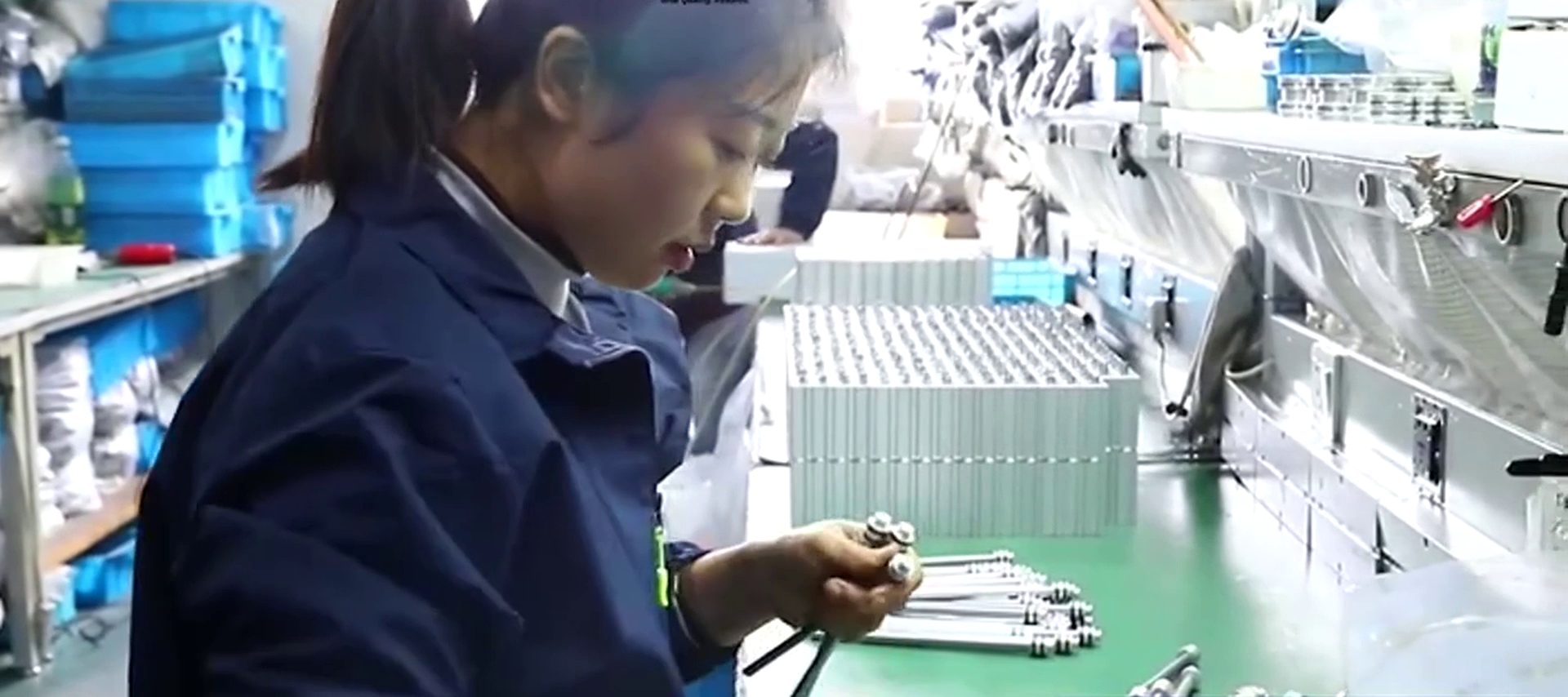
Manual assembly: seal seating and rod alignment remain operator work, and remain the stage that decides whether a cylinder runs smoothly or binds.
Readings, not opinions
The press stations display force and position, and the inspection result is recorded from the readout rather than judged by the sound of the press bottoming out. It is a small distinction with a practical consequence: a reading can be written down, compared across batches and defended later.
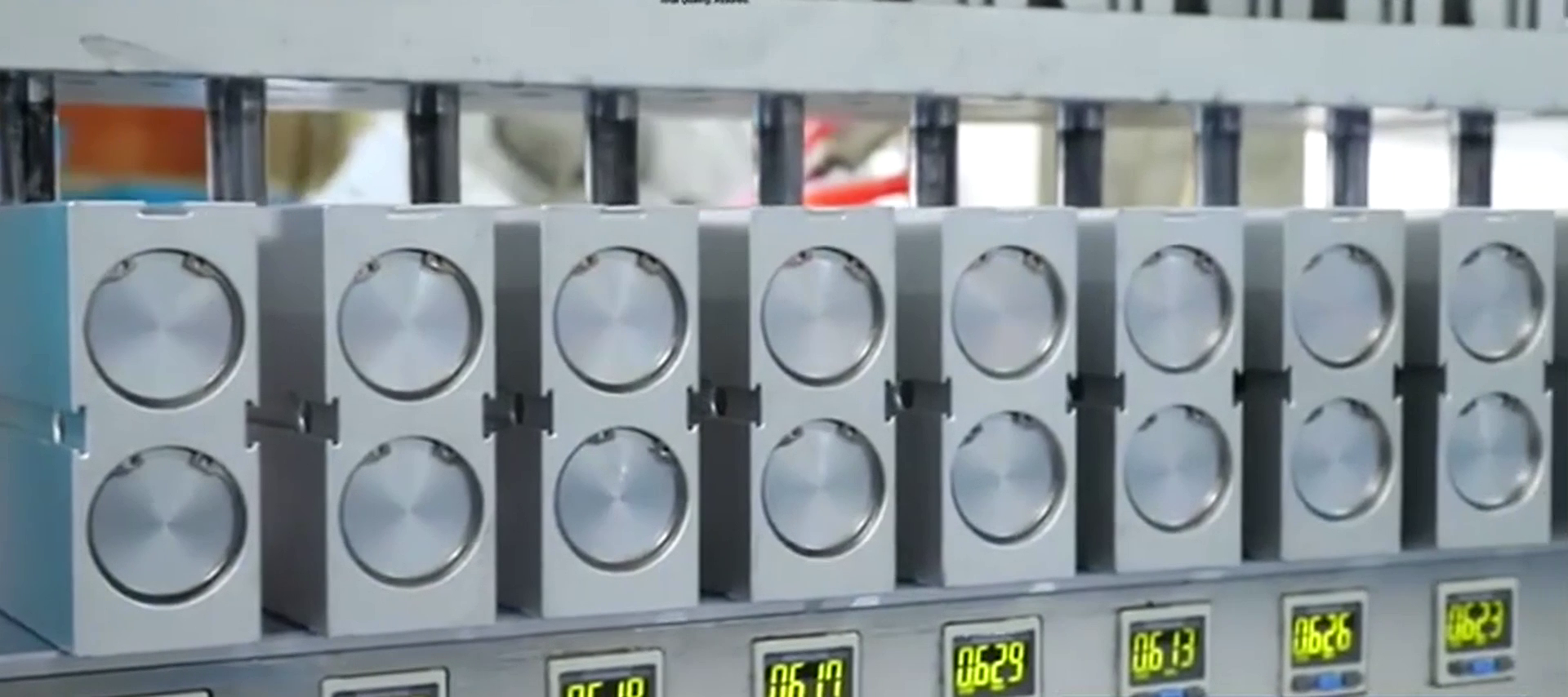
Press-station instrumentation: force and position are read off the display and recorded, rather than assessed by ear.
Seal integrity is checked under water. A leak that would be invisible on a bench — a slow seep around a seal lip — becomes a visible line of bubbles in a tank, which is why the method survives in plants that could afford more elaborate equipment.
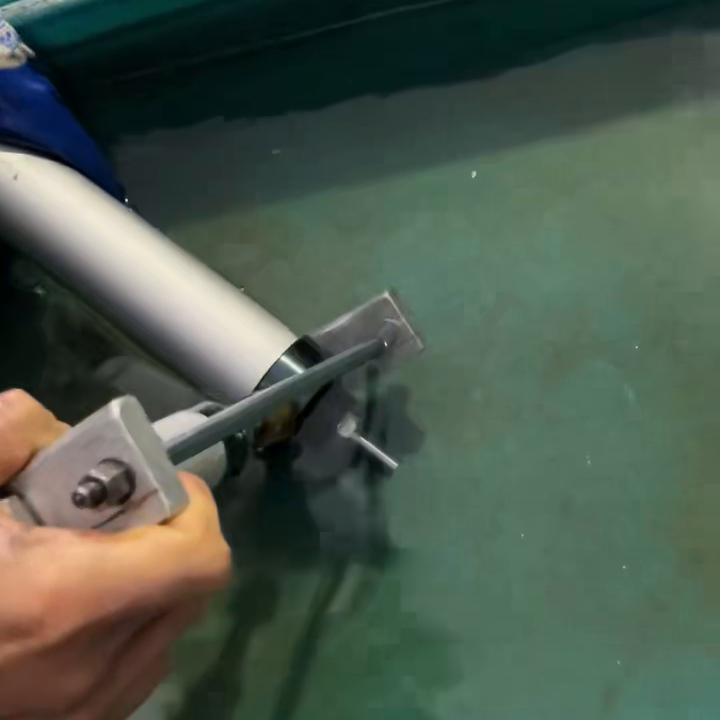
Underwater leak testing: a seep that would be invisible on a bench shows up as a line of bubbles.
Every unit leaves with an inspection label and a batch number. The label is the part buyers rarely ask about until something goes wrong; at that point it is the difference between answering a question about a delivery and answering it about the specific batch it came from. The facility holds Alibaba.com Verified Supplier status, audited on site by Intertek.
Range, stock and the drawing conversation
The product line covers four families that usually appear together on a machine: pneumatic cylinders, air preparation units (filter-regulator-lubricator assemblies), solenoid valves and shock absorbers. Buying them from one source is largely a matter of specification consistency — one port thread standard, one set of tolerances, one party to call.
Behind the line sits a finished-goods warehouse. Stock does not shorten a production run, but it does mean a repeat order is pulled and packed rather than scheduled — a distinction that matters more to a buyer maintaining a line than to one shopping for a price.
For anything outside the catalogue — a different stroke, a thread, a mounting pattern — the process starts with the customer's drawing. Orders are packed, sealed and labelled against the batch record, so what arrives can be matched to what was tested.
Finished product: cylinders, air preparation units, solenoid valves and shock absorbers from the AIRWORK range.
About AIRWORK
AIRWORK manufactures pneumatic components for automation and air systems — cylinders, push-in fittings, solenoid valves, air preparation units, shock absorbers and PU/PE tubing. Our range is built to standard mounting and thread dimensions, so parts drop into existing designs without modification. We work with distributors, OEMs and automation integrators on OEM and ODM orders, offering flexible MOQ, quick sampling and export-ready packaging. One team follows your order from model selection to shipment, with drawings, test reports and certificates provided on request.