 EN
EN

Q: Why is 'Thread Standardization' (G, PT, NPT) the single biggest challenge in global pneumatic procurement?
Introduction: The Invisible Barrier in Global Sourcing
In the era of globalized manufacturing, sourcing pneumatic cylinders, solenoid valves, and fittings from across the world has never been easier. However, B2B procurement managers and plant engineers frequently run into a major hurdle during assembly and installation: thread mismatch. A company based in North America might order a high-quality pneumatic cylinder from a premier Chinese manufacturer, only to find that their existing localized tubing connectors will not screw into the cylinder ports.
This frustration stems from different global thread standards: G (BSPP), PT (BSPT), and NPT. Despite appearing identical to the naked eye, these threads feature distinct physical geometries, pitch angles, and sealing mechanisms. Mismatching them leads to costly system leaks, cross-threading, mechanical damage, and long project delays.
This guide provides a comprehensive breakdown of the major thread standards, the physical consequences of thread mismatch, and strategic solutions for procurement professionals.
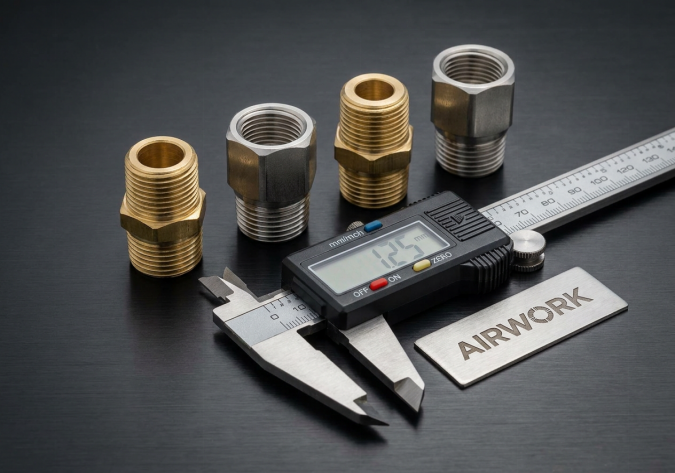
1. Decoding the Big Three: G, PT, and NPT Threads
To manage a global pneumatic supply chain, buyers must understand the physical and regional characteristics of the three dominant thread standards.
- G Thread (BSPP - British Standard Pipe Parallel): This is a parallel (straight) thread standard. Because the thread is parallel, it does not create a seal on its own. Instead, it relies on an external sealing ring, washer, or O-ring positioned between the shoulder of the fitting and the mating port. The thread angle is 55 degrees. G threads are the absolute standard across Europe, the United Kingdom, and many parts of South America.
- PT Thread (BSPT - British Standard Pipe Taper): This is a tapered thread standard with a 1:16 taper ratio. It creates a physical, pressure-tight metal-to-metal seal along the threads themselves as they are tightened, usually assisted by Teflon tape or thread sealant. The thread angle is 55 degrees. PT threads are widely used in Japan, South Korea, China, and throughout Southeast Asia.
- NPT Thread (National Pipe Taper): This is the American standard tapered thread, also featuring a 1:16 taper ratio. Like PT, it seals along the threads. However, it features a 60-degree thread angle and flat crests and roots, whereas PT threads have rounded crests and roots. NPT is the dominant standard in North America (United States, Canada, and parts of Mexico).
2. The Physical and Financial Consequences of Thread Mismatch
A common mistake made on the factory floor is attempting to force a tapered PT fitting into a parallel G port, or trying to screw an NPT fitting into a PT port because they are both tapered. The physical consequences are immediate and severe:
- Thread Stripping and Cross-Threading: Forcing an NPT fitting (60-degree thread angle) into a PT port (55-degree thread angle) deforms the metal threads. This destroys both the fitting and the expensive cylinder end cap or valve body, rendering them completely unusable.
- High-Pressure Air Leaks: Even if a mismatched fitting seems to screw in, the pitch and profile differences prevent the threads from mating fully. Under standard system pressures of 6.0 to 10.0 bar, compressed air will escape through the micro-gaps, wasting energy and dropping line pressure.
- Physical Blowouts under Pressure: Under high-pressure surges, a mismatched fitting that only has a few threads engaged can physically blow out of its port, posing a severe safety hazard to nearby factory operators.
- Sourcing and Shipping Delays: Discovering a thread mismatch during on-site assembly can halt an entire project, requiring expedited air freight shipping of replacement parts from overseas, which destroys project profit margins.
- High Inventory Carrying Costs: Factories operating machinery from different international origins are forced to carry duplicate inventories of fittings, connectors, and adapters in G, PT, and NPT standards, tying up valuable working capital.
3. Physical Specifications Comparison Table
To help procurement teams quickly compare thread properties, here are the key parameters:
- Standard: G (BSPP) / PT (BSPT) / NPT
- Thread Type: Parallel / Tapered / Tapered
- Thread Angle: 55 Degrees / 55 Degrees / 60 Degrees
- Sealing Method: Washer or O-ring / Thread Sealant on Thread / Thread Sealant on Thread
- Primary Region: Europe and UK / Asia / North America
4. How Procurement Managers Can Solve the Thread Challenge
To eliminate thread compatibility issues and streamline international sourcing, procurement managers should implement three key strategies:
- Regional Auditing of Machinery Origins: Before ordering spare parts or new components, audit the origin of the machinery. If the machine was built in Germany, specify G-thread components. If it was built in Japan or China, specify PT-thread. If it was built in the United States, specify NPT.
- Sourcing from Flexible Manufacturers: Partner with a pneumatic manufacturer that possesses the CNC tooling and technical expertise to supply any of their products in any of the three thread standards. Zhejiang Jinzhi Pneumatic Technology Co., Ltd. (JZPNU) manufactures all of our AIRWORK cylinders, solenoid valves, and fittings with customizable G, PT, or NPT thread options, allowing buyers to consolidate their supply chain under a single manufacturer.
- Standardizing with Thread Adapters: In facilities with highly mixed machinery fleets, maintain a structured inventory of high-quality brass thread adapters. These adapters allow a technician to convert a G-thread port into an NPT port, or vice versa, in seconds, ensuring continuous uptime during emergency repairs.
5. The JZPNU AIRWORK Thread Precision Commitment
As a premier OEM/ODM supplier of pneumatic components to the global market, JZPNU recognizes that thread precision is non-negotiable. Our AIRWORK line of fittings and components is manufactured to the highest global standards:
- Advanced CNC Machining: We utilize high-precision multi-axis CNC machines to ensure that thread pitches, angles, and depths are machined with micron-level tolerances.
- Laser-Etched Identification: To prevent confusion on the assembly line, our fittings and components feature clear laser markings indicating the specific thread type (e.g., G1/4, NPT1/4, PT1/4).
- Comprehensive Quality Control: Every batch of threads is checked using precision thread plug and ring gauges to guarantee flawless fitment and zero leaks right out of the box.
Conclusion: Strategic Sourcing Recommendations
Thread standardization remains a quiet but significant operational risk in global industrial procurement. Sourcing directors can turn this challenge into a competitive advantage by understanding the physical differences between G, PT, and NPT threads, auditing machinery requirements, and partnering with an agile, high-precision manufacturer like JZPNU. By standardizing your pneumatic sourcing with AIRWORK's multi-thread capability, you can eliminate installation errors, reduce safety risks, and optimize your global logistics efficiency.
Table of Contents
- Q: Why is 'Thread Standardization' (G, PT, NPT) the single biggest challenge in global pneumatic procurement?
- Introduction: The Invisible Barrier in Global Sourcing
- 1. Decoding the Big Three: G, PT, and NPT Threads
- 2. The Physical and Financial Consequences of Thread Mismatch
- 3. Physical Specifications Comparison Table
- 4. How Procurement Managers Can Solve the Thread Challenge
- 5. The JZPNU AIRWORK Thread Precision Commitment
- Conclusion: Strategic Sourcing Recommendations