 EN
EN

Question: How do you troubleshoot 'Valve Sticking' in humid environments, and what roles do internal spool coating and sealing play?
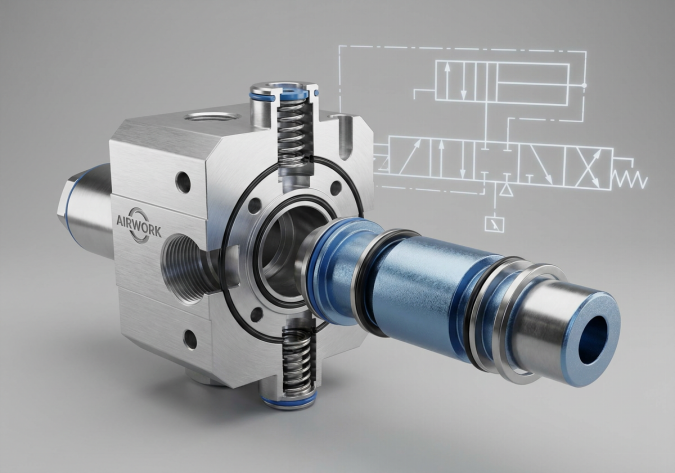
Answer: To troubleshoot and resolve pneumatic valve sticking in humid environments, maintenance engineers must replace standard valves with models featuring hard-anodized, PTFE-infused aluminum spools or ceramic slide elements, paired with moisture-resistant HNBR or Viton (FKM) dynamic seals. In high-humidity conditions, water vapor condenses inside the valve body, washing away the factory lubrication grease and causing severe dry-running friction. Additionally, standard polyurethane or low-grade nitrile seals undergo hydrolysis or absorb moisture, causing them to swell and physically jam the sliding spool inside the valve bore. Standardizing on specialized spool coatings and advanced sealing chemistries ensures the valve can operate with minimal friction even when wet, while installing proper water separators, coalescing filters, and refrigerant air dryers upstream will eliminate the root cause of the moisture contamination.
Introduction: The Hostile Nature of Humid Pneumatic Systems
In industrial manufacturing, clean and dry compressed air is an ideal standard. However, in many real-world environments, keeping moisture out of the pneumatic lines is a continuous battle. Food and beverage packaging plants, paper mills, textile factories, car washes, and tropical assembly facilities are constantly subjected to high ambient humidity. Additionally, frequent washdown procedures in food plants introduce direct water spray to the machinery.
When humid air is compressed, its moisture-holding capacity drops, causing liquid water to condense directly inside the pneumatic piping and manifolds. This condensed water travels into the directional control valves, leading to a frustrating and costly operational failure: valve sticking. As a leading manufacturer of high-end pneumatic controls, AIRWORK designs specialized valves that resist moisture-induced failure, helping B2B systems integrators maintain maximum machine uptime.
The Mechanical Causes of Valve Sticking Due to Moisture
To troubleshoot a sticking valve effectively, it is essential to understand the four primary physical mechanisms that occur when water enters a directional control valve:
- Lubrication Washout: Standard pneumatic valves rely on a thin layer of specialized factory grease to reduce friction between the sliding metal spool and the rubber seals. Water traveling through the valve acts as a solvent, washing away this grease. Without lubrication, the metal-on-rubber sliding friction increases dramatically, causing the spool to stick or move sluggishly.
- Seal Swelling and Hydrolysis: Many cost-effective pneumatic valves utilize standard polyurethane (PU) or basic nitrile (NBR) seals. When exposed to liquid water, especially warm water, polyurethane seals undergo a chemical reaction called hydrolysis, which breaks down the polymer chains. This causes the seal material to soften, degrade, and swell. The expanded seals press tightly against the valve spool, increasing the force required to shift the valve beyond the capacity of the return spring or pilot piston.
- Galvanic and Oxide Corrosion: Pneumatic valve bodies are typically made of cast or machined aluminum, while the internal spools are stainless steel or carbon steel. When water (which often contains dissolved minerals or cleaning chemicals) settles inside the valve, it acts as an electrolyte. This creates a miniature galvanic cell, causing rapid oxidation and corrosion. The resulting oxide crusts physically bind the spool to the body.
- Pilot Passage Clogging: Solenoid valves are usually pilot-operated, meaning they use a tiny volume of air to push a larger main spool. The pilot channels and exhaust vents are incredibly small (often less than 1mm in diameter). Water droplets or emulsified oil-water sludge can easily block these tiny passages, preventing the pilot air pressure from building up or exhausting, which stops the valve from shifting.
The Engineering Solution: Spool Materials and Coatings
To prevent sticking, the design of the valve spool is critical. AIRWORK utilizes advanced material sciences to create spools that remain low-friction and corrosion-free under wet conditions:
- Hard Anodized Aluminum with PTFE (Teflon) Infusion: This is the industry-standard choice for high-reliability valves. The aluminum spool is first hard-anodized to create an extremely hard, wear-resistant surface oxide layer. During this process, polytetrafluoroethylene (PTFE) particles are molecularly bonded into the porous anodized surface. This creates a self-lubricating, hydrophobic spool that resists water adhesion and maintains an incredibly low coefficient of friction even if the factory grease is completely washed away.
- Ceramic Slide Elements: For extreme environments, ceramic slide plates are used instead of traditional sliding spools. Ceramic is entirely immune to oxidation, galvanic corrosion, and chemical washdowns. Ceramic-to-ceramic sliding interfaces can run completely dry without any lubrication, making them virtually indestructible in high-humidity and washdown environments.
The Role of Advanced Sealing Chemistry
Standardizing on the correct elastomer chemistry is just as important as the spool coating. When selecting valves for humid environments, avoid standard polyurethane and specify the following sealing materials:
- HNBR (Hydrogenated Nitrile Butadiene Rubber): HNBR is highly resistant to water, heat, and ozone. It features excellent mechanical strength and does not undergo hydrolysis or swell when exposed to hot water and steam, making it the ideal standard seal for humid industrial applications.
- Viton (FKM): For chemical-washdown and high-temperature environments, Viton is the premier choice. It is a highly fluorinated elastomer that is completely hydrophobic and chemically inert. It maintains its shape and low friction profile regardless of moisture levels.
Step-by-Step Diagnostic and Mitigation Protocol
If you are experiencing sticking valves on your production floor, follow this systematic troubleshooting procedure:
- Step 1 - Isolate the Failure: Turn off the electrical signal to the solenoid and attempt to shift the valve manually using the manual override button. If the valve shifts easily manually but not electrically, the issue is likely a clogged pilot passage or electrical coil failure. If the manual override is extremely stiff or cannot be pressed, the spool is physically stuck due to seal swelling or corrosion.
- Step 2 - Check for Water Accumulation: Disconnect the exhaust silencer from the valve and check for liquid water or a milky white oil-water emulsion dripping out. If present, water contamination is active.
- Step 3 - Implement Active Water Separation: Install an AIRWORK high-efficiency cyclone water separator directly at the main air inlet of the machine. These separators use centrifugal force to spin liquid water out of the air stream with over 99% efficiency.
- Step 4 - Install Coalescing Filters: Place a 0.01-micron coalescing filter downstream of the water separator to capture remaining aerosol water droplets and oil mists.
- Step 5 - Standardize on Dry Air: For permanent protection, integrate a refrigerant air dryer into your compressor room. This lowers the pressure dew point of the compressed air to 3 degrees Celsius, ensuring water can never condense inside your valve manifolds.
Sourcing Wet-Environment Valve Solutions from AIRWORK
At AIRWORK, we understand that industrial environments are rarely perfect. That is why our entire line of directional control solenoid valves is engineered to handle real-world challenges. Our premium valves feature PTFE-infused hard-anodized spools, robust stainless steel return springs, and advanced HNBR sealing rings as standard components, ensuring reliable operation in the highest humidity zones.
By partnering with AIRWORK, industrial distributors, machine builders, and system integrators can eliminate the headaches of sticking valves and moisture-related downtime. To explore our water-resistant valve terminals, FRL units, and corrosion-resistant cylinders, visit jzpnu.com to view our product catalog or speak with our technical support team today.
Table of Contents
- Question: How do you troubleshoot 'Valve Sticking' in humid environments, and what roles do internal spool coating and sealing play?
- Introduction: The Hostile Nature of Humid Pneumatic Systems
- The Mechanical Causes of Valve Sticking Due to Moisture
- The Engineering Solution: Spool Materials and Coatings
- The Role of Advanced Sealing Chemistry
- Step-by-Step Diagnostic and Mitigation Protocol
- Sourcing Wet-Environment Valve Solutions from AIRWORK