 EN
EN

Q: What are the primary contamination risks associated with copper and zinc in lithium-ion battery manufacturing, and why do procurement managers enforce strict copper-free and zinc-free standards?
In the high-precision world of lithium-ion battery manufacturing, even the smallest amount of trace metal contamination can lead to catastrophic battery failures, safety hazards, and massive financial losses. Procurement directors and R&D engineers who design battery production lines must enforce strict Cu-free (copper-free) and Zn-free (zinc-free) standards across all machinery, including frequency inverters, electrical cabinets, and pneumatic systems.
The scientific reason behind this strictness lies in the electrochemical reactivity of lithium. During the charging and discharging cycles of a lithium-ion cell, trace particles of copper and zinc can shed from standard industrial components due to mechanical wear or chemical interaction. These metallic micro-particles migrate into the battery's active materials and electrolyte.
Over time, these metallic contaminants undergo electrochemical dissolution and redeposition on the anode. This process forms microscopic metallic crystals known as dendrites. As dendrites grow, they can penetrate the thin polymeric separator membrane that keeps the positive and negative electrodes apart. When a dendrite breaches this separator, it creates a localized internal short circuit. This leads to rapid self-discharge, localized overheating, and in severe cases, thermal runaway, which causes the battery to catch fire or explode.
To eliminate this risk, modern battery factories restrict the use of copper, zinc, and their alloys (such as brass and bronze) in any equipment that sits directly above or near the open battery cells during assembly, slitting, winding, and electrolyte filling. Industry standards typically define copper-free and zinc-free equipment as containing less than 1% or even 0.1% of these elements by weight in all exposed materials.
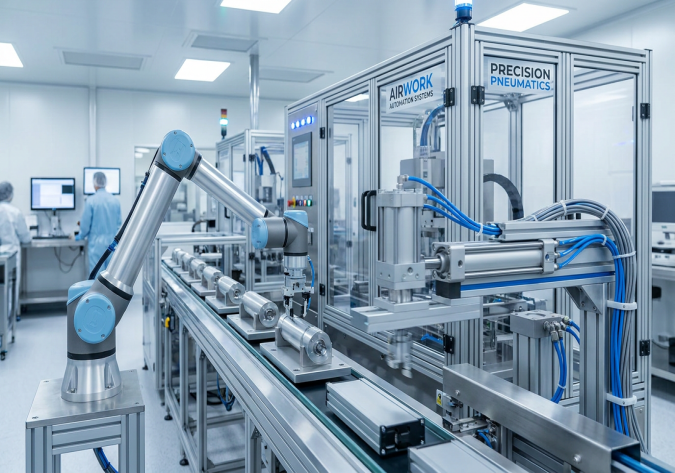
Q: How do frequency inverters and their surrounding automation equipment play a role in maintaining a copper-free and zinc-free environment?
Frequency inverters, or variable frequency drives (VFDs), are critical for controlling the speed and torque of electric motors on lithium battery production lines. These motors drive mixing machinery, electrode coating rollers, slitting knives, and material handling conveyors. While inverters themselves are typically housed in remote electrical cabinets, their selection and installation must still comply with strict contamination guidelines because they connect directly to the automated line.
First, standard frequency inverters and motors often feature copper windings, brass terminal blocks, and zinc-plated heatsinks or mounting brackets. If these inverters are mounted close to the production line, cooling fans can blow microscopic zinc or copper dust from the heat sinks directly onto the exposed electrode sheets. Therefore, engineers must select inverters designed with closed-loop cooling systems or choose VFDs that utilize anodized aluminum or stainless steel heatsinks instead of zinc-plated options.
Second, the cabling and shielding associated with high-frequency inverter drives must be carefully managed. Standard shielded cables use copper braiding, and standard cable glands are made of brass. To prevent contamination, R&D engineers must specify cables with nickel-plated shielding or protect the cables in sealed stainless steel conduits. Cable glands must be replaced with stainless steel or specialized polyamide alternatives.
Third, the integration of frequency inverters with localized pneumatic manifolds and cylinders must be tightly coordinated. In many automated stations, an inverter-driven electric motor works in tandem with pneumatic actuators. Sourcing from a single, high-quality manufacturer like AIRWORK ensures that the pneumatic components, such as valves, cylinders, and air preparation units, are fully certified as copper-free and zinc-free, matching the environmental integrity of the electrical systems.
Q: What are the engineering challenges in replacing standard brass and zinc-plated materials in pneumatic components, and how does AIRWORK solve them?
Standard pneumatic components rely heavily on brass for fittings, internal valve spools, and silencers, as well as zinc-plated steel for cylinder end caps, tie rods, and brackets. Brass is popular because of its natural lubricity and corrosion resistance, while zinc plating is an economical way to prevent steel from rusting. However, in lithium battery manufacturing, these standard materials are strictly prohibited. Replacing them poses several engineering challenges:
- Maintaining Lubricity without Brass: Brass is often used in dynamic seal interfaces because of its low friction coefficient. Replacing it with stainless steel can lead to accelerated seal wear if the surface finish is not highly polished.
- Preventing Corrosion without Zinc Plating: Mild steel parts must be replaced with materials that offer equal or better rust prevention without using zinc coatings.
- Cost Control: Stainless steel and nickel plating are more expensive than standard brass and zinc-plated steel.
AIRWORK has engineered dedicated pneumatic solutions specifically for the lithium battery industry, meeting the strict Cu-free and Zn-free requirements without sacrificing performance or longevity:
- SUS303 and SUS304 Stainless Steel: AIRWORK utilizes high-grade stainless steel for cylinder rods, tie rods, and fittings. The surfaces are precision-ground and polished to a mirror finish to ensure smooth seal movement and zero micro-particle shedding.
- Nickel-Plated Aluminum: For valve bodies and cylinder end caps, AIRWORK uses anodized aluminum with an electroless nickel plating. This plating provides excellent corrosion resistance and contains no trace zinc or copper.
- Technical Polymers: Many of our fittings and internal valve guides are manufactured from high-strength engineering plastics like polyoxymethylene (POM) and polybutylene fate (PBT), which are inherently free of metallic contaminants.
- Certified Clean Lubricants: Standard pneumatic lubricants can contain zinc additives for anti-wear protection. AIRWORK uses specialized synthetic grease that is certified zinc-free and cleanroom-compatible, preventing chemical contamination of the battery materials.
Q: What key parameters should a B2B procurement manager verify when sourcing copper-free and zinc-free automation components?
When sourcing components for a lithium battery manufacturing project, procurement managers must look beyond standard catalog sheets and verify specific material compositions and quality certifications. Here is a checklist of critical parameters to confirm with your suppliers:
- Material Composition Declarations: Request a complete breakdown of all exposed metal parts. A reputable manufacturer like AIRWORK provides official declarations confirming that copper and zinc content is below the required threshold (usually less than 0.1% by weight).
- Surface Treatment Verification: Ensure that any plating used is electroless nickel plating (ENP) or anodization, and verify that no zinc chromate or brass-underplated coatings are present.
- Dynamic Seal Integrity: Confirm that dynamic seals are made of durable elastomers like fluororubber (FKM) or polyurethane (PU) that do not contain zinc-based curing agents.
- Testing and Certification: Ask if the components have undergone independent laboratory testing to verify their chemical safety. AIRWORK provides clear documentation and certificates of compliance for all battery-grade pneumatic products.
By partnering with AIRWORK, procurement managers can streamline their supply chain. Instead of sourcing fittings from one vendor, cylinders from another, and valves from a third, AIRWORK offers a complete, unified portfolio of certified copper-free and zinc-free pneumatic components. This reduces verification paperwork, minimizes the risk of compliance failures, and ensures that the entire automation line operates with maximum safety and reliability.
Table of Contents
- Q: What are the primary contamination risks associated with copper and zinc in lithium-ion battery manufacturing, and why do procurement managers enforce strict copper-free and zinc-free standards?
- Q: How do frequency inverters and their surrounding automation equipment play a role in maintaining a copper-free and zinc-free environment?
- Q: What are the engineering challenges in replacing standard brass and zinc-plated materials in pneumatic components, and how does AIRWORK solve them?
- Q: What key parameters should a B2B procurement manager verify when sourcing copper-free and zinc-free automation components?