 EN
EN

Q: How to resolve 'Sticking' issues in spool valves after long periods of industrial downtime.
Following a holiday shutdown, a seasonal maintenance block, or an extended period of factory downtime, production managers often face a frustrating phenomenon: machinery refuses to start up smoothly. Specifically, pneumatic spool valves, which had operated flawlessly before the shutdown, suddenly experience sticking issues. The solenoid coils hum, electricity is delivered, but the valve spool refuses to budge.
This phenomenon is extremely common in B2B industrial operations, and it can delay startup schedules by hours as maintenance teams struggle to identify which valves are stuck. In this technical article, the AIRWORK engineering team breaks down the physical causes of spool sticking (commonly referred to as stiction) after prolonged inactivity, outlines clear step-by-step diagnostic and recovery procedures, and explains how to prevent these issues before your next scheduled shutdown.
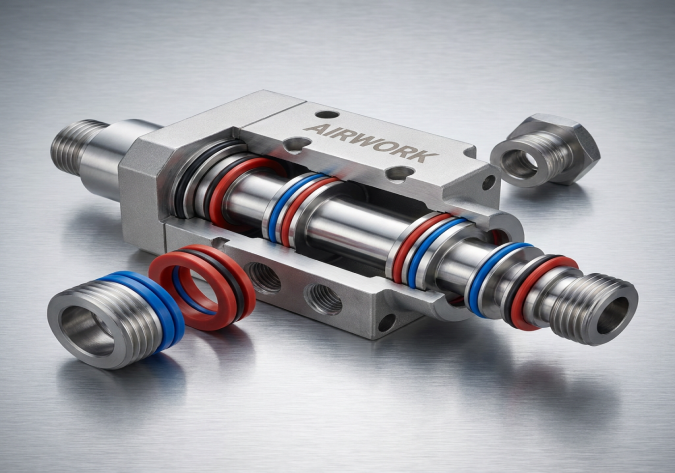
1. The Science of Stiction: Why Valves Stick During Downtime
To understand why a metal spool inside a valve sleeve becomes stuck, we have to look at the physical changes that occur when a pneumatic system is turned off and depressurized for days or weeks:
- Drying and Oxidation of Lubricants: During normal, daily operation, the thin film of grease on the spool and its rubber seals is constantly distributed by the rapid back-and-forth movement. When the valve sits idle, the solvent carrier in the grease slowly evaporates. Additionally, contact with oxygen in the static air leads to oxidation, transforming the once-slippery grease into a thick, tacky, varnish-like residue. This residue acts like glue between the spool and the valve bore.
- Rubber Seal Deformation (Set): Elastomeric seals (such as NBR or HNBR O-rings and wear rings) are under constant compression inside the valve body. Under active cycling, they maintain their elasticity. However, when left in a static compressed state for weeks, the rubber can experience compression set, forming a slight flat spot or bonding slightly to the micro-pores of the aluminum valve bore. This significantly increases the force required to initiate the initial movement.
- Micro-Corrosion: If the compressed air lines contain trace amounts of moisture, water droplets will settle in the lowest points of the valve manifold during downtime. This moisture reacts with the aluminum alloy valve body, forming microscopic oxidation patches (aluminum oxide). While barely visible to the eye, this rough oxidation creates immense mechanical resistance against the soft rubber seals of the spool.
In physics, this is the classic transition from static friction to dynamic friction. Because static friction is inherently higher, and is now compounded by dried grease, rubber bonding, and micro-corrosion, the solenoid's pilot pressure is simply not strong enough to break the spool loose.
2. Immediate Remedies: How to Resolve Sticking on Startup
If your production line is stalled due to a stuck spool valve, do not immediately discard the valve. Try these four structured recovery steps first:
- Utilize the Manual Override: Almost all professional directional control valves, including the AIRWORK 4V series, feature a physical manual override button. This is usually a small red or blue plastic pin on the valve body. Using a small screwdriver, gently press and twist the manual override. This physically pushes the pilot plunger, bypassing the solenoid electrical coil, and forcing pilot air directly onto the spool. Actuating this manually 5 to 10 times can often break the sticky grease bond and restore smooth operation.
- Increase Main Supply Pressure Temporarily: If a pilot-operated valve is struggling to shift, it may be because the pilot air pressure is too low to overcome the static friction. Try raising the system pressure at your regulator by 0.1 to 0.15 MPa above normal operating pressure. This extra pressure exerts more physical force on the piston face of the spool, helping to slide it past the sticky spots. Once the valve begins cycling smoothly, return the regulator to its normal operating pressure.
- Clean and Re-grease (For Field Service): If manual override fails and a replacement is not immediately available, the valve can be disassembled. Carefully remove the end caps, slide out the spool, and wipe down both the spool and the bore using a lint-free cloth and isopropyl alcohol. Inspect the NBR seals for damage. If they are intact, apply a thin, uniform coating of high-quality synthetic pneumatic grease (such as silicone or fluorinated grease) and reassemble. Note: Avoid petroleum-based lubricants, as they can cause the rubber seals to swell and stick even worse.
- External Solvent Flush: In emergency B2B situations where disassembly is too time-consuming, some maintenance teams disconnect the air inlet line and inject a small amount of specialized pneumatic cleaner or light penetrating oil directly into the valve port. Reconnect the air supply and cycle the valve. The solvent will help dissolve the dried varnish, allowing the spool to shift.
3. Preventive Strategies Before Your Next Shutdown
To ensure your machinery starts up seamlessly after future downtime, implement these preventive protocols before turning off the power:
- Purge the Moisture: Before shutting down the air compressor, run the system's FRL automatic drains or manually blow out all water traps in the piping. Leaving the system dry prevents water condensation from settling inside the valve manifolds.
- Perform a Final Cycle under Lubrication: If you run a lubricated pneumatic system, increase the lubricator drip rate slightly during the final hour of production before shutdown. This ensures that a fresh, rich layer of oil is deposited across all valve spools, protecting them from oxidation and drying out during the idle period.
- Keep the System Under Pressure (If Safe): If plant safety regulations allow, consider leaving the pneumatic mains pressurized during short weekend or holiday shutdowns. Maintaining constant air pressure keeps the seals energized and prevents the settling of moisture, making startup much faster and more reliable.
The AIRWORK (JZPNU) Advantage
At Zhejiang Jinzhi Pneumatic Technology Co., Ltd. (JZPNU), we recognize that B2B operations cannot afford sluggish startups. Our AIRWORK brand solenoid valves are engineered specifically to resist stiction after downtime:
- Micro-Honed Valve Bores: We utilize state-of-the-art tooling to hone the internal valve bores to an ultra-precise mirror finish, minimizing the micro-pores where adhesive grease bonds can form.
- Premium Synthetic Lubrication: Our valves are assembled using high-performance, non-drying synthetic grease that maintains its viscosity and lubricating properties across a wide temperature range, resisting evaporation even during months of inactivity.
- High-Resilience Seals: We utilize premium HNBR and Viton seals that have excellent resistance to compression set and chemical swelling, ensuring the spool is always ready to slide smoothly on the very first cycle.
By implementing proper maintenance practices and choosing high-quality components designed for real-world industrial environments, you can eliminate startup sticking and protect your bottom line from unexpected downtime.