 EN
EN

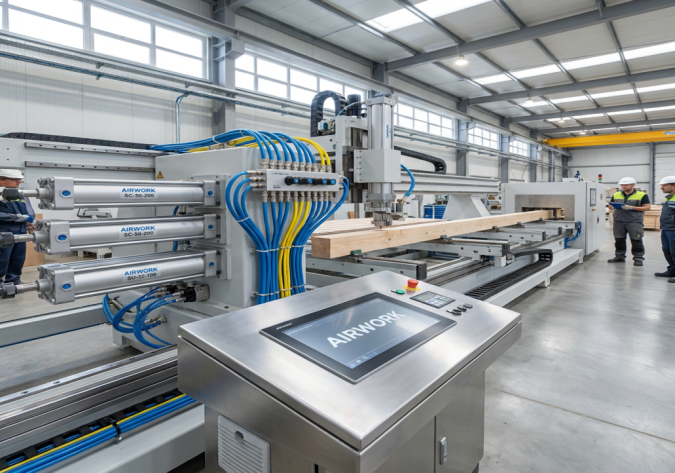
Introduction: The Modern Woodworking Shop
The woodworking industry has undergone a massive transformation, moving from traditional manual craftsmanship to highly automated industrial production. At the heart of this revolution is pneumatic technology. From CNC machining centers to automatic edge-banders and sanding machines, pneumatic systems provide the muscle and precision needed to drive modern production.
However, the woodworking environment is uniquely challenging. Sawdust, wood chips, and fine resins create a hostile atmosphere for standard industrial components. At AIRWORK, we specialize in providing pneumatic solutions specifically engineered to thrive in these conditions, helping manufacturers improve both their production speed and the longevity of their equipment. In this guide, we dive into the technical requirements for woodworking pneumatics and how to select the right components for maximum uptime.
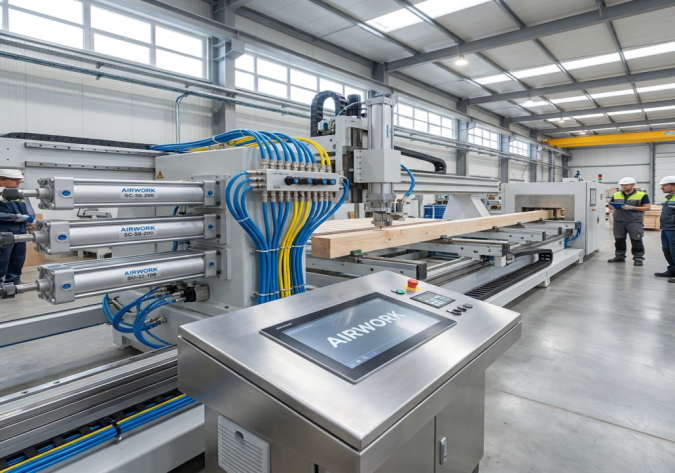
1. The Challenges of Woodworking Automation
To understand the value of specialized pneumatic solutions, one must first recognize the threats present in a woodworking facility:
Dust Infiltration: The 'Silent Killer'
Fine sawdust is more than just a nuisance; it acts as a high-performance abrasive. When sawdust settles on a piston rod and is drawn into the cylinder, it quickly grinds down the delicate rubber seals, leading to air leaks and loss of power. Furthermore, sawdust can clog the small exhaust ports of solenoid valves, causing them to stick or cycle sluggishly.
Heavy Loads and High-Speed Requirements
Wood panels, especially large MDF or solid wood boards, are heavy and require significant force for clamping and transport. Simultaneously, to stay competitive, woodworking machines must operate at high cycle rates. This combination of high force and high speed puts immense stress on cylinder end caps and internal cushions.
Vibration and Shock
Cutting, drilling, and routing operations generate significant high-frequency vibrations. These vibrations can cause standard pneumatic fittings to loosen over time, leading to micro-leaks that are difficult to diagnose but expensive to ignore in terms of energy waste.
2. Core Pneumatic Components for Woodworking Excellence
Robust Pneumatic Cylinders (SC and SU Series)
The workhorse of any woodworking machine is the pneumatic cylinder. For clamping, lifting, and pushing wood panels, the SC and SU Series standard cylinders from AIRWORK are the industry benchmark.
- Technical Advantage: These cylinders feature hard-anodized aluminum barrels for excellent wear resistance.
- Specialized Scraper Seals: For woodworking, we recommend upgrading to specialized scraper seals. Unlike standard seals, these feature a rigid outer edge that 'scrapes' the piston rod clean of sawdust and resin before it enters the cylinder body, extending seal life by up to 300% in dusty environments.
- Adjustable Air Cushioning: Essential for handling the inertia of heavy wood panels without damaging the machine frame.
Dust-Resistant Solenoid Valves
Solenoid valves in woodworking machines must be capable of operating even when the ambient air is thick with dust. AIRWORK’s 4V series valves feature a 'spool and sleeve' design with high-quality NBR seals and protected pilot exhausts. We also recommend the use of Sintered Bronze Silencers on all exhaust ports. Unlike plastic silencers, bronze can be cleaned and reused, and it provides a more robust barrier against dust ingress into the valve body.
High-Flow Air Source Treatment (FRL Units)
In a woodworking shop, the air compressor is often fighting a losing battle against moisture. An integrated FRL unit (Filter, Regulator, Lubricator) is non-negotiable.
- Filter: Use a 5-micron filter to ensure that no fine particles enter the valves.
- Lubricator: Proper lubrication is critical for maintaining the efficiency of cylinders that are cycling under heavy load. A consistent oil mist reduces the friction coefficient within the cylinder, preventing heat buildup and seal degradation.
3. Industry Use Cases: Precision in Action
Use Case: Automatic Edge Banding Machines
Edge banders require a series of precise movements to apply, trim, and buff the edging material. Small Mini Cylinders (MA Series) and Compact Cylinders (SDA Series) are used for the trimming knives. These must be fast and extremely consistent to ensure a clean cut every time. AIRWORK provides these cylinders with high-temperature seals to withstand the heat generated by the glue pots.
Use Case: CNC Nesting and Drilling
In CNC machines, pneumatic cylinders are used to actuate the drilling spindles and to hold the wood panels firmly against the vacuum table. Any 'chatter' or movement in the clamping cylinder will result in a ruined workpiece. Our SC series cylinders with reinforced rod guides ensure zero lateral movement during the machining process.
4. B2B Selection Criteria: How to Source for Woodworking OEMs
For manufacturers of woodworking machinery, selecting a pneumatic partner involves more than just looking at a catalog:
1. Environment Ratings: Ensure the components are rated for high-dust environments. Ask the supplier about 'wiper' or 'scraper' seal options.
2. Mounting Versatility: Woodworking machines often have unique geometry. Look for a wide range of mounting accessories (Clevis, Foot Mount, Flange) to ensure easy integration.
3. Component Interoperability: Sourcing your cylinders, valves, and fittings from a single provider like AIRWORK ensures that all components are designed to work together, reducing the risk of thread mismatches or flow bottlenecks.
4. Serviceability: Can the cylinder be repaired on the shop floor? AIRWORK provides full seal kits and replacement parts, allowing for rapid maintenance without needing to replace the entire actuator.
5. Preventive Maintenance Tips for Woodworking Pneumatics
To maximize the lifespan of your pneumatic systems:
- Weekly: Clean the piston rods of all cylinders with a dry cloth to remove resin buildup.
- Monthly: Check the FRL filter element. If it appears brown or grey, it is saturated with wood dust and needs replacement.
- Quarterly: Inspect all fittings for tightness and use a leak-detection spray to identify any micro-leaks caused by machine vibration.
Conclusion: Building a Foundation of Reliability
In the competitive world of woodworking, efficiency is everything. By choosing pneumatic solutions that are specifically engineered for the challenges of the wood shop—dust, load, and speed—manufacturers can significantly reduce their maintenance costs and improve their production quality. At AIRWORK, we are proud to support the woodworking industry with robust, high-performance components that stand the test of time. From the first cut to the final finish, our pneumatics are the silent partners in your production success.
Table of Contents
- Introduction: The Modern Woodworking Shop
- 1. The Challenges of Woodworking Automation
- 2. Core Pneumatic Components for Woodworking Excellence
- 3. Industry Use Cases: Precision in Action
- 4. B2B Selection Criteria: How to Source for Woodworking OEMs
- 5. Preventive Maintenance Tips for Woodworking Pneumatics
- Conclusion: Building a Foundation of Reliability