 EN
EN

Industrial automation systems require precision, reliability, and cost-effectiveness to maintain competitive advantage in modern manufacturing. Pneumatic components form the backbone of these systems, delivering consistent performance across countless production environments worldwide. Understanding how pneumatic components improve industrial automation systems is essential for operations managers, engineers, and facility planners seeking to optimize their production lines and reduce operational costs.
Pneumatic components represent a straightforward yet powerful approach to automating repetitive tasks, controlling fluid flow, and managing pressure systems in industrial environments. When properly integrated into automation architectures, pneumatic components deliver measurable improvements in production speed, equipment downtime reduction, and total cost of ownership.
The Role of Pneumatic Components in System Performance
Core Functions of Pneumatic Components
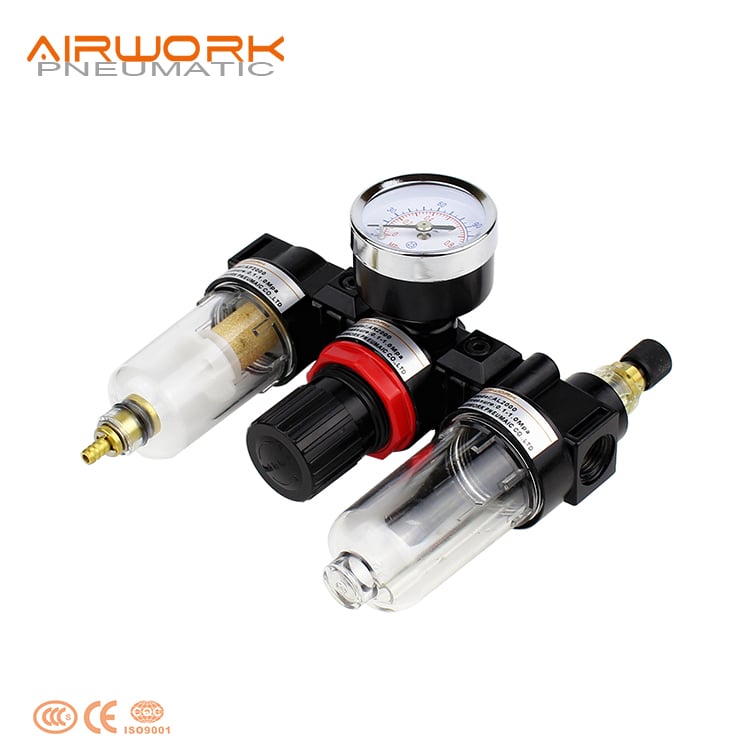
Pneumatic components work by converting compressed air into mechanical motion and control signals that drive machinery, actuators, and valves throughout production facilities. Cylinders, solenoid valves, filters, and regulators form integrated networks where pneumatic components coordinate timing, pressure management, and directional control. This seamless coordination enables automated processes to execute with minimal human intervention, increasing throughput and consistency across manufacturing operations.
The fundamental advantage of pneumatic components lies in their simplicity and robustness. Unlike hydraulic or electrical alternatives, pneumatic components operate reliably in dusty, wet, and temperature-variable industrial environments where other technologies struggle. Maintenance requirements for pneumatic components remain lower than competing systems, and replacement costs stay reasonable, making them economically attractive for businesses operating tight budgets.
Integration with Automation Controllers
Modern industrial automation relies on programmable logic controllers (PLCs) and human-machine interfaces that send electronic signals to pneumatic components, instructing them when and how to act. Solenoid-operated valves within pneumatic components respond instantly to these signals, controlling directional flow and pressure sequencing that orchestrate complex multi-step manufacturing processes. This integration between digital control systems and physical pneumatic components enables factories to automate entire production workflows with minimal manual oversight.
The responsive nature of pneumatic components means production facilities can adjust cycle times, pressure settings, and operational sequences quickly through software updates rather than mechanical reconfiguration. This flexibility allows manufacturers to adapt to product changes, accommodate new production lines, or scale operations without investing in entirely new equipment infrastructure. Pneumatic components thus become force multipliers for automation investments, extending system lifespan and improving return on capital deployed.
Efficiency Gains and Cost Benefits from Pneumatic Components
Speed and Productivity Improvements
Pneumatic components operate at speeds that frequently exceed manual processes by five to ten times, depending on application specifics and system configuration. Automated pick-and-place operations, assembly sequences, and material handling tasks that once required multiple human operators now complete in seconds using properly configured pneumatic components. This acceleration directly translates to higher daily production volumes, faster order fulfillment, and reduced time-to-market for manufactured goods.
The consistency of pneumatic components ensures that every cycle executes identically, eliminating quality variation introduced by human fatigue or inconsistency. Production facilities gain predictable output rates, allowing more accurate scheduling, inventory management, and customer delivery commitments. When pneumatic components operate continuously across multiple shifts, facilities effectively gain extra production capacity without purchasing additional machinery or expanding physical footprints.
Energy Efficiency and Operating Costs
Compressed air systems powered by pneumatic components consume less energy per work cycle than many competing automation technologies, particularly when facilities already operate centralized air compressors. Pneumatic components typically generate minimal heat waste compared to electric motors or hydraulic systems, and the modular nature of pneumatic components allows facilities to size systems precisely to actual workload requirements. This right-sizing prevents over-investment in oversized equipment and reduces unnecessary energy consumption across production schedules.
Maintenance costs for pneumatic components remain predictable and manageable because the technology involves fewer complex subassemblies than electric or hydraulic alternatives. Lubrication, filter replacement, and occasional seal maintenance represent the primary upkeep tasks, and these operations can often be performed by general maintenance staff without specialized training. The lower maintenance burden associated with pneumatic components frees technical resources to address higher-priority facility improvements and reduces unexpected downtime from equipment failures.
Reliability, Safety, and Industrial Environment Advantages
Durability in Harsh Manufacturing Conditions
Pneumatic components excel in manufacturing environments where temperature extremes, chemical exposure, moisture, and dust would damage electrical or hydraulic systems. Food processing facilities, chemical plants, outdoor assembly operations, and refineries depend on pneumatic components precisely because the technology withstands challenging conditions that would compromise alternative solutions. The inherent safety of pneumatic components also appeals to industries handling flammable materials, since compressed air systems eliminate spark and explosion risks present with electrical automation.
The mechanical simplicity of pneumatic components translates directly into extended service life and reduced replacement frequency compared to complex electronic or hydraulic alternatives. Facilities operating pneumatic components often report equipment lifespans of fifteen to twenty years or longer, provided basic maintenance schedules receive consistent attention. This extended service life combined with moderate replacement costs means pneumatic components deliver superior total cost of ownership across extended equipment deployment periods.
Safety Integration and System Redundancy
Pneumatic components naturally incorporate fail-safe characteristics because system pressure naturally bleeds away if air supply stops, preventing runaway equipment motion or uncontrolled actuator movement. This inherent safety feature means facilities can integrate pneumatic components into safety-critical applications with confidence, knowing that loss of compressed air automatically halts all automated motions. Many regulatory frameworks recognize this safety advantage and approve pneumatic components for applications where electrical systems would require additional protective devices and certification complexity.
The distributed architecture of pneumatic components allows facilities to design systems with built-in redundancy, ensuring that single-component failures do not cascade across entire production lines. Parallel valve arrangements, backup pressure pathways, and modular component design mean that maintenance personnel can isolate and replace individual pneumatic components while keeping surrounding equipment operational. This modularity significantly reduces planned maintenance windows and emergency downtime compared to monolithic automation systems where one failure compromises entire production capacity.
FAQ
What types of pneumatic components are most commonly used in industrial automation?
The most frequently deployed pneumatic components include cylinders for linear motion, solenoid directional valves for flow control, pressure regulators for force management, and air filters for system protection. Pneumatic components also encompass speed controllers, check valves, and actuators that work together within integrated systems. Each category of pneumatic components serves specific functional purposes, and selecting the right combination depends on application requirements, cycle time targets, and environmental constraints within individual facilities.
How do pneumatic components reduce downtime in manufacturing operations?
Pneumatic components minimize downtime through simple, predictable maintenance requirements and fast component replacement procedures. When pneumatic components fail, technicians can typically swap out individual units in minutes without requiring complex diagnostics or system recalibration. The modular design of pneumatic components also allows facilities to maintain stock inventories of common replacement parts, enabling immediate repairs without waiting for specialized components. This accessibility and simplicity make pneumatic components significantly more responsive to maintenance needs than complex electronic or hydraulic systems.
Can pneumatic components integrate with existing automation control systems?
Yes, pneumatic components integrate readily with programmable logic controllers, supervisory control systems, and human-machine interfaces through solenoid valve interfaces and pressure transducers. Modern pneumatic components include integrated electronics that communicate with industrial control networks, allowing seamless coordination with existing automation architectures. Retrofit applications often benefit from pneumatic components because the technology accommodates integration without requiring complete system redesigns or extensive control software modifications.