 EN
EN

Introduction: The 'Brain' of the Pneumatic System
In every automated production line, while cylinders provide the 'muscle,' solenoid control valves act as the 'brain' or 'nerve center.' They are the critical link between electronic control systems (like PLCs) and mechanical motion. For B2B procurement managers and system integrators, understanding the nuances of solenoid valves is essential for optimizing machine performance and minimizing downtime.
At AIRWORK (Zhejiang Jinzhi Pneumatic Technology Co., Ltd.), we specialize in high-durability solenoid valves that power industries across 120 countries. This deep dive explores the types, functions, and professional selection criteria for these vital components.
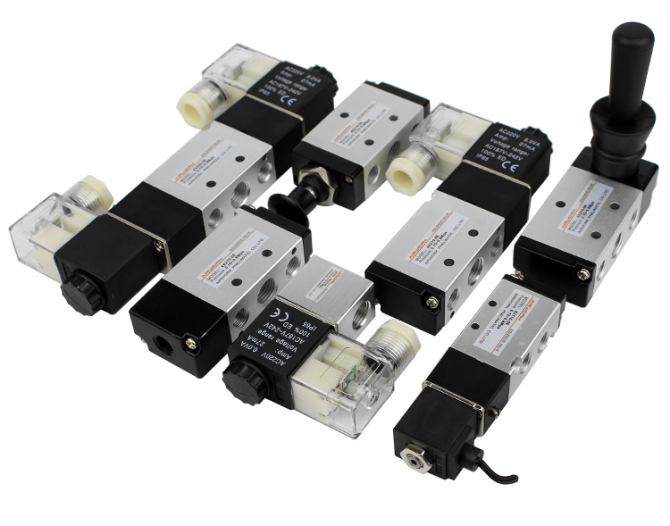
1. How Solenoid Valves Work: The Basics
A solenoid valve is an electromechanical device that uses an electromagnetic coil to control the flow of compressed air. When an electrical current passes through the coil, it creates a magnetic field that moves a plunger or spool within the valve body. This movement opens or closes specific ports, directing air to actuate cylinders or other pneumatic devices.
Core Components:
- The Coil (Solenoid): The electrical component that creates the magnetic force.
- The Spool/Plunger: The moving part that redirects air flow.
- The Valve Body: Usually made of high-quality aluminum alloy, containing the ports and internal passages.
2. Common Types and Functions
In the B2B market, solenoid valves are categorized by their 'ways' (number of ports) and 'positions' (number of switching states).
A. 2/2 Way Valves (2 Ports, 2 Positions)
These are simple on/off valves. They have one inlet and one outlet. They are typically used for simple air release or shut-off functions where no exhaust is required from the actuator side.
B. 3/2 Way Valves (3 Ports, 2 Positions)
3/2 way valves are the standard choice for controlling single-acting cylinders (those with a spring return).
- Function: One port for the air supply, one for the cylinder, and one for the exhaust. When energized, it fills the cylinder; when de-energized, it allows the cylinder to exhaust air so the spring can return the piston.
C. 5/2 Way Valves (5 Ports, 2 Positions)
This is the most common valve for double-acting cylinders.
- Function: It has one pressure port, two cylinder ports, and two exhaust ports. It allows air to be switched between the two sides of a cylinder's piston, providing controlled movement in both directions.
D. 5/3 Way Valves (5 Ports, 3 Positions)
These valves have a 'middle' position. They are used when you need to stop a cylinder mid-stroke.
- Closed Center: Holds the cylinder in place by blocking all ports.
- Exhaust Center: Releases air from both sides of the cylinder, allowing it to be moved manually.
- Pressure Center: Maintains pressure on both sides.
3. Direct-Acting vs. Pilot-Operated
For B2B buyers, choosing between these two operating methods is a matter of scale and pressure.
- Direct-Acting: The solenoid force directly moves the spool. These are ideal for small flow rates and can operate from 0 bar pressure. They are highly responsive but limited in size.
- Pilot-Operated: The solenoid controls a small 'pilot' air flow, which then uses the system's own air pressure to move a larger spool. These are standard for industrial applications because they can handle high flow rates with very small, energy-efficient coils.
4. Professional B2B Selection Tips
When sourcing solenoid valves for a project, keep these four critical factors in mind to ensure long-term reliability.
I. Flow Rate (Cv or Kv Value)
Selecting a valve that is too small will restrict your cylinder's speed. Conversely, a valve that is too large is a waste of money and energy. Calculate the required flow based on your cylinder's bore and desired cycle time.
II. Voltage and Power Consumption
Standard industrial voltages include DC24V, AC110V, and AC220V. Modern B2B designs favor DC24V for safety and ease of integration with digital control systems. Look for energy-saving coils if your system has hundreds of valves running simultaneously.
III. Connection Ports and Manifolds
Do you need individual valves with threaded ports (G or NPT), or a manifold system? Manifolds group multiple valves onto a single base, sharing a common air supply and exhaust. This significantly reduces tubing complexity and assembly time.
IV. Environmental Durability
- IP Rating: Ensure the valve can withstand the environment (e.g., IP65 for dust and water resistance).
- Response Time: Essential for high-speed packaging or sorting lines.
- Service Life: Quality valves should be rated for millions of cycles. AIRWORK valves are tested for high-frequency reliability.
5. Maintenance: Extending Valve Life
To prevent the most common cause of valve failure—contamination—follow these tips:
- Air Source Treatment: Always use an FRL (Filter, Regulator, Lubricator) unit. Clean, dry air prevents the spool from sticking.
- Correct Lubrication: If using lubricated air, ensure the oil is compatible with the valve's seals (usually NBR or HNBR).
- Voltage Stability: Fluctuating voltage can burn out coils prematurely.
Conclusion: Why Partner with AIRWORK?
Selecting the right solenoid valve is more than just matching a part number; it's about ensuring the heart of your machine beats reliably. AIRWORK provides not only high-quality components but also the engineering expertise to help you design optimized solutions for the automotive, textile, and woodworking industries.
With over 100 CNC machining centers and a dedicated R&D team, we are ready to support your B2B requirements with competitive pricing and EU-standard quality.
Explore our full range of control valves at [jzpnu.com](https://www.jzpnu.com/control-valve) or email us today for a technical consultation.
AIRWORK — Precision Control for Global Industry.