 EN
EN

Q: Selecting specialized 'Zinc-Alloy' vs. 'Technopolymer' FRL housings for different chemical exposures.
In modern industrial facilities, Filter, Regulator, and Lubricator (FRL) units are installed in a wide variety of operational environments. From the clean, sterile washdown zones of food and beverage packaging lines to the chemical-laden atmospheres of petroleum refineries, automotive paint shops, and wastewater treatment plants, FRL units are exposed to a hostile array of liquids, gases, and environmental elements.
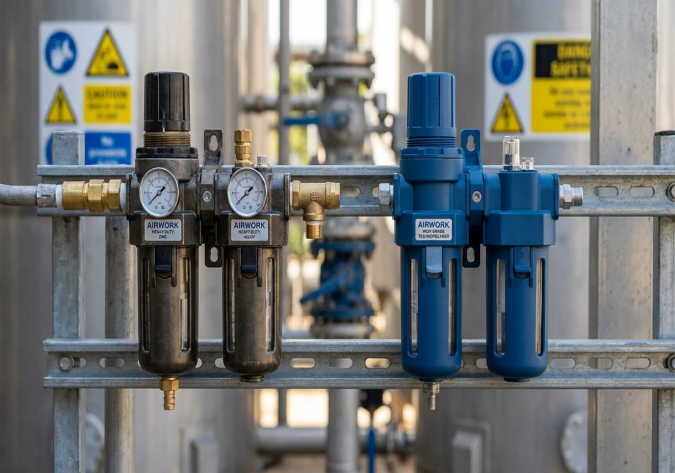
Under these conditions, selecting the right housing material for your FRL unit is a critical engineering decision. The housing must protect the delicate internal control mechanisms from chemical corrosion and mechanical impact. Sourcing managers and maintenance engineers primarily choose between two specialized housing materials: Zinc-Alloy and high-performance Technopolymers. This B2B technical guide compares these two materials, analyzing their chemical compatibility, mechanical limits, and ideal industry applications.
The Mechanical and Chemical Threat of Industrial Environments
When compressed air is prepared for use, the outer body of the FRL is subject to constant exposure from two fronts:
- Internal Contaminants: Synthetic lubricating oils, acidic condensation, and heavy rust particles moving through the piping system.
- External Atmospheric Contaminants: Caustic washdown chemicals, heavy detergents, salt spray, organic solvents, hydraulic fluids, and physical impacts from heavy tools or machine handling.
If the housing material is incompatible with these chemicals, the structural integrity of the FRL will degrade rapidly. This can lead to body cracking, explosive pressure blowouts, hazardous air leaks, and catastrophic system failures. Therefore, selecting the correct FRL body material is vital for plant safety and operational longevity.
Deep-Dive: Zinc-Alloy FRL Housings
Zinc-Alloy (often die-cast and coated with high-durability epoxy or polyurethane powder paint) has long been the traditional gold standard for heavy-duty industrial FRL units.
Key Technical Strengths of Zinc-Alloy:
- High Tensile and Mechanical Strength: Zinc-alloy is extremely robust. It can withstand massive external impacts, such as heavy tool drops or accidental collisions with forklift machinery, without cracking.
- Extreme Temperature and Pressure Limits: These housings maintain their structural stability across wide temperature ranges (typically from minus 20 degrees Celsius up to plus 80 degrees Celsius) and are ideal for high-pressure systems operating above 15 bar.
- Resistance to Petroleum and Solvents: Zinc-alloy exhibits exceptional chemical resistance to petroleum-based lubricants, hydraulic fluids, organic solvents (such as acetone, benzene, and toluene), and cutting fluids used in metal CNC machining.
Vulnerabilities of Zinc-Alloy:
- Caustic and Acidic Sensitivity: Zinc-alloy is vulnerable to highly acidic or alkaline environments. Strong acids or caustic cleaning agents will strip the protective powder coating and cause rapid galvanic corrosion of the raw metal underneath.
- Weight: Metallic FRL assemblies are heavy, requiring robust wall mounting brackets and reinforcing structures.
Ideal Industrial Applications for Zinc-Alloy:
- Metal CNC Machining and Foundries: Highly resistant to cutting oils and high physical heat.
- Automotive Service Workshops: Withstands impact and contact with motor oils and degreasers.
- Heavy Construction and Mining: Excellent resilience against physical shock and abuse.
Deep-Dive: Engineering Technopolymer FRL Housings
Technopolymers represent the cutting-edge of materials science. These are highly advanced, injection-molded engineering plastics—typically fiber-reinforced polyamides, polycarbonates, or polyoxymethylenes (POM)—engineered to replace metals in critical structural applications.
Key Technical Strengths of Technopolymer:
- Exceptional Corrosion and Chemical Resistance: Technopolymers are completely immune to rust and atmospheric oxidation. They exhibit outstanding resistance to highly corrosive chemical vapors, weak acids, alkalis, salt-laden marine air, and intensive daily sanitizing washdowns.
- Lightweight and Compact: Being up to 60 percent lighter than zinc-alloy equivalents, technopolymer FRL units can be easily mounted directly onto light-gauge machinery panels and mobile equipment without bulky structural supports.
- Cost-Effectiveness: Advanced injection-molding allows for highly complex single-piece geometries, lowering production assembly costs and providing B2B buyers with a premium product at an economical price point.
Vulnerabilities of Technopolymer:
- Sensitivity to Industrial Solvents: Some technopolymers can swell, soften, or develop micro-cracks (stress cracking) when exposed to aggressive organic solvents, chlorine, or synthetic compressor lubricants (like phosphate esters).
- Lower Impact Resistance: While highly resilient, engineering plastics can still crack under severe physical impacts compared to ductile metals.
- Lower Temperature and Pressure Limits: Typically rated up to a maximum temperature of plus 60 degrees Celsius and a dynamic pressure limit of 10 to 12 bar.
- UV Degradation: Prolonged exposure to direct outdoor sunlight can cause standard polymers to become brittle over time unless carbon-black UV stabilizers are added to the compound.
- No Asterisks: Bullet points use simple dashes.
Ideal Industrial Applications for Technopolymer:
- Food and Beverage Processing: Completely unaffected by caustic sodium hydroxide washdown sprays and high-humidity cleanroom conditions.
- Pharmaceutical and Chemical Plants: Resistant to acidic vapors and chemical washdown chemicals.
- Marine and Offshore Platforms: Zero risk of saltwater corrosion or rust, making it the perfect choice for coastal facilities.
Material Selection Matrix (Plain Text Layout)
To simplify B2B sourcing decisions, utilize this technical baseline:
- Organic Solvents: Zinc-Alloy is Excellent; Technopolymer is Moderate (verify specific plastic polymer).
- Strong Acids and Alkalis: Zinc-Alloy is Poor; Technopolymer is Excellent.
- Salt Water Spray: Zinc-Alloy is Fair (susceptible to white rust); Technopolymer is Excellent.
- Heavy Physical Impact: Zinc-Alloy is Excellent; Technopolymer is Fair.
- High Operating Temperature (above 65C): Zinc-Alloy is Excellent; Technopolymer is Poor.
- High Uptime Food-Grade Washdowns: Zinc-Alloy is Poor; Technopolymer is Excellent.
Conclusion: Sourcing Specialized Solutions with AIRWORK
At Zhejiang Jinzhi Pneumatic Technology Co., Ltd. (JZPNU), we recognize that no single housing material can satisfy every industrial scenario. Under our premium AIRWORK brand, we manufacture a comprehensive range of both heavy-duty die-cast zinc-alloy FRL units and ultra-resilient fiber-reinforced technopolymer modular units. By matching the correct AIRWORK FRL housing chemistry to your plant's specific chemical exposures, temperature profiles, and washing protocols, maintenance engineers can maximize FRL lifespans, eliminate body-cracking risks, and maintain flawless pneumatic efficiency.
Table of Contents
- Q: Selecting specialized 'Zinc-Alloy' vs. 'Technopolymer' FRL housings for different chemical exposures.
- The Mechanical and Chemical Threat of Industrial Environments
- Deep-Dive: Zinc-Alloy FRL Housings
- Deep-Dive: Engineering Technopolymer FRL Housings
- Material Selection Matrix (Plain Text Layout)
- Conclusion: Sourcing Specialized Solutions with AIRWORK