 EN


A Customer Walkthrough: Fittings and Cylinders, Seen at the Machines
Wenzhou-18th Nov.. A customer group spent the day at the plant this month, walking the fittings line and the cylinder area before sitting down with drawings and samples. Visits like this one are routine here, and the reason is simple: a buyer who has only seen a product photograph is buying a specification. A buyer who has walked the floor is buying the ability to repeat it.
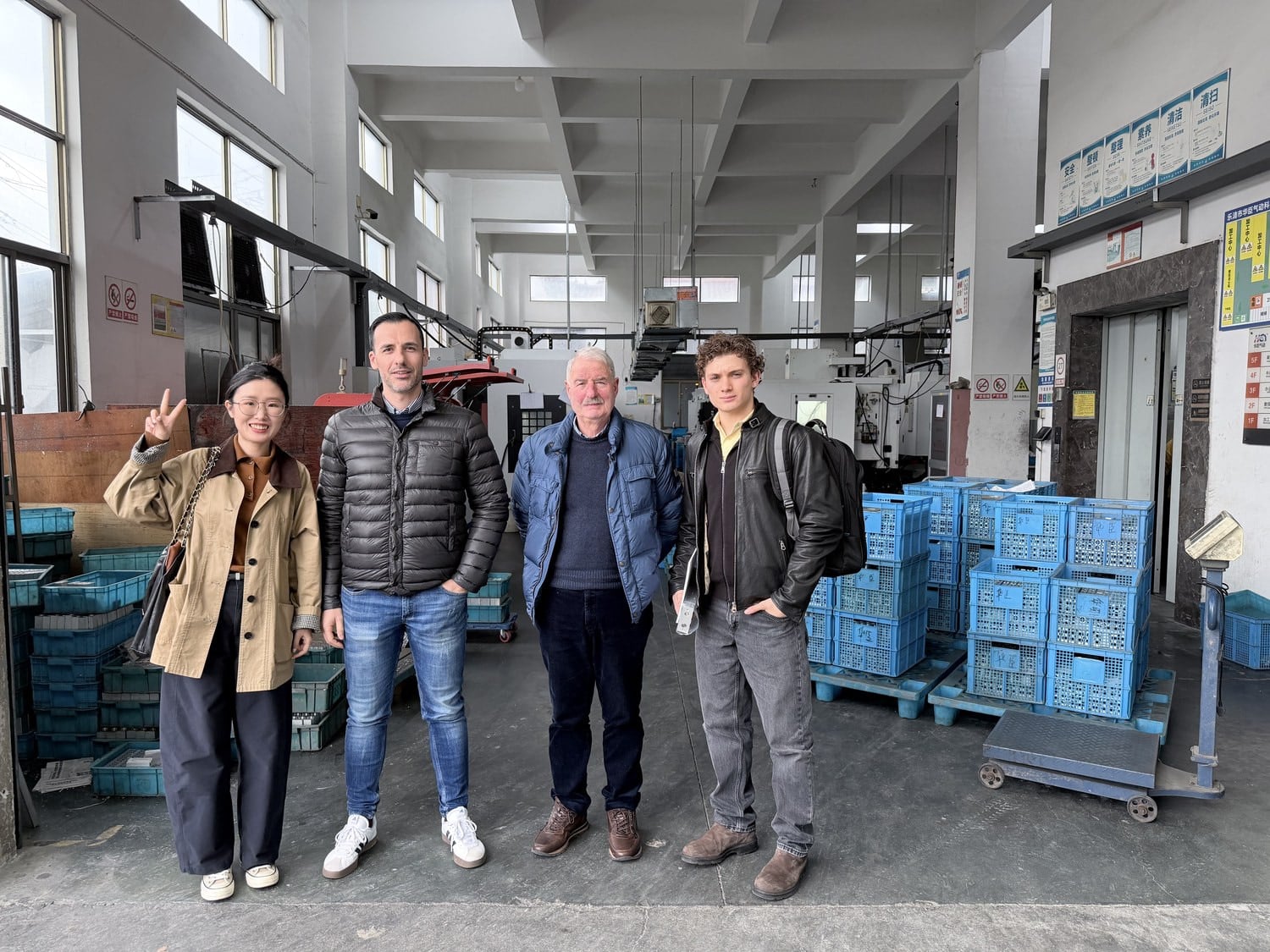
The visiting team with the sales engineer, at the end of the walkthrough.
Fittings: feeders, benches, bins
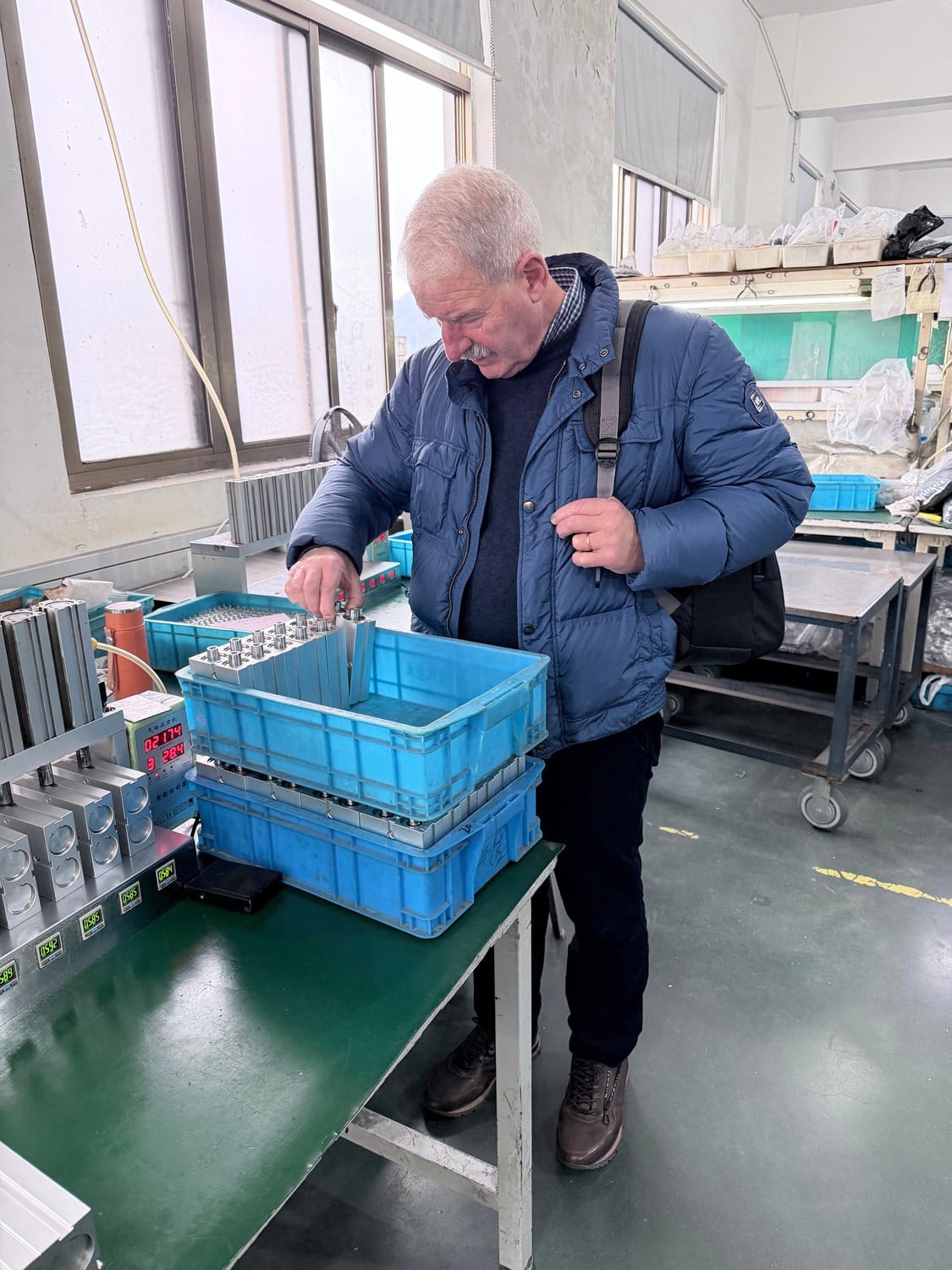
The fittings side of the plant runs on rows of vibratory bowl feeders, each one feeding a family of parts to the assembly benches beside it. Green and blue bins hold work in progress between stations; the line moves at the pace the operators set, not the pace a spreadsheet assumes. For the visitors, the useful part was not the machinery itself, but seeing how many hands touch a fitting between the first operation and the last inspection, and where the checks sit in that sequence.
 |
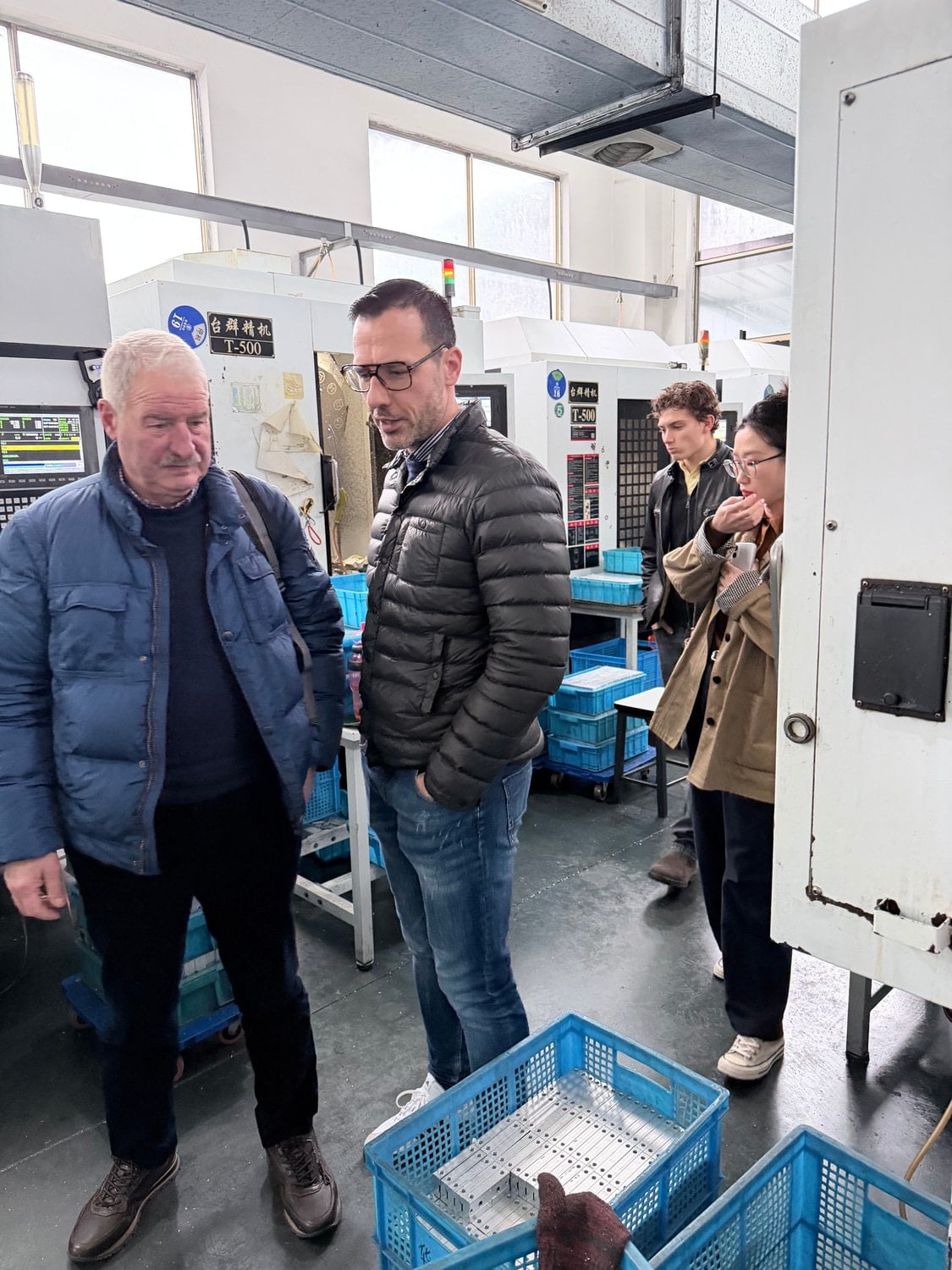 |
| Work in progress between stations on the fittings line. | Walking the machining area, where cylinder and fitting bodies are cut. |
Cylinders: bodies between cells, gates on a bench
On the cylinder side the plant is laid out around machining centres, with crates of machined bodies stacked between cells rather than warehoused somewhere else in the building. That arrangement is deliberate: it keeps the distance between a cut and its check short, and it makes work in progress visible to anyone walking past.
The bench the group stopped at longest is the one with the gauges. Numbered stations, each with its own fixture, sit along a green-topped table, and a manifold block is checked against them before it moves on. It is not a photogenic station, which is precisely why it was worth showing: this is where a specification either holds or does not.
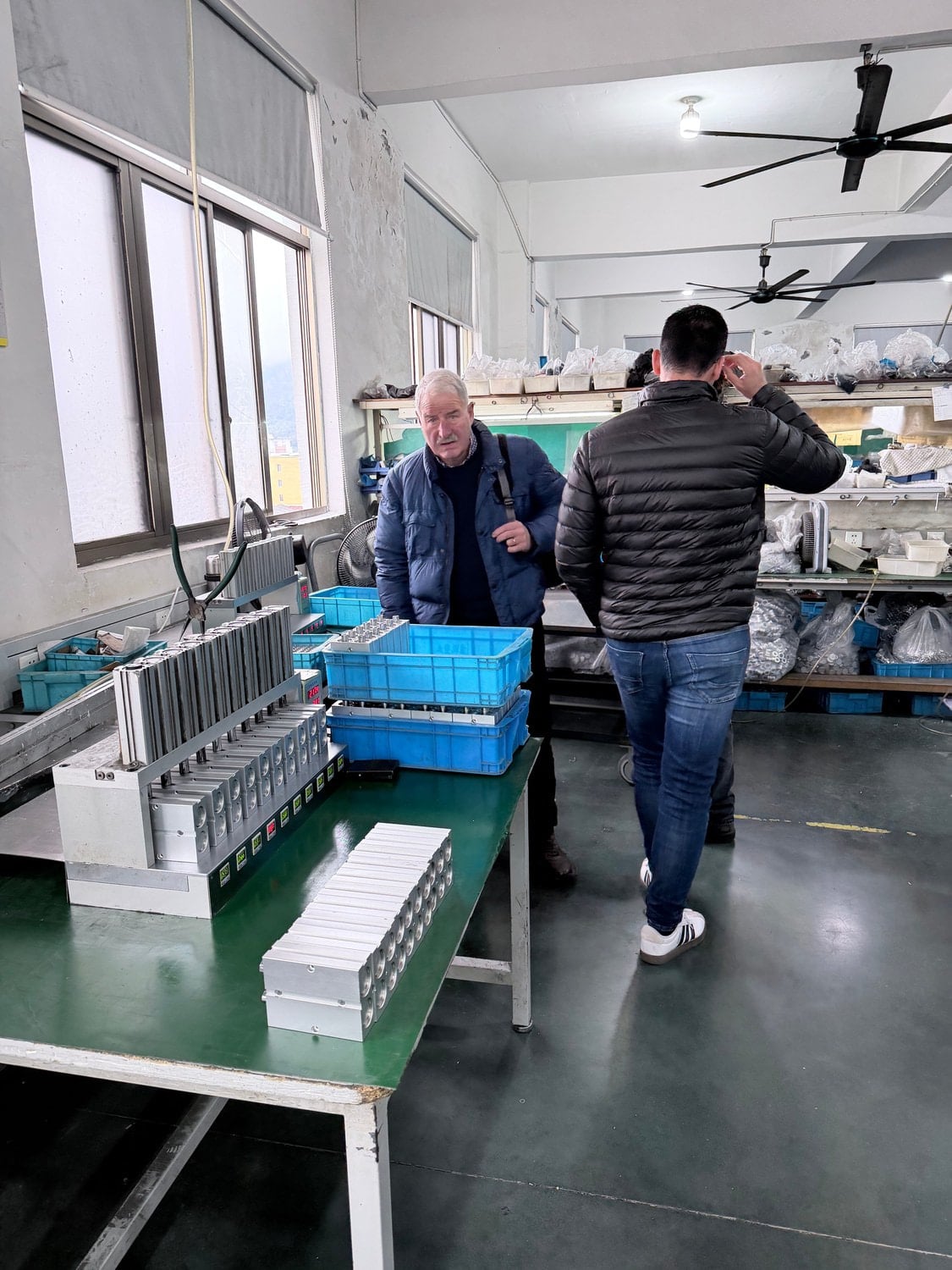
The test bench: numbered stations, one fixture each.
The questions that come up
Most of the afternoon went on three subjects, and they are the same three on almost every visit. How is a critical dimension held across a batch? How is a batch checked, and what is recorded? And what happens to the order when something on the line is out of tolerance? None of the answers are interesting in isolation. Together they are the difference between a supplier who can ship a sample and a supplier who can ship the fourth repeat order.
Then the table
The day ended in the meeting room, with catalogues, a set of samples, and a list of points the customer wanted changed in the next revision. That list is the real output of a visit: not a signature, but a shorter distance between what a drawing says and what a machine can hold.
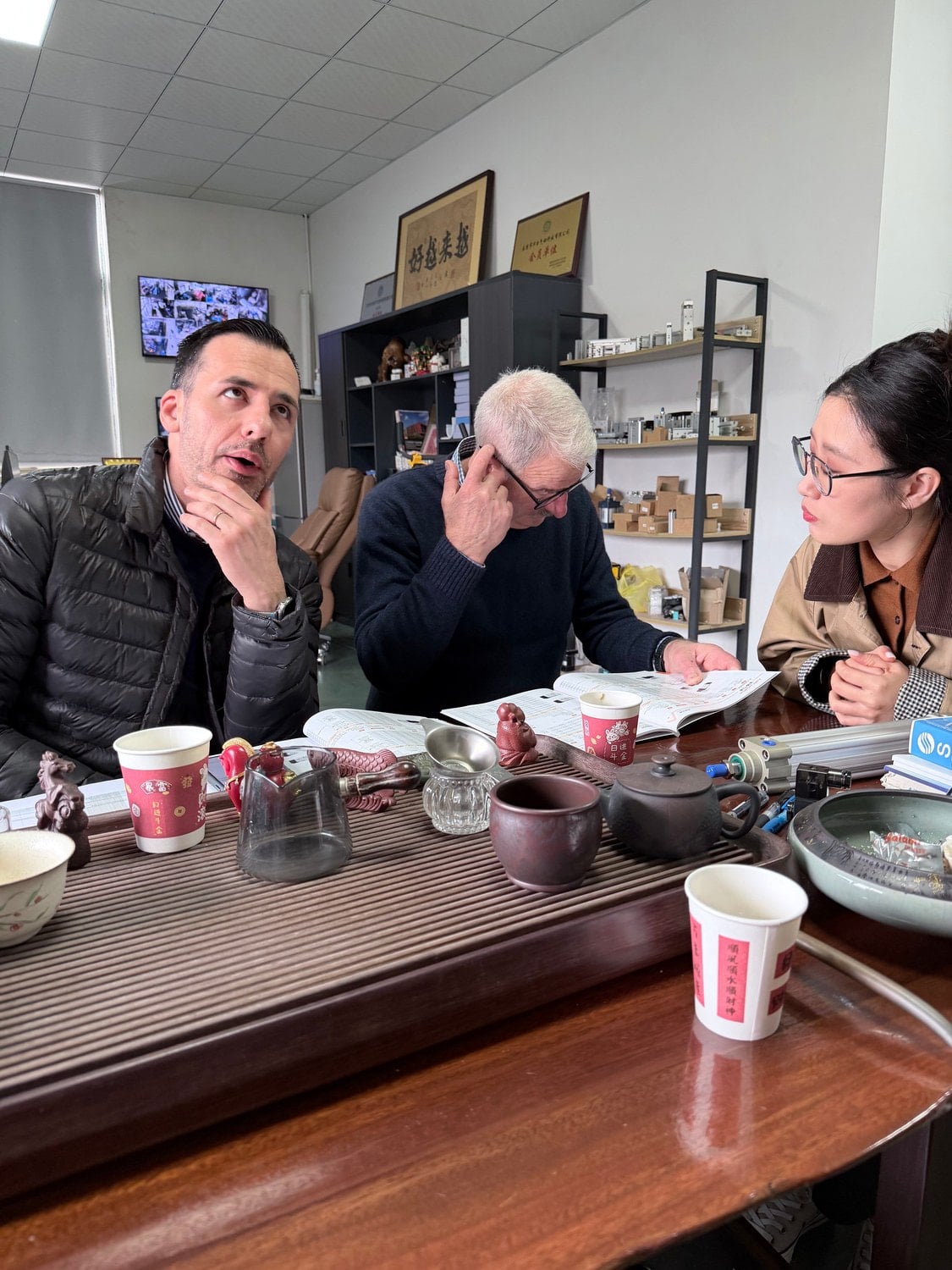
Catalogues, samples and the change list, at the end of the day.
About AIRWORK
AIRWORK is the brand of Zhejiang Jinzhi Pneumatic Technology Co., Ltd., a manufacturer of pneumatic components for industrial automation. Our range covers air cylinders, rotary actuators, solenoid and manual valves, fittings, silencers, coil hoses and blow guns, in metric and inch sizes with BSP, NPT and BSPT threads. Certified to CE and ISO 9001, we support OEM and ODM projects with drawings, samples and customized packing. One-stop procurement, from factory to application.