 EN


A Customer Walkthrough: Fittings and Cylinders, Seen at the Machines
Wenzhou—18th Nov. A customer group spent the day at the plant this month, walking the fittings line and the cylinder area before sitting down with drawings and samples. Visits like this one are routine here, and the reason is simple: a buyer who has only seen a product photograph is buying a specification. A buyer who has walked the floor is buying the ability to repeat it.
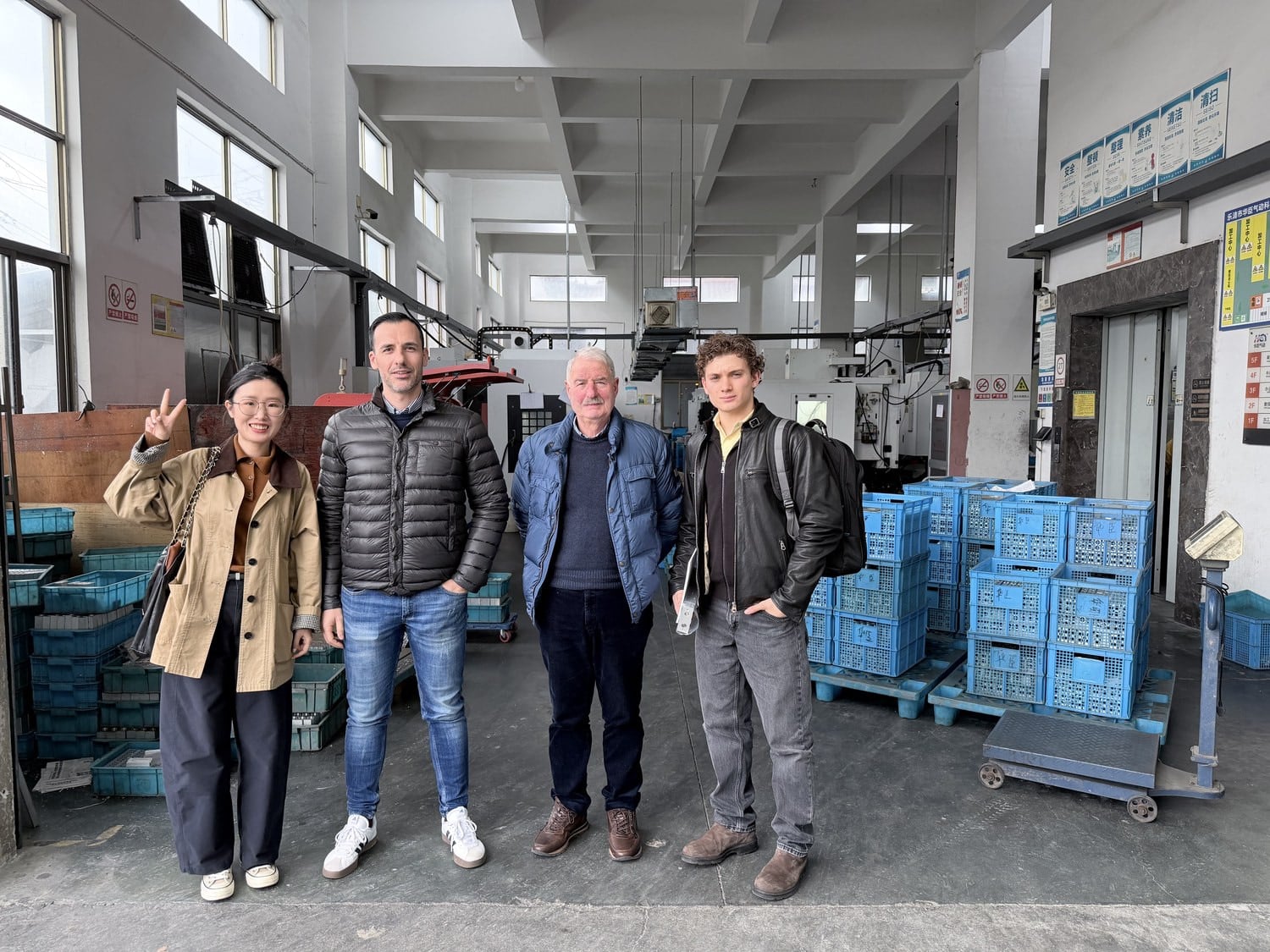
The visiting team with the sales engineer, at the end of the walkthrough.
Fittings: feeders, benches, bins
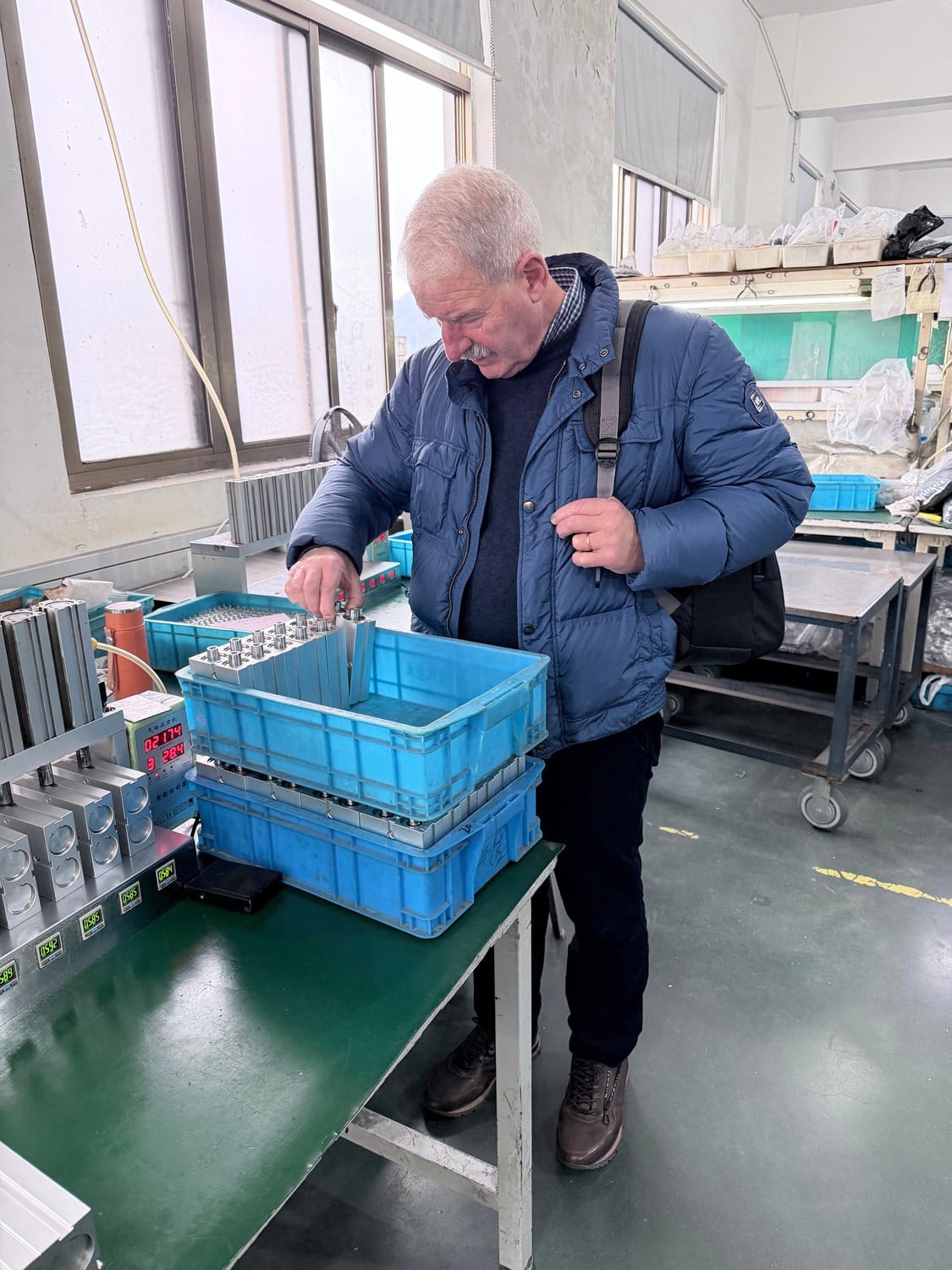
The fittings side of the plant operates using rows of vibratory bowl feeders, each feeding a group of parts to the assembly benches beside it. Green and blue bins hold work in progress between stations; the line moves at the pace set by the operators, not at the pace assumed by a spreadsheet. For visitors, the valuable insight was not the machinery itself, but observing how many hands handle a fitting from the first operation to the final inspection—and where quality checks occur within that sequence.
 |
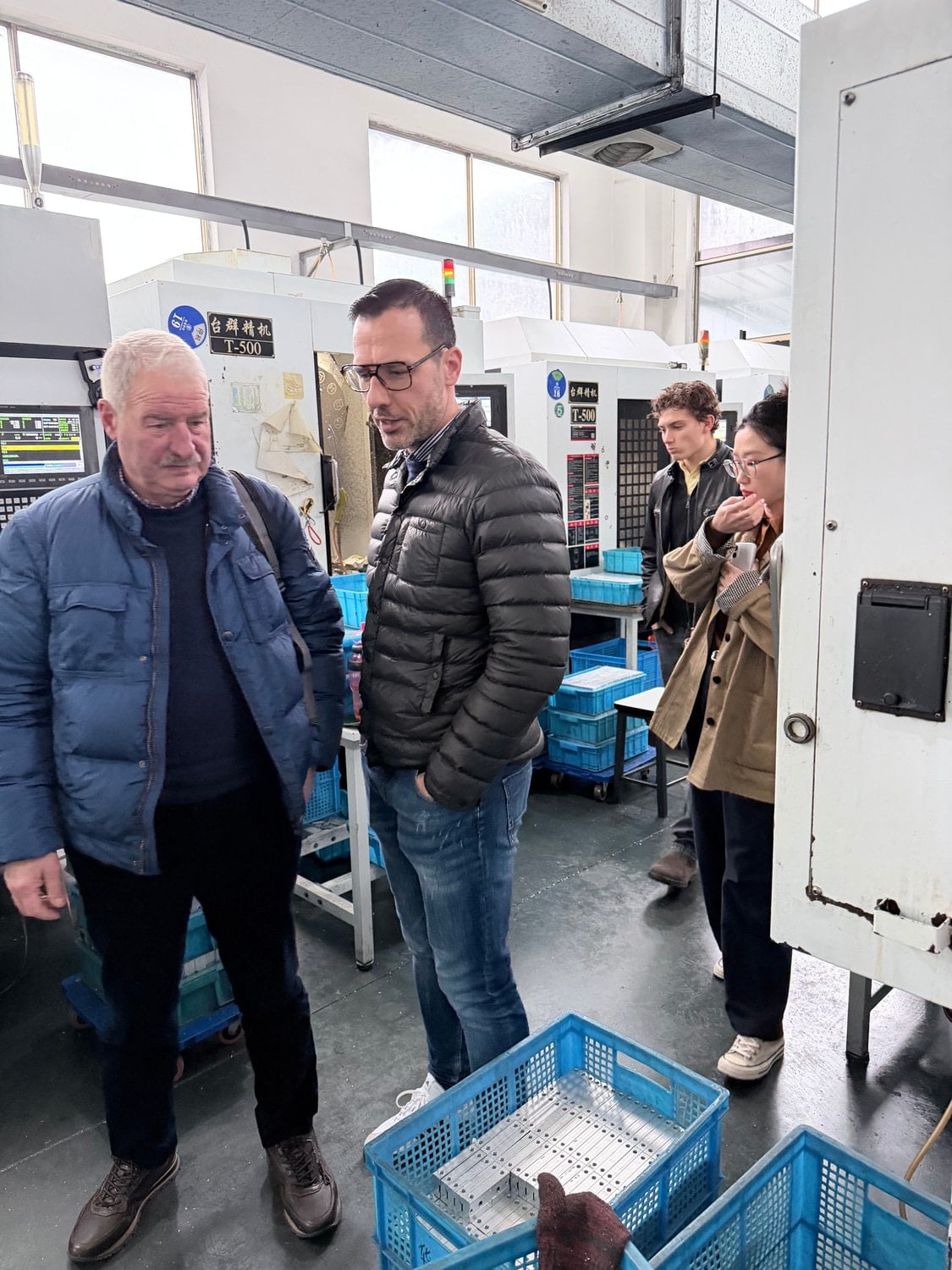 |
| Work in progress between stations on the fittings line. | Walking through the machining area, where cylinder and fitting bodies are cut. |
Cylinders: bodies between cells, gates on a bench.
On the cylinder side, the plant is arranged around machining centres, with crates of machined bodies stacked between cells rather than stored elsewhere in the building. This layout is intentional: it minimizes the distance between a machining operation and its inspection, and makes work in progress visible to anyone passing by.
The bench where the group lingered longest is the one equipped with gauges. Numbered stations—each with its own fixture—are arranged along a table topped in green, and a manifold block is verified against these stations before proceeding further. It is not a visually striking station, which is exactly why it merits attention: this is where a specification either proves valid or fails.
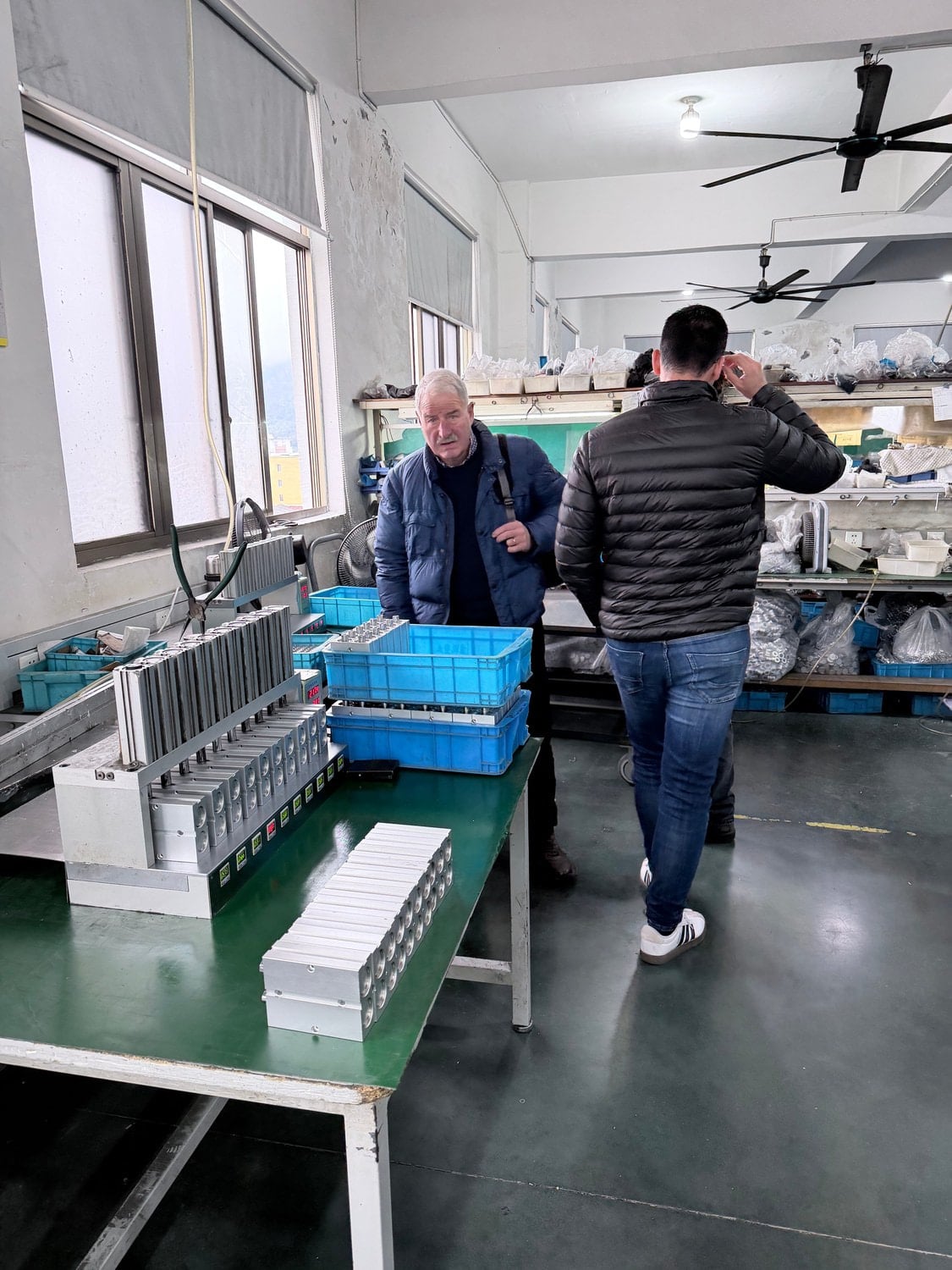
The test bench: numbered stations, one fixture per station.
The questions that arise
Most of the afternoon focused on three topics—topics that recur on nearly every visit. How is a critical dimension maintained across a batch? How is a batch inspected, and what data are recorded? And what happens to the order when an item on the line falls outside tolerance? None of the answers is compelling on its own; together, they define the distinction between a supplier capable of shipping a sample and one capable of shipping the fourth repeat order.
Then the table
Dieser Tag endete im Besprechungsraum mit Katalogen, einer Probe-Sammlung und einer Liste von Punkten, die der Kunde in der nächsten Überarbeitung geändert haben möchte. Diese Liste ist das eigentliche Ergebnis eines Besuchs: nicht eine Unterschrift, sondern eine kürzere Distanz zwischen dem, was eine Zeichnung sagt, und dem, was eine Maschine halten kann.
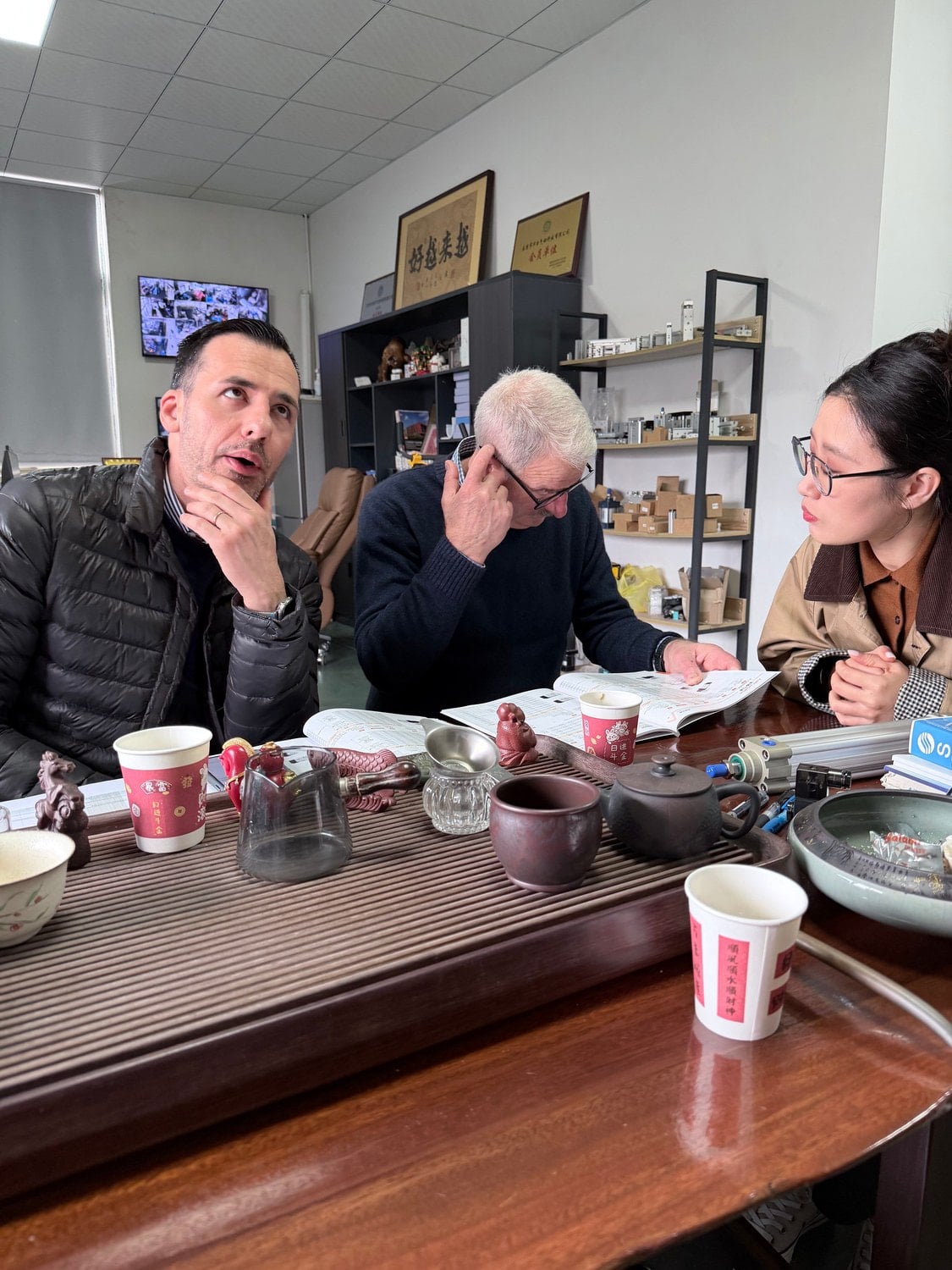
Kataloge, Proben und die Änderungsliste am Ende des Tages.
De AIRWORK
AIRWORK ist die Marke der Zhejiang Jinzhi Pneumatic Technology Co., Ltd., einem Hersteller pneumatischer Komponenten für die industrielle Automatisierung. Unser Sortiment umfasst Luftzylinder, Drehaktoren, Magnetventile und Handventile, Armaturen, Schalldämpfer, Spiralschläuche und Luftdüsen in metrischen und zölligen Abmessungen mit BSP-, NPT- und BSPT-Gewinden. Zertifiziert nach CE und ISO 9001 unterstützen wir OEM- und ODM-Projekte mit Zeichnungen, Mustern und kundenspezifischer Verpackung. Einheitliche Beschaffung – direkt ab Werk bis zur Anwendung.