 EN
EN

Mechanical efficiency in industrial systems directly impacts operational costs, energy consumption, and overall productivity. When engineers seek to optimize system performance, the choice of actuators becomes a critical design decision. An air piston represents one of the most effective solutions for enhancing mechanical efficiency across diverse applications, offering superior force-to-weight ratios, precise control characteristics, and minimal energy losses compared to traditional mechanical alternatives.
The fundamental principle behind an air piston's efficiency improvement lies in its ability to convert compressed air energy into linear mechanical motion with minimal friction losses and maximum controllability. Unlike electric motors or hydraulic systems that require complex transmission mechanisms, an air piston delivers direct linear force output, eliminating intermediate conversion stages that typically reduce overall system efficiency. This direct energy conversion mechanism enables industrial systems to achieve higher performance levels while consuming less input energy.
Force Generation and Energy Conversion Mechanisms
Pneumatic Force Multiplication Principles
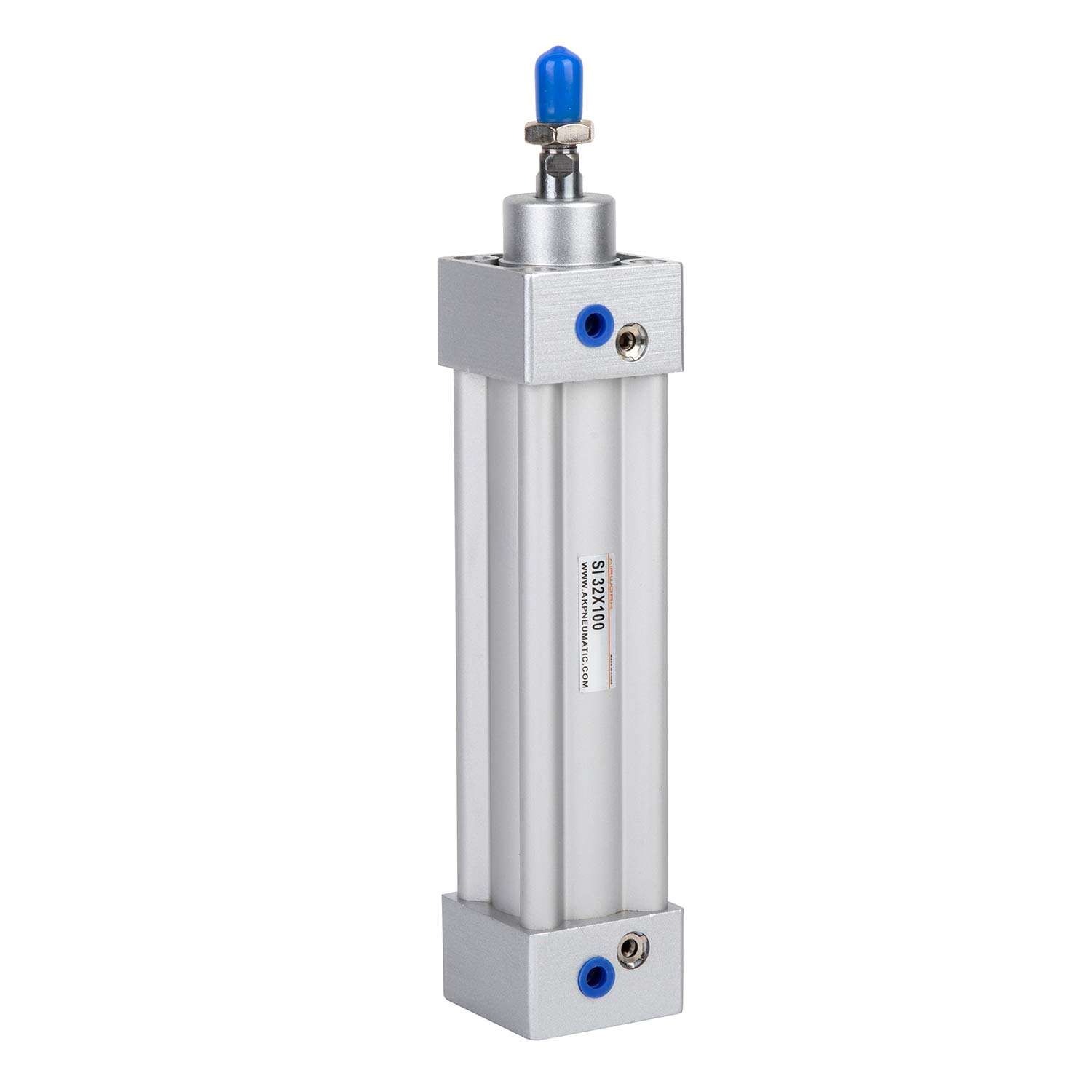
An air piston generates force through the controlled expansion of compressed air within a cylinder chamber, creating a pressure differential that drives the piston rod in a linear direction. The force output calculation follows Pascal's law, where force equals pressure multiplied by the effective piston area. This relationship allows engineers to precisely calculate and optimize the force requirements for specific applications, ensuring that the air piston delivers exactly the mechanical output needed without excess energy consumption.
The efficiency advantage becomes apparent when comparing energy conversion pathways. Traditional mechanical systems often require multiple conversion stages, such as electrical energy to rotational motion, then rotational to linear motion through gears or lead screws. Each conversion stage introduces efficiency losses through friction, heat generation, and mechanical wear. An air piston eliminates these intermediate steps, converting pneumatic potential energy directly into useful mechanical work.
Pressure Optimization and Flow Control
Modern air piston systems incorporate advanced pressure regulation and flow control technologies that optimize energy utilization throughout the operating cycle. Variable pressure control allows the system to adjust force output dynamically based on load requirements, preventing energy waste during light-load conditions. This adaptive capability ensures that the air piston operates at optimal efficiency across varying operational demands.
Flow control valves regulate the air supply rate to the cylinder, enabling precise speed control while minimizing compressed air consumption. Advanced systems employ proportional flow control that matches air supply to actual load requirements, reducing energy waste associated with over-pressurization or excessive flow rates. These control mechanisms enhance overall system efficiency by ensuring that compressed air energy is utilized only when and where needed.
Friction Reduction and Mechanical Advantages
Low-Friction Sealing Technologies
The mechanical efficiency of an air piston depends significantly on the sealing system design, which must maintain pressure integrity while minimizing friction losses. Modern air piston designs incorporate advanced sealing materials and geometries that dramatically reduce sliding friction between moving components. Low-friction seals, such as those made from specialized polymers or composite materials, enable smooth piston movement while maintaining excellent pressure retention characteristics.
These advanced sealing systems contribute to efficiency improvement through reduced breakaway force requirements and lower steady-state friction during operation. Traditional mechanical actuators often suffer from higher friction losses due to metal-on-metal contact surfaces, requiring additional input energy to overcome resistance. An air piston with optimized sealing technology operates with significantly lower friction coefficients, translating input pneumatic energy more effectively into useful mechanical output.
Linear Motion Efficiency Advantages
The inherent linear motion capability of an air piston eliminates the need for complex mechanical conversion systems that introduce efficiency losses. Rotary actuators typically require additional mechanisms such as rack and pinion systems, lead screws, or cam arrangements to produce linear motion. Each of these conversion mechanisms introduces friction, backlash, and mechanical losses that reduce overall system efficiency.
Direct linear actuation through an air piston provides a more efficient energy transfer path, converting pneumatic pressure directly into linear force without intermediate mechanical conversions. This direct conversion capability results in higher mechanical efficiency, reduced maintenance requirements, and improved system responsiveness. The elimination of complex transmission mechanisms also reduces the number of wear components, contributing to long-term efficiency maintenance.
Control Precision and Response Characteristics
Dynamic Response Optimization
An air piston offers exceptional dynamic response characteristics that contribute directly to mechanical efficiency improvement in automated systems. The compressibility of air provides natural shock absorption and compliance, reducing impact loads and mechanical stress on system components. This inherent damping characteristic eliminates the need for additional shock absorption mechanisms, simplifying system design while improving efficiency.
The rapid response capability of an air piston enables precise positioning and speed control, allowing systems to operate at optimal efficiency points throughout the duty cycle. Fast acceleration and deceleration capabilities reduce cycle times, increasing overall system throughput while maintaining energy efficiency. The ability to achieve precise positioning without overshoot or oscillation eliminates energy waste associated with correction movements.
Proportional Control Integration
Modern air piston systems integrate sophisticated proportional control technologies that enable precise force and position regulation based on real-time feedback. Proportional pressure control allows the system to deliver exactly the force required for each specific task, avoiding energy waste associated with constant maximum pressure operation. This intelligent control capability ensures optimal energy utilization across varying load conditions and operational requirements.
Position feedback systems enable closed-loop control that maintains precise positioning accuracy while minimizing energy consumption. The air piston can modulate pressure and flow dynamically to maintain position against varying external loads, ensuring consistent performance while optimizing energy efficiency. These advanced control capabilities allow the system to adapt automatically to changing operational conditions without manual intervention or energy waste.
System Integration and Maintenance Efficiency
Installation and Configuration Advantages
The mechanical efficiency benefits of an air piston extend beyond operational performance to include installation and integration advantages that reduce overall system complexity. Unlike hydraulic actuators that require fluid reservoirs, pumps, and extensive piping systems, an air piston operates using compressed air that is readily available in most industrial facilities. This simplified infrastructure requirement reduces installation costs and eliminates potential efficiency losses associated with hydraulic fluid heating and circulation.
The modular design of modern air piston systems enables easy integration into existing mechanical systems without extensive modifications. Standardized mounting interfaces and connection methods simplify installation procedures, reducing commissioning time and costs. The ability to retrofit existing mechanical systems with air piston actuators provides an efficient pathway for improving overall system performance without complete system redesign.
Maintenance and Reliability Factors
Long-term mechanical efficiency depends significantly on maintenance requirements and component reliability. An air piston typically requires minimal maintenance compared to complex mechanical systems, as it contains fewer moving parts and operates without lubricating fluids that require regular replacement. The clean operation using compressed air eliminates contamination issues that commonly affect hydraulic systems, maintaining consistent performance over extended operational periods.
The robust construction of industrial air piston systems ensures reliable operation under demanding conditions while maintaining efficiency characteristics throughout the service life. Predictable wear patterns and readily available replacement parts enable cost-effective maintenance scheduling that preserves system efficiency. The ability to perform maintenance without complete system shutdown contributes to overall operational efficiency and productivity.
FAQ
What factors determine the efficiency improvement potential of an air piston in a specific application?
The efficiency improvement potential depends on several key factors including the current system's energy conversion pathway, load characteristics, duty cycle requirements, and control precision needs. Systems with multiple mechanical conversion stages typically see greater efficiency gains when retrofitted with air piston actuators. Load matching is crucial - the air piston size and pressure rating should align closely with actual force requirements to maximize efficiency. High-frequency applications benefit most from the rapid response characteristics of pneumatic systems, while applications requiring precise positioning gain efficiency through improved control accuracy and reduced correction movements.
How does compressed air quality affect the efficiency performance of an air piston system?
Compressed air quality directly impacts efficiency through several mechanisms. Contaminated air containing moisture, oil particles, or debris can cause premature seal wear, increasing friction losses and reducing efficiency over time. Inconsistent air pressure due to inadequate filtration or regulation results in variable performance and energy waste. Proper air treatment including filtration, moisture removal, and pressure regulation is essential for maintaining optimal efficiency. High-quality compressed air ensures consistent lubrication of sealing surfaces, prevents corrosion of internal components, and maintains reliable pressure control characteristics that optimize energy utilization.
Can an air piston maintain efficiency advantages in high-temperature industrial environments?
Modern air piston designs incorporate temperature-resistant materials and thermal management features that maintain efficiency in elevated temperature conditions. High-temperature sealing compounds and heat-resistant cylinder materials prevent thermal degradation that could increase friction or reduce pressure containment. Thermal expansion compensation ensures consistent clearances and sealing effectiveness across temperature ranges. However, extremely high temperatures may require additional cooling or thermal isolation measures to preserve optimal efficiency. The compressed air supply naturally provides some cooling effect, helping to moderate operating temperatures and maintain consistent performance characteristics.
What are the typical efficiency gains achievable when replacing electric or hydraulic actuators with air piston systems?
Efficiency gains vary significantly based on the specific application and existing system design, but typical improvements range from 15% to 40% in energy conversion efficiency. Linear applications show the greatest gains due to elimination of rotary-to-linear conversion mechanisms. Systems requiring frequent start-stop cycles benefit from reduced inertial losses and faster response times. The exact improvement depends on factors such as duty cycle, load characteristics, control requirements, and the efficiency of the displaced system. Comprehensive system analysis including energy consumption measurements before and after conversion provides the most accurate assessment of efficiency gains for specific applications.
Table of Contents
- Force Generation and Energy Conversion Mechanisms
- Friction Reduction and Mechanical Advantages
- Control Precision and Response Characteristics
- System Integration and Maintenance Efficiency
-
FAQ
- What factors determine the efficiency improvement potential of an air piston in a specific application?
- How does compressed air quality affect the efficiency performance of an air piston system?
- Can an air piston maintain efficiency advantages in high-temperature industrial environments?
- What are the typical efficiency gains achievable when replacing electric or hydraulic actuators with air piston systems?