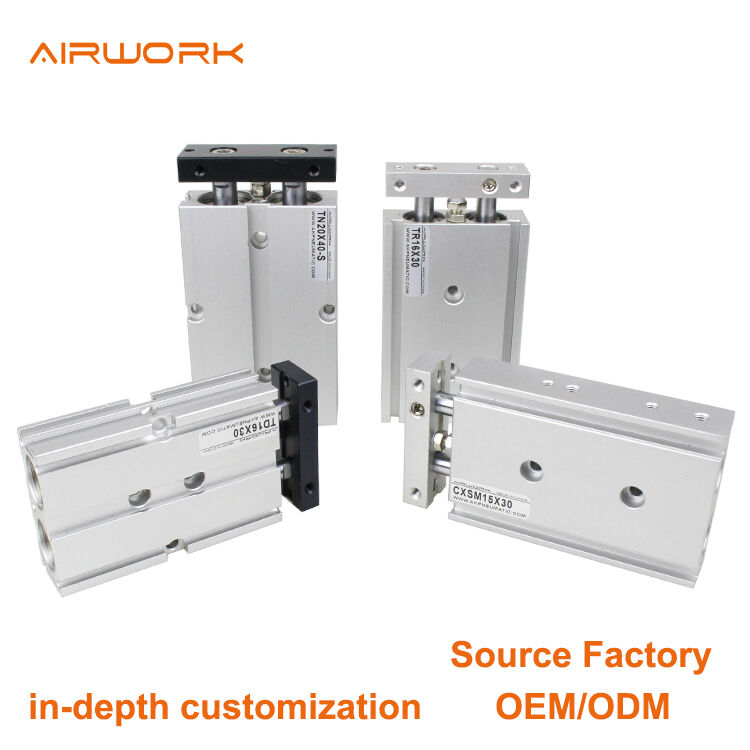
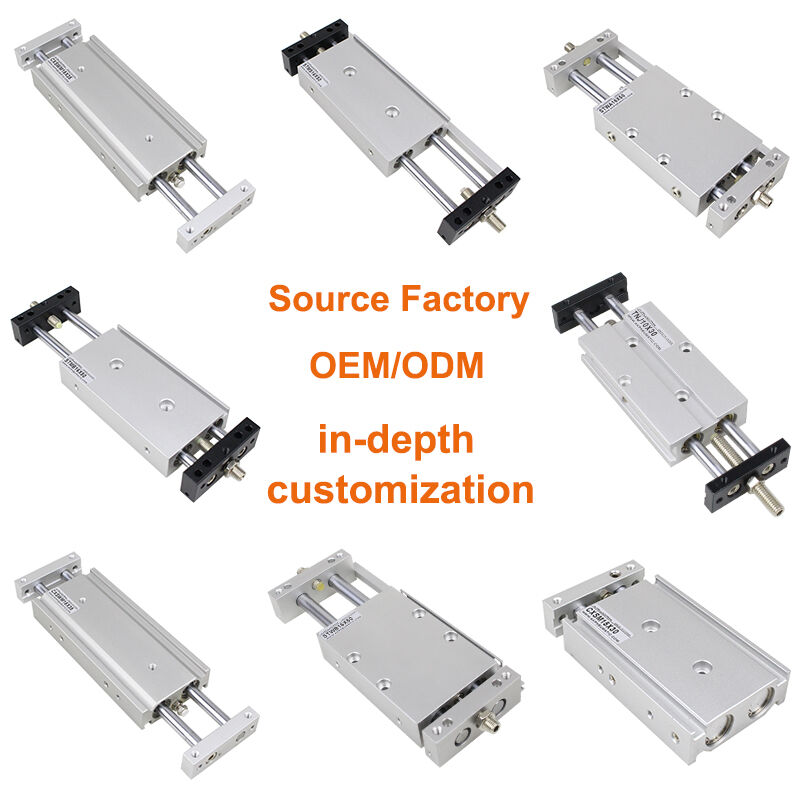
Dual Rod Pneumatic Cylinder: Advanced Linear Actuator Technology for Industrial Automation

All Categories

dual rod pneumatic cylinder

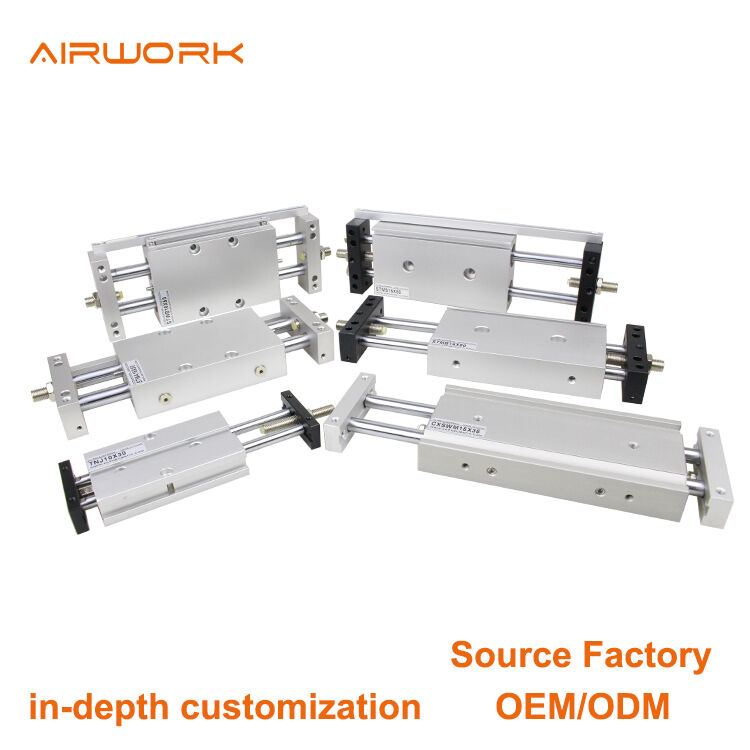
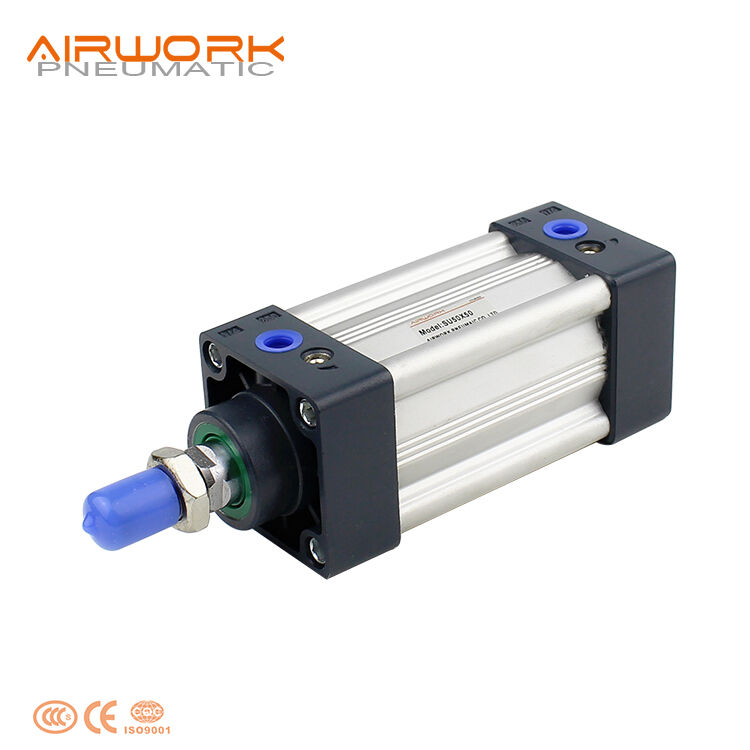
A dual rod pneumatic cylinder represents an advanced pneumatic actuator design that features piston rods extending from both ends of the cylinder body. This engineering configuration distinguishes it from traditional single-rod cylinders by providing enhanced mechanical performance and operational versatility. The dual rod pneumatic cylinder operates using compressed air to generate linear motion, with the unique characteristic of having identical force output in both extension and retraction directions. The cylinder consists of a barrel housing, internal piston assembly, two piston rods, end caps, and sealed air ports for directional control. When pressurized air enters one chamber, it forces the piston to move, simultaneously extending one rod while retracting the other. This design eliminates the differential force problem commonly encountered in single-rod systems, where different effective piston areas create unequal forces during opposing strokes. The technological architecture incorporates precision-machined components with advanced sealing systems to maintain optimal pressure retention and prevent internal leakage. Modern dual rod pneumatic cylinders feature corrosion-resistant materials, adjustable cushioning mechanisms, and various mounting configurations to accommodate diverse installation requirements. These cylinders find extensive applications across automated manufacturing lines, packaging machinery, material handling systems, and precision positioning equipment. Industries such as automotive manufacturing, food processing, pharmaceutical production, and semiconductor fabrication rely heavily on dual rod pneumatic cylinders for critical automation processes. The symmetric rod configuration enables precise load balancing and eliminates side loading issues that can cause premature wear in conventional cylinder designs. Additionally, the dual rod arrangement facilitates direct mechanical coupling to driven components, improving system responsiveness and reducing mechanical complexity in automated systems where bidirectional motion control is essential for optimal performance.

Popular Products

The dual rod pneumatic cylinder delivers superior performance benefits that make it an excellent investment for industrial automation applications. Equal force generation in both directions stands as the primary advantage, eliminating the force differential that plagues single-rod designs. This characteristic ensures consistent performance regardless of stroke direction, providing operators with reliable and predictable motion control. The symmetric design prevents side loading on the piston assembly, significantly extending operational lifespan and reducing maintenance requirements. Companies experience reduced downtime and lower replacement costs due to this enhanced durability. The dual rod configuration enables direct mounting of driven components to both rod ends, creating versatile installation options that simplify machine design and reduce component count. This flexibility translates to lower initial equipment costs and simplified maintenance procedures. Improved load balancing capabilities allow the dual rod pneumatic cylinder to handle complex loading conditions without compromising performance or accuracy. The system maintains consistent speed and positioning throughout the entire stroke length, delivering superior process control for demanding applications. Enhanced mechanical stability results from the dual rod support structure, which minimizes deflection and vibration during high-speed operations. This stability proves crucial for precision manufacturing processes where dimensional accuracy directly impacts product quality. The symmetric force characteristics eliminate the need for complex flow control valves typically required to compensate for force differentials in single-rod systems, reducing system complexity and associated costs. Faster cycle times become achievable because equal forces allow for optimized acceleration and deceleration profiles in both directions. The dual rod pneumatic cylinder accommodates higher operating pressures without structural compromise, enabling greater force output when applications demand maximum performance. Simplified control logic requirements reduce programming complexity in automated systems, allowing engineers to implement more straightforward motion control strategies. The inherent design stability reduces wear on guide systems and mounting hardware, extending the service life of entire automation systems and providing long-term cost savings for facility operators.

Tips And Tricks

Pneumatic fittings used in water

25

Feb

Pneumatic fittings used in water

View More
Basic knowledge of pneumatic air cylinders

25

Feb

Basic knowledge of pneumatic air cylinders

View More
Air Source Treatment Unit:The

25

Feb

Air Source Treatment Unit:The "Guardians" and Core Components of Pneumatic Systems

View More

Get a Free Quote

Our representative will contact you soon.
Email
Name
Company Name
Message
0/1000

dual rod pneumatic cylinder

Symmetric Force Output Technology

Symmetric Force Output Technology

The symmetric force output technology represents the most significant innovation in dual rod pneumatic cylinder design, delivering identical force capabilities in both extension and retraction directions. Unlike conventional single-rod cylinders where different effective piston areas create force imbalances, the dual rod pneumatic cylinder maintains equal effective areas on both sides of the piston. This engineering achievement eliminates the performance variations that compromise system reliability in traditional designs. The technology ensures that machinery operates with consistent force delivery regardless of stroke direction, providing operators with predictable and reliable performance characteristics. Manufacturing processes benefit enormously from this consistency, as product quality depends on maintaining uniform force application throughout production cycles. The symmetric force output eliminates the need for complex compensation mechanisms typically required in single-rod systems, reducing overall system complexity and associated maintenance requirements. Engineers can design simpler control systems because they no longer need to account for force differentials when programming motion sequences. This simplification translates to reduced development time and lower implementation costs for automation projects. The technology proves particularly valuable in applications requiring precise force control, such as pressing operations, assembly processes, and material forming applications. Quality control benefits significantly because consistent force output ensures repeatable results across production runs. The symmetric force characteristics enable faster cycle times by allowing aggressive acceleration and deceleration profiles without compromising system stability. Maintenance teams appreciate the reduced complexity because fewer variables affect system performance, making troubleshooting more straightforward and predictable. The technology supports higher operating pressures without introducing force imbalances, enabling greater power density in compact installations where space constraints limit cylinder sizing options.
Enhanced Mechanical Stability and Precision

Enhanced Mechanical Stability and Precision

Enhanced mechanical stability and precision form the cornerstone of dual rod pneumatic cylinder performance, delivering superior accuracy and reliability compared to conventional actuator designs. The dual rod configuration provides exceptional rigidity that minimizes deflection and vibration during operation, ensuring precise positioning throughout the entire stroke length. This stability proves essential for applications requiring tight tolerances and consistent repeatability, such as semiconductor manufacturing, precision assembly, and quality inspection processes. The symmetric rod support structure distributes loads evenly across the cylinder assembly, preventing the side loading conditions that cause premature wear in single-rod designs. This load distribution significantly extends component lifespan while maintaining dimensional accuracy over millions of operating cycles. The enhanced stability enables the dual rod pneumatic cylinder to achieve superior positioning accuracy, with many models capable of maintaining positioning tolerances within micrometers when properly controlled. Manufacturing processes benefit from this precision through improved product quality and reduced rejection rates. The rigid construction resists external forces that might otherwise compromise positioning accuracy, maintaining performance even in challenging industrial environments with vibration and shock loading. The dual rod design eliminates piston rod buckling concerns that limit single-rod cylinder applications, particularly in longer stroke lengths where structural integrity becomes critical. This capability expands application possibilities and allows engineers greater design flexibility when specifying actuators for demanding applications. The enhanced mechanical characteristics support faster operating speeds without sacrificing accuracy, enabling higher production rates while maintaining quality standards. Precision positioning systems benefit from the inherent stability because external guide systems can be simplified or eliminated entirely, reducing system complexity and associated costs. The mechanical advantages translate directly to improved process capability indices in statistical process control environments, helping manufacturers maintain tight quality specifications and reduce variability in production outcomes.
Versatile Mounting and Integration Options

Versatile Mounting and Integration Options

Versatile mounting and integration options distinguish the dual rod pneumatic cylinder as an exceptionally adaptable solution for diverse industrial automation challenges. The dual rod configuration provides mounting flexibility unavailable in conventional single-rod designs, enabling direct attachment of driven components to either rod end or simultaneous connection of multiple components. This versatility simplifies machine design by reducing the need for complex linkages, brackets, and coupling mechanisms typically required with traditional cylinders. Engineers can implement more compact and efficient designs because the dual rod pneumatic cylinder accommodates various mounting orientations and connection methods. The symmetric rod arrangement enables innovative mechanical configurations, such as differential motion systems where both rods drive separate components with coordinated movement patterns. This capability proves valuable in packaging machinery, material handling systems, and automated assembly equipment where multiple synchronized motions improve productivity. Installation flexibility extends to spatial arrangements because the dual rod design adapts to tight spaces where conventional cylinders would require additional clearance for single-sided mounting hardware. Maintenance accessibility improves significantly because technicians can access connection points from either end of the cylinder, reducing service time and complexity. The versatile mounting options support both horizontal and vertical installations without performance degradation, providing system designers with maximum flexibility in equipment layout and optimization. Integration with existing machinery becomes simplified because the dual rod pneumatic cylinder can often replace multiple single-rod units, consolidating mechanical systems and reducing component count. This consolidation reduces inventory requirements and simplifies spare parts management for maintenance organizations. The adaptable design accommodates custom mounting hardware and specialized connections, enabling seamless integration with proprietary equipment and unique application requirements. Cost savings result from simplified mechanical systems that require fewer components and reduced assembly time. The mounting versatility enables retrofitting applications where space constraints or access limitations would prevent conventional cylinder installation, extending the useful life of existing equipment through strategic automation upgrades.

Get a Free Quote

Our representative will contact you soon.
Email
Name
Company Name
Message
0/1000