Double Rod Pneumatic Cylinder: Advanced Force Balance & Superior Stability Solutions

All Categories

double rod pneumatic cylinder

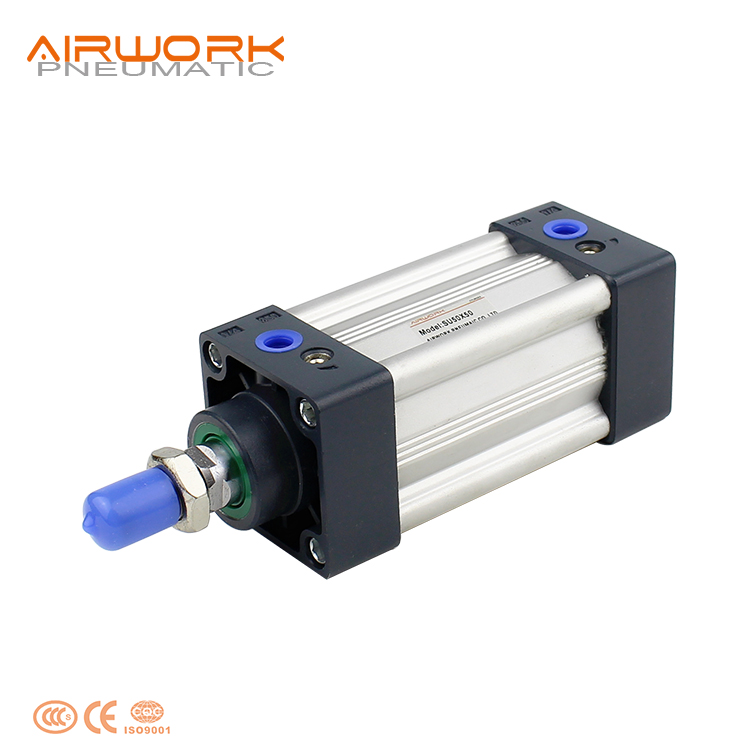
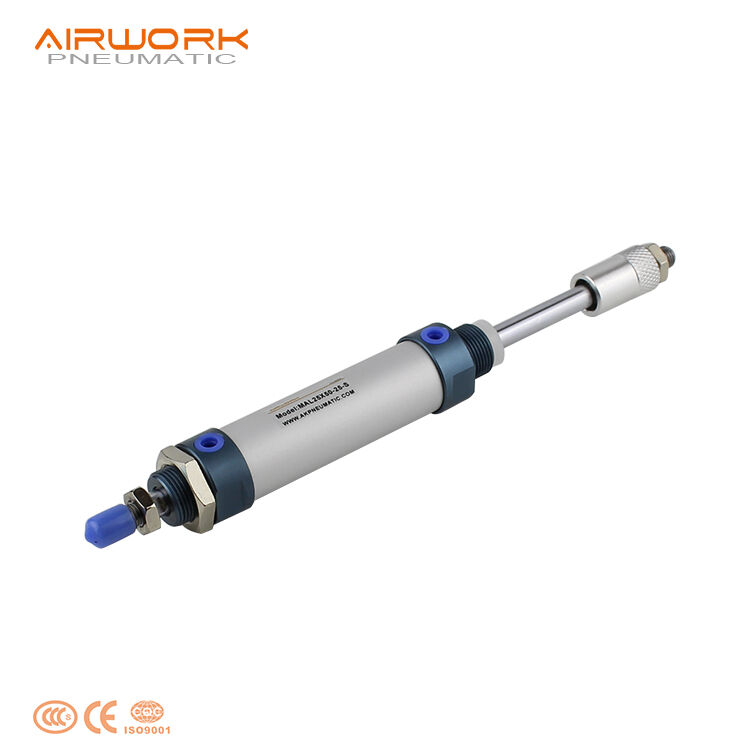
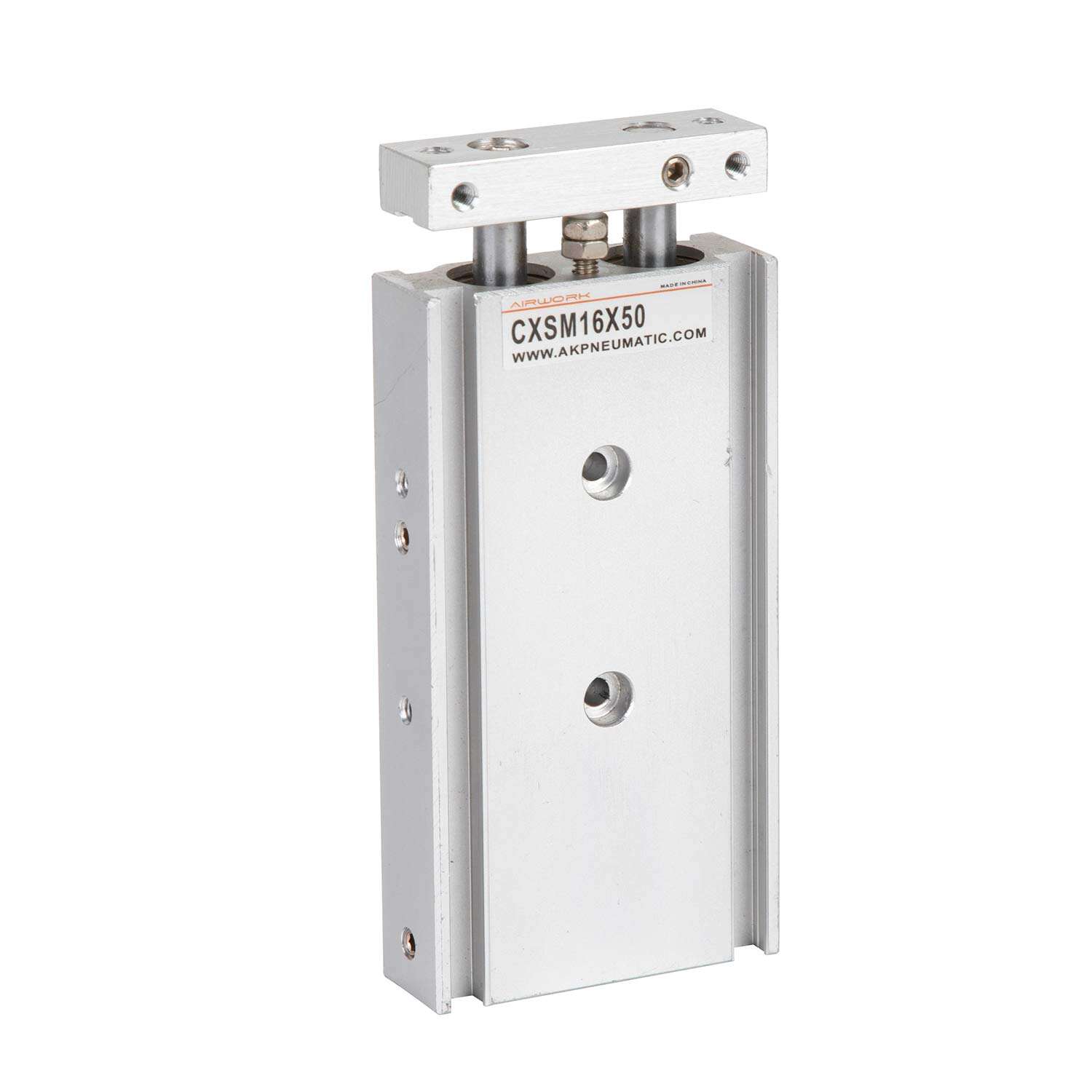
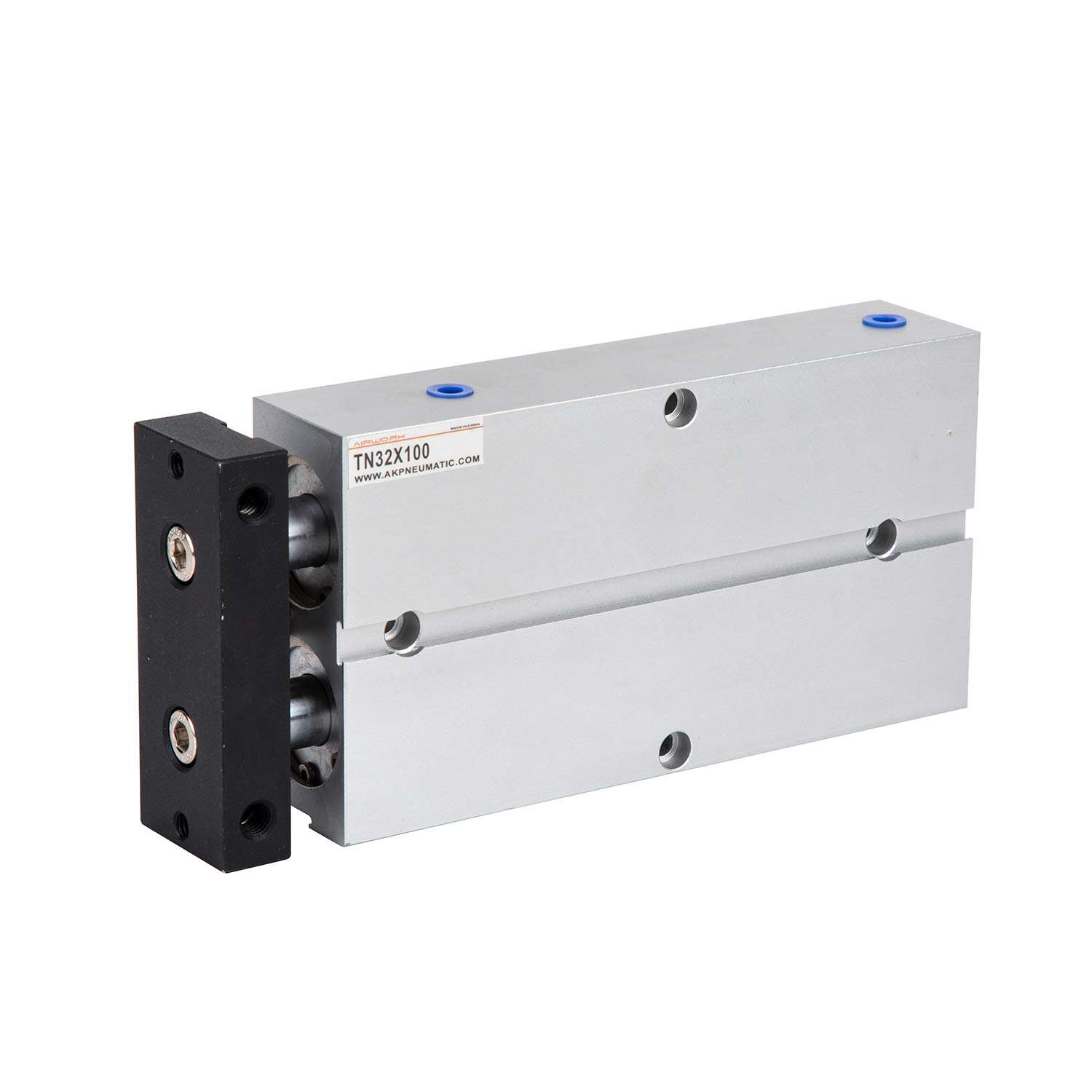
A double rod pneumatic cylinder represents an advanced pneumatic actuator design featuring two piston rods extending from opposite ends of the cylinder body. This configuration distinguishes it from single rod cylinders by providing symmetric force output and enhanced operational capabilities. The double rod pneumatic cylinder operates through compressed air pressure applied to both sides of the internal piston, creating linear motion that transmits through both extending rods simultaneously. The fundamental structure consists of a cylindrical barrel, internal piston assembly, dual piston rods, end caps with rod seals, and air inlet ports positioned strategically for optimal performance. The technological framework incorporates precision-machined components manufactured from high-grade materials including aluminum alloy cylinders, hardened steel rods, and specialized sealing systems designed for extended service life. Advanced cushioning mechanisms integrated within the end caps provide smooth deceleration during stroke completion, reducing impact forces and minimizing wear. The dual rod configuration enables unique mounting possibilities and load distribution characteristics unavailable in conventional single rod designs. Port connections accommodate standard pneumatic fittings, ensuring compatibility with existing compressed air systems and control valves. Internal sealing technology utilizes composite materials engineered for low friction operation while maintaining pressure integrity across varying temperature ranges. The piston design incorporates magnetic elements enabling position sensing through external sensors without direct contact. Manufacturing tolerances maintain precise rod alignment and smooth operation throughout the complete stroke range. Surface treatments applied to rod surfaces enhance corrosion resistance and reduce friction coefficients. The double rod pneumatic cylinder finds extensive applications across manufacturing automation, material handling systems, packaging equipment, automotive assembly lines, and precision positioning applications where symmetric loading and enhanced stability prove essential for optimal performance and operational reliability.

New Products

The double rod pneumatic cylinder delivers exceptional performance benefits that directly translate into improved operational efficiency and reduced maintenance costs for industrial applications. The symmetric design provides equal force output in both extension and retraction directions, eliminating the force differential inherent in single rod configurations. This balanced force characteristic ensures consistent performance regardless of load direction, making it ideal for applications requiring precise bidirectional control. The dual rod configuration significantly enhances lateral load resistance, preventing side loading damage that commonly affects single rod cylinders in misaligned installations. This robust construction reduces premature wear and extends operational lifespan considerably. Installation flexibility represents another major advantage, as the dual rods enable mounting configurations impossible with conventional designs. Engineers can connect loads to either rod end or utilize both rods simultaneously for complex mechanical linkages. The enhanced stability provided by dual guidance significantly improves positioning accuracy, particularly critical in precision assembly operations and quality control applications. Maintenance requirements decrease substantially due to the balanced loading characteristics that reduce internal wear patterns. The symmetric force distribution eliminates column loading stresses that typically cause premature seal failure in single rod units. Operational smoothness improves dramatically as dual rods provide superior piston guidance, minimizing friction and reducing air consumption during operation. The design accommodates higher operating pressures while maintaining seal integrity through balanced pressure distribution across sealing surfaces. Versatile mounting options include both rigid and flexible connections, adapting to diverse mechanical requirements without compromising performance. The double rod pneumatic cylinder operates reliably across extended temperature ranges while maintaining consistent performance characteristics. Response times improve through optimized internal geometry and reduced moving mass, enabling faster cycle rates in high-speed applications. These combined advantages result in lower total cost of ownership through reduced maintenance, extended service intervals, and improved production efficiency that justifies the initial investment in premium pneumatic technology.

Practical Tips

Pneumatic fittings used in water

25

Feb

Pneumatic fittings used in water

View More
Basic knowledge of pneumatic air cylinders

25

Feb

Basic knowledge of pneumatic air cylinders

View More
Air Source Treatment Unit:The

25

Feb

Air Source Treatment Unit:The "Guardians" and Core Components of Pneumatic Systems

View More

Get a Free Quote

Our representative will contact you soon.
Email
Name
Company Name
Message
0/1000

double rod pneumatic cylinder

Superior Force Balance and Bidirectional Control

Superior Force Balance and Bidirectional Control

The double rod pneumatic cylinder excels in applications demanding precise bidirectional force control through its innovative dual rod design that eliminates the force differential characteristic of single rod cylinders. In conventional single rod designs, the effective piston area differs between extension and retraction strokes due to the rod cross-sectional area reducing the effective pressure surface on one side. This asymmetry creates unequal forces that complicate control algorithms and limit application flexibility. The double rod configuration resolves this challenge by maintaining identical effective piston areas in both directions, delivering consistent force output regardless of stroke direction. This balanced force characteristic proves invaluable in reciprocating applications such as material transfer systems, where identical pushing and pulling forces ensure uniform handling of delicate components. Manufacturing processes benefit significantly from this force symmetry, particularly in press-fit operations where consistent force application prevents component damage during both insertion and extraction cycles. The predictable force characteristics simplify pneumatic system design by eliminating the need for complex pressure compensation mechanisms typically required with single rod cylinders. Control valve sizing becomes straightforward as identical flow requirements exist for both stroke directions, reducing system complexity and component costs. The balanced design enables precise positioning control in both directions without force-related positioning errors that plague asymmetric cylinder designs. Applications requiring force feedback control achieve superior accuracy as the consistent force output eliminates calibration complexities associated with directional force variations. This technology particularly benefits automated assembly systems where component placement accuracy directly impacts product quality and production efficiency. The superior force balance translates into improved process repeatability, reduced scrap rates, and enhanced overall equipment effectiveness that justifies the investment in advanced pneumatic cylinder technology.
Enhanced Lateral Load Resistance and Stability

Enhanced Lateral Load Resistance and Stability

The double rod pneumatic cylinder demonstrates exceptional lateral load resistance capabilities that significantly outperform single rod configurations, providing enhanced operational stability and extended service life in demanding industrial environments. The dual rod arrangement creates a superior guidance system that effectively distributes side loads across two bearing surfaces rather than concentrating stress at a single point. This distributed loading mechanism prevents the bending moments and deflection issues commonly experienced with single rod cylinders when subjected to misaligned loads or mounting tolerances. The enhanced stability proves particularly valuable in automated material handling applications where conveyor systems, robotic arms, and positioning mechanisms generate complex loading patterns that would rapidly degrade conventional cylinder performance. Manufacturing operations benefit substantially from this improved lateral load capacity, especially in applications involving cutting, drilling, or pressing operations where tool forces create significant side loading conditions. The robust dual rod design accommodates mounting misalignments and thermal expansion effects without compromising operational accuracy or accelerating wear patterns. Installation tolerances become less critical as the enhanced stability compensates for minor alignment errors that would cause premature failure in single rod applications. The superior guidance characteristics reduce internal friction and eliminate stick-slip behavior that degrades positioning accuracy and increases air consumption. Quality control processes achieve improved repeatability as the stable operation maintains consistent positioning under varying load conditions. The enhanced lateral load resistance enables designers to specify smaller, lighter cylinders for given applications, as the improved stability allows operation at higher working loads without compromising reliability. This weight reduction proves particularly beneficial in mobile equipment and overhead mounting applications where reduced mass improves dynamic response and reduces structural requirements. The stability advantages extend equipment lifespan significantly while reducing maintenance intervals and unplanned downtime costs that impact production efficiency and profitability.
Versatile Mounting and Connection Options

Versatile Mounting and Connection Options

The double rod pneumatic cylinder offers unparalleled mounting versatility and connection flexibility that opens new possibilities for mechanical system design and optimization. The dual rod configuration enables engineers to create innovative mounting arrangements impossible with conventional single rod cylinders, including center-mounted installations where the cylinder body remains stationary while both rods extend to operate separate mechanisms simultaneously. This unique capability proves invaluable in symmetrical applications such as dual-sided clamping systems, synchronized material handling, and balanced positioning mechanisms. The ability to connect loads to either rod end or utilize both rods independently provides exceptional design flexibility that simplifies complex mechanical linkages and reduces overall system complexity. Packaging machinery applications particularly benefit from this versatility, enabling compact designs where space constraints limit mounting options. The dual rod arrangement facilitates through-rod installations where mechanical connections pass completely through the actuator assembly, creating clean, space-efficient designs that integrate seamlessly into existing equipment. Automotive assembly lines utilize this mounting flexibility for simultaneous operations on both sides of vehicle components, improving cycle times and production efficiency. The enhanced connection options enable direct mounting to linear guides, ball screws, and precision positioning systems without requiring additional coupling hardware that introduces backlash and reduces accuracy. Installation procedures simplify significantly as the balanced design eliminates the need for precise alignment fixtures typically required with single rod cylinders. The versatile mounting capabilities reduce the number of different cylinder models required in inventory, as a single double rod design can accommodate multiple application requirements through various mounting configurations. Maintenance accessibility improves through flexible positioning options that enable optimal service access while maintaining operational performance. The connection versatility extends to sensor integration, where magnetic position sensors can mount at either rod end or both ends simultaneously for redundant position feedback in critical applications. This mounting flexibility translates into reduced engineering time, simplified procurement processes, and enhanced system reliability that delivers measurable value to manufacturing operations.

Get a Free Quote

Our representative will contact you soon.
Email
Name
Company Name
Message
0/1000