Push to Connect Air Fittings - Fast Installation, Reliable Sealing Solutions

All Categories

push to connect air fittings

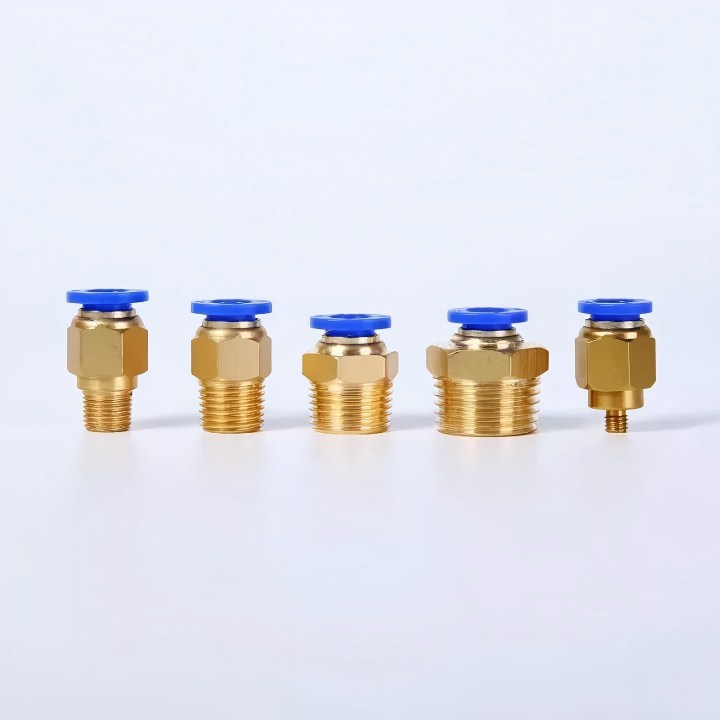
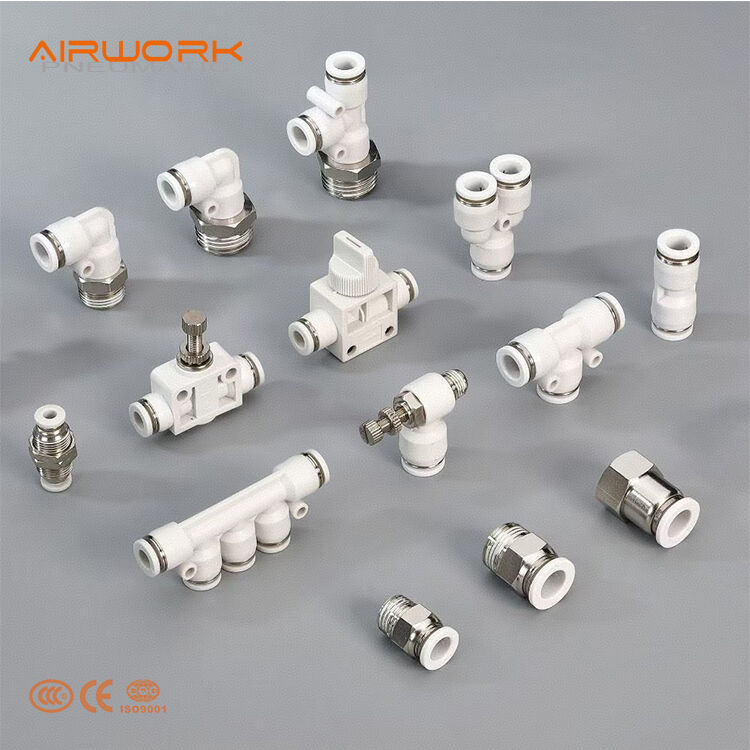
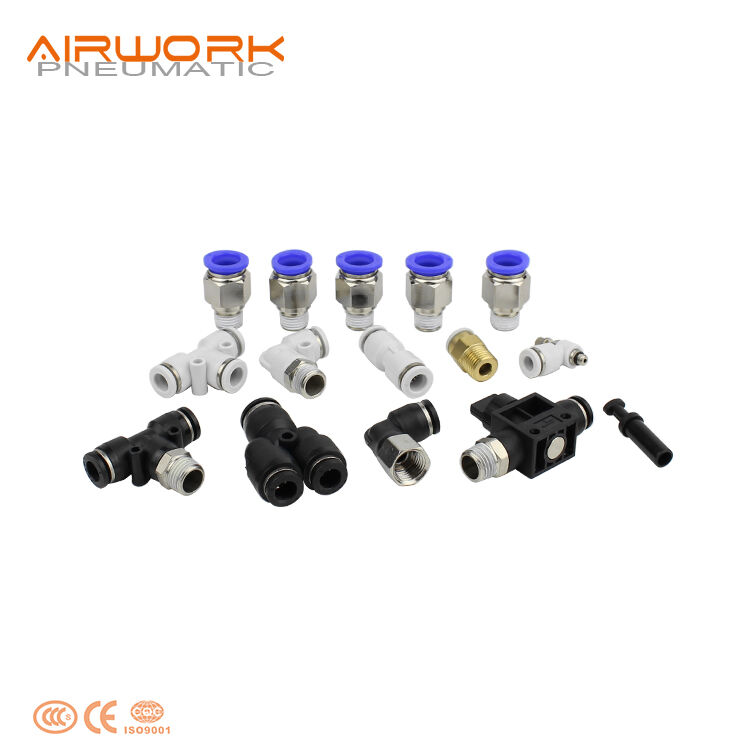
Push to connect air fittings represent a revolutionary advancement in pneumatic system connections, designed to simplify and streamline compressed air applications across numerous industries. These innovative components eliminate the need for traditional threaded connections, tools, or complicated assembly procedures. The primary function of push to connect air fittings centers around creating secure, leak-proof connections between pneumatic tubing and various system components through a simple insertion process. When tubing is pushed into the fitting, an internal gripping mechanism automatically engages, creating both mechanical retention and pneumatic sealing simultaneously. The technological foundation of push to connect air fittings relies on precision-engineered internal components including stainless steel gripping teeth, high-performance sealing rings, and spring-loaded release mechanisms. These elements work together to ensure reliable performance under varying pressure conditions while maintaining easy disconnection capabilities. The gripping system utilizes multiple contact points to distribute stress evenly across the tubing surface, preventing damage during operation. Advanced sealing technology incorporates multiple O-ring configurations that adapt to different tubing materials and operating pressures. Applications for push to connect air fittings span diverse industrial sectors including manufacturing automation, food processing, pharmaceutical production, automotive assembly, and laboratory instrumentation. These fittings prove particularly valuable in environments requiring frequent system modifications, maintenance access, or rapid equipment reconfiguration. The versatility of push to connect air fittings extends to compatibility with various tubing materials such as polyurethane, nylon, polyethylene, and fluoropolymer options. Operating pressure ranges typically accommodate standard industrial requirements while maintaining consistent performance across temperature variations. Quality push to connect air fittings feature corrosion-resistant materials, ensuring longevity in challenging environmental conditions while reducing overall system maintenance requirements and operational downtime.

New Product Recommendations

Push to connect air fittings deliver substantial operational benefits that directly impact productivity, cost efficiency, and system reliability for businesses across all industries. The most immediate advantage involves dramatically reduced installation time compared to traditional compression fittings or threaded connections. Technicians can complete connections in seconds without requiring specialized tools, thread sealants, or extensive training. This time-saving capability translates directly into lower labor costs and faster project completion schedules. The reliability factor of push to connect air fittings significantly outperforms conventional alternatives through consistent sealing performance and reduced potential for human error during installation. Unlike threaded connections that depend on proper torque application and sealant distribution, these fittings achieve optimal performance through standardized insertion procedures that eliminate guesswork and variability. Maintenance operations benefit enormously from the quick-disconnect functionality built into push to connect air fittings. System modifications, component replacements, and routine inspections proceed efficiently without shutting down entire pneumatic circuits or disturbing adjacent connections. This capability proves especially valuable in production environments where minimizing downtime directly affects profitability. Cost advantages extend beyond initial installation savings to encompass reduced inventory requirements and simplified procurement processes. Rather than stocking multiple thread sizes, sealants, and specialized tools, operations can standardize on push to connect air fittings that accommodate various tubing sizes through unified connection methods. The elimination of thread damage concerns removes costly replacement scenarios and reduces spare parts inventory. Performance consistency represents another crucial advantage, as push to connect air fittings maintain their sealing capabilities through repeated connection cycles. The internal mechanisms resist wear and degradation better than traditional sealing methods, resulting in longer service life and improved system reliability. Environmental resistance built into quality push to connect air fittings ensures continued performance despite exposure to temperature fluctuations, vibration, chemical exposure, and other challenging conditions. This durability reduces replacement frequency and minimizes unexpected system failures that disrupt operations and affect productivity.

Latest News

Pneumatic fittings used in water

25

Feb

Pneumatic fittings used in water

View More
Basic knowledge of pneumatic air cylinders

25

Feb

Basic knowledge of pneumatic air cylinders

View More
Air Source Treatment Unit:The

25

Feb

Air Source Treatment Unit:The "Guardians" and Core Components of Pneumatic Systems

View More

Get a Free Quote

Our representative will contact you soon.
Email
Name
Company Name
Message
0/1000

push to connect air fittings

Tool-Free Installation and Superior Time Efficiency

Tool-Free Installation and Superior Time Efficiency

The tool-free installation capability of push to connect air fittings represents a paradigm shift in pneumatic system assembly and maintenance procedures. This innovative design eliminates the traditional requirement for wrenches, thread sealants, torque specifications, and specialized installation equipment that characterize conventional threaded connections. The simplicity of the connection process allows technicians to achieve professional-grade installations through straightforward tubing insertion, automatically engaging internal gripping and sealing mechanisms. This advancement significantly reduces the skill level required for pneumatic system work while simultaneously improving connection consistency and reliability. Time efficiency gains from push to connect air fittings extend far beyond simple installation speed improvements. Complex pneumatic systems that previously required hours of assembly time can now be completed in a fraction of that duration, allowing projects to progress more rapidly and reducing labor costs substantially. The elimination of time-consuming procedures such as thread preparation, sealant application, and torque verification streamlines workflows and reduces the potential for installation errors that could compromise system performance. Maintenance operations particularly benefit from this efficiency, as technicians can quickly disconnect and reconnect components without lengthy preparation or cleanup procedures. The impact on overall productivity becomes especially pronounced in applications requiring frequent system modifications or component access. Manufacturing environments that regularly reconfigure pneumatic systems for different production runs can accomplish these changes rapidly without extensive downtime or specialized maintenance personnel. This flexibility enables more responsive operations and improved equipment utilization rates. Additionally, the consistent performance achieved through standardized installation procedures eliminates the variability associated with manual torque application and sealant distribution, resulting in more reliable system operation and reduced callback rates for installation contractors. Training requirements for personnel working with push to connect air fittings are minimal compared to traditional connection methods, enabling faster workforce development and reducing specialized labor dependencies.
Exceptional Sealing Performance and Leak Prevention

Exceptional Sealing Performance and Leak Prevention

Push to connect air fittings achieve superior sealing performance through advanced multi-stage sealing systems that surpass traditional connection methods in both initial effectiveness and long-term reliability. The sophisticated sealing mechanism incorporates precision-engineered O-rings and sealing surfaces that create multiple barriers against air leakage while accommodating the natural expansion and contraction of pneumatic tubing materials. This multi-layer approach ensures consistent sealing performance across varying operating conditions, including pressure fluctuations, temperature changes, and system vibrations that commonly challenge conventional fittings. The engineering excellence behind these sealing systems addresses common failure points found in traditional threaded connections, where improper thread engagement, inadequate sealant application, or over-tightening can compromise seal integrity. Push to connect air fittings eliminate these variables through standardized sealing engagement that occurs automatically upon proper tubing insertion. The internal sealing components are designed to maintain optimal contact pressure regardless of installation technique, ensuring consistent results across all applications. Long-term sealing reliability represents a critical advantage for industrial operations where air leaks translate directly into energy waste, reduced system efficiency, and increased operational costs. The materials used in quality push to connect air fittings demonstrate exceptional resistance to degradation from ozone exposure, temperature cycling, and chemical contact that can affect rubber sealing components over time. This durability ensures sustained sealing performance throughout extended service periods, reducing maintenance requirements and system downtime. The ability to maintain effective sealing through repeated connection and disconnection cycles sets push to connect air fittings apart from alternatives that may experience gradual degradation with each use. This capability proves particularly valuable in applications requiring regular system modifications or component maintenance, where connection integrity must be preserved despite frequent handling. Furthermore, the consistent sealing performance achieved by push to connect air fittings contributes to overall system efficiency by maintaining designed operating pressures and flow rates, optimizing equipment performance and reducing energy consumption associated with compensating for pressure losses.
Versatile Compatibility and System Integration Flexibility

Versatile Compatibility and System Integration Flexibility

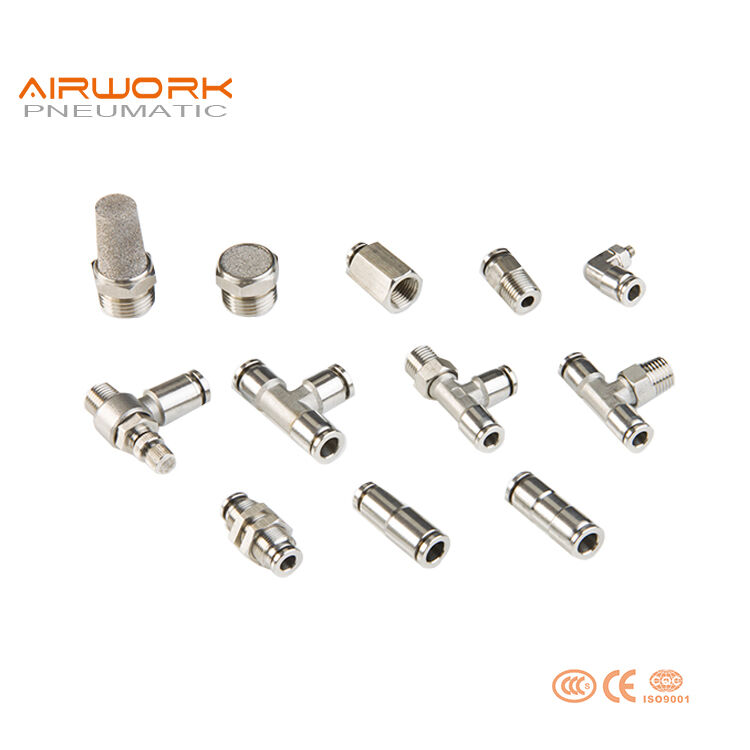
The versatile compatibility of push to connect air fittings encompasses broad tubing material support, diverse connection configurations, and adaptable pressure ratings that accommodate virtually any pneumatic application requirement. This comprehensive compatibility eliminates the complexity of matching specific fitting types to particular tubing materials or system specifications, simplifying procurement processes and reducing inventory management requirements. Quality push to connect air fittings work effectively with polyurethane, nylon, polyethylene, PVC, and specialized tubing materials while maintaining consistent sealing and retention performance across these diverse material types. The geometric flexibility of push to connect air fittings extends to numerous configuration options including straight connectors, elbows, tees, crosses, reducers, and specialized shapes that address complex routing requirements. This variety enables system designers to optimize pneumatic layouts for efficiency and accessibility while maintaining the convenience and reliability of push-to-connect technology throughout the entire system. The availability of different port configurations, thread options, and mounting styles ensures seamless integration with existing equipment and infrastructure. Pressure rating versatility allows push to connect air fittings to serve applications ranging from low-pressure instrument air systems to high-pressure industrial pneumatic equipment. This broad pressure capability reduces the need for multiple fitting families and simplifies system design processes. Temperature tolerance specifications accommodate both standard industrial environments and specialized applications with elevated or reduced operating temperatures. The chemical resistance properties of premium push to connect air fittings enable use in challenging environments where exposure to cleaning agents, process chemicals, or atmospheric contaminants might affect conventional fittings. System integration advantages include compatibility with automated assembly processes, robotic installation capabilities, and standardized connection procedures that support lean manufacturing principles. The consistent external dimensions and connection forces of push to connect air fittings facilitate automated handling and installation, reducing labor requirements for high-volume assembly operations. This compatibility with modern manufacturing processes positions these fittings as ideal components for advanced production systems where efficiency, reliability, and automation capabilities drive competitive advantage.

Get a Free Quote

Our representative will contact you soon.
Email
Name
Company Name
Message
0/1000